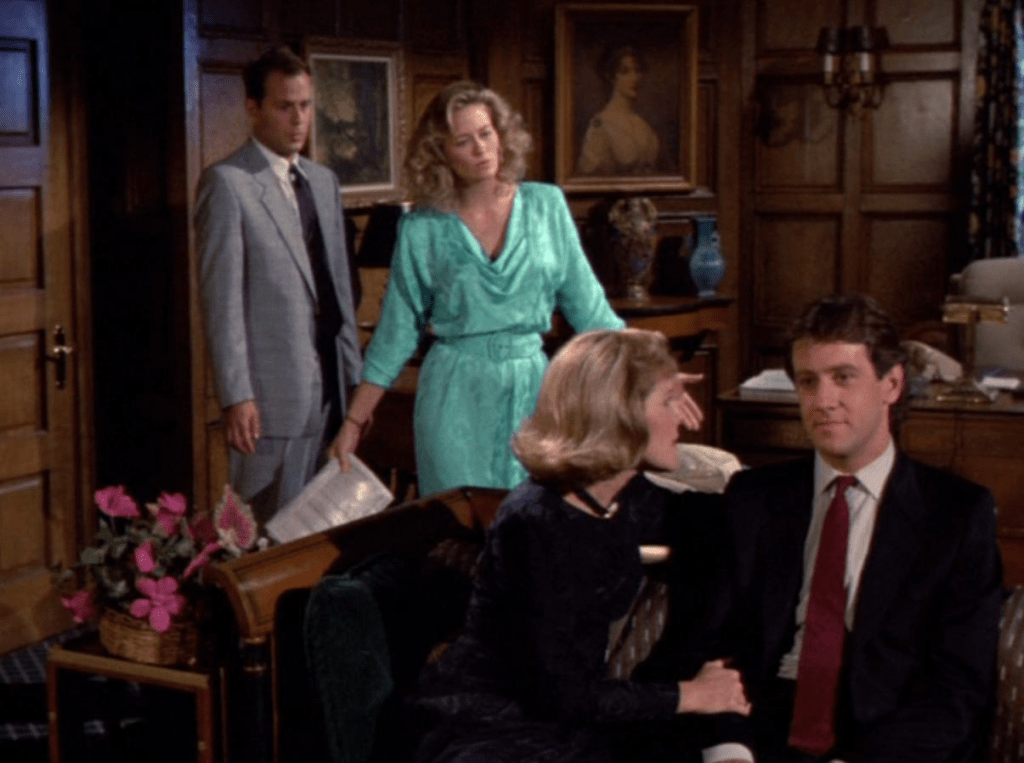
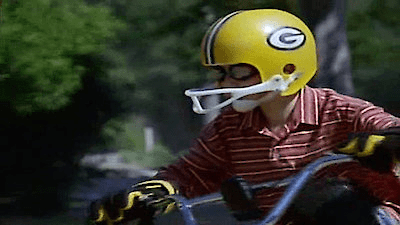
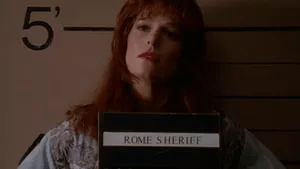
One wonders if the creators of Jim Carrey’s movie Liar Liar was inspired by this episode.
“This, as the banner already has proclaimed, is Mr. Harvey Hunnicut, an expert on commerce and con jobs, a brash, bright, and larceny-loaded wheeler and dealer who, when the good Lord passed out a conscience, must have gone for a beer and missed out. And these are a couple of other characters in our story: a little old man and a Model A car – but not just any old man and not just any Model A. There’s something very special about the both of them. As a matter of fact, in just a few moments, they’ll give Harvey Hunnicut something that he’s never experienced before. Through the good offices of a little magic, they will unload on Mr. Hunnicut the absolute necessity to tell the truth. Exactly where they come from is conjecture, but as to where they’re heading for, this we know, because all of them – and you – are on the threshold of the Twilight Zone.“
When Harvey Hunnicut bought the Model A car from the little old man, it seemed as if Hunnicut was ripping the man off. Oh how the tables turned.
As the little old man left the car salesman, he informed him that the car was haunted and that he would be haunted until he sold the car.
Little did Hunnicut know that it meant that he would be unable to tell a lie.
A used car salesman unable to lie? How could he sell anything? Especially when he had a lot full of lemons and clunkers. Hunnicut found that the truth was not a friend to him.
Overall, this episode was fairly light and, truthfully, kind of dull. He faced some initial consequences for his lies, especially form the wife on the phone, but he was able to get it sold without too much difficulty, passing the curse along to another person.
This lacked much of the Twilight zone’s usual oomph. The episode was not great.
“The Invaders”
And we went from a weak episode to one of the best of the series. The Invaders was totally original and featured a fantastic performance from Agnes Morehead (who would become Endora on Bewitched).
The dialogue of the episode was almost completely absent. It started off with the typical opening narration:
“This is one of the out-of-the-way places, the unvisited places, bleak, wasted, dying. This is a farmhouse, handmade, crude, a house without electricity or gas, a house untouched by progress. This is the woman who lives in the house, a woman who’s been alone for many years, a strong, simple woman whose only problem up until this moment has been that of acquiring enough food to eat, a woman about to face terror, which is even now coming at her from – the Twilight Zone.“
An isolated woman and a spaceship arriving in her home. However, the spaceship had miniature invaders-what appeared as robots, inside. The woman battled against the invaders, trying to protect herself and her home.
The old woman searched throughout her house, ending up capturing one of the invaders in a blanket, and beating it into unconsciousness. She then tossed it into the fire in the fireplace.
During this entire episode, we only hear the grunt and the screams of the woman. Never does she talk to the invaders or talk to herself during the horrifying time. It creates a great deal of tension and anxiety. The music from Jerry Goldsmith amplifies the atmosphere.
When she returned to the roof where the spaceship is located, she hears a message from the invaders back to their home planet saying to abandon this mission, do not strike a counterattack. There is a race of giant creatures here. The woman finishes off the ship and we see that it is from the US Air Force. The invaders were humans in suits, not miniature robots.
“These are the invaders, the tiny beings from the tiny place called Earth, who would take the giant step across the sky to the question marks that sparkle and beckon from the vastness of the universe only to be imagined. The invaders…who found out that a one-way ticket to the stars beyond has the ultimate price tag…and we have just seen it entered in a ledger that covers all the transactions in the universe…a bill stamped “Paid in Full” and to be found unfiled in the Twilight Zone”
This was an awesome ending to a tense and nerve-wracking episode. Agnes Morehead does an amazing job acting without any dialogue. She created a ton of sympathy for the old woman when you thought she was trying to save herself from some alien robots.
Olivia Colman has become one of our best current living actors working, and she brings her best no matter what project she is in. This is a perfect example as today’s June Swoon 2 is Empire of Light, a film that did not receive near the amount of love as many had anticipated.
According to IMDB, “Hilary (Olivia Colman) is a cinema manager struggling with her mental health, and Stephen (Micheal Ward) is a new employee longing to escape the provincial town where he faces daily adversity. Together they find a sense of belonging and experience the healing power of music, cinema, and community.“
There was a lot of good things here. First was the performances, led by Olivia Colman. Michael Ward was excellent as Stephen. There were solid supporting performances from Colin Firth, Toby Jones, Tom Brooke, Crystal Clarke, and Tanya Moodie.
There were also several very good scenes in the film that brought some emotional heft and strong character development. The film looked beautiful too.
This is where things kind of went off the rails. The positives of this film are there, for sure, but there are other issues that drag this down, most of which deal with the story being told.
The film did lack a general narrative throughline. It felt as if it tried to do way too many different things and none of them worked together very effectively. The movie lacked a focus as this film felt as if it were about mental illness, racism, the power of the cinema and theater experience, relationships at the work place, adultery and the use of power to get your way. These all were used and most of them used equally which made the film feel too muddled.
There also seemed to have a couple spots at the end of the movie that could have served as an effective ending, but it kept going back to continue the story. Some times that works, but here it just felt like the movie wasn’t sure how to end.
Empire of Light had its moments and Olivia Colman is, once again, exceptional, but it feels to much of a mess to be a great movie. It is currently passable at best.
“This is Mr. Henry Corwin, normally unemployed, who once a year takes the lead role in the uniquely popular American institution, that of the department-store Santa Claus in a road-company version of ‘The Night Before Christmas’. But in just a moment Mr. Henry Corwin, ersatz Santa Claus, will enter a strange kind of North Pole which is one part the wondrous spirit of Christmas and one part the magic that can only be found… in the Twilight Zone.“
We get the drunk Santa story that we have seen so many times since. Henry Corwin, after being fired from his Santa job at the mall for being drunk, found a Santa gift bag that allowed Corwin to pull out whatever the gift receiver wanted.
The police believed he had stolen the stuff, but they could not prove anything. He was able to show them that he could pull anything they asked for out of the bag.
He ran out of gifts and wound up getting in the sleigh and becoming the real Santa Claus.
This was an okay episode. We’ve seen this before, but I’m not sure they saw this at the time (1960).
“Dust”
We get another Western on The Twilight Zone. This one deals with a very dark issue and one of sadness.
“There was a village. Built of crumbling clay and rotting wood. And it squatted ugly under a broiling sun like a sick and mangy animal wanting to die. This village had a virus, shared by its people. It was the germ of squalor, of hopelessness, of a loss of faith. For the faithless, the hopeless, the misery-laden, there is time, ample time, to engage in one of the other pursuits of men. They began to destroy themselves.”
The episode started off with a terrible tragic event. We find out that Luis Gallegos, who is in jail and being prepared to be hanged, had been drunk and accidentally ran over a little girl with his wagon.
We get one of the worst characters I have seen on The Twilight Zone in the peddler Sykes. This guy was so horrible in this episode. He taunted Luis while he was in jail. He was snarky with the Sheriff. He was looking to make money off the pain of Luis’s father. This guy should have received the ironic ending of the episode. He did not though. He did see, apparently, the errors of his ways.
Sykes sold Luis’s father a bag full of dirt from the ground and pretended as if it were magic dust. Luis’s father showed up at the hanging and threw the dirt around hoping it would work.
Shockingly, the rope snapped, dropping Luis to the ground. The parents of the little girl decided that this was a sign and Luis should be left alive.
I liked this episode quite a bit, but I did want Sykes to pay for his cruelness. The ending did feel a little underwhelming.
“Back There”
The Professor winds up in a time travel episode.
“Witness a theoretical argument, Washington, D.C., the present. Four intelligent men talking about an improbable thing like going back in time. A friendly debate revolving around a simple issue: could a human being change what has happened before? Interesting and theoretical, because who ever heard of a man going back in time? Before tonight, that is, because this is—The Twilight Zone.”
Peter Corrigan is involved with his friends in a discussion on time travel. As he was leaving the club, he finds himself transported to 1865, on the day that Abraham Lincoln was to be assassinated.
When Corrigan realized when he was, he tries going all over the place trying to stop the assassination. He winds up at the police station arrested. A man shows up and takes him out of the jail.
The man takes him to a room and drugs him. It was actually John Wilks Booth who took Corrigan so he would no longer be yelling about the assassination.
When Corrigan awoke, he discovered it was too late and that Lincoln was killed. He wound up back in the present and discovered that someone who had worked in the club before, now was a member because of things that happened when Corriganhad gone back in the past.
This was interesting. They took plenty of liberties here, especially with Booth. It’s great to see the Professor once again.
With the June Swoon 2 in full swing, I came this morning to an Academy Award winning film that I had not seen from 2022. Women Talking was written and directed by Sarah Polley and won the Oscar for the Best Adapted Screenplay, as well as being nominated for Best Picture.
Women Talking featured a powerful ensemble cast that included Rooney Mara, Claire Foy, Jesse Buckley, Frances McDormand, Judith Ivey, Kate Hallett, Shelia McCarthy, Ben Whishaw, August Winter, Liv McNeil, Michelle McLeod, and Emily Mitchell.
It was 2010 and a group of women from a Mennonite colony discovered a horrendous secret. There were men in the colony who would take horse tranquilizers and drug the women in order to rape them. When one of the men were captured, he revealed the others involved too.
These men went to a neighboring city for trial and most of the men from the colony went to help with bail, leaving the women and children behind. The group of women who had all at one time been raped or assaulted came together in order to decide what they were going to do. Would they stay and allow it to keep happening, would they stay and fight or would they leave the colony?
Most of the movie was this debate among the women, trying to keep themselves and their children safe as well as keep their religious faith.
There is a reason this was a screenplay winner at the Oscars. The dialogue and the character interactions here were remarkably powerful and covered every aspect of the situation. The conflicts within each woman was shown with understandable relatability. There was anger, grief, guilt, confusion all beautifully portrayed by a very talented ensemble cast. None of the survivors had the same reactions and that made it all the more potent.
There is not much action going on, but you do not miss it because the tension of the conversations were so high, you feel as if you’ve seen such a dramatic decision.
Women Talking could be a challenge for some people, but it is an outstandingly acted film with amazing character driven dialogue that provides an empowering message.
After three of the best episodes of the series so far in the last group of four, the enxt to are watchable and enjoyable, while not, perhaps, extraordinary.
“The Trouble with Templeton”
An aging theater actor, whose wife is openly cheating on him, reminisces back to his first wife who had since died.
“Pleased to present for your consideration, Mr. Booth Templeton; serious and successful star of over thirty Broadway plays, who is not quite all right today. Yesterday and its memories is what he wants, and yesterday is what he’ll get. Soon his years and his troubles will descend on him in an avalanche. In order not to be crushed Mr. Booth Templeton will escape from his theater and his world, and make his debut on another stage, in another world, that we call the Twilight Zone.”
Arriving late for his latest play, a hotshot new director chastised Templeton, causing the actor to flee from the theater. Before he knew it, Booth Templeton found himself back in the middle 1920s and was able to go to see his late wife Laura once again.
However, as is the case with most of The Twilight Zone episodes, Templeton did not expect what he found. His wife Laura was at a speakeasy having a lot of fun and was not overly pleased to see Templeton. She wanted to stay and dance whereas Templeton wanted to go be alone with his wife.
Templeton realized that his idyllic memories of Laura had been shaped by his loss and his loneliness and that his wife was not as perfect as he thought he remembered. He found a script in his pocket covering the very conversation he was having. He decided that the ghosts of the past were performing this play for him to bring him out of his funk.
When he returned to the present, Templeton faced the new director and, filled with new confidence, demanded the respect he deserved.
This was a solid episode with a nice use of the time travel trope.
“A Most Unusual Camera”
Chester and Paula Diedrich were a married couple who worked together as small time thieves, robbing antique shops. In their hotel room, they were going over their disappointing haul from that night’s robbery.
“A hotel suite that, in this instance, serves as a den of crime, the aftermath of a rather minor event to be noted on a police blotter, an insurance claim, perhaps a three-inch box on page twelve of the evening paper. Small addenda to be added to the list of the loot: a camera, a most unimposing addition to the flotsam and jetsam that it came with, hardly worth mentioning really, because cameras are cameras, some expensive, some purchasable at five-and-dime stores. But this camera, this one’s unusual because in just a moment we’ll watch it inject itself into the destinies of three people. It happens to be a fact that the pictures that it takes can only be developed in The Twilight Zone.“
Chester and Paula find a strange box camera among their loot and they wind up taking a picture with it. The picture showed Paula wearing a fur coat, that she did not own. A few minutes later, she found a fur coat among the objects that they had stolen and she put it on, striking the exact pose shown in the picture.
They took a second picture with the camera which showed Paula’s brother standing in the doorway. They knew that couldn’t happen because he was in prison. Yet, a few minutes later, her brother Woodward entered the room claiming to have escaped.
Chester realized that the camera was taking pictures that showed the very near future. Trying to find a way to take advantage of the camera, they went to the race track and made a ton of money taking pictures of the winner’s board before the races started and then betting on the winners shown in the pic.
The greed and selfishness of the trio came through later when a French bellhop decoded the camera indicating that they only are able to take 10 pictures. They argued over what to do with the final two and eventually led to Chester and Woodward falling out the window to their death.
That point would have made a dark and satisfying ending for the episode, but unfortunately, it kept going. For some reason, Paula took a picture of the dead bodies from her window with the camera. The French bell hop returned and stole the money, threatening to turn Paula in. He took the picture of the dead bodies and said that there were more than two.
Oddly, Paula went rushing to the window to look at the bodies and she tripped, flying out he window as well. Then the bellhop looked at the picture and saw four bodies and somehow fell out the window too.
That ending turned out to really cut into what was a decent episode. The cartoony ending, especially with Paula and the bellhop, tarnished what could have been a solid, though dark ending.
Overall the episode was fine, but it could have been so much more.
Season two has not been very strong so far. However, there were three exceptional episodes in a row with the fourth one being fine. This stretch of episodes really elevated the season.
“The Howling Man.”
Dutch angles for everyone!
What a great episode this one was. I enjoyed The Howling Man. Stumbling into the castle, David Ellington was lost and needed help. Just like Brad and Janet from Rocky Horror. Just like Bugs Bunny in several Looney Tunes shorts. Or Count Dracula’s castle. It never turns out well.
It was a unique opening as we started with David Ellington seemingly addressing the audience about the shocking horror that he had experienced. It felt for awhile that David would take the place of Rod Serling in the narrator chair, but Rod did eventually show up.
“The prostrate form of Mr. David Ellington, scholar, seeker of truth and, regrettably, finder of truth. A man who will shortly arise from his exhaustion to confront a problem that has tormented mankind since the beginning of time. A man who knocked on a door seeking sanctuary and found, instead, the outer edges of The Twilight Zone.”
Mr. Ellington was allowed to stay in the castle because he was sick and could not leave on his own. However, this was a bad thing for all as he came across a man locked away in the castle who claimed that the leader of this cult-like group, Brother Jerome, was crazy and had him locked up for no reason.
Brother Jerome was pretty sketchy too. Mr. Ellington wanted to understand, but Jerome did not want to tell him the full story. He knew the true story would make him sound like a loon.
Finally, Jerome broke down and explained to Mr. Ellington that the man he spoke to was no man at all… he was the devil. He told Mr. Ellington how the devil came to be locked in a room in their castle. Mr. Ellington pretended to believe him, and as soon as he could, he went and freed the man from the room.
Ellington was clearly blinded by his illness and his own foolishness because the questions he asked, which were good one about the lock on the door and why the man couldn’t just get himself out, were ignored.
Sure enough, the devil was freed and shapeshifted into his devilish form, horns and all. According to Rod’s narration, the devil was behind WWII, The Korean War, the weapons of war until Mr. Ellington had recaptured him.
We find out that, instead of narrating, he had been telling his own maid about the story to make sure that she never open that door. Which, of course, she promptly did.
This reminded me of the myth of Pandora’s Box. Pandora was a good person who did not intend on releasing the worst pain and anguish onto the world by opening the box and letting them out. Yet, that is what happened, just like Mr. Ellington opened the door and let out the great evil of the world. They say that the road to hell is paved with good intentions. Looks like this episode agrees with that idiom.
“Eye of the Beholder”
A second consecutive awesome episode. Eye of the Beholder started out with the poor fate of Miss Janet Tyler, her ugly face completely covered in bandages, in a hospital for her last chance treatment.
“Suspended in time and space for a moment, your introduction to Miss Janet Tyler, who lives in a very private world of darkness. A universe whose dimensions are the size, thickness, length of the swath of bandages that cover her face. In a moment we will go back into this room, and also in a moment we will look under those bandages. Keeping in mind of course that we are not to be surprised by what we see, because this isn’t just a hospital, and this patient 307 is not just a woman. This happens to be the Twilight Zone, and Miss Janet Tyler, with you, is about to enter it.“
The nurse and the doctor were in to see Janet, but it was clear immediately that something weird was going on. We saw nobody’s faces. The doctor and the nurses were shot with specific camera angles or within shadows that kept the audience from seeing anyone’s face. Meanwhile we were told that Janet had one final chance to be able to be normal or she would need to be taken away to be with her kind of people.
Boy, are there some connections to this episode and the world we live in right now? As the episode continued, we were introduced slowly to several ideals of their current society. We even got to hear from their “Leader” on a closed circuit TV. The longer the episode went, the more bizarre the world seemed to be.
I thought the truth was fairly obvious early on in the episode. I had guessed that when they removed the bandages from Janet’s face, she would be revealed as being beautiful and, my thought was that everyone else would have blank faces. I was half right as the doctors and nurses were revealed to have ugly, pig-like faces.
The actual removal of the bandages was done wonderfully, building tension with every unwrapping. It took its time and it was a great payoff.
“Nick of Time”
William Shatner is in The Twilight Zone!
Before his iconic turn as Captain Kirk or his role in probably the most well-known Twilight Zone episode ever, William Shatner was here as the recently wed Don Carter.
“The hand belongs to Mr. Don S. Carter, male member of a honeymoon team en route across the Ohio countryside to New York City. In one moment, they will be subjected to a gift most humans never receive in a lifetime. For one penny, they will be able to look into the future. The time is now, the place is a little diner in Ridgeview, Ohio, and what this young couple doesn’t realize is that this town happens to lie on the outskirts of the Twilight Zone.“
Don and his new wife Pat have their car break down and they get stuck in Ridgeview, Ohio. While they were waiting for their car to be repaired, they went to a diner for food. At their booth, there was a little fortune teller napkin dispenser that you could put in a penny and ask a yes or no question and the machine would spit out an answer like a fortune cookie.
Problem was the answers seemed coincidentally accurate and Don, who was very superstitious, began to believe in the power of the machine. He slowly became obsessed with what the fortune teller was saying to them and was allowing the box to dictate their life.
At first, Don thought the machine had told him that something bad would happen if they left early. Don figured out that if they left before three, something bad would happen. So they stayed until 2:55. This drove me crazy. You waited this long, why not wait another five minutes. Why press fate?
Of course, right at 3, they nearly get hit by a car, which only cemented Don’s belief in the precognition of the machine. He took Pat back to the diner and began asking question after question.
Pat was able to bring Don back to reality with some common sense and they were able to get out of the diner and into their car to go wherever they wanted to go. However, another desperate looking couple came into the diner and sat down at the booth, pumping the fortune teller full of pennies and asking advise for their lives.
William Shatner was great here, really playing up the paranoia and the obsession of the superstitious man, and he showed the strength to escape from the pull of this belief.
“The Lateness of the Hour”
Robots everywhere.
“The residence of Dr. William Loren, which is in reality a menagerie for machines. We’re about to discover that sometimes the product of man’s talent and genius can walk amongst us untouched by the normal ravages of time. These are Dr. Loren’s robots, built to functional as well as artistic perfection. But in a moment Dr. William Loren, wife and daughter will discover that perfection is relative, that even robots have to be paid for, and very shortly will be shown exactly what is the bill.”
Dr. Loren’s daughter, Jana, was not a very likable character. She felt very selfish and most likely jealous of the robots and how much they did for her mother and father. She worried that these robots were keeping her parents from fully living their lives.
She did it in the most obnoxious way though, including throwing one of the robots down the stairs. She insisted that her father shut the robot staff down. He did not want to but he finally acquiesced when Jana said that either it was the robot staff shut down or she would leave and never come back.
I personally would have shown her the door, but there was a reason that was not going to happen. The twist of the episode, which again I had figured out early, was that Jana was also a robot. She flipped out when she discovered this truth, and her father had no other choice but to turn her into a maid instead.
“Let this be the postscript — Should you be worn out by the rigors of competing in a very competitive world, if you’re distraught from having to share your existence with the noises and neuroses of the twentieth century, if you crave serenity but want it full time and with no strings attached, get yourself a workroom in the basement, and then drop a note to Dr. and Mrs. William Loren. They’re a childless couple who made comfort a life’s work, and maybe there are a few do-it-yourself pamphlets still available… in the Twilight Zone”
While much of this episode irritated me because of Jana’s behavior, I loved the end of the episode. She absolutely deserved this ending.
There are still a couple of books from last week that I have yet to read, but a chunk more have gone down since. The biggest one that I have yet to touch is the giant hardcover book Criminals by Ed Brubaker and Sean Phillips. It collected that series and I am looking forward to getting that one started. However, it is a big book and is a tad intimidating.
So with some of the others from last week still up, I will push that book off for awhile.
Killadelphia Vol. 1. “Sins of the Father.” Written by Rodney Barnes and drawn by Jason Shawn Alexander. This is a collection of Killadelphia issues #1-6 from Image. This series was Eisner nominated and, although I typically do not like the collected books, Killadelphia has been around for awhile and would be expensive to get the actual comic book issues. And who knows if I would have even liked it. So I grabbed the first volume at Comic World last week. This was great. It made President John Adams and his wife Abigail Adams vampires. This was so cool and told a great father/son story as well. May have to look into the next volume of books.
Damn Them All #2. Written by Simon Spurrier and illustrated by Charlie Adlard. More magic as Dora and Ellie move on with their attempts to find help with the 73 demons. We are introduced to Carlin and Pruflas in this issue.
X-Men #23. “When Cometh… the Stark Sentinels” The X-Men come to confront the brand new Iron Man Sentinel from Orchis and they discover that one of these new Sentinels is going to be very difficult to handle.
New Mutants: Lethal Legion #3. “Old Wounds, Old Weapons“. These New Mutants are strange for me. I have found them interesting to read, but I have struggled to know who was whom. Outside the familiar New Mutants such as Rahne, Dani and Karma, the rest of these characters are new or unfamiliar to me and tough to connect with. I have been enjoying the book so far though.
Fury #1 “Who is S.C.O.R.P.I.O.?” Written by Tom King. Art is handled by several people including Scot Eaton & Cam Smith, Tom Reilly, Adam Kubert, and Ramon Rosanas. Adam Kubert and Dean White did the cover art. This was an interesting book using both the new Nick Fury and the original Nick Fury, showing where they are and moments of their backstory on how they got where they were. It was neat how they told the story with different styles from the different time periods. I could definitely get into more Nick Fury, especially with Secret Invasion coming this month on Disney +.
Thor #34. “Blood of the Fathers Part Four” More goodness from Thanos, Dr. Doom and Thor. We also have Hela making a return, Loki showing up, Thor’s sister taking a step forward. Things are feeling as if they are beginning to prepare for a finale for this storyline.
Deadpool: Badder Blood #1. Story by Rob Liefeld, script by Chad Bowers and pencils by Rob Liefeld. Team up with Cable and Wolverine. I have to say there were some amazing moments of art in this book, including a couple of pages that were tilted in the other direction that made this an intriguing read. I’ve been digging Deadpool recently.
Star Signs #2. Written by Saladin Ahmed and featuring art by Megan Levens. A group of young heroes, who’ve been dubbed names of the Zodiac, are begin brought together after the stars disappeared from the sky. It looks as if there are two sides collecting powered individuals and things are getting more fascinating.
Invincible Iron Man #7. “Fight the Future” Written by Gerry Duggan and drawn by Juan Frigeri. Kael Ngu did the art on the cover. Tony and Rhodey try an assault on the Stark Unlimited facility producing the Iron Man Sentinels. Things seem to be going well until Rhodey gets captured and set up for murder. (BTW… I thought the cover art was a little weird. It looks like Tony Stark has big rollie-pollie, cartoonish eyes that are looking up and to the right. I know that is not what it was supposed to be, but now I can’t unsee it.
Peacemaker: Tries Hard #2. Written by Kyle Starks and drawn by Steve Pugh. Cover art was by Kris Anka. Peacemaker and Mallah go to assault the secret base of General Immortus to get the DNA of the Terminator. And things do not turn out well for Peacemaker.
Daredevil & Echo #1. Written by Taboo & B. Earl with art by Phil Noto. This story takes place during two distinct timelines, current day with Daredevil and Echo and in 1835 with Tommy Murdock. This was a good read, better than I anticipated it was going to be.
X-Men: Before the Fall-Mutant First Strike #1. “Here to Help” The anti-mutant organization Orchis is spreading misinformation and propaganda against mutants and the X-Men are doing what they can by helping victims of a deadly strike against a small town of Milford. The strike was intended to look like it was done by mutants, though it seemed that Orchis orchestrated it. It was cool to see some of these X-Men again (in their fun red X, white jackets). It was weird though cause I saw Angel here and then, for a few panels, I saw Archangel, and I did not know why there was no example of Warren changing. Maybe I missed something over the years of skipping X-books.
Love Everlasting #8. “Too Hip for Love.” Written by Tom King and drawn by Elsa Charretier. Joan is back from the mental ward and is struggling to maintain her grasp on sanity. Doesn’t help when she is seeing the Cowboy constantly. Plus, it never seems to change from 1963. Joan is reaching the end of her rope as she had a gun to her head this issue. She did not kill herself, but the idea is there.
Ambassadors #6. Written by Mark Millar and illustrated by Matteo Scalera. I picked up the second variant cover, which was in black and white. This is the final issue of the first arc of Millar’s newest book. This final issue was filled with some excellent action as the super heroes all come together for the first time. A brutal ending too.
I have been waiting anxiously to watch this Korean made film for the June Swoon 2. Decision to Leave was a popular hit of the international films last year, but I have been pushing it off because of the length. The film was almost 2 hours and 20 minutes, which was long for a film that required reading.
Before I go on about the movie, I have to complain about the captions. The English translation was small on the screen and some of the dialogue went too fast. It was difficult to keep up with the flow of the story without being 100% sure what they just said. I have said that in previous subtitled films, you forget that you are reading and just fall into the story, but this time the reading was more difficult at times that it never truly allowed me to lose myself in the story.
That is not necessarily a flaw of the film as much as it was Vudu and its presentation. I will not hold that against Decision to Leave, but there is no doubt that it affected my viewing pleasure.
According to IMDB, “From a mountain peak in South Korea, a man plummets to his death. Did he jump, or was he pushed? When detective Hae-joon (Park Hae-il) arrives on the scene, he begins to suspect the dead man’s wife Seo-rae (Tang Wei). But as he digs deeper into the investigation, he finds himself trapped in a web of deception and desire.”
I did enjoy this movie with its mystery at its core. Exactly how much of a role had Seo-rae played in her husband’s demise or was it actually just suicide? The film does a great job of keeping the story going as you are never sure what the truth is.
The relationship between Hae-joon and Seo-rae felt wrong for most of this movie as you could never be sure if she were playing him or if she was just a victim of the situation. This relationship caused Hae-joon’s marriage to crumble, although there are some hints in the movie that implied that Hae-joon was already not very happy with the path of his life.
Reason to Leave was directed by Park Chan-wook, who also directed the iconic film Oldboy. Park Chan-wook created a beautiful look to the film and brought a great deal of magic to the love story.
Decision to Leave tells a solid romantic story with touches of tragedy mixed in. The performances are all really strong and the film looks lovely. It is a touch long, but it takes its time telling the story effectively.
A whiny, nervous criminal is in a small, cheap hotel room when approached to do more than the petty, two-bit crimes he is used to committing.
“This is Mr. Jackie Rhoades, age thirty-four, and where some men leave a mark of their lives as a record of their fragmentary existence on Earth, this man leaves a blot, a dirty, discolored blemish to document a cheap and undistinguished sojourn amongst his betters. What you’re about to watch in this room is a strange mortal combat between a man and himself, for in just a moment, Mr. Jackie Rhoades, whose life has been given over to fighting adversaries, will find his most formidable opponent in a cheap hotel room that is in reality the outskirts of The Twilight Zone.“
Jackie was hoping George, the head crook, would give him something special tonight, and he was right. However, Jackie was not excited about it at all.
George gives Jackie a gun and instructs him to kill a little old man who was rebutting the gangster’s advances. George wanted him to be made am example of and George gave that job to Jackie because no one would expect such a whimpy loser to be a murderer.
Jackie may have been a criminal, but he had never killed anyone before so this assignment triggered a conflict of conscious within Jackie. And Jackie began having a discussion with the reflection of himself in the mirror.
After a dramatic confrontation with the mirror image, Jackie refused the job and beat up George, resigning from his employ.
I took this as an example of the character of Jackie dealing with a split personality. It seemed more than just an argument over a conscience. The reflection spoke about how Jackie could have taken dual paths and that he chose a poor one. This is clearly something that Jackie has dealt with in the past. And at the end of the episode, the alter personality, who called himself John, takes over the body from Jackie.
I did enjoy the psychological aspect of this episode. The argument with the reflection in the mirror is a well known trope of this style and I wonder if it had happened before the Twilight Zone.
“A Thing About Machines”
Get out of here, Finchley
“This is Mr. Bartlett Finchley, age forty-eight, a practicing sophisticate who writes very special and very precious things for gourmet magazines and the like. He’s a bachelor and a recluse with few friends, only devotees and adherents to the cause of tart sophistry. He has no interests save whatever current annoyances he can put his mind to. He has no purpose to his life except the formulation of day-to-day opportunities to vent his wrath on mechanical contrivances of an age he abhors. In short, Mr. Bartlett Finchley is a malcontent, born either too late or too early in the century, and who, in just a moment, will enter a realm where muscles and the will to fight back are not limited to human beings. Next stop for Mr. Bartlett Finchley – The Twilight Zone.”
Mr. Bartlett Finchley was a pompous, stuck-up individual who blamed all the problems around him on the machines that filled up his home, and not on the blistering temper that seemed to overwhelm him at a drop of a hat.
Somehow, the machine began speaking to him and intentionally doing things to irritate and upset him.
The machines get the last laugh in a fit of personification as Finchley’s car chased him around the neighborhood and killed him in a pool.
The episode gave us no reason for the mysterious machines to come to life. It did hint at this being in Finchley’s head, but there was no evidence of that actually occurring. Though there were some ideas here, there were too many silly images included taking whatever tension the episode tried to build out. I knew what we were up for when the electric razor began coming down the steps on its own.
Finchley was unlikable, but lacked any real reason for the audience to see him drown in a pool by his own car.
Season two kicked off with a couple of new details. One, the well known Twilight Zone theme was in the opening, standing out. I’m not sure if it was included on the first season intros, but it definitely stood out more this season.
Secondly, Rod Serling, who always spoke the opening narration, appeared on screen to deliver the narration.
“This is Africa, 1943. War spits out its violence overhead, and the sandy graveyard swallows it up. Her name is King Nine, B-25, medium bomber, Twelfth Air Force. On a hot, still morning, she took off from Tunisia to bomb the southern tip of Italy. An errant piece of flak tore a hole in the wing tank and, like a wounded bird, this is where she landed, not to return on this day, or any other day.”
We see the downed airplane in the desert and then the camera sweeps around to see the unconscious body of Captain James Embry. When Embry awakens, he starts looking desperately for the remainder of his crew.
Failing to find them, Embry continued to get more disheveled. He gets to the place where he is seeing images of his crew, who are not actually there.
At this point, Embry is breaking down in frustration and desperation. The scene shifts from the desert to a hospital where Embry is being taken care of after going into shock when seeing a newspaper with a headline about the King Nine being discovered after crashing during the war years ago. Embry was supposed to go on the mission, but backed out at the last instance and did not die as the rest of the crew did.
Embry wakes up and believes that he had dreamt the whole thing. However, the sand in his shoes implied that there was more real about the events he encountered than suspected.
This certainly deals with the idea of survivor’s guilt, which is a horribly insidious trauma.
Season two kicked off with a decent episode. The performance of Bob Cummings as Embry was very strong as the entire premise of the episode depended on his skills.
“The Man in the Bottle”
When I started the Daily Zone, I knew I had seen some episodes, although I have not seen near as many as I thought as only one was familiar in season one. However, there was one episode that I knew I had seen. I did not remember the overall concept behind it, but I knew it had to do with an older couple and a little shop. I also remembered something about the man becoming Adolf Hitler. Well, this is that episode.
The Man in the Bottle is, of course, a genie. When a struggling older couple with their antique shop come in possession of a bottle, it falls to the ground and opens. A genie appears offering 4 wishes.
Arthur and Edna Castle are unsure what to do. Edna was very anxious about making the wishes, saying that she did not like the look of the genie. When Arthur used the first wish to fix a broken glass on the display case, they saw that this was true and that they could do anything.
They wished for a million dollars. The genie provided and the Castles were extremely happy. They gave away $60,000 dollars to the people of the neighborhood only to find out that the IRS wanted their part. The tax turned out to be a HUGE piece of it. After taxes and the money they gave away, they had $5 dollars left.
Then Arthur tried to become the leader of a country and the genie turned him into Hitler at the end of WWII in the bunker. Arthur had to use the final wish to fix things and return to normal.
Poor Arthur, who was a kind man, did not deserve being messed with as the genie did. Arthur was kind, helping out an old lady at the beginning, giving her a dollar even though he could not pay his own bills. They showed him giving out money to people in a kind-hearted way. Yet, he was screwed over.
Obviously, the episode’s theme was ‘be careful what you wish for…’ but treating this kind old couple the way the show did, felt more cruel than just teaching a lesson. Even at the end, the Castles were able to just laugh off their experiences.
The June Swoon 2 continues today with Breaking, a movie based on a true story starring John Boyega.
Former Marine Brian Brown-Easley (John Boyega) “is denied support from Veterans Affairs, financially desperate and running out of options, he takes a bank and several of its employees hostage, setting the stage for a tense confrontation with the police.” (IMDB)
John Boyega was amazing as the desperate Marine was and how he was trying to shine a light on the problem that he was facing. It was not just that he needed the money, which he did, but he wanted that the VA, which had denied his money, to make things right.
Boyega showed how troubled Brian was, both with the situation and with the mental aspect. He was more than just a troubled man. He was shown to be a good man even though the two hostages he kept in the bank were afraid for their lives. Nicole Beharie and Selenis Leyva are tremendous as the two bank employees remaining as hostages. The negotiator was played by Michael Kenneth Williams and he brought an empathy unlike most any other character in the film.
There was a lot of tension developed in the film by not only the situation but also the character dialogue. You were never sure exactly what was going to happen. You might feel that this situation was going to end up tragic, but there were plenty of uncertainty about what was going on. That made this an effective way to create a mood.
I am not sure if the film was able to shine enough of a light on the problem facing Brian. There are issues with the way the VA treats some vets and this film touched on it, but it needed to go into it more if they wanted it to be a message.
Breaking was a film that I had always heard positives about, but I never got around to seeing it in the theater or on streaming. It made a great film for the June Swoon 2.
After a very strong season of episodes, I am afraid that season 1 ended with a couple of clunkers for me.
Spoilers
“The Mighty Casey”
A terrible baseball team from New Jersey holds try outs and they wind up with a new pitcher. Casey is a left handed master who was as dominant as he could be. There was only one problem.
Casey was a robot.
When the league found out about the truth, they insisted that Casey was suspended. However, Casey’s creator, Dr. Stillman, said he could give Casey a heart, thus making him human. The surgery was a success, meaning that Casey could continue to pitch. Unfortunately, Casey’s new heart turned him into a pitcher who could not get anyone out.
Jack Warden played manager “Mouth” McGarry.
I found this episode to be my least favorite episode of the season so far. It was a silly premise and the execution was worse yet. When Casey was pitching, they added stupid sound effects to his fastball, slowball and curve ball. The whole episode was just a joke and was a huge step down from anything that I had seen before.
“A World of his Own”
I had always thought that I had seen my share of the episodes of The Twilight Zone, but as I have watched the first season, I did not recognize or was familiar with any of them. That is, until this episode. I remembered parts of this episode as I was watching it so this is the first of the Twilight Zone episodes that I had seen before. It would have been decades ago though.
This was also not a favorite of mine, though better than the baseball one I just watched.
Gregory was a writer who had the power to bring to life characters that he created. All he had to do was speak into his tape recorder and the characters would come to life.
This led to a conflict with his wife Victoria, who came upon Gregory snuggling up with a blonde woman (called Mary). When Gregory explained that she was just a creation of his, Victoria was ready to have him committed.
Gregory could take the tape, cut it out with his scissors and toss it into the fire, which caused the person to disappear.
The end of the episode did help save it a bit. Victoria was shown to be a creation as well and she, not believing it, tossed her own tape into the fire. She disappeared. That was fairly obvious as it was happening. The best part was when Rod Serling appeared in the room to narrate the events and Gregory tossed his tape into the fire too, cause Rod to disappear. That was the best part of the episode.
“Leaving Mr. Gregory West—still shy, quiet, very happy… and apparently in complete control of The Twilight Zone.”
This ends the first season of The Twilight Zone. The Daily Zone will be continuing into the second season soon.
Jack Klugman stars in the thirty-second episode of The Twilight Zone and he carries the episode on his back. Klugman is very strong here, delivering several monologues and playing off other actors that can not or will not respond to him.
“Joey Crown, musician with an odd, intense face, whose life is a quest for impossible things like flowers in concrete or like trying to pluck a note of music out of the air and put it under glass to treasure. Joey Crown, musician with an odd, intense face, who, in a moment, will try to leave the Earth and discover the middle ground – the place we call The Twilight Zone.”
Joey Crown is a depressed trumpet player with an alcohol problem. Life was getting him so down that he decided to commit suicide by stepping in front of a speeding truck. That was when things got weird.
Joey found himself walking around the area, but unable to interact with anyone. Everyone he came across reacted as if they could not see Joey. Joey made the reasonable assumption that he was dead… that he was a ghost.
However, he comes across a man playing the trumpet that lets him know that is not the case. In fact, he says that Joey was in a limbo state and he could choose to go back or remain in the land of shadows. Joey goes back and things get much better.
Klugman was the reason to enjoy this episode. Joey did not seem to mind being in limbo so his choice to return to a world where he tried to leave by suicide did not make much sense. Still, the acting was strong and the message of stick with life is a good one.
“Mr. Bevis”
…with Butthead nowhere to be seen.
This was a second episode in a row that depended on the lead performance of the actor. This was Orson Bean and his semi-comedic role as Mr. James B.W. Bevis was excellent stuck into an episode that was strange and that had a message that did not feel very well done.
“In the parlance of the twentieth century, this is an oddball. His name is James B. W. Bevis, and his tastes lean toward stuffed animals, zither music, professional football, Charles Dickens, moose heads, carnivals, dogs, children, and young ladies. Mr. Bevis is accident prone, a little vague, a little discombooberated [sic], with a life that possesses all the security of a floating crap game. But this can be said of our Mr. Bevis: without him, without his warmth, without his kindness, the world would be a considerably poorer place, albeit perhaps a little saner.”
Loved the word ‘discombooberated.’
Mr. Bevis is a carefree, kind-hearted, fun-spirited man who could not hold a job because of his idiosyncrasies. We see him go through a day where he loses his job, has his car ruined and ends up in a bar getting drunk.
He is approached by his guardian angel, J. Hardy Hempstead, who has been guardian angelling Mr. Bevis’s family for years.
He told Mr. Bevis that he could redo the day and everything would turn out differently, but he would have to change the way he lived. No more funny suits, no more weird car, no more sliding down the bannister, no more playing on the street with the kids.
When he went through this day with the new way of acting, Mr. Bevis realized that he did not want to have a life where he could not do those things, even if it meant he would not be successful.
So I guess the message is that it is best to be yourself, but get used to failing if you do. The only way to success is by being something you are not, suppressing your true nature. That does not seem like a very positive message.
This was clearly inspired by “It’s A Wonderful Life” but it fails to reach that level of entertainment. Orson Bean does everything he can with what he is given and nearly pulls it off. Unfortunately a disappointing message and a lackluster story derailed this performance.
“The After Hours”
This is probably the most frightening episode of The Twilight Zone to date. There were some really anxiety creating shots as poor Marshal White struggled to remember what was going on.
“Express elevator to the ninth floor of a department store, carrying Miss Marsha White on a most prosaic, ordinary, run-of-the-mill errand.
Miss Marsha White on the ninth floor, specialties department, looking for a gold thimble. The odds are that she’ll find it—but there are even better odds that she’ll find something else, because this isn’t just a department store. This happens to be The Twilight Zone.”
I immediately spotted that there was no 9th floor on the elevator that Marsha White got on and I knew something was going on. What happened from here on out was weird.
Marsha White was here to buy a gold thimble for her mother (which at the end is strange considering the twist). After purchasing the thimble, she realized that it was scratched and dented and tried to return it, but the manager told her there was no 9th floor in the store.
This started Marsha’s psychological problems, afraid of what she saw… especially when she saw the woman who sold her the thimble… as a mannequin.
The twist at the end I did see coming, but that did not make everything around it less creepy. The strong performance by Anne Francis made up for any problems that might have been in the episode and the twist, the fact that Marsha was a mannequin too, was creative and probably very effective for the time.
I loved the Transformers as a kid. I loved the TV cartoon and I remember buying Transformers toys. Then the Michael Bay movies came along and I was excited. Unfortunately, they turned out to be some of my least favorite films ever. Legitimately, I believe Transformers: The Last Knight might be my least favorite movie of all time.
The last Transformers movie was Bumblebee, which was the first one without Michael Bay’s fingerprints all over it, and it was one of the best. Sadly, it did not do well at the box office so I was afraid that the film series would head back to the giant stupidity of the previous films instead of the solid work of Bumblebee.
Here come Transformers: Rise of the Beasts. This included characters from the 1990s animated TV show Beast Wars along with a low number of the Autobots. While I do not think this new Transformers movie was up to the level of Bumblebee, this was way better than any of the first five in the franchise and presented a breath of fresh air for the Robots in Disguise.
Set in 1994 after the events of Bumblebee, Rise of the Beasts featured Noah (Anthony Ramos), a down on his luck former soldier who was struggling to find employment to help his mother and his ill brother Kris (Dean Scott Vazquez). After failing to get an honest job, Noah succumb to criminal activity and tried to steal a car. Of course, his luck is terrible as he tried to steal the Autobot, Mirage (Pete Davidson).
Meanwhile, Elena (Dominique Fishback), a young museum intern, studied a falcon statue with weird markings on it. When she accidentally broke the statue, it revealed the Transwarp Key, an object that was taken by the group of Maximals, led by Optimus Primal (Ron Perlman), years before from their home planet when forces of the planet-sized Unicron, who consumed planets, tried to find the key. The key would open portals around the universe and allow Unicron unfettered access to any planet of his choosing. Unicron’s led henchman was named Scourge (Peter Dinklage), who had been searching for the key since. When Elena activated it, the signal alerted Scourge to its location.
The signal also brought Optimus Prime (Peter Cullen) and the few other Autobots to it, trying to find the key which would allow them to go home to Cybertron.
Okay, so… that is a lot of synopsis. And I just scratched the surface. Though it feels convoluted when I am writing the plot out, the film does a decent job of explaining things for the audience so they were not lost. At least, I was not lost, though I have a knowledge of the lore so perhaps someone not as familiar with the Transformers may be more confused.
There have been several issues I have had with the previous Transformers movies. The first one is the human characters. In previous movies, the human characters were terrible characters that simply took up time that should have gone to the Transformers. Here, Anthony Ramos and Dominique Fishback do a very good job of being vital and not ridiculous like in previous films (The film had Mirage make a great joke about Marky Mark…aka Mark Wahlberg, who was in previous Transformers movies).
Second issue I have had before was the fact that I could never tell which giant robot was which. All of the Autobots looked the same except for Optimus Prime and Bumblebee. The rest were dull and poor characters that were undistinguishable from the others. This is much better since they keep the Autobots to a limited number including Prime, Bumblebee, Mirage, Arcee and Wheeljack. The Maximals were much more original in their designs so they stood out better (although when they transformed into their robot forms, they were much less so). Optimus Primal and Michelle Yeoh’s Maximal character Airazor are the two Maximals that standout in this film. However, the villains were absolutely interchangeable, even Scourge not standing out of the crowd.
Previous franchise films had just stupid humor/jokes that were not funny. The humor in this film was kept to a minimum and usually worked well.
The writing has been truly stupid over the previous movies and, while this film’s writing isn’t remarkable, it is much better. There are several cringeworthy moments in the third act though that bothered me. The third act was decent enough as not to have ruined what they were going for, though it did feel like too much of a step back.
The mid-credit scene was great and looks to take the franchise into a very intriguing path that I would be all for. No spoilers here.
As someone who hated the Michael Bay Transformers movies, I am on board with this new path the franchise is on. This movie is not a brilliant film, but it easily clears the bar set by previous entries in the series. While not as good as Bumblebee, keeping the number of Autobots down helped this film and it is always cool to hear Peter Cullen voicing Optimus Prime. This film kept the really stupid things at a minimum and avoided most of the traps that ruined previous movies. I am cautiously optimistic about the future of the Transformers movies.
The June Swoon 2 this morning features a movie that was utterly beautiful.
Bill Nighy gave an Academy Award nominated performance as Mr. Williams, a grim and humorless bureaucrat whose life changed after receiving a diagnosis giving him just a few months to live.
Mr. Williams decided to do something worthwhile will the few months he had remaining and he took up the fight for a local playground.
Bill Nighy is absolutely transcendent in this role. He is subtle and powerful with every glance and every slight word. He is never over-the-top, even though the situation could call for it. He was reserved yet determined to not fail in his final effort.
He had become withdrawn and callous within his job before the diagnosis altered his thinking. He spent some time with a former co-worker, Margaret Harris (Aimee Lou Wood), whose energy and willingness to embrace life attracted the old man. He wanted to remember how to engage in the daily joy of being alive while he still had the opportunity.
The film started off making it seem as if the leading protagonist would be Mr. Williams’s newest co-worker, Mr. Peter Wakeling (Alex Sharp), but he ended up as a supporting player in the story. Through his eyes, we get the chance to see the results of what Mr. Williams was able to accomplish.
Living was directed by Oliver Hermanus and the film is an adaption of a 1952 Japanese movie Ikiru which had been directed by EYG Hall of Famer Akira Kurosawa.
I have not seen the original film from Kurosawa, but this new adaptation is lovely, life-affirming and filled with a zest for life that is too easily lost. Bill Nighy is spectacular in his reserved and measured performance that will no doubt break your heart while inspiring you to do better. Living was a wonderful experience.