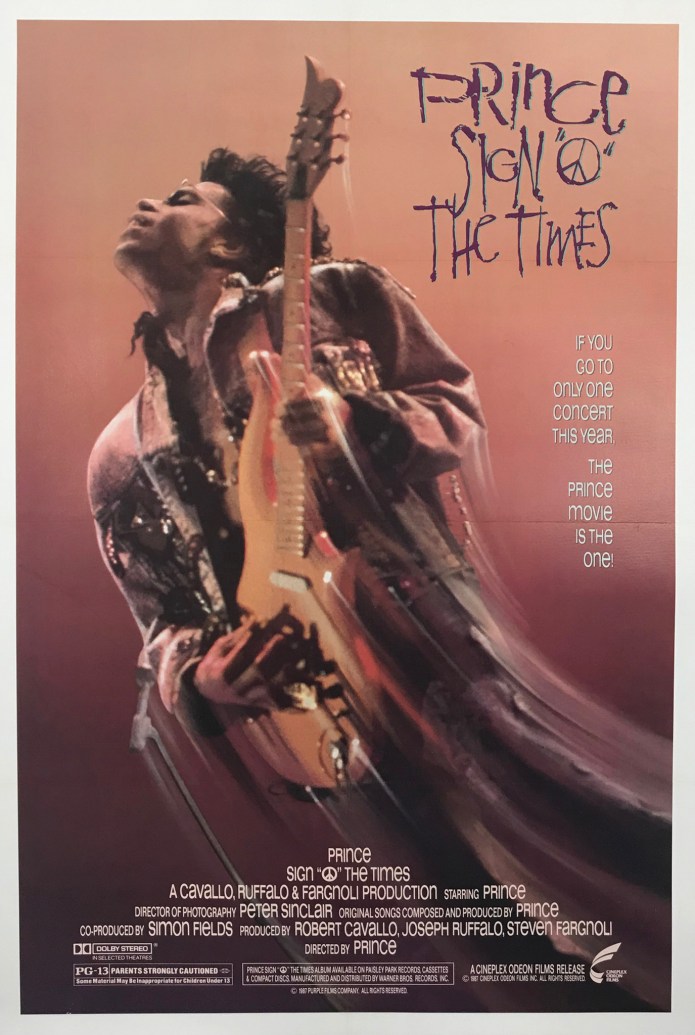
I have not done a concert movie during the DailyView yet. Check that off the genre box. Today on Peacock, I took the time to watch Prince’s Sign ‘o’ the Times concert film.
I would not say that I was a fan of Prince. I like some of his music, particularly his earlier Purple Rain material. I was not aware of much of the album Sign ‘o’ the Times, outside of the song he did with Sheena Easton so I came into this concert film without any real expectations.
I quite enjoyed it.
The film was a lot of fun. It brought a ton of energy from Prince, and he seemed to be filled with joy (something that was not necessarily something he showed a lot of in his life). The music was exciting and filled with energy. Though a lot of it sounded alike, there were some amazing musical performances. Especially Shelia E’s amazing drum solo which just demanded your attention and powered through the middle of the film.
There are only so many shots that are available in a concert movie, which is a challenge for the filmmaker. Prince, who co-directed this with Albert Magnoli, did the best you could expect, but did not bring anything really new to the genre.
Because of this, the film will rise or fall with the music and fortunately, the music is exceptional. Well played, well performed and engaging. I bopped my head throughout the film despite not knowing many of the songs being performed.
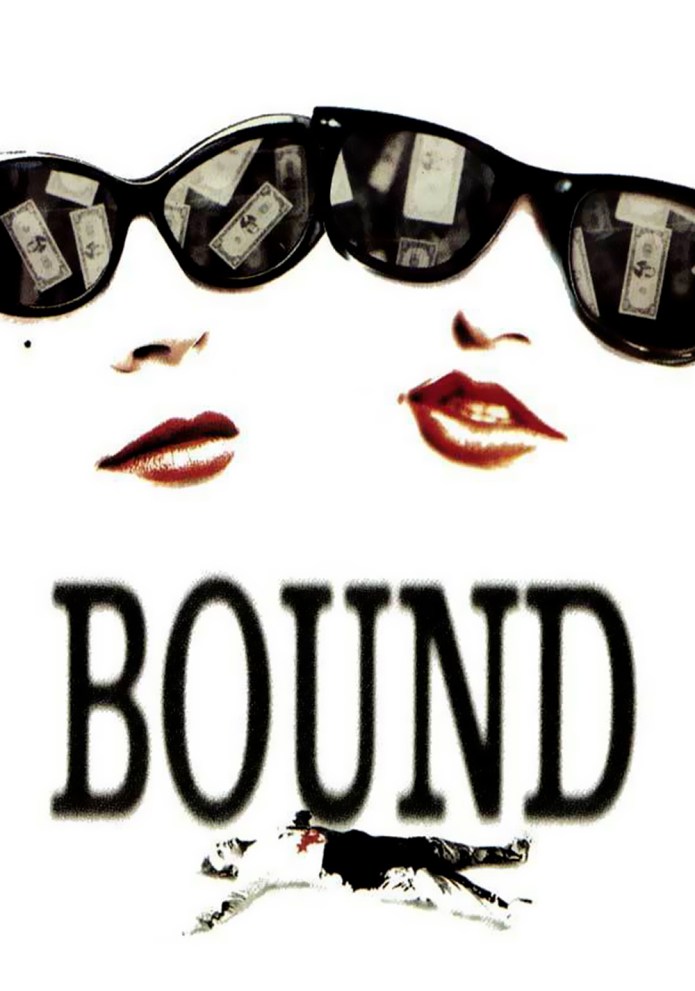
The Wachowskis became a huge success after they created and directed the original Matrix. However, prior to the Matrix, they directed another film called Bound and it was great.
We meet ex-com Corky (Gina Gershon) who comes across Violet (Jennifer Tilly), who was dating a man named Caesar (Joe Pantoliano), who was involved with the mob. Corky and Violet form a sexual connection and begin to plot together on a theft of $2 million dollars that Caesar had to clean (literally). They planned on framing Caesar for the stealing of the mob money, but their plot does not go as smoothly as planned.
This was a fun, violent and dramatic story, with several twists and turns that you do not see coming. Gina Gershon and Jennifer Tilly have great chemistry with each other and Joe Pantoliano brings the menace of Caesar to the film. These three carry the heavy load of the movie and they do it expertly.
The plot works extremely well as every step feels as if it was beautifully laid out in the story and works no matter how implausible or unexpected it should have been. Everything works story wise.
The last 45 minutes or so of the film is as batshit crazy as you can expect, with anxiety and nerves off the chart. You are never sure what is going to happen or how, or if, they surviving this plan.
The style is well done and the film leads right into the Matrix success. Good stuff.
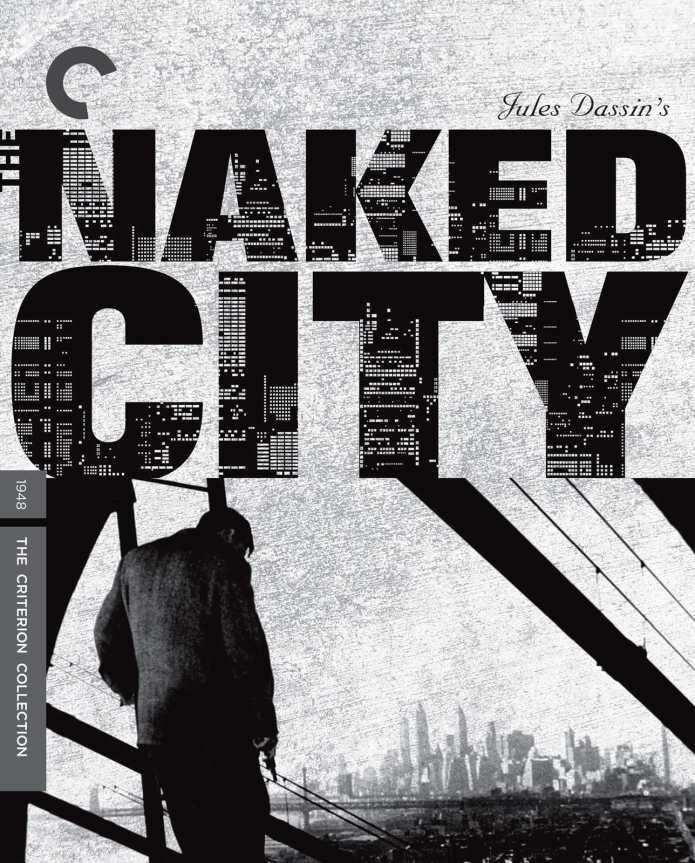
Filling the year of 1948 in the DailyView is an influential film directed by Jules Dassin that tells the story of the investigation by the police of the murder of a young model. It is most widely known because it films its scenes on the streets and building of New York City instead of on a sound stage.
The police procedural, led by Detective Lt. Dan Muldoon (Barry Fitzgerald), slowly follows the clues, many of which are small and seemingly unimportant, to solve the crime.
While it was interesting with the way they shot this movie, it led to some distinct problems. Namely, the requirement that there had to be a ton of voice over because the original shots outside the sound stage was hard to hear, I assume. Many times voices did not match lips because the sound was too low. There were other times where the sound included too much of an echo. All of this was distracting.
There was also a voice over doing narration at sporadic moments though the film. That voice made it sound like a documentary at times.
I’m going to say that some of the acting was wooden and uninteresting. Barry Fitzgerald though was a fascinating lead actor, looking unlike your typical leading man. He also had a distinct voice that helped break up the monotony of the scenes.
When the acting wasn’t wooden, it was way over the top. There did not seem to be much in the middle.
The Naked City did win two Academy Awards, but they were for technical aspects cinematography and film editing.
I was not into this movie much and I did not enjoy the story or characters much.
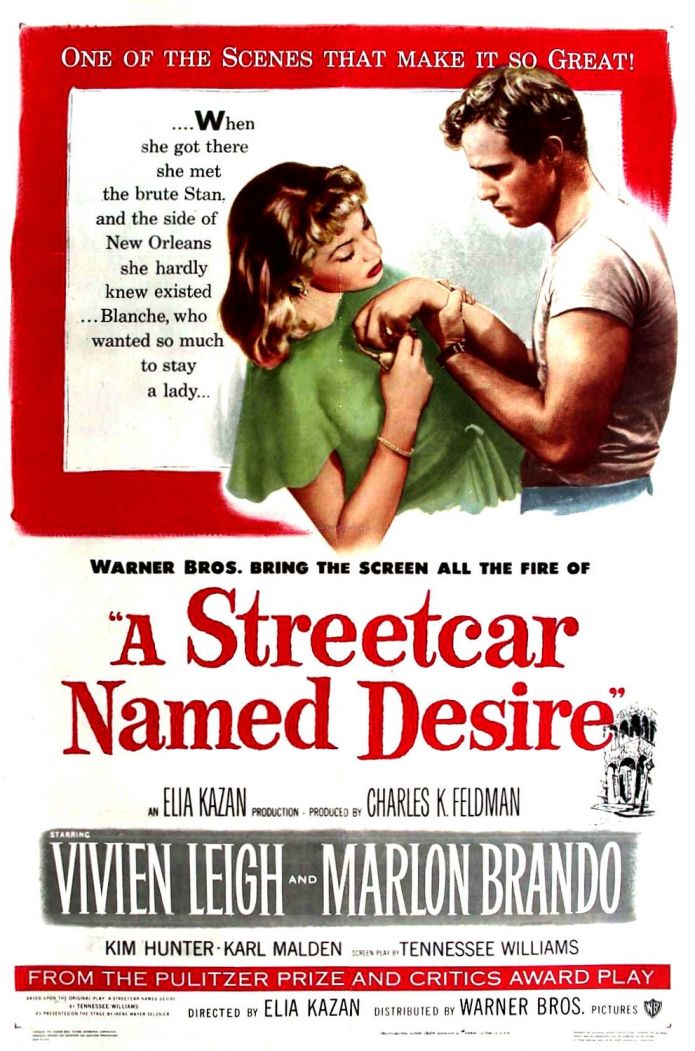
1951 was a year that was missing a film in the DailyView. I found a classic to fill that missing slot giving me at least one movie every year from 1949-2020 in the binge so far. The classic that I found to fill the 1951 year was A Streetcar Named Desire.
The Academy Award winning picture was adapted from Tennessee Williams’s Pulitzer Prize winning play from 1947. The film version had a definite feel of a stage play being put on screen, which helped create the mood that makes the film so special.
The film starred Marlon Brando as Stanley Kowalski, Kim Hunter as his wife Stella and Vivien Leigh as Blanche DuBois, Stella’s Southern belle sister. Blanche arrived at her sister’s home in New Orleans, a rundown apartment where she lived with Stanley. Stanley did not take Blanche well, wondering how she lost her family estate, Belle Reve.
Stanley was crude and brutish, clashing often with the more gentile, ladylike Blanche. Stella was caught between them several times which made things more dangerous, since she was pregnant.
One of Stanley’s poker playing friend, Mitch (Karl Malden) took a shine to Blanche and saw a fellow lonely soul in the Southern belle. However, when Stanley discovered the truth behind Blanche’s past, everything was blown out of the water.
This was an uncomfortable movie to watch since the physicality of Stanley (and even Mitch to a lesser extent) felt justified through much of the movie. The viciousness that he went after Blanche, (and Stella at times too) was treated as typical fashion whereas I absolutely found Stanley to be nothing more than an abuser with dreams of controlling and power. There were scenes where Stanley would fly off the handle over the littlest things and scream at the women in a manner to intimidate them. It was terrible.
It is a great performance by Marlon Brando, one that put him on the map, but the performance was terrifyingly realistic. Watching Stella cringe away from Stanley with every outburst makes me think that he was physical with her on a more regular basis than what we saw.
Karl Malden, Vivien Leigh and Kim Hunter all won Academy Awards for their roles in A Streetcar Named Desire. Brando was nominated but he did not receive the Oscar. Brando was virtually an unknown in this performance, but he went on a run of four consecutive Academy Award nominations with this one.
The black and white helped keep the tone of darkness and anxiety that was ambient throughout. You’re never quite sure what outcome was going to happen, but you could sense that it was not going to end happily.
A Streetcar Named Desire is a classic film with some powerful performances that does not allow the viewer to get comfortable at all. It deals with anger, physical abuse and mental illness all within the story and keeps you feeling confined.
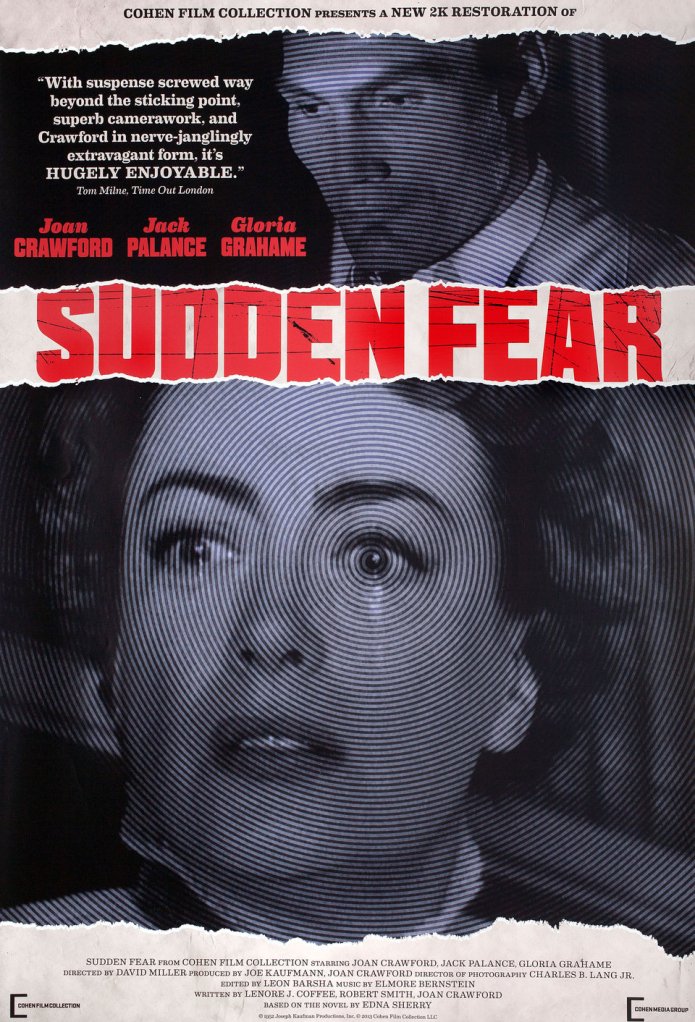
We find ourselves in the year 1952 and there is a noir thriller, filmed in black and white, that stars the iconic Joan Crawford and the one and only Jack Palance. It was called Sudden Fear and it was a film with several twists and turns.
Crawford played playwright Myra Hudson, who was casting her new play on Broadway. She had to reject actor Lester Blaine, played by Palance, as the lead. After this awkward encounter, she met him aboard the train that she was taking back to her home in San Francisco. They become close on the train and end up getting married.
However, Myra discovered that he was only in the marriage to get her money and that he and his co-conspirator/mistress Irene (Gloria Grahame) were planning on killing her and making it look like an accident. Shocked by the betrayal, Myra started her own plan to take care of the situation.
Joan Crawford is great here. She is not anybody’s fool. There are some things that she did that made me yell at the screen, which you find in most films like this. She kept most of it reasonable, but there were a few things that happened that made me immediately question why it happened, besides that the plot needed it to happen.
Jack Palance is always great, especially playing a villain. You never quite trust him from his arrival on the train until his plan is revealed to Myra and the audience.
The ambiance of the flick is very effective and the final act is filled with tension and an uncertainty of what was going to happen. The last 20 minutes or so of Sudden Fear kept my attention 100% and had me on the edge of my seat. It was a very effective thriller and, despite some questionable decisions made by characters, Sudden Fear builds to an excellent conclusion.
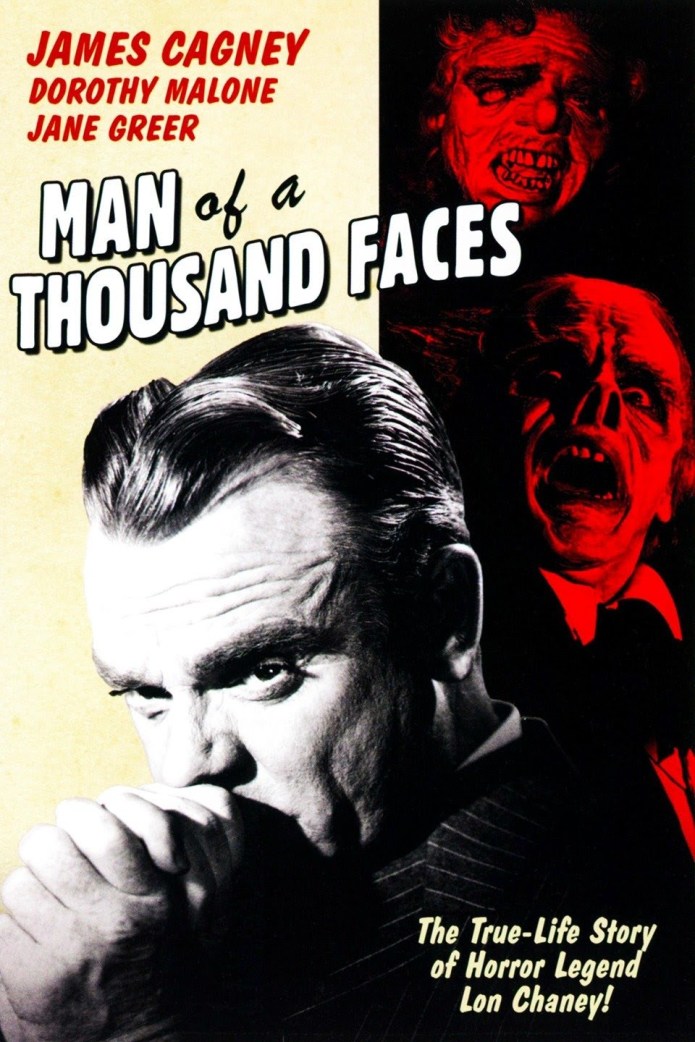
Former Vaudevillian and silent picture star Lon Chaney was known as the Man of 1000 Faces for his ability to create characters with wild made up faces and masks. He became a legend for being a “mystery man” and a horror icon.
In this biopic, Lon Chaney (James Cagney) and his life is examined from his early days as a child in a home where his father and mother were both deaf to his career in motion pictures.
The first part of the film dealt with his first marriage to Cleva (Dorothy Malone), a singer who became pregnant with Lon’s son. However, when Lon took her to meet his family, Cleva responded with anger and repulsion over Lon’s parents’ disability and she claimed that she did not want to have a baby that had this passed along to her.
I found Cleva totally horrible. I hated this character so much because of her ugliness of spirit and her ignorant mind. She was selfish and mean-spirited, even after the baby was born with his hearing. The film tried to rehabilitate the character at the end of the movie, but her cruelness in the first half did not make me think any better of her.
There were some horrible things that happened to Lon during this time frame of the film, including having the custody of his son taken by the state until he could provide a suitable home, which was another thing that I found terrible. This was the emphasis for Lon to leave Vaudeville and head to California to get work in pictures.
James Cagney is great as Lon Chaney. I believed him as the actor from the minute I saw him and he does a bunch of physical acting, including dancing, that makes him stand out and shows what a talented person Lon Chaney was.
Cleva was the character I hated most in movies this year. I had a much softer place in my heart for Norman Osborn {Spider-Man spoilers} after he killed Aunt May {End of Spoilers} than I did for this woman. There had to be some form of mental illness involved in this woman’s life that could have helped suss her out more and help the audience understand why she took the extreme steps she took instead of what we got to see.
I found this picture to be an excellent movie and I learned a lot about the life of Lon Chaney. The film may have been 10-15 minutes too long, but that is a minor gripe.
After watching the 2003 movie Monster starring Charlize Theron this morning, I went flailing down the rabbit hole. I watched a 1992 documentary by Nick Broomfield called Aileen Wuornos: The Selling of a Serial Killer that looked upon the life of the subject from the movie, Aileen Wuornos, popularly known as the first female serial killer.
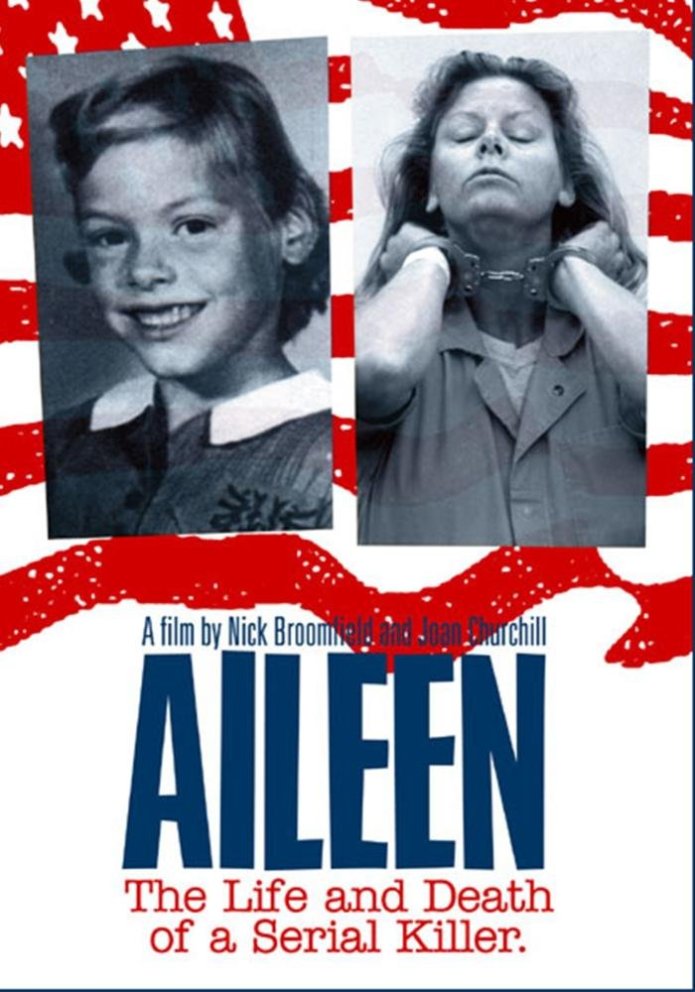
However, as I was looking over the information on the documentary, I discovered that Nick Broomfield made a second doc with Aileen Wuornos as a topic, this time entitled Aileen: Life and Death of a Serial Killer. I figured this would put a bow on the day’s topic and so down the rabbit hole I went.
Whereas The Selling of a Serial Killer was showing how the people in Aileen’s life, her adopted family, her lawyer, were using the tale to make money, there was less of that here. Steve, Aileen’s original lawyer does make a return to the documentary during a hearing to attempt to get a new trial for Aileen on grounds that his representation was ineffective (and Steve was considerably less out there than he was in the first doc) but we also go to see Nick Broomfield take the stand to defend the doc itself.
There was a lot of rehashing the first documentary in the early part of Life and Death of a Serial Killer, but it found its voice about midway through as Nick was granted several interviews with Aileen herself and he came out with some golden moments.
She said that everything she had said about self defense was not true, that everything they had said about her killing in cold blood was true and that she wanted to make sure that she was not lying as she was preparing to meet God after the execution.
Then, the most gripping moment came when she thought that Nick was no longer recording. She whispered to him that she had to say these things and that it was self-defense because she wanted Nick to continue her message about the crooked cops that she believed allowed her to continue to kill people.
At this point, the film began to focus on the fact that Aileen had left reality, that she had gone crazy, but that the execution would still press on. Former Florida Governor Jeb Bush continued to push for the execution (it was implied that he was doing so because of an upcoming election). A state appointed psychologist was sent into see Aileen and, according to Nick, spent 15 minutes with Aileen and determined that she was mentally fit to face her execution.
Watching the lunacy come and go from her face during the times Nick was interviewing her was amazing. She was obviously paranoid about the police and their responsibility in her crimes. Nick had talked to her birthmother and when he mentioned her to Aileen, she transformed into pure hatred. Her eyes were dark and frighteningly full. It was the most uneasy moment of the entire doc.
After spending just a little time with her on the screen, I can not understand how anyone could consider her mentally capable. I suppose in a legal manner, that she knew what she was doing was wrong was what would have been used to determine but watching her change from friendly woman happy to see Nick to a raving firebrand whose eyeballs seemed to be bulging from her skull.
Aileen Wuornos was executed by lethal injection on October 9, 2002. Her final words were read in a statement: “I’m sailing with the Rock, and I’ll be back. Like Independence Day with Jesus, June 6, like the movie, big mothership and all. I’ll be back, I’ll be back.”
After watching Monster with Charlize Theron this morning, I was interested in learning more about Aileen “Lee” Wuornos and the true story that Monster was based upon. I found a documentary from 1992 on YouTube from filmmaker Nick Broomfield.
This documentary spent more time dealing with the time period of Aileen Wuornos was in prison and was awaiting for her time on Death Row, with the murders she committed being used as a background to the story.
Part of the documentary focused on the people who were in Wuornos’s life, a religious fanatic Arlene Pralle, who legally adopted Wuornos and wound up giving the accused serial killer advise that may not have been in her best interest. We also meet Wuornos’s attorney, Steven Glazer, was a bizarre and clearly questionable lawyer for Wuornos. His continual guitar playing and song singing made this guy look vey much like a reaper.
In fact, there sure seemed to be a focus here on a group of people who were more concerned in cashing in on the infamy of Aileen Wuornos than they were in giving her the best representation possible or support in the final days of her life. It seemed very much so that these people were vultures attracted by the corpse that would be America’s first female serial killer, as Wuornos was dubbed.
The interview at the end of the doc with Aileen was compelling and she said some things that made a lot of sense. I am not saying that she came off as innocent, because she did not, but there are some factors, especially with the testimony from her first trial, that could have changed the outcome of the trial.
We heard a lot more from other people about Aileen and they all felt as if they had their own motives for doing what they were doing. Honestly, Aileen came off in her own interview as easily manipulated and maybe even somewhat confused. The fact that she was on record making negative comments in courts including swearing and threats did not help her case at all.
This doc makes a great companion piece to Monster and gives the case even more potential depth.
This was a tough one to watch the day after Christmas.
Monster is the story of Aileen Wuornos, a Daytona Beach prostitute that became a serial killer, who would lure men in and kill them for their money and cars. Patty Jenkins wrote and directed this biopic about Wuornos (Charlize Theron) and her relationship with Selby (Christina Ricci).
I’m not sure the definition of a serial killer fits in this case, at least from what the movie lays out, but the deep, layered performance from Charlize Theron was easily the standout part of this movie.
Theron is practically unrecognizable as Aileen, a battered and abused woman looking for a way to survive in life. After meeting Selby, Aileen attempted to leave the hooking profession and go straight, but her lack of skills and education doomed that dream immediately and Aileen’s brashness and bluntness rubbed people the wrong way.
So when she returned to turning tricks to raise money to support Selby and herself, she found herself in a violent encounter with a man who had a gun. This first incident was self-defense, but she seemed to realize that she could get ahead killing these men.
Monster is a powerfully painful story of a woman who never had a chance. Charlize Theron is completely lost in the role, and she creates a tragic character out of this horrendous person who wound up being executed in 2002. Christina Ricci adds her own excellent work to the quieter role of Selby, whose relationship with Aileen drove the narrative.
The scene where Aileen killed a name named Horton (Scott Wilson, Herschel from the Walking Dead) was a painful and horrible scene. The man Horton was such a kind hearted man who was just trying to help this woman whom he saw as needing his assistance and, because her gun slipped out into sight, she had to kill him. It was a gut wrench of a scene.
Charlize Theron rightfully won the Academy Award for this performance. She transformed into this woman, having very little of Theron’s known beauty. The transformation is mind boggling and the performance was chilling. Theron’s talents should ever be doubted.
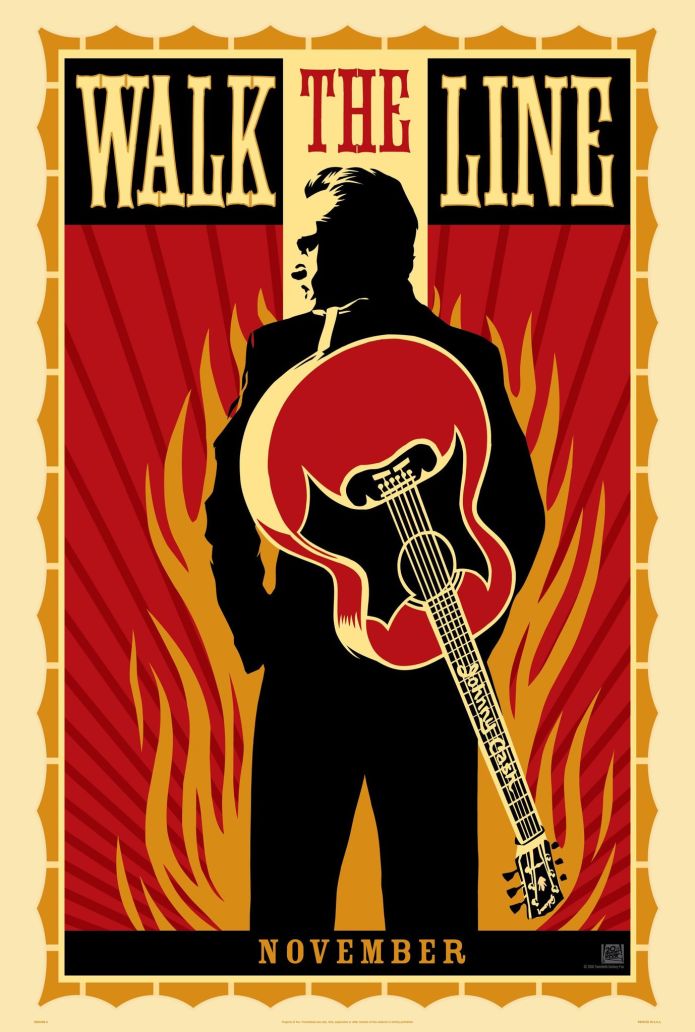
This movie has been on the watch list since the DailyView began back in April but the timing never worked out. When I extended the DailyView to be 365 days, I placed the image of Joaquin Phoenix and Reese Witherspoon on the banner so that I would make sure not to skip it.
Walk the Line is the biopic of country/rock music legend, Johnny Cash with a heavy part of the biopic focusing on the relationship Cash had with his eventual wife June Carter Cash.
Johnny Cash faced a lot of conflict in his life which led him to his marriage with June. Johnny went through drug problems, a violent temper, father (Robert Patrick) issues, the death of his older brother (Lucas Till) when he was a child, divorce, jail. Johnny Cash dealt with his demons with his music and the relationship to June Carter and she stuck by him despite his bad behavior.
Joaquin Phoenix and Reese Witherspoon were brilliant in these roles, both receiving Oscar nominations for them. Witherspoon took home the Academy Award for June Carter. The film absolutely rested on the powerhouse performances by both of these two actors in the challenging life of the Rock-n-Roll Hall of Famer.
The music was excellent as well. Both Phoenix and Wetherspoon did their own singing for Walk the Line, the soundtrack winning a Grammy. Their roles are not an imitation of the iconic duo, but they bring the essence of John and June Carter Cash to the screen in many elegant and some not-so elegant ways.
A shout out should also go to Ginnifer Goodwin for her efforts in the role of Vivian Cash. She brought some serious acting chops into that role (and eventually went into Storybrooke as Snow White in Once Upon a Time). Goodwin was tremendous opposite Phoenix as Johnny’s first wife.
It was about time that this film made the DailyView. It is an exceptional biopic. There have been some controversy that they ignored a lot of Johnny Cash’s life and omitted some of the political aspects of his world, but it is not as if there was not already rich material to use. Walk the Line is excellent.
I meant to watch this first thing this morning for the DailyView, but I woke up to the internet connection being out. Not sure how long the internet would be out, I watched one of the Studio Ghibli films off DVD. However, it was not too long after I finished watching that movie that the internet returned. So I wrote the review for The Tale of the Princess Kaguya and then I went to Netflix for El Camino Christmas.
I had seen the Rotten Tomatoes score for the film and it was at 40%. My expectations were low.
I really enjoyed this movie. I found it funny, filled with some awesome characters with a fantastic cast.
Eric Norris (Luke Grimes) arrived in El Camino, Nevada hoping to find the father who deserted him as a baby. Unfortunately, his trip led him to a drunken former vet Larry Roth (Tim Allen). Meanwhile, crooked local law officer Carl Hooker (Vincent D’Onofrio) and his idiot partner Deputy Billy Calhoun (Dax Shepard) arrest Eric on suspicion of meth dealing, and Carl beats Eric up trying to get a confession.
To avoid the potential police brutality charge that was coming, Billy let Eric loose. Eric was seen by Carl and they engaged in a car chase. This ended up with Eric inside a Liquor store with Carl, shot in the leg by Larry, the owner of the store Vicente (Emilio Rivera), liquor store worker Kate Daniels (Michelle Mylett) and her five-year old son Seth (Ashton Essex Bright), turning into a hostage situation.
Sheriff Bob Fuller (Yearwood Smith) is out front with Billy, keep control of the crazed situation that was only being escalated by the local police intervention.
I really enjoyed this movie as it went from straight comedy to a thriller with some tense moments. It even takes some time to take the potentially one note Carl and give him some character motivation that makes sense and creates an understanding of why Carl is the way he is. Vincent D’Onofrio is great as always and brings a level to Carl that a less talented actor may not have been able to do.
Tim Allen is better here than I have seen him in a long time and he plays a character unlike any other Tim Allen character I have seen before.
This was dark and funny, with engaging characters in a terrible situation. It was not what I expected, but I like this a lot.
I woke up this Christmas morning to the Internet service I subscribe to out completely. That put the DailyView into uncertainty. I had intended to watch the El Camino Christmas on Netflix (which will come later this afternoon), but that is yet to come. Because of the lack of streaming, I pulled out my Studio Ghibli DVD and looked for one of the remaining films I needed to see.
I picked The Tale of the Princess Kaguya.
What a sad and joyous experience that was. It was a long film, one of the longest animated movies that I have seen, and it was a gorgeously animated film, with images of amazing artistic skills and glorious hand-drawn art.
I watched the English dubbed version of the film, so I heard some voices that I recognized such as Mary Steenburgen, Chloë Grace Moretz and James Caan.
The Bamboo Cutter (James Caan) was cutting down bamboo when he found a tiny princess. He took her home and gave it to his wife (Mary Steenburgen). The princess turned into a baby and started to grow quicker than normal. As she ages, she meets local kids and becomes close with them. Eventually, her father finds gold in the bamboo and he decided that he needed to take her to the capitol so she could become a proper princess in the upper class of Japanese society. Being dubbed Princess Kaguya in a naming ceremony, Kaguya started to rebel against the expectations of being a princess.
The story is an adaptation of one of the oldest Japanese folklore tales. The story is beautiful and the characterization is wonderful. It shows the way that women are treated in Japanese society, as well as in many other areas of the world as well.
It was too long. However, it is such a beautiful piece of art and a lovely and very sad film. It is a commitment to watch, but it is worth the time.
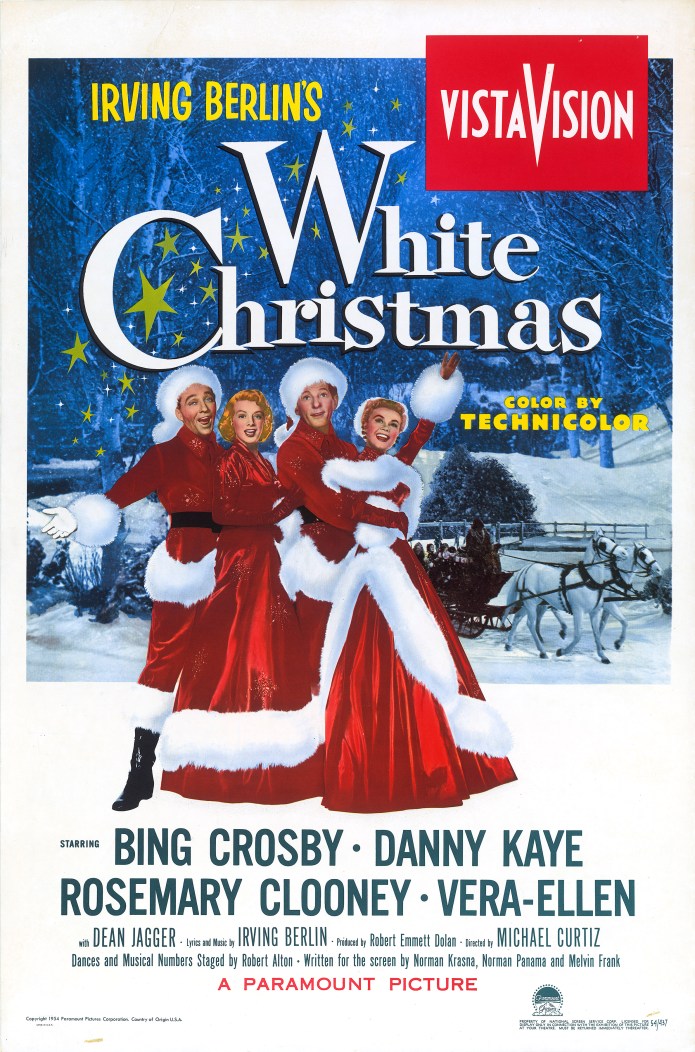
I was not expecting to see this movie start off with a scene from World War II. White Christmas is a classic Christmas film that has only a tangential connection to the holiday, but features Bing Crosby and Danny Kaye in all their glory.
After saving his life during the war, Phil Davis (Danny Kaye) convinced musical star Bob Wallace (Bing Crosby) that they would work better as a theatrical pair when the war was over. With great success, they stop off to see a new group, the Haynes Sisters. Judy (Vera-Ellen) and Betty (Rosemary Clooney). They hit it off and they wind up at the same place in Vermont. an inn owned by their beloved former General, Thomas Waverly (Dean Jagger). The unexpected lack of snow has caused financial struggles for the General. Wallace and David decided that they would help the general out by putting on their show.
There was a lot of great music. Again though, the only Christmas music is White Christmas which is done at the beginning and at the very end.
The dancing is brilliantly choreographed, especially the first dance scene with Danny Kaye and Vera-Ellen. That dance routine to “The Best Things Happen While You’re Dancing” is so spectacular.
The film is totally sweet and I can see where some people may think it was too much. There were typical misunderstandings involved in the plot that cause problems that could be overcome with just some communication. Thanks a lot, Mary Wickes (who played the nosy Emma).
There are some great parts tot eh film. It might be a bit too long, but the music and dance were fantastic and Bing Crosby, and especially, Danny Kaye were wonderful.
Christmas Eve brings a little treat I found on Netflix. Bill Murray in a Christmas special featuring a group of celebrities, music and some funny comedy.
Bill Murray starts off in the middle of a blizzard in a hotel where he is scheduled for a live Christmas special, but the spirit was hardly jolly within him. Paul Schaffer was with him, happily playing the piano.
A series of celebrities showed up to sing, even if they could not truly sing. We have Maya Rudolph, Chris Rock, George Clooney, Miley Cyrus, Amy Poehler, Julie White, Jason Schwartzman, Rashida Jones, David Johansen, and the band Phoenix.
There were several songs that were just off enough that they worked very well. I loved the whole Bill Murray/Chris Rock duet “Do You Hear What I Hear?” Chris Rock’s entire antipathy of the moment was only out shadowed by the electricity going off.
With the live special cancelled, Murray took it to the bar and there was just some joyous performances. The French indie pop band Phoenix performed a wonderful song called “Alone on Christmas Day” with Murray jumping in and out of the frame.
There was a fun section that occurred in Murray’s mind after he passed out from too much drinking. This moment included the arrival of George Clooney and Miley Cyrus. Clooney was a hoot in the song “Santa Claus wants Some Lovin”.
In the end, I enjoyed this film, a homage to the old variety show format. I was also impressed with the voice on Maya Rudolph, who I do not think I have heard sing before. A Very Murray Christmas was witty and fun, a real surprise for the season.
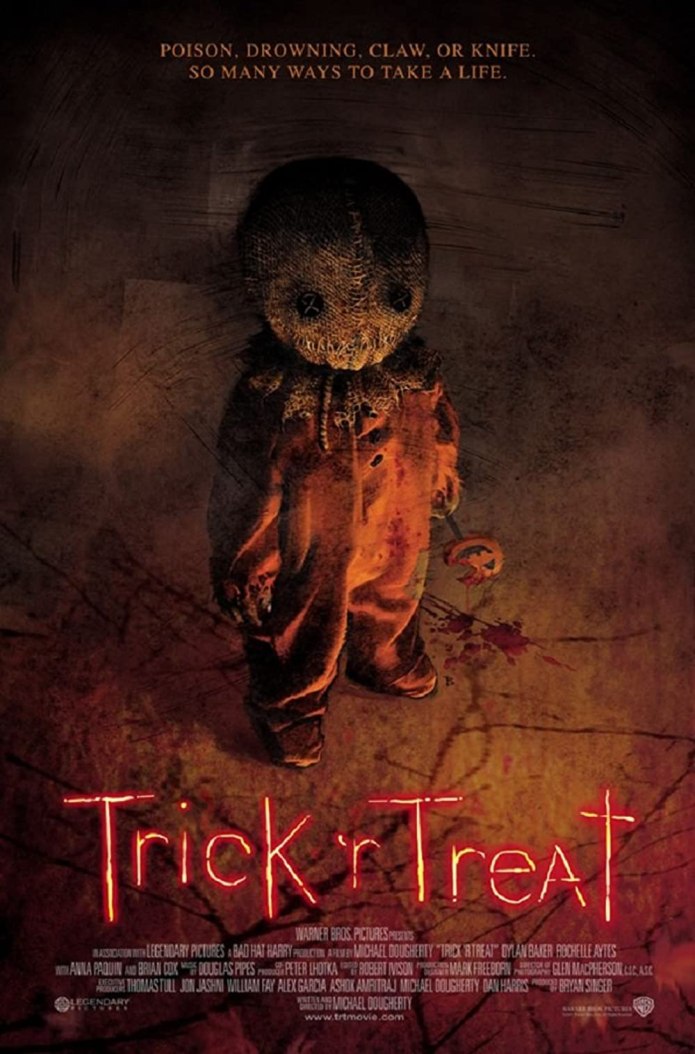
We are just two days away from Christmas, so there is no better time to watch a Halloween horror anthology film than now. Okay, maybe instead I am watching this movie, 2007’s Trick ‘r Treat because it is leaving HBO Max at the end of December and I want to watch it. A little bit of October in December never hurt anyone…except perhaps a whole bunch of characters in this movie.
Trick ‘r Treat had several small stories all taking place in the same town of Warren Valley, Ohio on Halloween night where a certain add trick-or-treater named Sam (Quinn Lord) seemed to be enforcing the riles and customs of All Hallows’ Eve.
There are several stories that were being told in a non-linear narrative, jumping around showing how they may be tied together. These include a school principal Steven Wilkins (Dylan Baker) who, along with his annoying son Charlie (Brett Kelly), appeared to be some form of serial killer (though the film does not go into much detail on this bit of the tale), a group of kids pulling a trick dealing with an old legend of a bus crash, Kreeg (Brian Cox), Wilkins ill tempered neighbor and his hatred of Halloween and mysterious background, as well as Laurie (Anna Paquin) and her sister Danielle (Lauren Lee Smith) who were attending a surprise party.
These stories appeared separate but they did continue to mix across during the narrative. There were some real gross out moments (I hate vomit scenes) and several extremely creepy moments. The irony is thick through Trick ‘r Treat and it keeps you intrigued to see where it was going next. It also makes you wonder why this town is such a mecca for the mysterious.
The framing of the film was much like a comic book, which DC Comics put out a graphic novel of the film (which was initially supposed to be a four issue weekly series but had to be redone when the film was delayed).










 EYG- Embrace Your Geekness