An episode of The Twilight Zone that was unlike any of the others shown. Namely, it is an Academy Award winner.
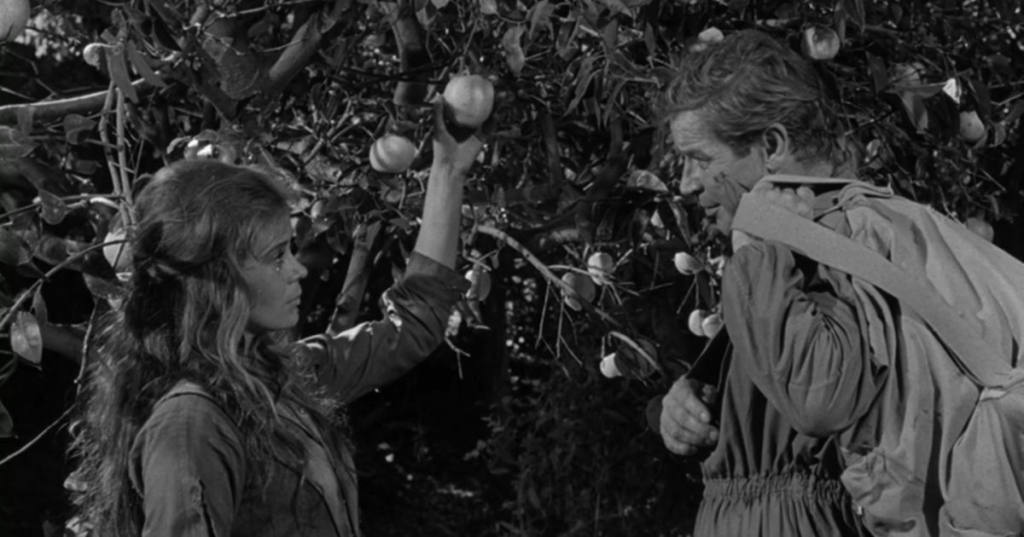
“An Occurrence at Owl Creek Bridge” was a short film that was shot in France and won at the Cannes Film Festival. It also won an Academy Award for Best Short Film. According to Wikipedia, the rights to the French film was purchased by TV producer William Froug to show to the American public. With a few adjustments (such as adding an introduction from Rod Serling and closing narration at the end), the film became the 22nd episode of The Twilight Zone.
It was also very different than other episodes because there was barely any dialogue in the film, depending on background sounds (such as bird noises or military orders) and a song laid over sections of the episode.
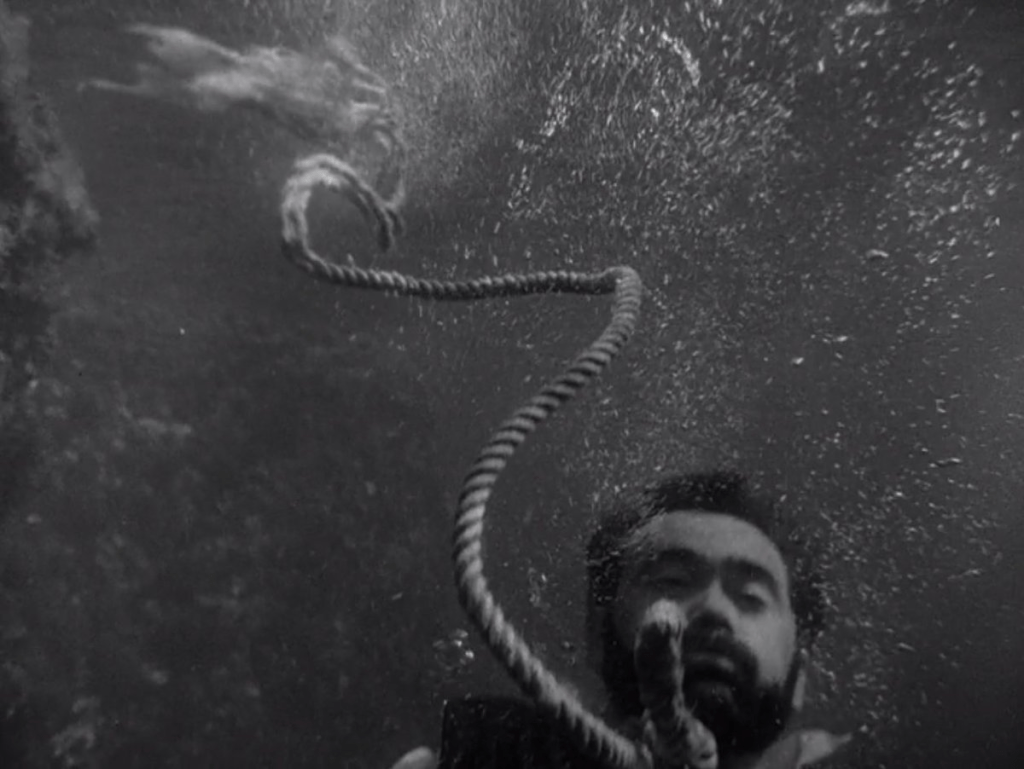
The story focused on a man named Peyton Farquhar, who was being prepared to be hanged by Union soldiers during the Civil War off a bridge over Owl Creek. As he was pushed off the edge of the bridge, his rope broke and he fell into the creek below. As he was fired upon by soldiers, he made his desperate attempt to escape. He successfully escaped the soldiers and wandered back to where his wife lived.
Just before their happy reunion, he snapped his head backwards and went taut and we saw, in reality, that he had never escaped and had been hanged on the bridge. We realized that everything that had happened after his rope broke took place in his head during the time when he had been pushed off the bridge and before the rope when tight.
“An occurrence at Owl Creek Bridge, in two forms: as it was dreamed … and as it was lived and died. This is the stuff of fantasy, the thread of imagination … the ingredients of the Twilight Zone.”
I found this to be an extremely engaging and exceptional episode of the show. I actually had figured out that he was still hanging on the bridge before the reveal, but I thought all the events that had happened were a purgatory of some sort instead of it all being in his head. I thought that twist at the end was really well done.
Roger Jacquet brought an excellent performance to the episode, showing his desperation and determination to get back to his love. The episode leaves with a haunting image of Farquhar hanging from the bridge.
The Twilight Zone is once again dealing with time.
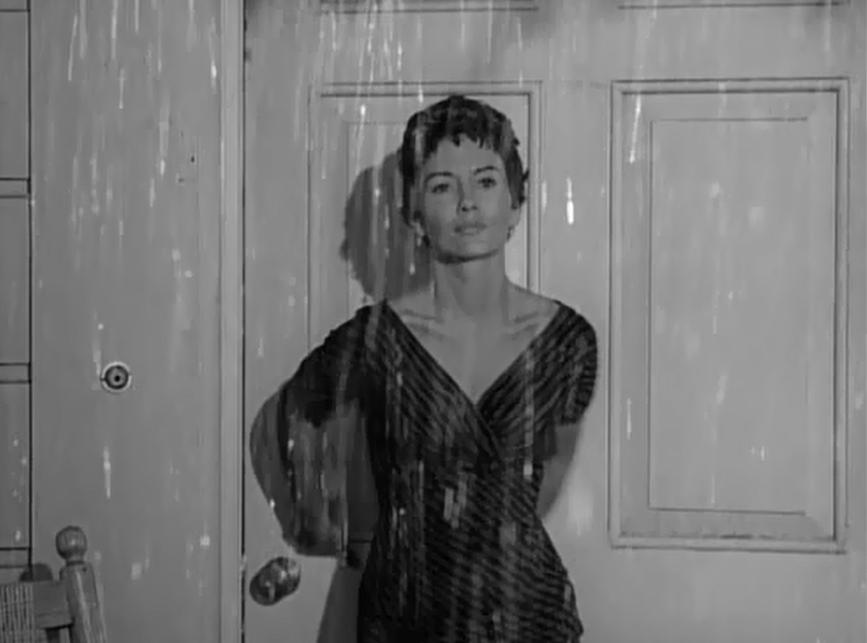
“This is the face of terror. Anne Marie Henderson, 18 years of age, her young existence suddenly marred by a savage and wholly unanticipated pursuit by a strange, nightmarish figure of a woman in black, who has appeared as if from nowhere and now, at driving gallop, chases the terrified girl across the countryside, as if she means to ride her down and kill her, and then suddenly and inexplicably stops to watch in malignant silence as her prey takes flight. Miss Henderson has no idea whatever as to the motive for this pursuit. Worse, not the vaguest notion regarding the identity of her pursuer. Soon enough, she will be given the solution to this twofold mystery, but in a manner far beyond her present capacity to understand, a manner enigmatically bizarre in terms of time and space – which is to say, an answer from… the Twilight Zone”
The start of this episode was pretty strong. Admittedly, it would have been nice to have the mysterious woman look a little more mysterious as you can tell immediately that this is the same actress. Still, it is unclear what was going on in the scene.
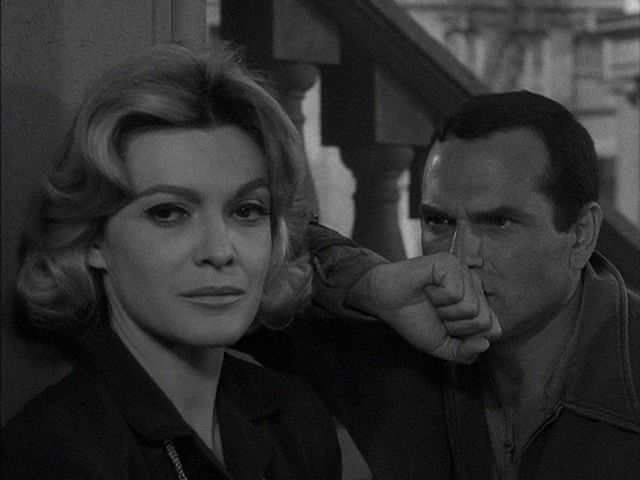
Then, to have this turn into a confrontation between old and new loves…is a totally different feel. When her former fiancé, David, arrived at the door, you get the feeling of what was going to happen. She was going to marry Robert despite her love for her childhood sweetheart and she would ruin her life. We have seen this dozens of times in narratives, the denial of true love causing pain.
However, that is not what happened. We see Anne in the future (or is it the present?), depressed, angry, her father dead, her mother begging for help and married to a drunken David. We learn that Anne did indeed run off with her love David, leaving Robert at their engagement party, and this was led her down the path to unhappiness and angst.
The future Anne realized that the frightening confrontation she had with her younger self was nothing more than a desperate attempt to warn herself of her failure.
I have weaved around the Amazon Prime listing and I am back on regular track for the correct listing of Twilight Zone episodes. However, this morning’s episodes are quite a run of mediocre offerings.
“The Long Morrow”
This is the best of the episodes that will be on this post. A new world version of “Romeo and Juliet” where you have the doomed couple that is fated for failure.
“It may be said with a degree of assurance that not everything that meets the eye is as it appears. Case in point, the scene you’re watching. This is not a hospital, not a morgue, not a mausoleum, not an undertaker’s parlor of the future. What it is is the belly of a spaceship. It is en route to another planetary system, an incredible distance from the Earth. This is the crux of our story – a flight into space. It is also the story of the things that might happen to human beings who take a step beyond, unable to anticipate everything that might await them out there.”
“Commander Douglas Stansfield, astronaut, a man about to embark on one of history’s longest journeys: forty years out into endless space and hopefully back again. This is the beginning, the first step towards man’s longest leap into the unknown. Science has solved the mechanical details and now it’s up to one human being to breathe life into blueprints and computers, to prove once and for all that man can live half a lifetime in the total void of outer space, forty years alone in the unknown. This is Earth. Ahead lies a planetary system. The vast region in between is the Twilight Zone.”
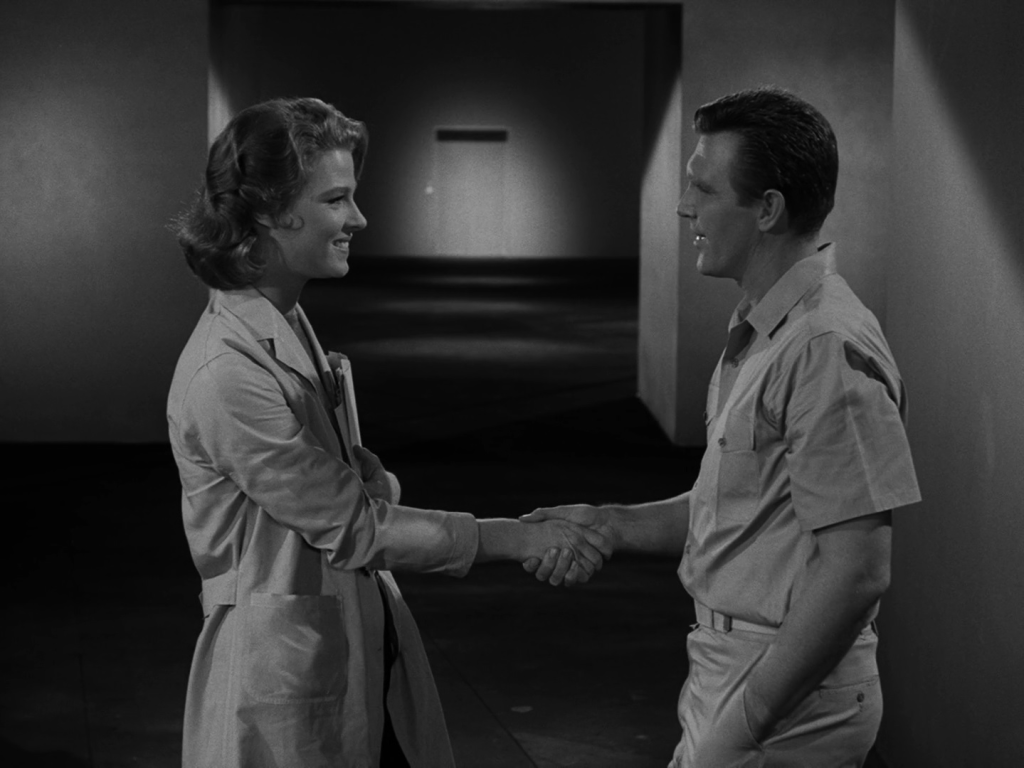
So the plan was to put Doug into suspended animation so when he returned to earth, he would be the same age, basically, that he was when he left, though the earth would be 40 years older. However, before his departure, he met his young colleague, Sandra Horn and they fell in love. They were sad that he was leaving and, when he would return, he would be in his 70s.
The couple made decisions as it was happening that were in direct opposition. Doug chose not to go into suspended animation and age regularly while Sandra chose to go into suspended animation on earth and not age at all until he would return.
Doug did not want to saddle this young beauty with an old man so he left her. Romantic and tragic all the same time.
“The Self-Improvement of Salvadore Ross”
Salvadore Ross is yet another protagonist in The Twilight Zone who are unlikable and just a bad guy. I’ve seen some review that have said that the audience can relate to him with his desire to improve himself. I never got that from him. I saw him as someone who just wanted something that he couldn’t have and would go to any extremes to do it no matter what the cost. I was very pleased with the end of the episode with Salvadore taking a bullet, even though it basically destroyed the life of the man who wound up shooting him.
“Confidential personnel file on Salvadore Ross. Personality: a volatile mixture of fury and frustration. Distinguishing physical characteristic: a badly broken hand, which will require emergency treatment at the nearest hospital. Ambition: shows great determination towards self-improvement. Estimate of potential success: a sure bet for a listing in Who’s Who in the Twilight Zone.”
Salvadore had some kind of supernatural ability to make deals that would do amazing things. He made a deal with an old man in the hospital to switch his cold with Sal’s broken hand. The old man agreed, not knowing that the deal would happen.
Salvadore then started making deals to make money, to make himself old, to regain his youth… all to the detriment of the people in which he was dealing. He was not doing it to improve himself, but in order to try and make his desired woman, Leah Maitland, fall for him.
He was played with quite a temper and I definitely got the vibe from him that he would be an abusive husband. He grabbed Leah by the arm and put his hand up around her chin several times in the episode during their arguments. I found most of the early scenes between Sal and Leah to be quite cringeworthy and uncomfortable.
He bought the compassion off of Leah’s father, which led to Leah’s father shooting and killing him so he would not marry Leah. While that is a happy ending for me, it would certainly lead to prison for her father and would lead to another person out of Leah’s life. Salvadore was so selfish and self-absorbed in this episode that he turned out to be one of the worst characters on the show.
“Black Leather Jackets”
Aliens preparing for an invasion of the earth, who speak to a giant eyeball on a computer screen? Oh, and these aliens are shown wearing black leather jackets, like those troublesome kinds of the time.
“Three strangers arrive in a small town; three men in black leather jackets in an empty, rented house. We’ll call them Steve, and Scott, and Fred, but their names are not important; their mission is, as three men on motorcycles lead us into the Twilight Zone.”
There is a whole bunch of silliness here. The whole black leather jacket/motorcycle thing is a stereotype. The love story that comes between alien Scott and neighbor girl Ellen is ridiculous and makes no sense. There was zero chemistry between the two of them and I did not believe their relationship even once.
Why was the leader shown only as a giant eyeball? We may never know.
There was a recognizable face here though. Duke of Hazzard’s Uncle Jesse/Grizzly Adams’s Mad Jack, Denver Pyle played Ellen’s father, who confronted the aliens early and got mind controlled after they bullied him. Ellen was also a known actress, Shelley Fabares, Christine on Coach.
“From Agnes-with Love”
You can always tell when there is going to be an attempt at a comedic episode of The Twilight Zone. You get the cartoonish background music, trying to use the music to help make episode funnier than it was.
Again, that is unable to help this one.
“James Elwood: master programmer. In charge of Mark 502-741, commonly known as Agnes, the world’s most advanced electronic computer. Machines are made by men for man’s benefit and progress, but when man ceases to control the products of his ingenuity and imagination he not only risks losing the benefit, but he takes a long and unpredictable step into… the Twilight Zone.”
The computer named Agnes wanted to help with James’s love life, giving him tips for women (tips by the way that were remarkably sexist or even a touch misogynistic), especially one woman in particular, Millie.
The computer responded to verbal questions with the large font print on what looked like paper. The entire set up was ridiculous.
Poor little nerdy James really had no chance. He clumsily poured champagne all over Millie on one date. She, for some reason, gave him another date, even after giving her roses, flowers in which she was allergic. James, unintentionally introduced Millie to another co-worker and they hit it off really well.
Turned out that Agnes was sabotaging James, as if he needed the help, because Agnes was jealous. I guess this led to a nervous breakdown for James.. who was just trying to get some work done. James’s boss was Mr. Drysdale from the Beverly Hillbillies.
I am not sure that the show has ever had a successful episode of comedic nature. At least this comedic episode did not try to get by on slapstick and the music changed as the episode moved on.
The penultimate episode of Secret Invasion dropped on Disney + this morning. It did feel that this was an episode that was meant to set up the finale. Not that it is a bad episode, but it did feel that it did not have a ton of events happen.
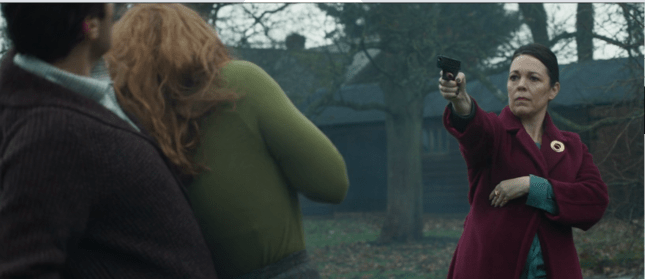
Last week, I complained that there was no Olivia Colman in episode 4 so my favorite thing this week was the return of Sonia Falsworth.
She is simply my favorite part of this series and I would absolutely watch a series with her as the main protagonist. She is so charming and witty and yet as brutal and matter-of-fact as any character we have seen. She is completely believable as an MI6 agent and her moments with Samuel L. Jackson have been wonderful. I am pleased that she made her way into this episode more prominently than she had been up to this point.
I have also found Priscilla to be a great addition to this story. There is so much background that can be mined between Fury and Priscilla that it feels as the little bit that we have gotten here is gold. I want more of that as well.
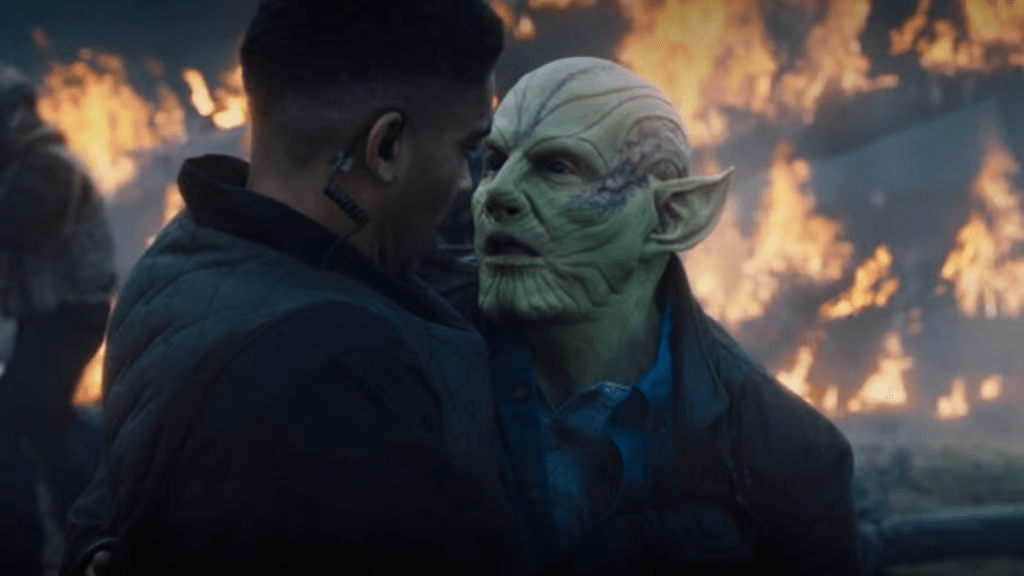
Emilia Clarke feels underwritten and I have not had a ton of connection with this character. I wanted more form her with the death of Talos, but she seems very emotionally distant, even in situations where she should feel something. The scene with G’iah and Priscilla gunning down the Skrull house invaders was bad ass though. Emilia Clarks feels like she should be someone that is dominating every moment she is on screen and she just hasn’t. That is not her fault because it does feel as if she is doing what she can, but there just has not been enough with her to justify my emotional connection.
I liked the scene with Fury and ‘Rhodey’ at the hospital, even though there seemed to be a few holes in the logic. Sam Jackson and Don Cheadle are always welcome together on my screen.
There seems as if there is a lot of things happening and with next week’s finale coming, I hope they are able to wrap everything up effectively.
This is another episode out of official order on Prime. I will continue to do the write-up according to Prime’s listing, but include the actual order/numbers.
“Number 12 Looks Just Like You”
Another mysterious and dark future is shown to us in The Twilight Zone where a dystopian future has every young person at the age of 19 is transformed into a beautiful body of their choosing, surgically. There are only a handful of choices to be made and everyone looks alike.
“Given the chance, what young girl wouldn’t happily exchange a plain face for a lovely one? What girl could refuse the opportunity to be beautiful? For want of a better estimate, let’s call it the year 2000. At any rate, imagine a time in the future where science has developed the means of giving everyone the face and body he dreams of. It may not happen tomorrow, but it happens now, in The Twilight Zone.”
The episode reminded me of Pixar’s The Incredibles. In that movie, Syndrome, the villain, wanted to give weaponry to the world because he had a hatred of the super people and he believed that “… when everyone is super… no one will be.” The same idea is going on in this episode, except instead of ‘supers,’ it is beautiful people. In fact, the quote “when everyone is beautiful, then no one will be” is used a couple of times in the episode.
The episode implies that the surgery is not voluntary, and that there is someone behind the scenes that is pushing for this conformation for all. As Marilyn had chosen not to undergo the transformation, but she is taken to the hospital and basically forced into having the surgery.
The three actors: Richard Long, Pam Austin, and Suzy Parker played all of the different roles to show how everyone in this world looked alike. Richard Long, in particular, took on all the male roles in the hospital, from doctors to orderlies to Marilyn’s father and uncle. Collin Wilcox gives a strong performance as the young girl who did not want to join the collective and become just another beautiful person. The ending of the episode is quite tragic and dark.
This is an episode that does a decent job of world building, but does not feel as if it were complete. I think this is one that could have been a successful episode in season four when there were more time for the story.
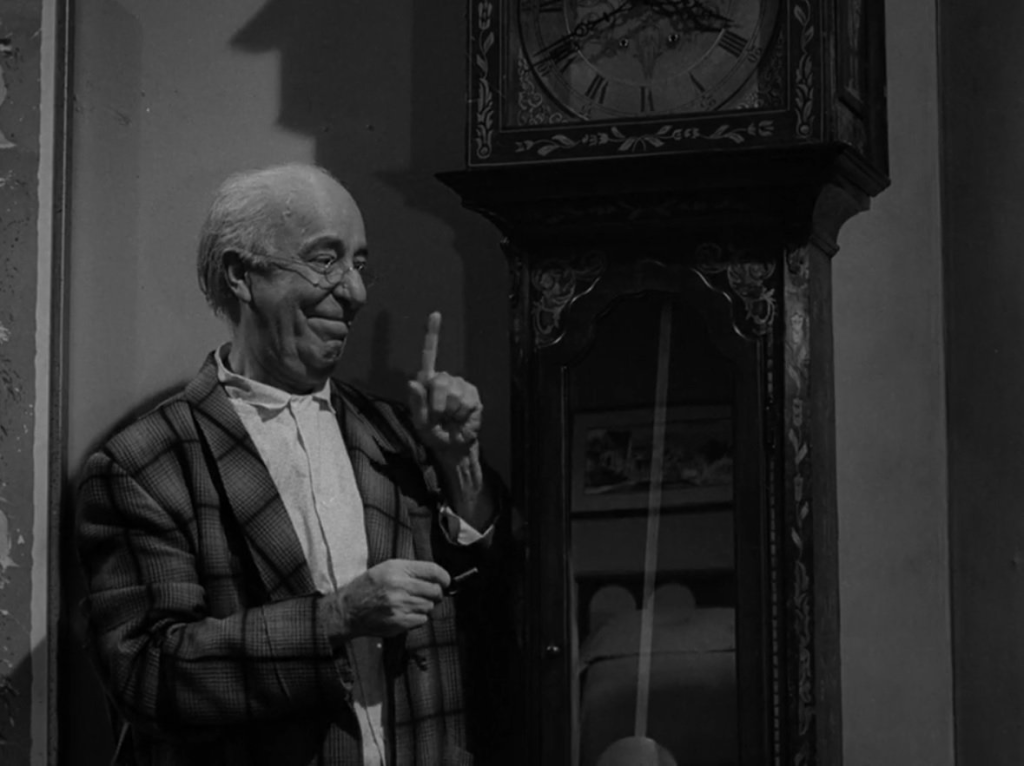
More grandfather clock shenanigans on The Twilight Zone.
“Each man measures his time; some with hope, some with joy, some with fear. But Sam Forstmann measures his allotted time by a grandfather’s clock, a unique mechanism whose pendulum swings between life and death, a very special clock that keeps a special kind of time—in the Twilight Zone.”
Sam was a grandfather living with his granddaughter and he believed that as soon as the grandfather clock stopped running, he would die. So he was obsessively rewinding it, making sure that it never stopped. His granddaughter and her husband were getting concerned that grandpa had lost his mind.
There was a whole psychiatrist thing happen, but grandpa wound up selling the clock to a neighbor so he could keep taking care of it. However, the neighbors left town for the weekend and the clock was going to stop ticking. Grandpa tried to break in but he got caught by the cops.
So Grandpa had accepted his fate, that he was getting ready to die. He spirit left his body and then… he told his spirit that he wasn’t going to die. He just said, nope… not dying tonight.
This was such a silly end to an episode that could have had some real anxiety to it, but never did. Just a waste of an episode. Ed Wynn is a likable actor though and he did a good job with his performance, but the writing was just not up to par.
“Ring-a-Ding Girl”
I have complained a few times during the Daily Zone that The Twilight Zone had plenty of episodes that had a pretty solid set-up, a very good premise, but the ending just did not pay it off properly. Well, this is the first time that I can remember from the series that the episode was dull and not working for me, until the ending, which was absolutely fantastic and pulled the episode off the heap.
“Introduction to Bunny Blake. Occupation: film actress. Residence: Hollywood, California, or anywhere in the world that cameras happen to be grinding. Bunny Blake is a public figure; what she wears, eats, thinks, says is news. But underneath the glamour, the makeup, the publicity, the buildup, the costuming, is a flesh-and-blood person, a beautiful girl about to take a long and bizarre journey into The Twilight Zone.”
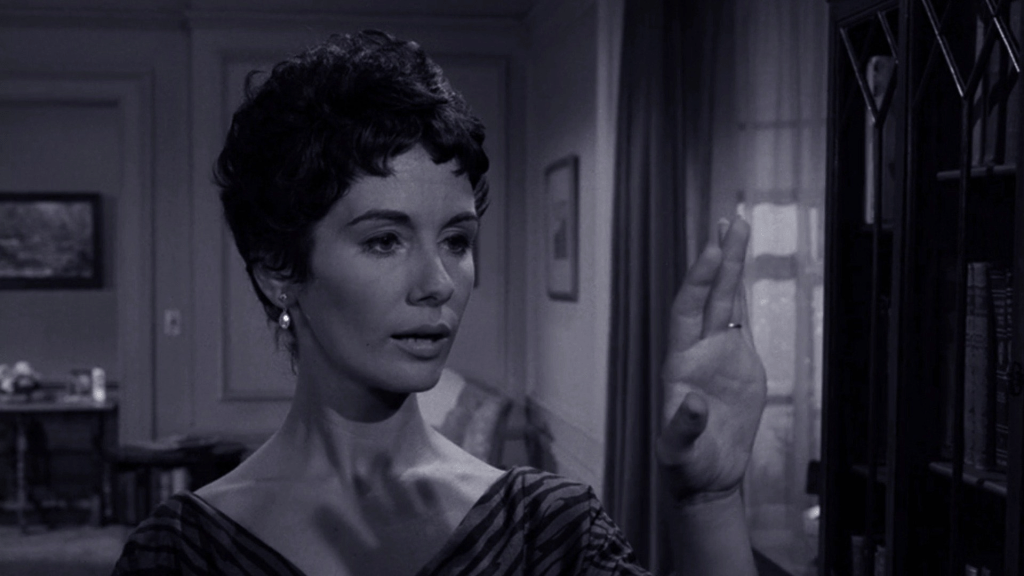
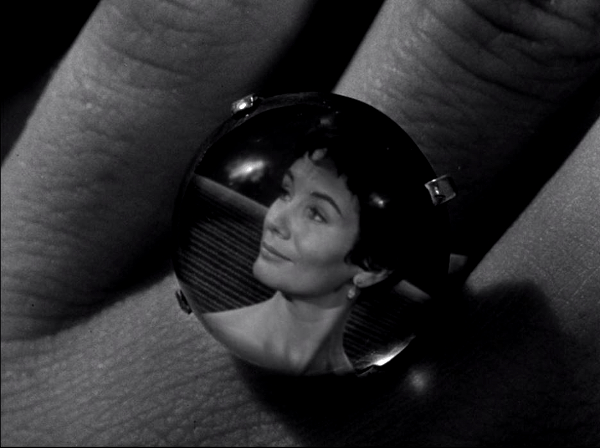
Bunny Blake received this mood ring from her sister that she hadn’t seen in years and, though she was expected to be in Rome to film her next movie, she decided to stop off in her hometown and see her sister. Bunny was seeing images in the ring of people she knew from the town and they kept asking for Bunny’s help.
Bunny was intended to be shown as a stuck-up, vain actress that would look down on the common world. However, Maggie McNamara, the actress playing Bunny, was so charming and relatable, I never once held any of that against her. You could feel that there was something going on with her, but I had no idea what it was. And that is what would eventually make this episode better than expected.
Bunny was definitely trying to get the town to not go to the park for the annual founder’s day picnic. None of it made sense… until it did.
We find out that Bunny was actually on a plane that would crash into the park, killing all the people who attended. But since Bunny had worked to get the people elsewhere, she saved most of the townspeople. We then learn that Bunny was truly on the plane and had died in the crash, and that the Bunny who was here visiting her sister and fixing it so the town would not be at the park was just a spirit.
“We are all travelers. The trip starts in a place called birth, and ends in that lonely town called death. And that’s the end of the journey, unless you happen to exist for a few hours, like Bunny Blake, in the misty regions of the Twilight Zone.”
As I was watching this episode, I was thinking that it was going to be a very low 3 or perhaps a high 2 for the rating, but then the ending happened and I found myself elevating the episode all the way up to …
That shows how a successful twist at the end of the show can improve what they had seen. It made everything make more sense and put a real emotional touch on the episode.
“You Drive”
I hated Oliver Pope immediately.
There have been a bunch of characters that have appeared on The Twilight Zone over the previous 133 episodes that I disliked. There were even a few that I hated, but Oliver Pope is right near the top of that list.
“Portrait of a nervous man: Oliver Pope by name, office manager by profession. A man beset by life’s problems: his job, his salary, the competition to get ahead. Obviously, Mr. Pope’s mind is not on his driving.”
When the narration finished, Oliver hit a kid on a bicycle with his car and then drove off. Rod Serling continued his narration:
“Oliver Pope, businessman-turned-killer, on a rain-soaked street in the early evening of just another day during just another drive home from the office. The victim, a kid on a bicycle, lying injured, near death. But Mr. Pope hasn’t time for the victim, his only concern is for himself. Oliver Pope, hit-and-run driver, just arrived at a crossroad in his life, and he’s chosen the wrong turn. The hit occurred in the world he knows, but the run will lead him straight into—the Twilight Zone.”
Oliver went home, filled with guilt, but not filled enough to do anything about it. He was more concerned with his job and a guy who he believed was trying to get his job. And when that guy got arrested as a suspect in the hit-and-run, Oliver celebrated the fact that he did not have to worry about his job any more.
The episode started with some good creepiness as the car in his garage was making noises. Unfortunately, the rest of the episode got really silly, as the car would honk its horn, drive itself back from the shop, and chase Oliver down the road.
There was a moment when it looked like the car was going to run over Oliver’s head, but it stopped short of that. Instead, it drove Oliver to the police station where he, apparently, confessed to the hit-and-run that had killed the boy.
I don’t know if this episode inspired Stephen King to write Christine, but it did not inspire me to do anything but want a more satisfying punishment for Oliver.
June 25, 1876 is a dark day in the history of the US Military. June 25, 1964 was a dark day in the history of The Twilight Zone.
The episode took the story of Custer’s Last Stand and had three soldiers from the show and had them tracing the path of the past, only to get stuck in it.
“June twenty-fifth 1964—or, if you prefer, June twenty-fifth 1876. The cast of characters in order of their appearance: a patrol of General Custer’s cavalry and a patrol of National Guardsmen on a maneuver. Past and present are about to collide head-on, as they are wont to do in a very special bivouac area known as….the Twilight Zone.”
It was weird because we started with three military officers from the Old West and I thought we were getting another of the Western themed episodes of The Twilight Zone. A few moments later, there was a tank and that threw a monkey wrench into the plans.
This episode gave me more specifics about the lead up to the slaughter of Custer and his men, which was fairly interesting, but the episode did not engage me in much else. It was an intriguing premise, but the overall execution of the episode felt pretty lacking.
“A Short Drink from a Certain Fountain”
A new version of Dr. Jekyll and Mr. Hyde, the idea how scientists will test their formulas on themselves… although this is a scientist testing his formula on his brother.
“Picture of an aging man who leads his life, as Thoreau said, ‘in quiet desperation.’ Because Harmon Gordon is enslaved by a love affair with a wife forty years his junior. Because of this, he runs when he should walk. He surrenders when simple pride dictates a stand. He pines away for the lost morning of his life when he should be enjoying the evening. In short, Mr. Harmon Gordon seeks a fountain of youth, and who’s to say he won’t find it? This happens to be the Twilight Zone.”
So, Harmon basically talks his brother into testing his formula on him because he wanted to be young again so he could keep up with the love of his life, his young wife Flora. Flora, btw, is one of those horrible characters from the Twilight Zone that you just hate.
Of course, it is also a Fountain of Youth trope and it turns out much like you would expect.
The relationship between Harmon and Flora was inconsistent and unlikable. There was no reason I believed that Harmon was in love with this rotten woman and I believe even less that she wouldn’t just walk out the door and return with a lawyer when the doctor threatened to have all of his brother’s money and the gifts that he gave her away from her if she did not take care of her newly ‘childish’ husband.
This one was not one of the better episodes of the show. Not much to benefit for the story.
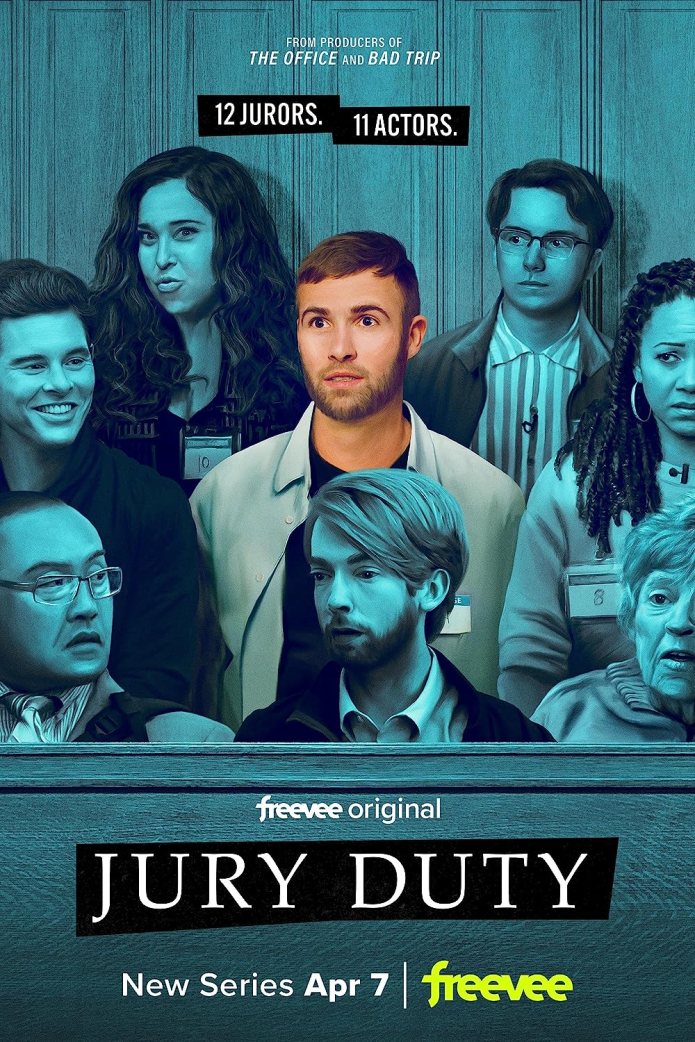
Jury Duty is an 8-episode mockumentary series on Amazon Prime that I had no idea about until just recently.
On the YouTube program For Your Consideration, one of the hosts, Jeff Sneider, mentioned Jury Duty as they were discussing potential Emmy nominations, Sneider had said very few had watched the show but everyone that did were raving over it.
Then, there were literally four Emmy nominations for the show including Outstanding Comedy Series, Supporting Actor (James Marsden), Casting and Writing.
Finally, I saw a Thread from Kristian Harloff talking about how he had been recommended the series by Roxy Striar and that he found it incredibly funny. That made me even more intrigued and I became interested in seeing exactly what this show was about.
It was hilarious!
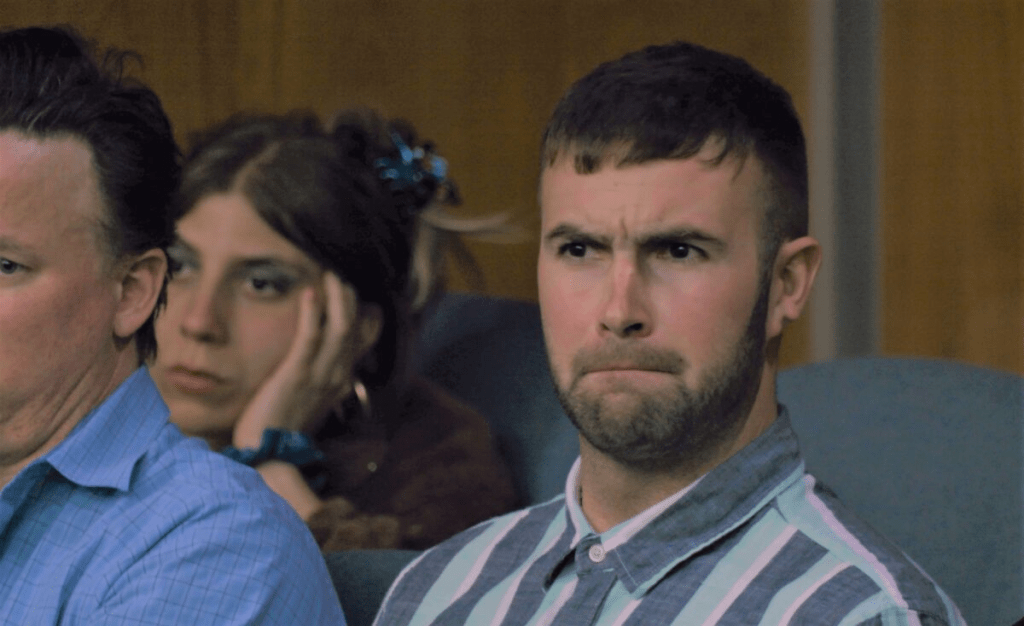
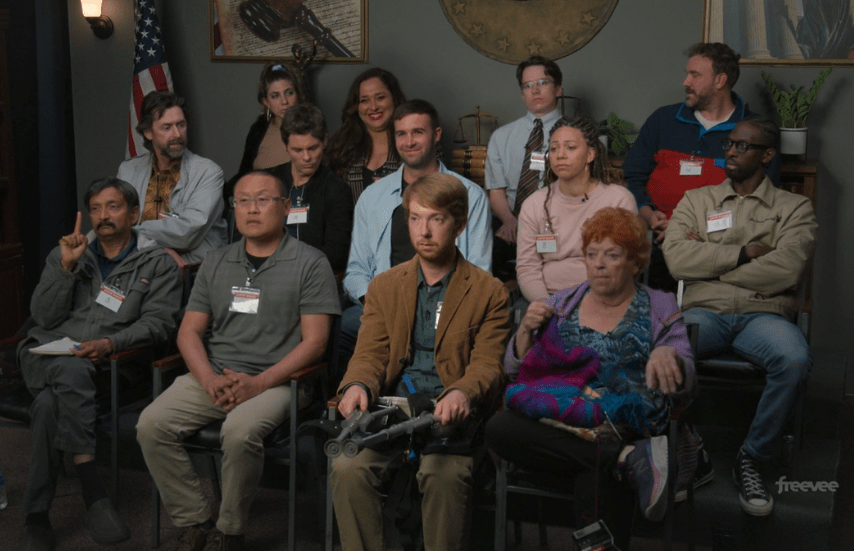
It was filmed in documentary style. The show was going to look at the process of the American Justice System through the eyes of a jury. The only thing was that everyone involved was an actor… except for one person.
One juror was a real person, who thought he was involved in a real documentary, but was actually being filmed for this TV show.
His name was Ronald Gladden and, unbeknownst to him, he had just become the star of this TV program. James Marsden played a fictionalized version of himself and acted like he was just an obnoxious Hollywood star. The rest of the jury pool was filled out with actors who had bizarre characters that you would think would tip Ronald off that something weird was going on.
And it did. He felt like real life was just out there.
He said that he felt like he was in a reality show a couple of times, which was really funny considering he sort of was. He took every bizarre circumstance so well and with such patience that you had to love this person.
The cast and crew had everything planned out and scripted, but there was an air of improvisation too since you were never sure what Ronald would do or how he may react to the oddness around him. If he would have done one thing, it would have affected what they had planned. It was also impressive that the cast did not crack up during the filming and that they did such an outstanding job of staying in character.
About into episode five or six, I was really hoping to see the reaction of Ronald when it was revealed that this whole trial and sequestering of the jury was scripted. Thankfully, the final episode of the season was a reveal episode, showing Ronald the truth, showed him how things were done and who these people that he had gotten to know over the previous three weeks, actually were.
The “casting” of Ronald was a huge success for this show as if he was not such an awesome and sweet guy, this show would have broken him. Instead, he stepped up in a situation that he thought was real, but was insane and handled everything beautifully.
Jury Duty absolutely deserved the Emmy nominations that it received and I am happy that I was able to watch the series. Jury Duty featured eight episodes that were about a half hour long making this an easy binge watch.
Once again, Amazon Prime’s listing of season five is not in the accepted order for The Twilight Zone. On my source pages, “The Night Call” was S5 x E19, but Amazon Prime had it following the last episode, “Uncle Simon,” which is S5 x E8. Since that is the order I have on Amazon, I will be watching it in that order, but labeling it on the posts as the episode number the sources have it at.
With some investigation, I found out this fact on Wikipedia, “‘Probe 7, Over and Out’ was intended to air a week after the premiere of ‘Night Call,’ which was scheduled for Friday, November 22, 1963— the previous episode, ‘Uncle Simon,’ having aired a week earlier on November 15. Hours before ‘Night Call’ was to air though, President John F. Kennedy was assassinated in Dallas, Texas. Thus it was rescheduled, as were all of the other network shows. As a result, ‘Probe 7, Over and Out’ immediately follows ‘Uncle Simon’ in original broadcast order. ‘Night Call’ was eventually broadcast on February 7, 1964.”
“Probe 7, Over and Out”
I was missing the fig leaf.
This whole episode felt familiar, and it is not because it became an origin story for Adam and Eve. It was because there were plenty of pieces from the episode that we had already seen on previous episodes of the series.
“One Colonel Cook, a traveler in space. He’s landed on a remote planet several million miles from his point of departure. He can make an inventory of his plight by just one 360-degree movement of head and eyes. Colonel Cook has been set adrift in an ocean of space in a metal lifeboat that has been scorched and destroyed and will never fly again. He survived the crash but his ordeal is yet to begin. Now he must give battle to loneliness. Now Colonel Cook must meet the unknown. It’s a small planet set deep in space, but for Colonel Cook, it’s the Twilight Zone.”
However, it turned out to be earth, early in its existence. We saw that already a couple of times. Colonel Cook revealed his first name to be Adam, and the woman he meets, in her own weird language, reveals herself to be named Norda… Eve Norda. They went off together at the end of the episode toward a more area with more green, flora, fruit trees… almost as if it were a garden.
Sadly, Cook’s original planet was being destroyed by a nuclear war as he is told by a transmission from a General on his planet. The Twilight Zone certainly used its stories to speak out against the dangers of nuclear weapons.
I didn’t hate the Adam and Eve twist reveal, but it sure came out of nowhere and most of this episode felt like a retread of past episodes such as “Two,” “The Lonely,” and “People Are Alike All Over,” and “I Shot an Arrow into the Air.”
“Night Call”
This one was really creepy. I loved it.
“Miss Elva Keene lives alone on the outskirts of London Flats, a tiny rural community in Maine. Up until now, the pattern of Miss Keene’s existence has been that of lying in her bed or sitting in her wheelchair, reading books, listening to a radio, eating, napping, taking medication—and waiting for something different to happen. Miss Keene doesn’t know it yet, but her period of waiting has just ended, for something different is about to happen to her, has in fact already begun to happen, via two most unaccountable telephone calls in the middle of a stormy night, telephone calls routed directly through—the Twilight Zone.”
A phone call in the middle of the night. At first, no sound. Eventually, a voice that is repeating the word, ‘Hello’ over and again.
The scene where Miss Keene received the call with the repeating ‘Hello’ on it was truly as frightening as this series has been. There was a real creepy factor to it.
Gladys Cooper played Miss Keene and does an amazing job conveying the fear and the confusion of the lonely old lady, confined to a wheelchair and spending each day just going through the motions. The fact that the phone company and her own housekeeper were little help in calming her down was even worse (though a horror trope for certain).
I also loved the twist of how the call was being made from a local cemetery and how the phone company just said that there was a phone wire down and Miss Keene could not be receiving any calls, even though we all knew that she was.
Taking a trip to the cemetery and discovering that the downed phone line was across the grave of her former fiancé, Brian Douglas, and that Miss Keene herself was responsible for his death, in the same accident where she was paralyzed. I loved this end.
I kept thinking to myself as the episode went on that this one was really nailing it, but it needed something at the end to bring it all home. There have been Twilight Zone episodes that have been great with the premise and the set up, but failed to deliver on the finale. I am happy to say that this one was not the case.
In fact, it may have been even more sad because Miss Keene had told the voice to leave her alone and when she found out who it was, she realized that he always did what she had said. This meant that she would no longer be able to talk to him and she would continue to be as lonely as she has been. A very ironic end to a very creepy and satisfying episode.
We are back to the futuristic apocalyptic world of The Twilight Zone. Oddly enough, they once again call this 1974, ten years after the official release of the episode. Not sure why they believe that 1974 is the year for all of these events, but it is fine for me.
“What you’re looking at is a legacy that man left to himself. A decade previous he pushed his buttons and a nightmarish moment later woke up to find that he had set the clock back a thousand years. His engines, his medicines, his science were buried in a mass tomb, covered over by the biggest gravedigger of them all—a bomb. And this is the earth 10 years later, a fragment of what was once a whole, a remnant of what was once a race. The year is 1974 and this is The Twilight Zone.”
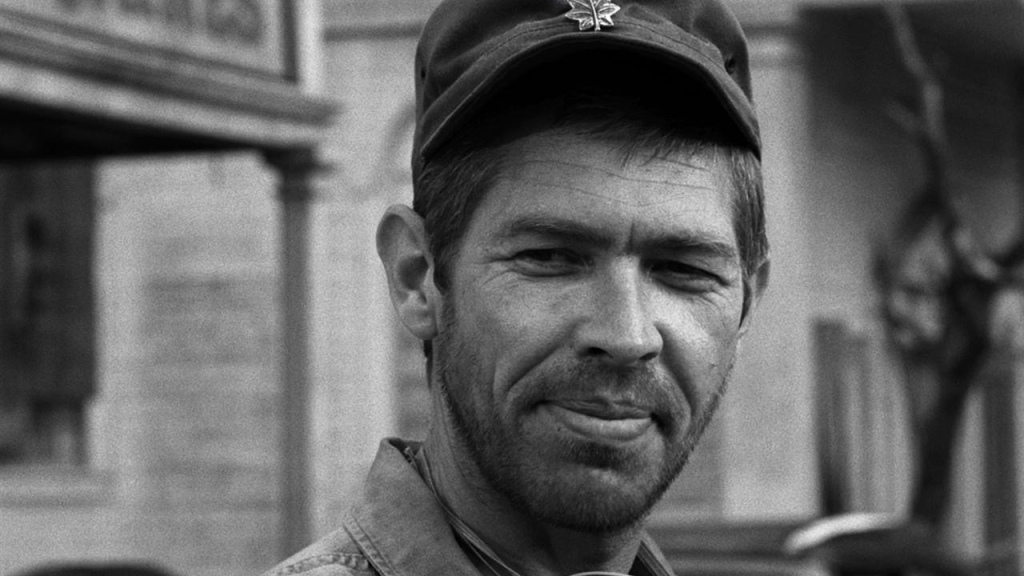
A small group of military men, led by James Coburn’s Major French arrived in a small town where the population followed the instructions of an unseen old man who lived in a cave and only communicated with a man named Goldsmith, played by John Anderson.
This is very much of a parable for the belief in religion and faith in something that you could not see. The Old Man in the Cave supposedly gave the settlers information that has helped them keep alive since the nuclear war back in 1964. Goldsmith was determined that they would follow every proclamation from the Old Man. Major French arrived as the skeptic and began throwing everything back in Goldsmith’s face.
When it was revealed that the Old Man was nothing more than a computer, the faith of all of the settlers was broken and they were happy to have followed Major French’s ‘do-whatever-you-want’ attitude. Of course, it led to them all dying, except for Goldsmith, whose faith was unaltered.
I was not a big fan of the end of this episode. It felt pretty heavy-handed and it could have done without the monologue at the end.
“Uncle Simon”
Hey, is that Robby the Robot?
Danger, Uncle Simon, Danger!
This one is a mean-spirited episode with a fairly lack of a solid story.
“Dramatis personae: Mr. Simon Polk, a gentleman who has lived out his life in a gleeful rage; and the young lady who’s just beat the hasty retreat is Mr. Polk’s niece, Barbara. She has lived her life as if during each ensuing hour she had a dentist appointment. There is yet a third member of the company soon to be seen. He now resides in the laboratory and he is the kind of character to be found only in the Twilight Zone.”
Poor Barbara. She is tormented for 25 years by this rotten old man, and then gets taunted and tormented by Robby the Robot for the foreseeable future, demanding hot chocolate.
I was behind Barbara so much that her pushing the robot down the stairs, or letting her Uncle Simon lay at the foot of the stairs with a broken back until he died seemed reasonable behavior to me.
I’m not sure if we were supposed to feel for Uncle Simon, because I did not. I am not sure if we were supposed to think Barbara was a cold-hearted, money-grubbing woman, because I felt that there was a reasonable reason for that behavior. I’m not sure why poor Barbara was made to suffer as much as she did in this episode.
This one was not one of my favorite episodes. I did not understand the meaning behind the episode or the theme that The Twilight Zone almost always has.
Another episode of The Twilight Zone that features time and ways to manipulate it is the fourth episode of season five.
“Submitted for your approval or at least your analysis: one Patrick Thomas McNulty, who, at age forty-one, is the biggest bore on Earth. He holds a ten-year record for the most meaningless words spewed out during a coffee break. And it’s very likely that, as of this moment, he would have gone through life in precisely this manner, a dull, argumentative bigmouth who sets back the art of conversation a thousand years. I say he very likely would have except for something that will soon happen to him, something that will considerably alter his existence—and ours. Now you think about that now, because this is The Twilight Zone.”
This is another protagonist that is not easy to root for because he is completely irritating and annoying. There have been several of those over the first four seasons + and it always hurts the episode when the main character is not very likable. Even when they are learning a lesson, there has to be some component that the audience wants to see him receive a redemption. McNulty does not seem that type.
I do like the twist at the end that causes McNulty to have everyone on earth frozen in time, leaving him alone and isolated even though everyone is right there. Though the ending works, everything that led up to the twist did not work nearly as well.
“The Last Night of a Jockey”
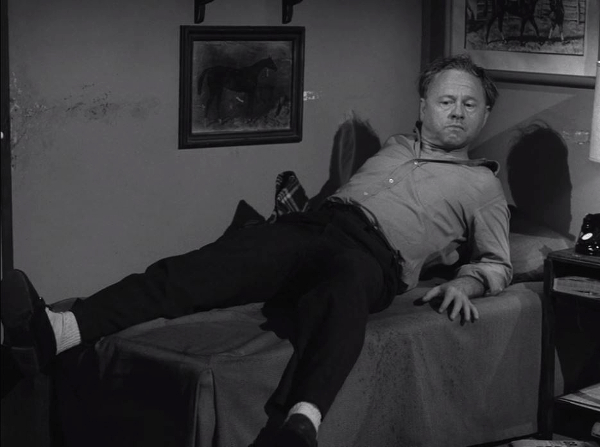
This episode of The Twilight Zone was a one-man-show with the one and only Mickey Rooney. Rooney’s performance was one of the highlights of the show, but there is not too much else afterwards.
“The name is Grady, five feet short in stockings and boots, a slightly distorted offshoot of a good breed of humans who race horses. He happens to be one of the rotten apples, bruised and yellowed by dealing in dirt, a short man with a short memory who’s forgotten that he’s worked for the sport of kings and helped turn it into a cesspool, used and misused by the two-legged animals who’ve hung around sporting events since the days of the Coliseum. So this is Grady, on his last night as a jockey. Behind him are Hialeah, Hollywood Park and Saratoga. Rounding the far turn and coming up fast on the rail—is the Twilight Zone.”
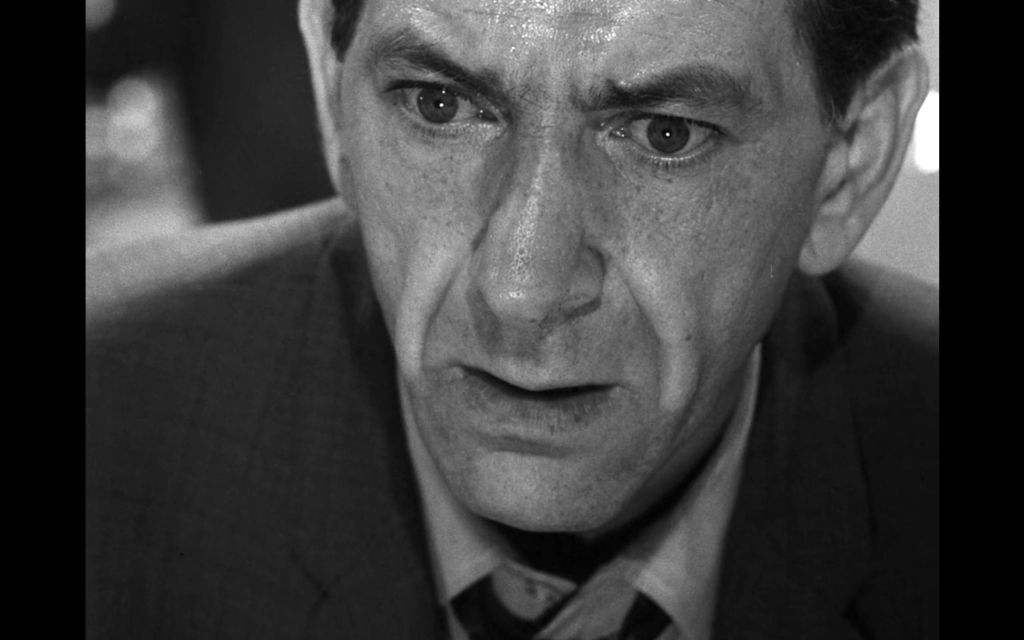
Mickey Rooney is the only character that we meet in this episode and he carries everything through his dialogue and the physical imagery when the sets keep getting smaller to show that Rooney had become bigger… something that the voice in his head apparently has the ability to make happen.
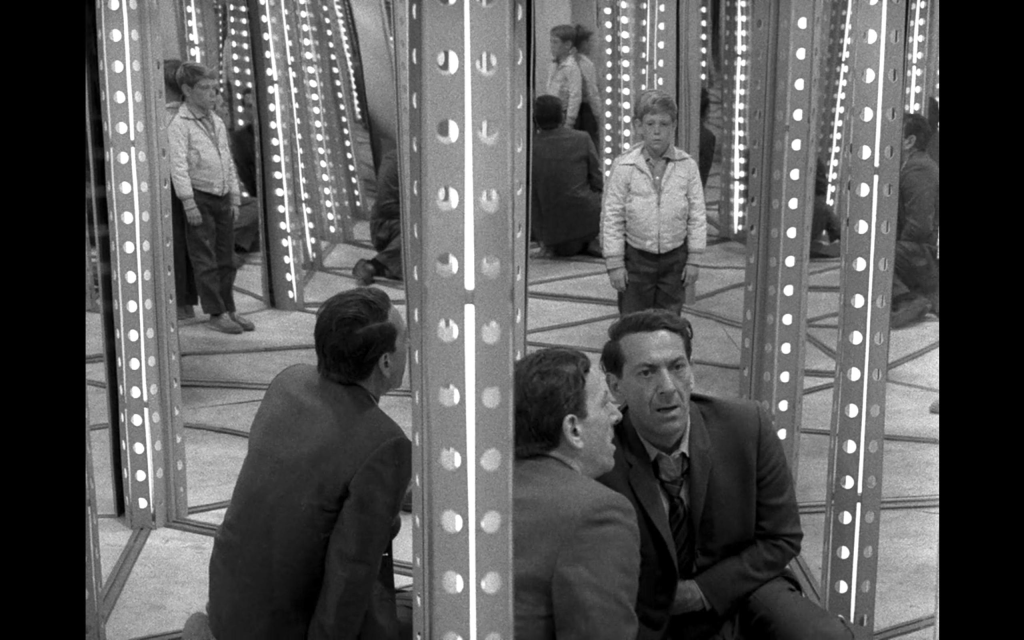
We have seen reflections in mirrors before during this series, including in “The Mirror” and in “Nervous Man in a four Dollar Room.” Grady’s alter ego spewed negatives and insults back at him, making the jockey scream in anger and frustration. Then there is an ironic ending that messes up Grady’s life all the worse.
This one was not a favorite, though Mickey Rooney was a strong actor for the role.
“Living Doll”
Now this is more like it.
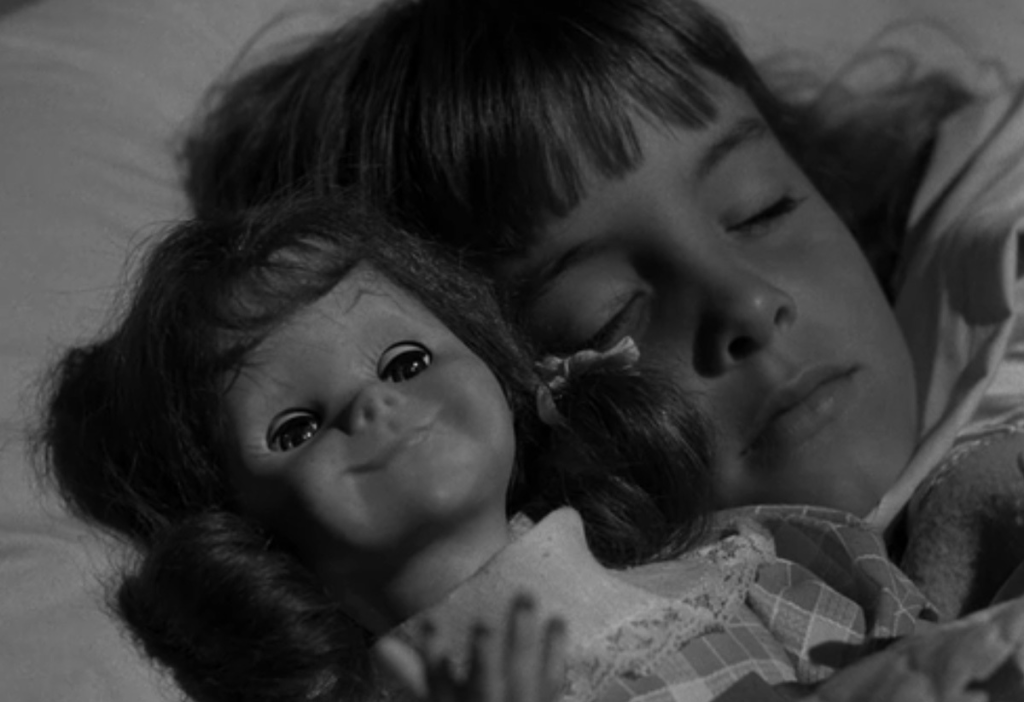
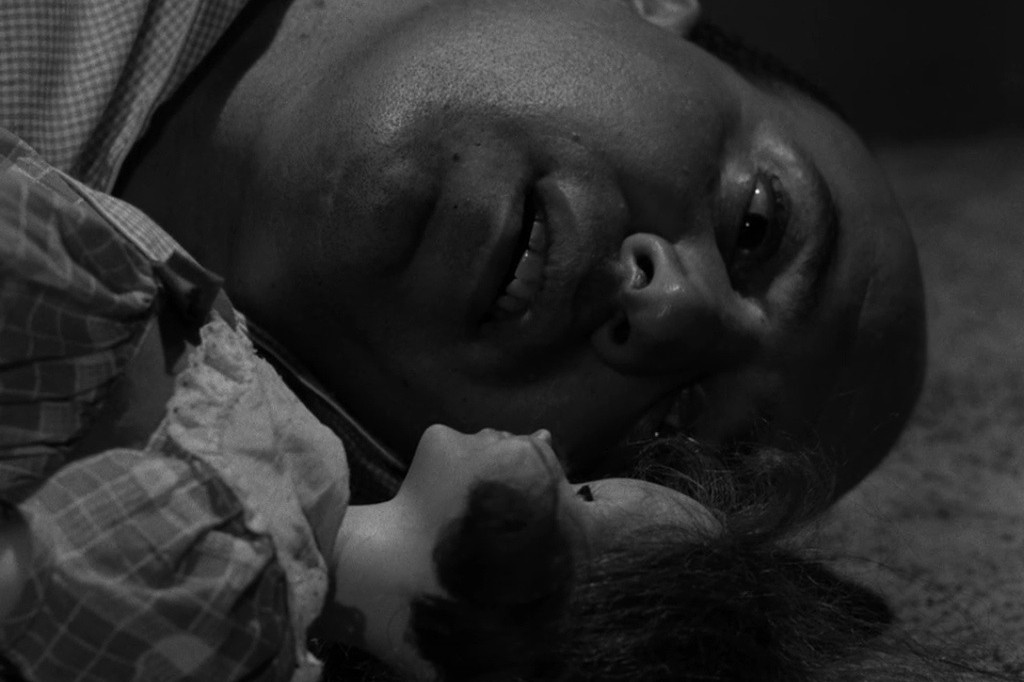
Telly Savalas starred in one of the classic episodes of The Twilight Zone as Talky Tina, the talking doll, brings forth glorious vengeance upon bad parents.
The horror trope of the evil living doll has been covered a ton of times from The twilight Zone episode “The Dummy” from season three to the Chucky franchise of movies and TV or MEGAN from a movie earlier this year. When done well, the creepy doll can be very effective, and this episode is one of the best of the series.
“Talky Tina, a doll that does everything, a lifelike creation of plastic and springs and painted smile. To Erich Streator, she is the most unwelcome addition to his household—but without her, he’d never enter the Twilight Zone.”
Telly Savalas played Erich Streator, the step-father to a little girl named Christina, whose mother Annabelle (interesting, another well known killer doll. I wonder if the movie Annabelle took her name from this character?) had purchased Talky Tina for her.
This was a triggering topic since apparently there is some kind of problem where Erich and Annabelle were unable to conceive their own child. Though nothing specific was mentioned for this, there was enough hints dropped to understand the issue.
Savalas does an amazing job as the nutcase husband who does some truly cruel things and says some really inappropriate words to both Annabelle and to Christina. When he specifically yells at Christina that he was not her father, I gasped. I understood why Talky Tina took an immediate dislike to Erich. I was also happy to see Talky Tina get the last word on this situation after Erich had done so much to try and destroy the doll. I did not see Talky Tina as an evil force as I see Chucky or MEGAN or other forms of killer dolls. I see Talky Tina as a protector. Sure, that is how MEGAN started off too, so maybe Talky Tina would have gone crazy eventually as well.
There is, of course, an argument that could be made that Talky Tina was all Erich’s own mind and guilt over his inability to have children with Annabelle that led to this delusion of a talking doll. Sure, Talky Tina does imply a threat to Annabelle after she has killed Erich by having him trip and fall down the stairs, but that was done as a cool tag for the episode. I think the whole mental illness issue is in play for the backdrop of this episode.
Telly Savalas was excellent in this episode. I think he would have to be in consideration for best performance of the series for this role.
We have finally arrived at an episode that is arguably the most iconic, most well known episode of The Twilight Zone of all-time.
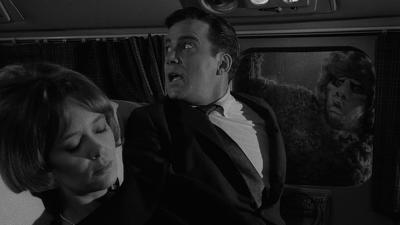
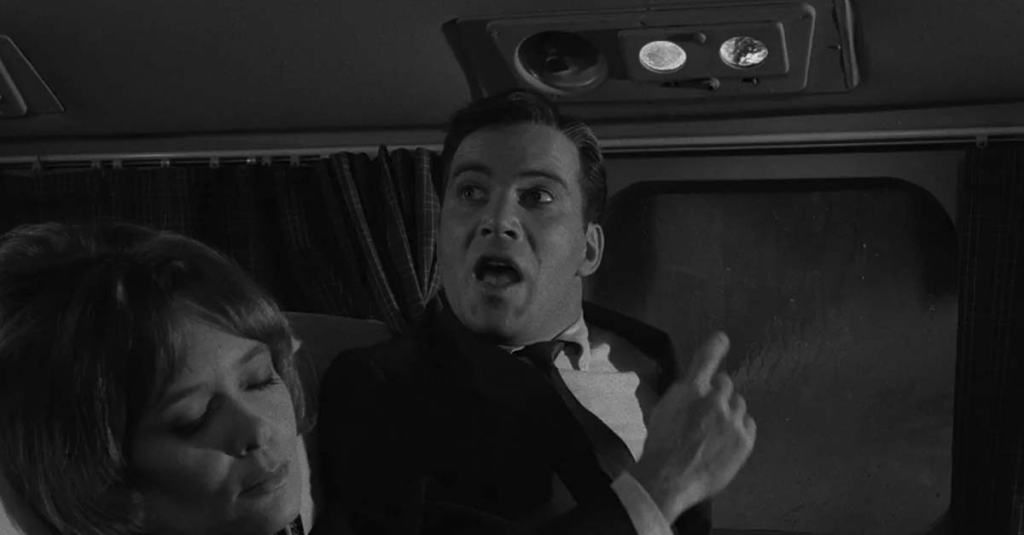
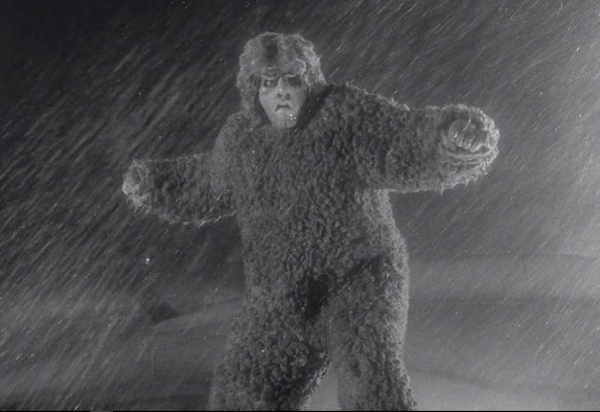
“Nightmare at 20,000 Feet” starred William Shatner and featured the fate of a man who had just recovered from a nervous breakdown and who was the only person to be able to see a gremlin on the wing of the airplane that he and his wife were flying upon.
“Portrait of a frightened man: Mr. Robert Wilson, thirty-seven, husband, father and salesman on sick leave. Mr. Wilson has just been discharged from a sanatorium where he spent the last six months recovering from a nervous breakdown, the onset of which took place on an evening not dissimilar to this one, on an airliner very much like the one in which Mr. Wilson is about to be flown home—the difference being that, on that evening half a year ago, Mr. Wilson’s flight was terminated by the onslaught of his mental breakdown. Tonight, he’s traveling all the way to his appointed destination, which, contrary to Mr. Wilson’s plan, happens to be in the darkest corner of the Twilight Zone.”
The set up is brilliant as Mr. Wilson certainly seems to be losing his mind. The fact that he had six months before had already suffered a nervous breakdown centered around an airplane makes everyone doubt what he was claiming. Clearly he was acting like a raving lunatic.
William Shatner knocked this out of the park. His continued descent into a crazed panic, though not insanity, was awesome to watch and the frustration of the gremlin disappearing every time he tried to get someone else to see it was as unbalancing for the audience as it was for him.
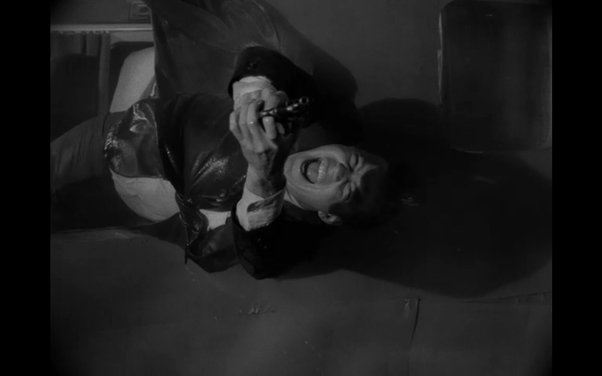
The way that Shatner played this made the audience wonder exactly whether or not he was actually seeing something or if it was all in his head. When he wound up stealing the gun and shooting the gremlin by leaning out the emergency window was truly nuts. Shatner showed that he was a damn good shot too considering.
The only drawback is that the gremlin did not look very good. It was comical in appearance, obviously a man in a big furry outfit. Of course, this was 1964 and you have to be understanding about what they were capable of at the time.
I also loved how the damage to the airplane was shown at the very end, proving that Mr. Wilson was not crazy and that he actually had seen the gremlin on the wing of this airplane. Even more, his crazy efforts with the stolen gun potentially saved the entire plane and everybody on it.
Richard Donner, who would be the director of Superman: The Movie, The Goonies, Lethal Weapon, directed this episode. Donner would go ahead and direct five total episodes of The Twilight Zone in season five.
I had seen this episode when I was younger, but this time, I truly appreciated the excellent work done by everybody involved. Sure, the gremlin was not the most frightening looking creature I have ever seen, but the anxiety it created was real. There is a reason this is considered one of the greatest episodes of the show and is remembered decades later.
Season five of the original Twilight Zone kicked off with an emotional banger.
Jack Klugman returned for his fourth installment of the anthology series after being featured in “Death Ship,” “A Game of Pool,” and “A Passage for Trumpet.” All three of these episodes are very solid to excellent, but, in my opinion, “In Praise of Pip” is the best episode of the series featuring Klugman. It is certainly the most powerful performance from the actor.
“Submitted for your approval: one Max Phillips. A slightly-the-worse-for-wear maker of book, whose life has been as drab and undistinguished as a bundle of dirty clothes. And though it’s very late in his day, he has an errant wish that the rest of his life might be sent out to a laundry, to come back shiny and clean. This to be a gift of love to a son named Pip. Mr. Max Phillips, homo sapiens, who is soon to discover that man is not as wise as he thinks. Said lesson to be learned in the Twilight Zone.”
Max’s son, Pip, is in the Vietnam War and is wounded badly, so badly that they believe that he is dying. The sent a telegram to Max, a lowly bookie who cons young people into making poor gambling bets, that told him that his son was dying. Jack Klugman’s performance for the rest of this episode was heart-breaking.
The young kid who had been conned by Max was being roughed up by the loan shark, Max’s boss Mr. Moran’s goons. Max, after hearing the sad news about Pip, insisted that Moran return the money to the kid he had conned and Max attacked Moran and his henchman, being shot in the gut in the process.
Max wondered about the streets after killing Moran, clutching his wound. He arrived at a closed amusement park, one where he had taken Pip when he was a kid. He saw 10-year old Pip at the park and the pair spent the next hour having fun and spending time together. However, it was time for Pip to leave, telling his father that he was dying. Max prays to God to not take Pip and to take him instead. Max then died on the ground of the amusement park.
Later that year, Pip returned to the amusement park, having survived the surgery that would save his life, thinking about his father.
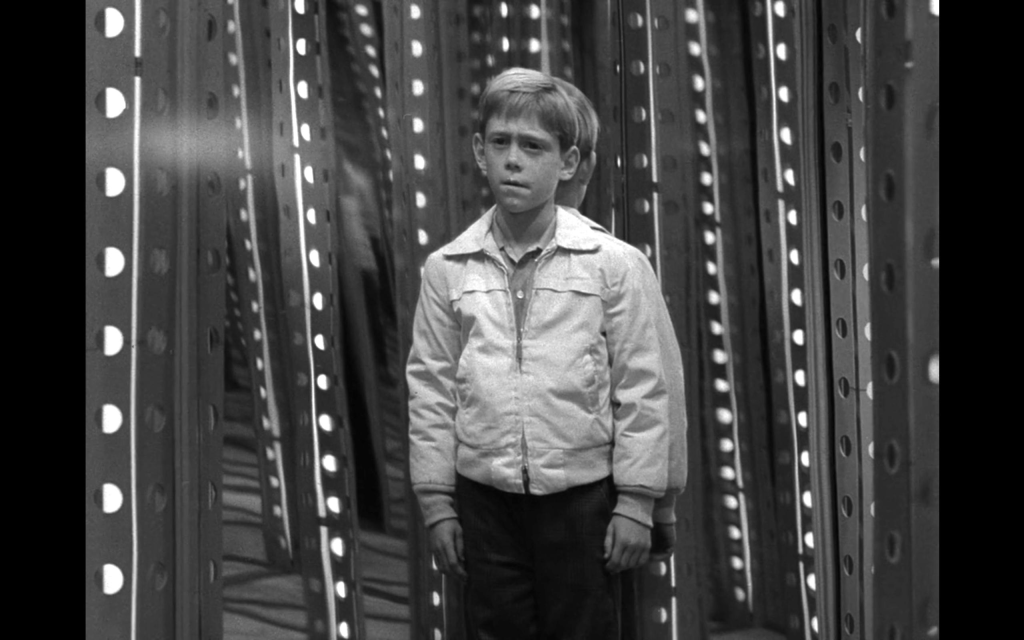
Admittedly, the story may not have had a classic Twilight Zone ending, but the performance by Jack Klugman, and also Billy Mumy, who also appeared in “It’s a Good Life” and “Long-Distance Call,” does a great job as young Pip.
“Steel”
Rock’em, Sock’em Robots arrive in The Twilight Zone.
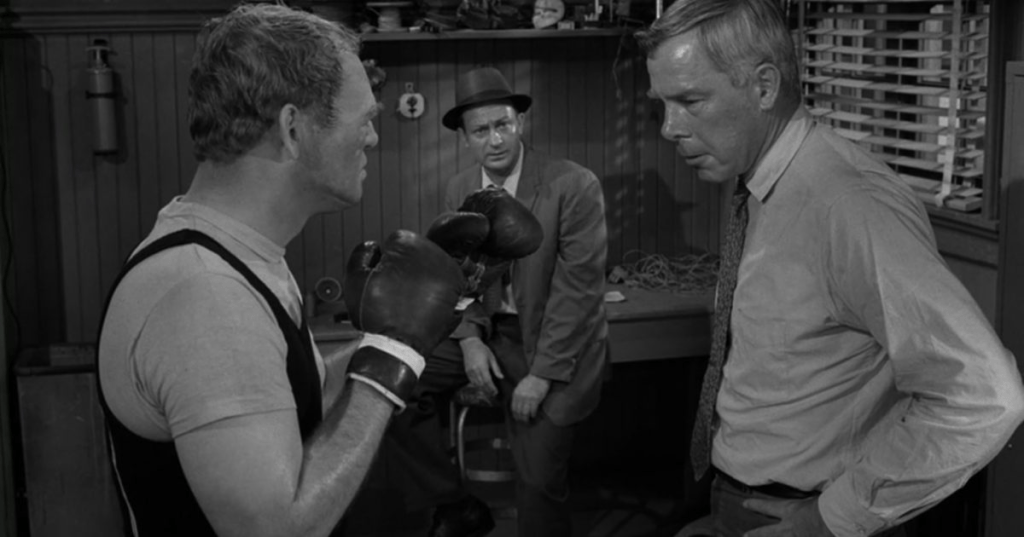
“Sports item, circa 1974: Battling Maxo, B2, heavyweight, accompanied by his manager and handler, arrives in Maynard, Kansas, for a scheduled six-round bout. Battling Maxo is a robot, or, to be exact, an android, definition: ‘an automaton resembling a human being.’ Only these automatons have been permitted in the ring since prizefighting was legally abolished in 1968. This is the story of that scheduled six-round bout, more specifically the story of two men shortly to face that remorseless truth: that no law can be passed which will abolish cruelty or desperate need—nor, for that matter, blind animal courage. Location for the facing of said truth: a small, smoke-filled arena just this side of the Twilight Zone.”
Starring Lee Marvin, their boxing robot broke down just before a fight he desperately needed. Marvin decided to take the place of the robot and pretend to be one himself. The robot he wound up facing beat the crap out of him and he gets knocked out in the first round, meaning he only got half of the money he needed.
That was about it. Not sure what the episode’s purpose was. Boxing had been banned in this “near-future” episode, set ten years after its initial release. The story lacked any real oomph and the boxing scenes were not very well executed.
And nobody’s head popped off their shoulders like they should in Rock’em, Sock’em Robots!
“The Bard” is currently my least favorite episode of The Twilight Zone.
“You’ve just witnessed opportunity, if not knocking, at least scratching plaintively on a closed door. Mr. Julius Moomer, a would-be writer, who if talent came 25 cents a pound, would be worth less than car fare. But, in a moment, Mr. Moomer, through the offices of some black magic, is about to embark on a brand-new career. And although he may never get a writing credit on the Twilight Zone, he’s to become an integral character in it.”
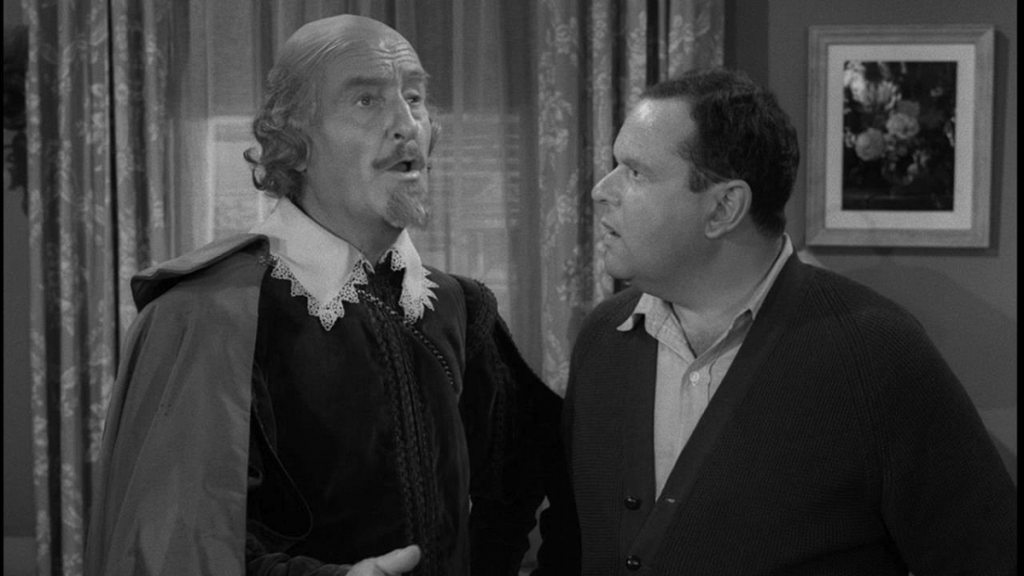
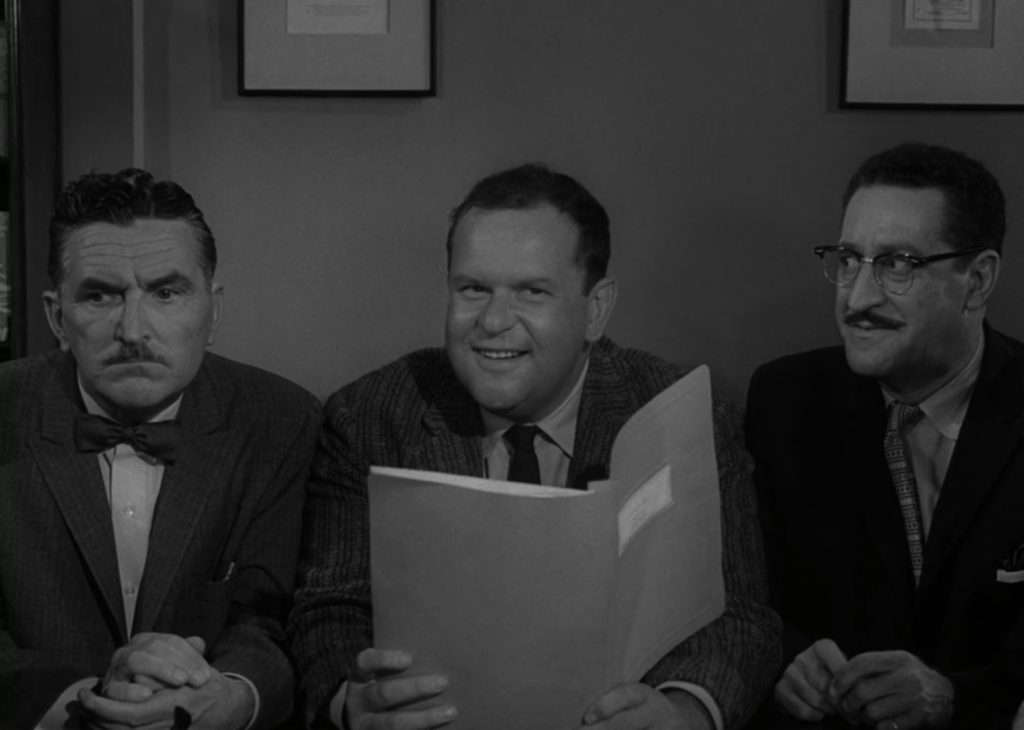
There are a ton of issues in this episode. First, the character of Julius Moomer is just as unlikable as any character we have seen in this series. I couldn’t stand listening to this idiot and his overbearing and obnoxious attitude. Second, the comedy was being overlaid with a series of weird sound effects and silly music that made the whole thing feel cartoony and childish. Third, the whole ‘black magic’ section of the plot made no sense and had little, if any, effect on the plot, outside of bringing Shakespeare to the present, a story beat that we see a ton in a series like Bewitched.
We do see an early appearance by Burt Reynolds, playing an actor in the play written by Shakespeare but plagiarized by Julius Moomer. Reynolds is clearly doin an imitation of Marlon Brando, even going as far as referencing ‘Cat on a Hot Tin Roof’ and other recent work from playwrights.
The episode had a message about how people not involved in the creative part of TV can change things with their simple say so. They include an advertiser in the scene who made a bunch of changes to the script, even going as far as saying that his wife didn’t like something. Rod Serling had famously had this very trouble and is using this episode to satirize the situation.
This is the final episode of season four. Season four has been up and down with some really strong parts and other episodes that are just horrendous. The Bard falls into that latter category as this episode is a huge clunker. This also marks the final episode of the hour format as season five returned to the half hour episodes. There were considerably more episodes that were hurt by the longer time than episodes that was helped by it.
Tomorrow, I will begin season five, the final season of the original run of The Twilight Zone. There are 36 episodes remaining in the classic EYG Hall of Fame series.
This week’s Secret Invasion week was outstanding, but just too short for me. I have to say that there are some awesome scenes in this series, but I feel the six episode format does not allow for them to really go into depth enough on what they have done. That’s a shame.
Of course, they only have six episodes so we have to take what we get.
This week, to no one’s surprise, Emilia Clarke turned out to be not dead. She had given herself the power of Extremis and she healed from the bullet hole from Gravik is episode three. We do not get much more with G’iah this week though, a short scene with her father was about all there was.
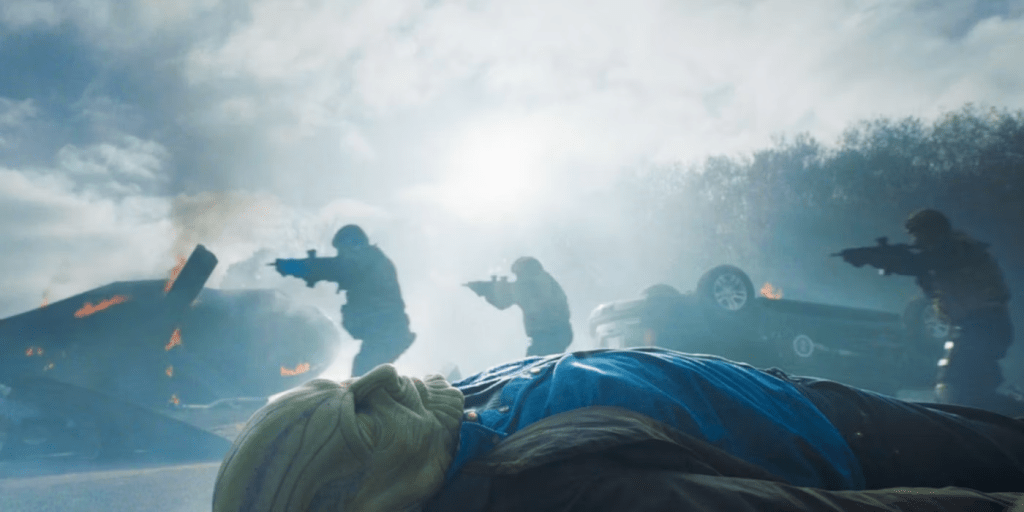
Her father, Talos, had a much more impactful episode and the shock ending where Gravik,
apparently, killed Talos as he and Nick Fury were rescuing the President of the United States from Skrull attack was shocking. Nick Fury leaving Talos’s body on the ground and taking off with the President in tow was also shocking.
The action of that ending scene with the Skrulls, led by Gravik, who showed off his Super Skrull-Groot powers, was some excellent action. Much of it felt practical which is a nice change of pace. The explosions sending the cars of the presidential motorcade flipping were well done. Talos’s apparent sacrifice to help save the President was well done too.
This episode revealed for certain that Rhodey was indeed a Skrull. We have no idea how long he has been a Skrull, but this Skrull was absolutely becoming cocky and filled with the power that he has. His hotel room conflict with Fury showed how overconfident this Skrull has become. Watching Fury play with Skrull-Rhodey was fun.
The best scene of the episode came between Fury and Priscilla. As they meet in a church, we see Rhodey instruct Priscilla to kill Fury and, when she arrived home, there Fury was, waiting for her. He had bugged her and he knew of the instructions coming form Rhodey so their tête-à-tête at the table became more intense.
This scene provided us with more of an insight into the relationship between Fury and Priscilla than we have gotten to this point and we can see the love between them even though both knew that something drastic was about to happen.
The scene where both of them fired their guns was extremely well done. I really thought Priscilla was doomed here so when it was revealed that they both had fired past their other, I was very pleased.
As I said earlier, this episode was just over 30 minutes long and it felt way too short. With just two episodes remaining, I hope they provide enough time for the show to sufficiently stick the landing. Plus, no Olivia Colman this week and that is unacceptable.
























 EYG- Embrace Your Geekness