Next list that I am compiling for the Twilight Zone review is the Top 10 villains. Now, a lot of Twilight Zone episodes did not have what would be defined as a ‘villain’ and had more of an antagonist. Even then, a lot of the episode dealt with the protagonist causing the conflict themselves. I picked out the ten best villains, in my opinion, from the original run of the series from 1959-1964.
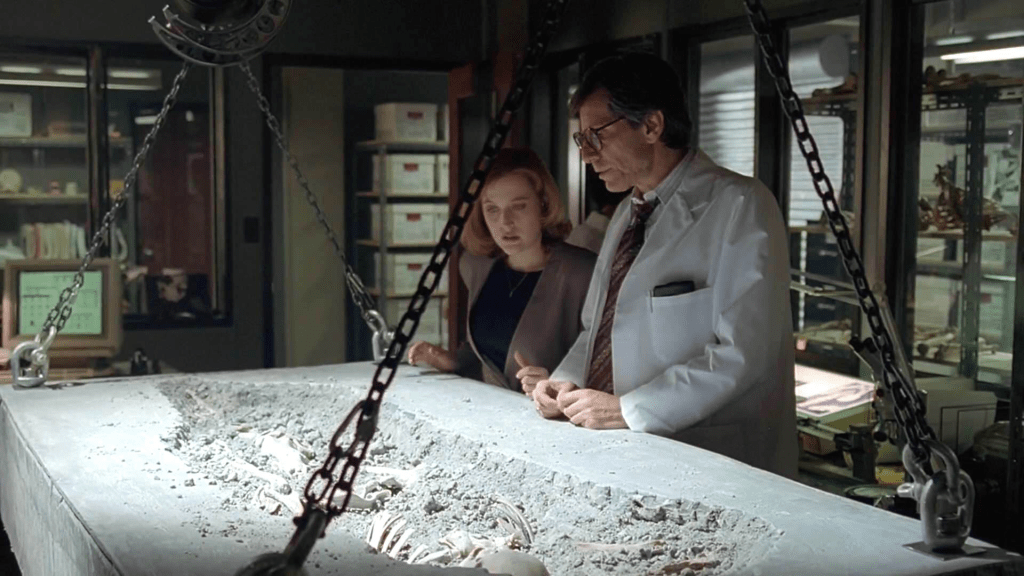
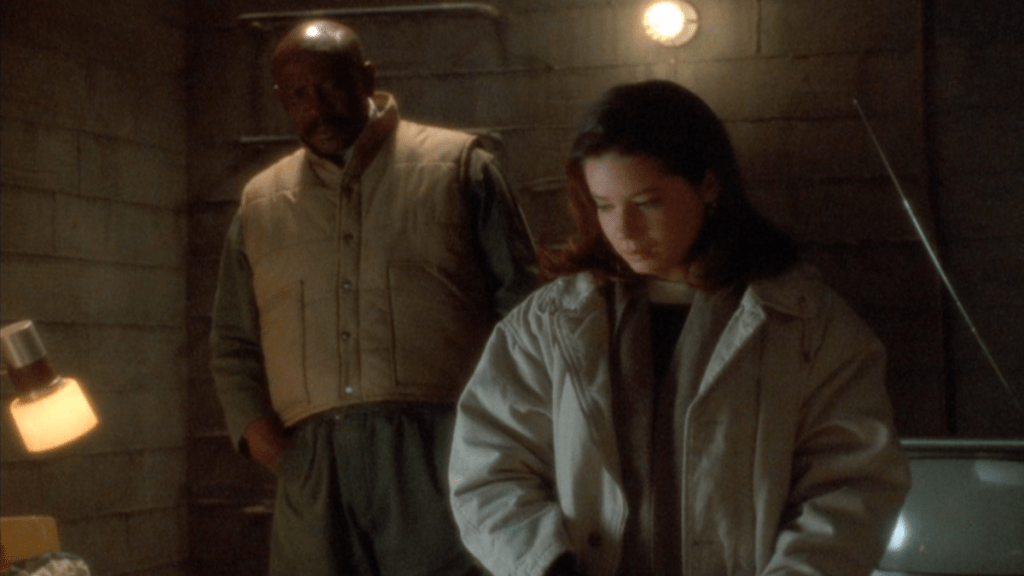
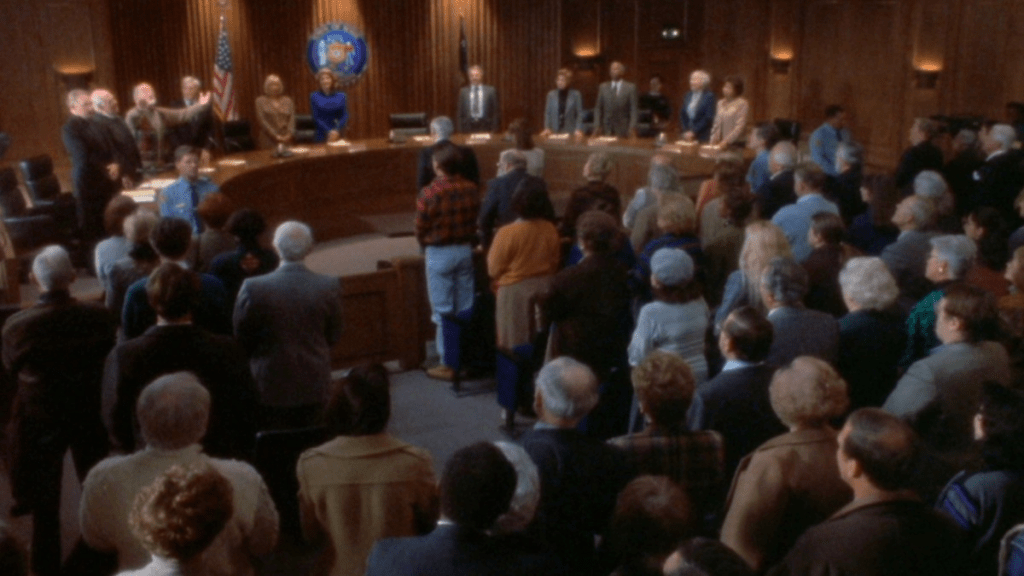
#10. Mr. Death (Nothing in the Dark). Honestly, this is a little questionable because Death is not necessarily a villain and the way Robert Redford played him was not truly villainous. Still, I put him on th ebottom of this list.
#9. Corey (I Shot an Arrow into the Air). Played by Dewey Martin, Corey was the one of the three surviving crewmen of a crash on an unknown planet and he started turning on his comrades by hording their water and, in the end, kills the others before he realized that they had crash landed on earth.
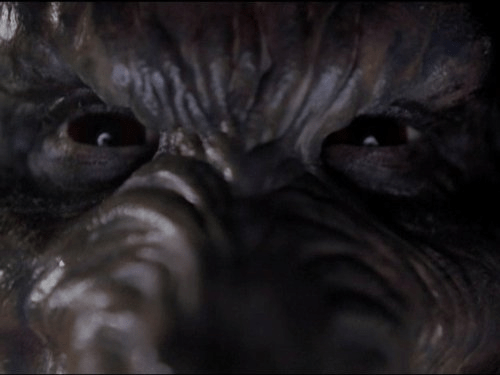
#8. The Gremlin (Nightmare at 20,000 Feet). The creature that tormented William Shatner and tried to tear off the wing of the plane, which could have killed everyone on it. This would have been higher if it hadn’t been such a silly looking costume.
#7. Anthony (It’s a Good Life). Best villains are the ones that think themselves the hero of their story. Anthony certainly believed that he was doing the best for the town as he was manipulating and tormenting these people.
#6. Oliver Crangle (Four O’ Clock). Theodore Bickel played this character as wanting to stop all the terrible people in the world. He would shrink the terrible people down to two feet tall. Again, he did not see himself as the villain even though he absolutely was.
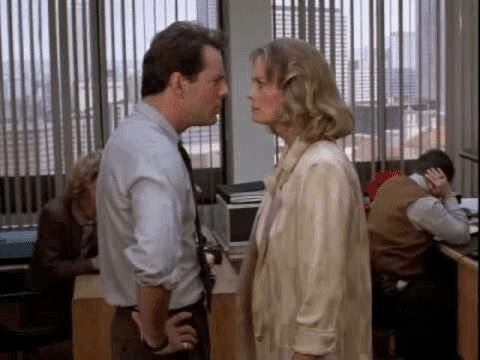
#5. Peter Vollmer (He’s Alive). Dennis Hopper does a great job as the sniveling little runt who ascends to the head of the neo-Nazi Party thanks to the help from the ‘ghost?’ of Adolph Hitler.
#4. Mr. Smith (Printer’s Devil). Burgess Meredith gets a chance to play the Devil, who appears to help a struggling newspaper by breaking scoops that just happened, and that he may have cause himself. The Devil has been an antagonist in The Twilight Zone several times and this is the best version.
#3. Eric Streater (Living Doll). Telly Savalas is the step-father to a little girl who brings home a toy doll. he was mad about the doll, which then started talking back and threatening him. There was no doubt in my mind that Eric was an abusive husband and father, or at least, he was on the road to becoming one.
#2. Caesar (Caesar & Me). The talking ventriloquist dummy that got Cliff Robertson to break the law and it eventually drove him crazy. Caesar also started up with its next victim, the rotten little girl Susan.
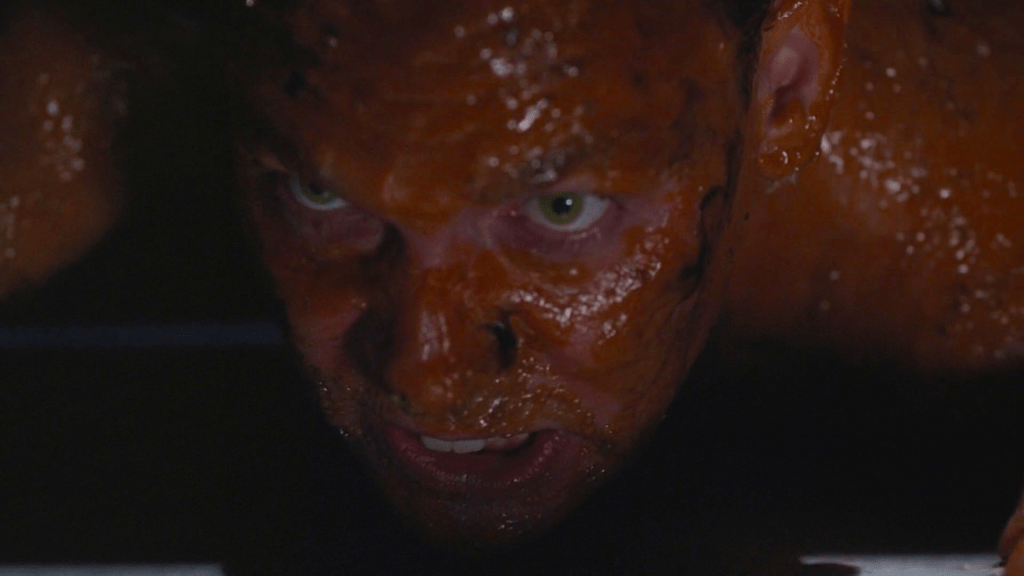
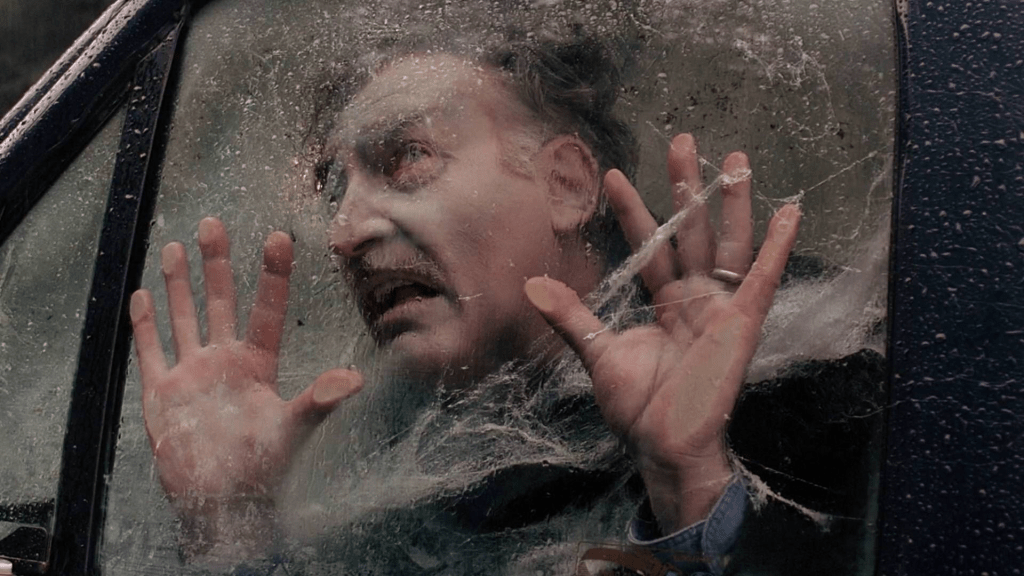
#1. The Kanamit (To Serve Man). This alien race came to the planet earth under the guise of helping humankind, but, in truth, they were here simple to take them back to their planet, fatten them up and cook them up.
With the Daily Zone coming to a close yesterday after I completed the viewing of all 156 episodes of The Twilight Zone, I have started to compile some lists. Kicking off the posts are, in my opinion, the Top 20 performances from The Twilight Zone 1959-1964. There are three actors who appear in the top 20 twice.
#20. Neville Brand/George Takei (The Encounter). I put these two together because they were so important playing off the other that they were truly an acting team. And this episode falls apart with out these two elevating the material.
#19. Buster Keaton (Once Upon a Time). The special episode of The Twilight Zone honored Buster Keaton and his history in the films. The silent section highlighted Keaton’s slapstick mastery and was one of the few Twilight Zone episodes that were actually funny.
#18. Donald Pleasence (The Changing of the Guard). Donald Pleasence was a teacher at the end of his career, looking for a reason to make himself relevant. The potentially suicidal man is truly brought to life by Pleasence.
#17. Jack Klugman (A Game of Pool). Jack Klugman brought a lot of pathos to this role of a pool player determined to be known as the greatest ever, and the game that would make that so.
#16. Theodore Bikel (Four O’Clock). Bikel played the villain of the piece, Oliver Crangle, and he played him with a flair and with a ton of gusto. In what could have been just a mustache twirling villain, Bikel found the perfect balance in this man.
#15. Russ Martin (Death Ship). Give a shout out to Jack Klugman here too as the captain, but Russ Martin is the character providing all the conflict among this group of three men who crashed on an abandoned planet only to find another crashed ship with three bodies that looked just like them.
#14. Anne Francis (After Hours). Anne Francis does a great job as a confused customer of a department store that can not seem to find her way back to the floor she had purchased her gift from. One of the cool twists of the series and Francis does a great job of showing it.
#13. Earl Holliman (Where is Everyone?). Holliman’s performance really made the debut episode of The Twilight Zone something special as he showed a steep decline mentally when he had no one around to interact with. If Holliman did not do so great, would the show had been such a success?
#12. Fritz Weaver (The Obsolete Man). The Chancellor learns a painful lesson thanks to Burgess Meredith in this sci-fi future tale. A 1984/Big Brother type of story with the Chancellor having the tables turned on him. Weaver showed all the emotions and the fear at the end was palpable.
#11. Cliff Robertson (Caesar and Me). Cliff Robertson had some excellent performances in the show, but this one really stands out for me. Watching this man gradually lose himself to this ‘talking’ ventriloquist dummy was very powerful.
#10. Billy Mumy (It’s a Good Life). Young Billy Mumy had several good performances, including Long Distance Call and In Praise of Pip, but he is iconic in this role as the all-powerful Anthony, who ruled the town with a mental power that could send you to the ‘cornfield.’ The coldness of expression was quite advanced for a young boy.
#9. Gladys Cooper (Night Call). Receiving a surprising call in the middle of the night leads to a lot of terror for invalid Elva Keene. She went from terror early to hopefulness when she realized that perhaps she would not have to be alone. This was a very layered performance from a talented actor whom we will see later on this list.
#8. James Whitmore (On Thursday We Leave for Home). Captain Benteen has been the leader of his people for years, and when the rescue ship arrived from earth, Captain Benteen struggled with the idea of not being the God he had been. Whitmore gives this man, who could be considered a cult leader, humanity and you understood why he would become lost.
#7. Burgess Meredith (The Obsolete Man). Burgess Meredith might be considered the MVP of The Twilight Zone and his portrayal of the librarian Romney Wordsworth who was to be put to death because of his obsoleteness. Yet Romney gets the last word on the subject. Burgess Meredith is perfect in this role.
#6. Robert Duvall (Miniature). Another character dealing with mental illness, Charley Parkes found himself much more at ease talking to and interacting with a doll house miniature at a museum, believing that it was alive and carrying on life in the doll house.
#5. Jack Klugman (In Praise of Pip). Here is the first of the three actors to appear twice on this list, and Klugman could have been here a couple of other times as well. His Max Phillips is in such pain when he mistakenly finds out that his son, Pip, had been killed in the Vietnam War. As he is dying himself from a gunshot wound, Klugman spends a day at the amusement park with the spirit of Pip in a truly heartbreaking performance.
#4. Burgess Meredith (Time Enough at Last). One of the best episodes of the series, poor Henry Bemis only wants to be able to read his books and newspapers, but everyone is preventing him from doing it. So when Henry survives the destruction of the city only to break his glasses, irony is truly hard to swallow. Meredith is the second double performance on this list, and he could have easily been here for Printer’s Devil too.
#3. Agnes Morehead (The Invaders). One of the singularly top performances of the series, Agnes Morehead does not have dialogue and she still dominates the screen as she battles the arrival of aliens from another planet (although there is a twist to that).
#2. William Shatner (Nightmare at 20,000 Feet). This was almost #1 as Shatner was brilliant as the man who saw a gremlin on the airplane wing and slowly slipped into madness trying to convince others on the plane that there is danger afoot. Shatner could have easily let this performance slide into an overblown performance (see John Lithgow in Twilight Zone: The Movie), but everything was perfect. Shatner could have made this list too as Don Carter in Nick of Time.
#1. Gladys Cooper (Nothing in the Dark). Wanda Dunn had been hiding from Mr. Death. She had secured herself in a hideaway and avoided human contact. When a policeman was shot outside her place, she had to come out and help him, opening herself up to the final fate that awaits us all. She was so amazing, bringing fear, denial and acceptance to this broken woman. She starred in this with Robert Redford as Mr. Death. She is, of course, the third actor to have double duty on this list.
“Mr. Floyd Burney, a gentleman songster in search of song, is about to answer the age-old question of whether a man can be in two places at the same time. As far as his folk song is concerned, we can assure Mr. Burney he’ll find everything he’s looking for, although the lyrics may not be all to his liking. But that’s sometimes the case – when the words and music are recorded in the Twilight Zone.”
This episode has a time loop going on as we see something that, apparently, keeps happening. Floyd Burney, aka “Rock-a-Billy Kid,” arrives at an isolated location in search of a new song. The strange old man in this dilapidated shop in the woods warned him away, but Floyd heard a song being sung in the woods.
Pulled along like the sailors when hearing the siren call from Greek mythology, Floyd finds a woman in the woods named Mary Rachel and tries to convince her to give him the song she was singing. She kept saying that it was someone else’s song. This line is never mentioned again.
Floyd seduces her and she sings the song for him, which he has plans to record himself. However, her brother shows up with a gun and wants to take Floyd back to his other brothers. Floyd struck him with his guitar, killing him. He takes off to run from the other brothers, but Mary Rachel begs him to not run “this time.” She wants him to hide instead saying that he is always caught. Floyd runs back to the old who he also kills… for no real reason this time. The brothers catch up with Floyd and we see the gravestone for Floyd Burney that we saw before.
I have to say that these country folk sure can’t take a punch. The young guy died from getting hit across the back with a guitar that did not look incredibly sturdy. The old man died from one punch.
The song was quite annoying too and it did not sound like a song that a Rock-a-Billy singer would play. When Floyd tried to show the old man what kind of music Rock-a-Billy was and dropped to his knees to sing, I nearly lost it.
This was an annoying episode with ideas that are only ever touched upon or implied.
“The Fear”
This was a decent episode of The twilight Zone, the penultimate episode of the original series’ TV run.
“The major ingredient of any recipe for fear is the unknown. And here are two characters about to partake of the meal: Miss Charlotte Scott, a fashion editor, and Mr. Robert Franklin, a state trooper. And the third member of the party: the unknown, that has just landed a few hundred yards away. This person or thing is soon to be met. This is a mountain cabin, but it is also a clearing in the shadows known as the Twilight Zone.”
I liked how this episode built the tension and the anxiety between the two characters stranded in this cabin in the woods with some mysterious ‘thing’ outside.
My favorite part of this episode was the relationship between Miss Scott and Trooper Franklin. I liked how they interacted, how they dealt with each other honestly and straightforwardly. They did not force a romantic relationship between them, though I could see that developing in the future for them.
The ending of the episode had some iffy moments. I am not sure how I felt about the giant inflatable alien or why the trooper started to shoot at this alien without even once trying to communicate with it. Then the wind from the balloon was somewhat over the top as it deflated.
In the end, it felt like the same basic concept that we had seen in “The Invaders” episode and the episode called “The Little People.” Still, the first two acts of this show made it very good and did support the ending well enough.
“The Bewitchin’ Pool”
The final broadcast episode of the first version of The Twilight Zone had a bunch of problems.
First, apparently, the scenes shot outdoors had trouble with the sound and had to be redubbed. It was painfully noticable.
Even more so, the lines by Mary Badham, who played young girl Sport, could not be dubbed because the actress had gone back to Alabama and it was too expensive to bring her back. So instead they used known voice over actress June Foray to do the lines. June Foray voiced Rocky the Flying Squirrel in the Bullwinkle series. It was a distinct difference from the rest of Sport’s lines.
Sport and her brother Jeb could escape from their mean and always fighting parents by diving into their swimming pool, coming up at a mysterious land where kids escape to and they met an old woman named Aunt T. They go back and forth a couple of times, even though Aunt T said that finding their way back would be nearly impossible until they finally leave their parents and stay in the magical land for good.
The show was a comment on divorce and how it affects kids. Of course, it does not help when you have got a rotten mother who is constantly yelling “Darn you loudmouth kids” at you.
The acting of this episode was wooden and lifeless. The voice acting, which was out of the producers’ control, did not help anything. The closing narration said :“A brief epilogue for concerned parents. Of course, there isn’t any such place as the gingerbread house of Aunt T, and we grownups know there’s no door at the bottom of a swimming pool that leads to a secret place. But who can say how real the fantasy world of lonely children can become? For Jeb and Sport Sharewood, the need for love turned fantasy into reality; they found a secret place—in the Twilight Zone.” Was the use of the ‘gingerbread house’ line implying that Aunt T had sinister plans for the kids, fatting them up by feeding them cake like the witch in ‘Hansel and Gretel?” Will Jeb and Sport wind up as meal time?
Honestly, that would make this episode considerably better. It was a weak episode to end the series on.
This brings the Daily Zone to a close, as the first season of The Twilight Zone with Rod Serling is done. I watched all 156 episodes over the last two months.
I will be doing a few lists over the next few days of my favorite this and least favorite that.
Just remember that all of that is just my opinion… and if you disagree… that is okay and you can form your own opinions… in the Twilight Zone.
The finale of Secret Invasion dropped on Disney + this morning and I am struggling with the feeling that I am having. It is the first time that I am feeling disappointed with a Marvel series on Disney +. Secret Invasion started so strong, but the truth is, the quality of the show slipped with every episode and this finale is so underwhelming that this has become my least favorite MCU TV show.
There was so many things about this episode that I did not like that I feel that there is just too many to list. I’ll give it a try:
The showdown between “Fury” and Gravik was dumb. Of course, it was G’iah instead of Fury and the whole Super Skrull fight at the end was terrible.
Does this mean that G’iah has the powers of all the Avengers?
Gravik and G’iah sure seem to master their new powers quickly and easily.
What is up with the President?
With the phone call Fury made to the president, why is he leaving the earth again?
They rush through the reveal of the kidnapped people and just taunt us with how long they were held.
Oh, and by the way, when they did release the prisoners, shouldn’t they be feeling the affects of the radiation like “Fury” was earlier?
This episode was too short and felt incredibly rushed.
Gravik’s death was just anticlimactic. The relationship with Fury and Gravik was wasted too as it should have been so much more. The scene with Samuel L. Jackson and Kingsley Ben-Adir was well acted, but since it was not actually Fury, it did not feel right.
No end credit scene
Olivia Colman is still the best part of this entire series. Every second she is on the screen is special and I want more of her in the MCU. I am not sure I want overpowered G’iah involved though.
The ending scene with Fury and Varra was decent. It was shot well, but it still did not make much sense. It felt as if the show thought this relationship was the key one for the show, but I felt as if the relationship was not as heavy as it could have been. They settled.
Secret Invasion’s strength was easily the acting. They had a bunch of scene work with some excellent actors, but it does not fit together well. This could have been so much better. I just am so disappointed with the overall series of Secret Invasion.
I figure I would toss out the current list of MCU Disney + shows.
Lookie, there is Robby the Robot again. This is the second bad episode guest starring Robby.
This is also very relevant episode in today’s world as the Screen Actor’s Guild and the Writer’s Guild of America has been on strike with one of the big reasons being the use of AI by studios, which threatens to replace working actors and writers. Much like the theme of this episode.
“These are the players — with or without a scorecard. In one corner a machine; in the other, one Wallace V. Whipple, man. And the game? It happens to be the historical battle between flesh and steel, between the brain of man and the product of man’s brain. We don’t make book on this one and predict no winner….but we can tell you for this particular contest, there is standing room only — in the Twilight Zone.”
Wallace Whipple is only a caricature of a person. He is only a representation of the selfishness and the greed of the CEOs and the faceless heads of giant companies. His glee in his cruelty in this episode really takes away from the downfall later in the episode because it all turned on him too quickly.
Still, there is no one to truly root for in this episode. I think you are meant to relate to Dickerson, the foreman who lost his job and got drunk and tried to destroy the computer, but he was a loud drunk and not someone I felt for. The character of Mr. Hanley was shown as a decent man, but he was not around enough for any connection to be made.
There was Robby the Robot! A silly cameo tucked on at the end of the episode to show that even Mr. Whipple is replaceable. Danger, Mr. Whipple, Danger!
A poorly written episode with way too much melodrama that draws away from the important theme of the show. I did not like much of anything in this episode.
“Stopover in a Quiet Town” is a standout episode of The Twilight Zone that has inspired plenty of other pop culture items.
“Bob and Millie Frazier, average young New Yorkers who attended a party in the country last night and on the way home took a detour. Most of us on waking in the morning know exactly where we are; the rooster or the alarm clock brings us out of sleep into the familiar sights, sounds, aromas of home, and the comfort of a routine day ahead. Not so with our young friends. This will be a day like none they’ve ever spent – and they’ll spend it in the Twilight Zone.”
Trapped inside this apparently deserted town, Bob and Millie run around the city of Centerville realizing that they could not escape and that thing that looked to be real, such as trees and the squirrel, were fake or stuffed.
They could find no one else in the town, only a few dummies set up in cars to look like there were people. They ran around in desperation to try and find their way out.
They heard the laughter of a little girl all around them, which was eventual revealed that they had been abducted by aliens and were being used like dolls in a little girl’s toy set.
The idea was similar to the set up of the season three episode, “Five Characters in Search of an Exit” except this was a “don’t drink and drive” type theme. I’m not sure if it was a good idea to make it the woman’s fault for being abducted, which the show hinted at. Still the execution of the story was very good even if the child’s laughter and the hints of a shadow coming over the car made this twist fairly predictable.
“The Encounter”
This one was uncomfortable.
I immediately thought that this was George Takei, who would wind up as Sulu on the original Star Trek series, which it did turn out to be. Both Takei and co-star Neville Brand were intense with their performances in this story.
It made me feel like it was a stage play. One basic setting with two actors just bouncing their performances off the other. It was certainly carried by the strength of these two actors.
“Two men alone in an attic, a young Japanese-American and a seasoned veteran of yesterday’s war. It’s twenty odd years since Pearl Harbor, but two ancient opponents are moving into position for a battle in an attic crammed with skeletons, souvenirs, mementos, old uniforms, and rusted medals. Ghosts from the dim reaches of the past, that will lead us into the Twilight Zone.
This episode was removed from much of the Twilight Zone syndication after its initial debut because of the racial overtones present and some of the controversy over the story told, in particular the revelation that Takei’s character’s father had been a traitor at Pearl Harbor and had helped signal the planes, a fact that was not true and that there had been no indication that there were any Japanese-Americans at Pearl Harbor helping the bombers.
There was also a lot of racial insensitive language being tossed around, especially from the character played by Neville Brand, who was a former soldier during WWII and had recently been fired from his job and had his wife leave him because of his drinking. Both actors used this incendiary dialogue to create some real tension in the scenes.
There were some supernatural elements of the episode too, mostly surrounding a samurai sword that Band’s character had taken off of a Japanese soldier that he had killed during the war. This was the weaker aspect of the script as the interactions with the actors was considerably more potent.
This episode had its strengths and weaknesses and they were distinctly pronounced. Some of the scenes were riveting while others made no sense. It was a tough watch for sure.
“Mr. Garrity and the Graves”
This is definitely the worst of the three episodes in this post.
“Introducing Mr. Jared Garrity, a gentleman of commerce, who in the latter half of the nineteenth century plied his trade in the wild and wooly hinterlands of the American West. And Mr. Garrity, if one can believe him, is a resurrecter of the dead – which, on the face of it, certainly sounds like the bull is off the nickel. But to the scoffers amongst you, and you ladies and gentlemen from Missouri, don’t laugh this one off entirely, at least until you’ve seen a sample of Mr. Garrity’s wares, and an example of his services. The place is Happiness, Arizona, the time about 1890. And you and I have just entered a saloon where the bar whiskey is brewed, bottled and delivered from the Twilight Zone.”
A con man comes into town, pretending to be able to raise the dead. He sets up a town that, apparently, did not have any loved ones that they were sad were dead. All the people of Happiness, Arizona seemed to be happy that their relatives and family members were gone.
So, after he pretended to raise the dead, Garrity had the people pay him to have them go back to their graves.
It was clear that he was pulling a con on everybody except these dumb people.
However, the worst part of the episode was the ending. When Garrity met up with his accomplice and the dog that he pretended to bring back from the dead, it was revealed that he had actually unwittingly brought the dead people back to life and they were heading down to the town to cause trouble.
I thought maybe these zombie-like people would attack Garrity as a way to show that you can’t mess with life-death, but, nope. It was not that. They were just heading back to Happiness and the closing narration implied that Garrity did not know his own power.
How dumb was this episode? Extremely dumb. Did not like this one at all.
As of now, I only have four more episodes of the original series of The Twilight Zone for the Daily Zone. Plans are to do one episode on Wednesday and then finish up with three on Thursday (pending actual time). Perhaps it gets pushed back a day or so, but Friday is the absolute last potential day for the Daily Zone.
Director Abner Biberman was responsible for one of the best shots of the entire episode, as this point of view shot through the hangman’s noose was one of the images that truly stuck with me over this entire series.
“Sheriff Charlie Koch on the morning of an execution. As a matter of fact, it’s seven-thirty in the morning. Logic and natural laws dictate that at this hour there should be daylight. It is a simple rule of physical science that the sun should rise at a certain moment and supersede the darkness. But at this given moment, Sheriff Charlie Koch, a deputy named Pierce, a condemned man named Jagger, and a small, inconsequential village will shortly find out that there are causes and effects that have no precedent. Such is usually the case—in the Twilight Zone.”
There were a couple of familiar faces popped up in this episode. Ivan Dixon, Kinch from Hogan’s Heroes, and George Lindsey, Goober Pyle from the Andy Griffith Show, appear in this episode.
While this episode turned out to be a touch preachy, I really enjoyed the idea of the darkness overcoming the small town, how hate can only bring more hate to the world. The anger of the crowd toward Jagger, who killed a bigot supposedly in self-defense, and the desire of Goober to see him hanged really stood out.
According to Wikipedia, this episode was penned by Rod Serling as a response to the assassination of John Kennedy.
“Sounds and Silences”
Here is another Twilight Zone episode that suffers from a lead character that is wholly unlikable.
However, some of the comments made about Roswell by his staff and co-workers were very inappropriate and were directed simply at his weight. That makes them every bit as bad as this guy, who is absolutely obnoxious and loud.
“This is Roswell G. Flemington, two hundred and twenty pounds of gristle, lung tissue and sound decibels. He is, as you have perceived, a noisy man, one of a breed who substitutes volume for substance, sound for significance, and shouting to cover up the readily apparent phenomenon that he is nothing more than an overweight and aging perennial Sea Scout whose noise-making is in inverse ratio to his competence and to his character. But soon our would-be admiral of the fleet will embark on another voyage. This one is an unchartered and twisting stream that heads for a distant port called the Twilight Zone.”
This episodes shows the progression of a man and his succumbing to a mental illness. The episode shows Roswell first hearing every sound at a deafening level and then, after seeing a psychiatrist, trying to be able to control the sound, succeeding in a sense, but unable to adjust that volume back up again.
Another episode with sound effects that are truly awful, which is bad considering how important they are to this story. Overall, unlikable protagonist and unenterable sound beats in the story. One of the weaker episodes of the series.
“Caesar and Me”
The idea of a living ventriloquist dummy returns to “Caesar and Me.”
“Jonathan West, ventriloquist, a master of voice manipulation. A man, late of Ireland, with a talent for putting words into other peoples’ mouths. In this case, the other person is a dummy, aptly named Caesar, a small splinter with large ideas, a wooden tyrant with a mind and a voice of his own, who is about to talk Jonathan West – into the Twilight Zone.”
This is another episode that deals with mental illness, as Jonathan West descends into a dark place because of the machinations of the dummy, Caesar. Of course, the episode makes us think that Caesar can talk, but this is clearly a metaphor for someone hearing voices and having those voices make you do things. Jackie Cooper’s desperate pleading to Caesar to talk when the police had arrived was a haunting moment of a very good episode.
This is the same dummy used in the season three episode entitled “The Dummy.” On fact, in my head (although not labeled as such) I considered this a sequel to that episode, seeing where the dummy ends up after that last appearance.
There is also one of the worst characters of the show. The young girl named Susan, played by Morgan Brittany (who appeared later in Dallas), was just a horrible person and shown as a whiny, cruel, mean-spirited character and I do not think it is a coincidence that she ends up with Caesar at the end of the episode.
“A little girl and a wooden doll. A lethal dummy in the shape of a man. But everybody knows dummies can’t talk – unless, of course, they learn their vocabulary in the Twilight Zone.”
While this is not as great as “The Dummy,” “Caesar and Me” is another very strong episode that I enjoyed tremendously.
“The Jeopardy Room”
Welcome to The twilight Zone, Martin Landau!
Some spycraft arrives in the Twilight Zone with a single room setting, creating some stress and claustrophobia.
“The cast of characters—a cat and a mouse, this is the latter. The intended victim who may or may not know that he is to die, be it by butchery or ballet. His name is Major Ivan Kuchenko. He has, if events go according to certain plans, perhaps three or four more hours of living. But an ignorance shared by both himself and his executioner, is of the fact that both of them have taken the first step into the Twilight Zone.”
The cat and mouse between Martin Landau and John van Dreelen (who played Commissar Vassiloff) was the highlight of this episode. Vassiloff was clearly interested in finding a worthy adversary which he even placed above the actual mission – which was to kill Kuchenko.
Because of his personal machinations, Vassiloff created several holes that allowed Kuchenko a chance to survive. Vassiloff even pulled The Dread Pirate Roberts’ trick of drinking a poison that he was immune to in order to win the confrontation. No idea if this was Iocane Powder or not, though that was the deadliest poisons known to man and it did not kill Kuchenko (Love a good Princess Bride connection!)
I did like this episode a lot, but the ending turned out to be cheesy. Kuchenko turned the trap back onto Vassiloff and his henchman Boris, a henchman that proved himself to be a really stupid one, answering a booby trapped phone even though he knew that it had a bomb in it. That ending was a bit of a drawback to the solid episode.
.
The Daily Zone is down to seven remaining episodes in the final season of the original version of The Twilight Zone.
I do like how the episode “Queen of the Nile” did not come right out and namedrop Cleopatra as the true identity of the ageless starlet Pamela Morris. Sure, they implied it heavily, with plenty of evidence to support such an inference, but without the specific name coming up, this felt more in doubt.
Funny how the next episode, “What’s in the Box?” actually mentions Cleopatra.
“Jordan Herrick, syndicated columnist, whose work appears in more than a hundred newspapers. By nature a cynic, a disbeliever, caught for the moment by a lovely vision. He knows the vision he’s seen is no dream; she is Pamela Morris, renowned movie star, whose name is a household word and whose face is known to millions. What Mr. Herrick does not know is that he has also just looked into the face—of the Twilight Zone.”
All I could think of as I was watching this episode was the MCU movie, The Eternals, with Kumail Nanjiani’s character Kingo being a star in movies from Bollywood and having to pretend he is a descendent after so many years, since he did not age. Of course, Kingo did not need the help of an age-sucking scarab to stay youthful.
Poor Jordan Herrick never suspected the real truth about Pamela Morris and the sacrifices that she had to make in order to stay young. I suppose if he had stayed alive, he may have uncovered the whole truth, but when you are aged so rapidly that you turn to dust on the floor, you may not be able to realize that you’ve messed up.
I liked the end of this episode as Herrick met his fate and we see how Pamela remained so young after centuries of life.
“What’s in the Box”
This is another episode of The Twilight Zone where our main protagonists are just unlikable which makes it difficult to care what happened to either of them.
“Portrait of a TV fan. Name: Joe Britt. Occupation: cab driver. Tonight, Mr. Britt is going to watch “a really big show,” something special for the cabbie who’s seen everything. Joe Britt doesn’t know it, but his flag is down and his meter’s running and he’s in high gear—on his way to the Twilight Zone”
Honestly, it was the TV repairman that may have been the worst character around. I mean, he pulls some tricks with the TV causing Joe to see his future, the murder of his wife, Phyllis. The TV repairman, played by Sterling Holloway, did not appreciate the snide comments made by Joe so he pulled something sneaky with the TV and that led to the death of Phyllis. This feels a bit much for the TV repairman’s hurt feelings. It also seems a bad turn for the voice of Winnie the Pooh, himself (Sterling Holloway).
This is basically the same story as “A Most Unusual Camera” from season 2, only this is a TV instead of a camera. Overall this is not as good as that episode and this feels excessive.
“The Masks”
You may have to use some of that inheritance for some plastic surgery.
“Mr. Jason Foster, a tired ancient who on this particular Mardi Gras evening will leave the Earth. But before departing, he has some things to do, some services to perform, some debts to pay—and some justice to mete out. This is New Orleans, Mardi Gras time. It is also the Twilight Zone.”
Jason’s family was really a rotten group of people. This makes their eventual fate quite satisfying. You kind of see it coming, but it still works because of these terrible characters. They may not be as well developed of a group of characters (this is another one that might have benefitted from the longer run time of season 4), but we get enough of each character that lets us understand how lacking they are as human beings.
Robert Keith was excellent as the dying patriarch of the family that he had clearly had enough of over the years. He was very effective delivering the exposition in a clever and revealing manner.
This was a solid episode that does deliver the justice you want. The masks were sufficiently creepy and Keith is the pulse of the whole episode.
An episode of The Twilight Zone that was unlike any of the others shown. Namely, it is an Academy Award winner.
“An Occurrence at Owl Creek Bridge” was a short film that was shot in France and won at the Cannes Film Festival. It also won an Academy Award for Best Short Film. According to Wikipedia, the rights to the French film was purchased by TV producer William Froug to show to the American public. With a few adjustments (such as adding an introduction from Rod Serling and closing narration at the end), the film became the 22nd episode of The Twilight Zone.
It was also very different than other episodes because there was barely any dialogue in the film, depending on background sounds (such as bird noises or military orders) and a song laid over sections of the episode.
The story focused on a man named Peyton Farquhar, who was being prepared to be hanged by Union soldiers during the Civil War off a bridge over Owl Creek. As he was pushed off the edge of the bridge, his rope broke and he fell into the creek below. As he was fired upon by soldiers, he made his desperate attempt to escape. He successfully escaped the soldiers and wandered back to where his wife lived.
Just before their happy reunion, he snapped his head backwards and went taut and we saw, in reality, that he had never escaped and had been hanged on the bridge. We realized that everything that had happened after his rope broke took place in his head during the time when he had been pushed off the bridge and before the rope when tight.
“An occurrence at Owl Creek Bridge, in two forms: as it was dreamed … and as it was lived and died. This is the stuff of fantasy, the thread of imagination … the ingredients of the Twilight Zone.”
I found this to be an extremely engaging and exceptional episode of the show. I actually had figured out that he was still hanging on the bridge before the reveal, but I thought all the events that had happened were a purgatory of some sort instead of it all being in his head. I thought that twist at the end was really well done.
Roger Jacquet brought an excellent performance to the episode, showing his desperation and determination to get back to his love. The episode leaves with a haunting image of Farquhar hanging from the bridge.
The Twilight Zone is once again dealing with time.
“This is the face of terror. Anne Marie Henderson, 18 years of age, her young existence suddenly marred by a savage and wholly unanticipated pursuit by a strange, nightmarish figure of a woman in black, who has appeared as if from nowhere and now, at driving gallop, chases the terrified girl across the countryside, as if she means to ride her down and kill her, and then suddenly and inexplicably stops to watch in malignant silence as her prey takes flight. Miss Henderson has no idea whatever as to the motive for this pursuit. Worse, not the vaguest notion regarding the identity of her pursuer. Soon enough, she will be given the solution to this twofold mystery, but in a manner far beyond her present capacity to understand, a manner enigmatically bizarre in terms of time and space – which is to say, an answer from… the Twilight Zone”
The start of this episode was pretty strong. Admittedly, it would have been nice to have the mysterious woman look a little more mysterious as you can tell immediately that this is the same actress. Still, it is unclear what was going on in the scene.
Then, to have this turn into a confrontation between old and new loves…is a totally different feel. When her former fiancé, David, arrived at the door, you get the feeling of what was going to happen. She was going to marry Robert despite her love for her childhood sweetheart and she would ruin her life. We have seen this dozens of times in narratives, the denial of true love causing pain.
However, that is not what happened. We see Anne in the future (or is it the present?), depressed, angry, her father dead, her mother begging for help and married to a drunken David. We learn that Anne did indeed run off with her love David, leaving Robert at their engagement party, and this was led her down the path to unhappiness and angst.
The future Anne realized that the frightening confrontation she had with her younger self was nothing more than a desperate attempt to warn herself of her failure.
I have weaved around the Amazon Prime listing and I am back on regular track for the correct listing of Twilight Zone episodes. However, this morning’s episodes are quite a run of mediocre offerings.
“The Long Morrow”
This is the best of the episodes that will be on this post. A new world version of “Romeo and Juliet” where you have the doomed couple that is fated for failure.
“It may be said with a degree of assurance that not everything that meets the eye is as it appears. Case in point, the scene you’re watching. This is not a hospital, not a morgue, not a mausoleum, not an undertaker’s parlor of the future. What it is is the belly of a spaceship. It is en route to another planetary system, an incredible distance from the Earth. This is the crux of our story – a flight into space. It is also the story of the things that might happen to human beings who take a step beyond, unable to anticipate everything that might await them out there.”
“Commander Douglas Stansfield, astronaut, a man about to embark on one of history’s longest journeys: forty years out into endless space and hopefully back again. This is the beginning, the first step towards man’s longest leap into the unknown. Science has solved the mechanical details and now it’s up to one human being to breathe life into blueprints and computers, to prove once and for all that man can live half a lifetime in the total void of outer space, forty years alone in the unknown. This is Earth. Ahead lies a planetary system. The vast region in between is the Twilight Zone.”
So the plan was to put Doug into suspended animation so when he returned to earth, he would be the same age, basically, that he was when he left, though the earth would be 40 years older. However, before his departure, he met his young colleague, Sandra Horn and they fell in love. They were sad that he was leaving and, when he would return, he would be in his 70s.
The couple made decisions as it was happening that were in direct opposition. Doug chose not to go into suspended animation and age regularly while Sandra chose to go into suspended animation on earth and not age at all until he would return.
Doug did not want to saddle this young beauty with an old man so he left her. Romantic and tragic all the same time.
“The Self-Improvement of Salvadore Ross”
Salvadore Ross is yet another protagonist in The Twilight Zone who are unlikable and just a bad guy. I’ve seen some review that have said that the audience can relate to him with his desire to improve himself. I never got that from him. I saw him as someone who just wanted something that he couldn’t have and would go to any extremes to do it no matter what the cost. I was very pleased with the end of the episode with Salvadore taking a bullet, even though it basically destroyed the life of the man who wound up shooting him.
“Confidential personnel file on Salvadore Ross. Personality: a volatile mixture of fury and frustration. Distinguishing physical characteristic: a badly broken hand, which will require emergency treatment at the nearest hospital. Ambition: shows great determination towards self-improvement. Estimate of potential success: a sure bet for a listing in Who’s Who in the Twilight Zone.”
Salvadore had some kind of supernatural ability to make deals that would do amazing things. He made a deal with an old man in the hospital to switch his cold with Sal’s broken hand. The old man agreed, not knowing that the deal would happen.
Salvadore then started making deals to make money, to make himself old, to regain his youth… all to the detriment of the people in which he was dealing. He was not doing it to improve himself, but in order to try and make his desired woman, Leah Maitland, fall for him.
He was played with quite a temper and I definitely got the vibe from him that he would be an abusive husband. He grabbed Leah by the arm and put his hand up around her chin several times in the episode during their arguments. I found most of the early scenes between Sal and Leah to be quite cringeworthy and uncomfortable.
He bought the compassion off of Leah’s father, which led to Leah’s father shooting and killing him so he would not marry Leah. While that is a happy ending for me, it would certainly lead to prison for her father and would lead to another person out of Leah’s life. Salvadore was so selfish and self-absorbed in this episode that he turned out to be one of the worst characters on the show.
“Black Leather Jackets”
Aliens preparing for an invasion of the earth, who speak to a giant eyeball on a computer screen? Oh, and these aliens are shown wearing black leather jackets, like those troublesome kinds of the time.
“Three strangers arrive in a small town; three men in black leather jackets in an empty, rented house. We’ll call them Steve, and Scott, and Fred, but their names are not important; their mission is, as three men on motorcycles lead us into the Twilight Zone.”
There is a whole bunch of silliness here. The whole black leather jacket/motorcycle thing is a stereotype. The love story that comes between alien Scott and neighbor girl Ellen is ridiculous and makes no sense. There was zero chemistry between the two of them and I did not believe their relationship even once.
Why was the leader shown only as a giant eyeball? We may never know.
There was a recognizable face here though. Duke of Hazzard’s Uncle Jesse/Grizzly Adams’s Mad Jack, Denver Pyle played Ellen’s father, who confronted the aliens early and got mind controlled after they bullied him. Ellen was also a known actress, Shelley Fabares, Christine on Coach.
“From Agnes-with Love”
You can always tell when there is going to be an attempt at a comedic episode of The Twilight Zone. You get the cartoonish background music, trying to use the music to help make episode funnier than it was.
Again, that is unable to help this one.
“James Elwood: master programmer. In charge of Mark 502-741, commonly known as Agnes, the world’s most advanced electronic computer. Machines are made by men for man’s benefit and progress, but when man ceases to control the products of his ingenuity and imagination he not only risks losing the benefit, but he takes a long and unpredictable step into… the Twilight Zone.”
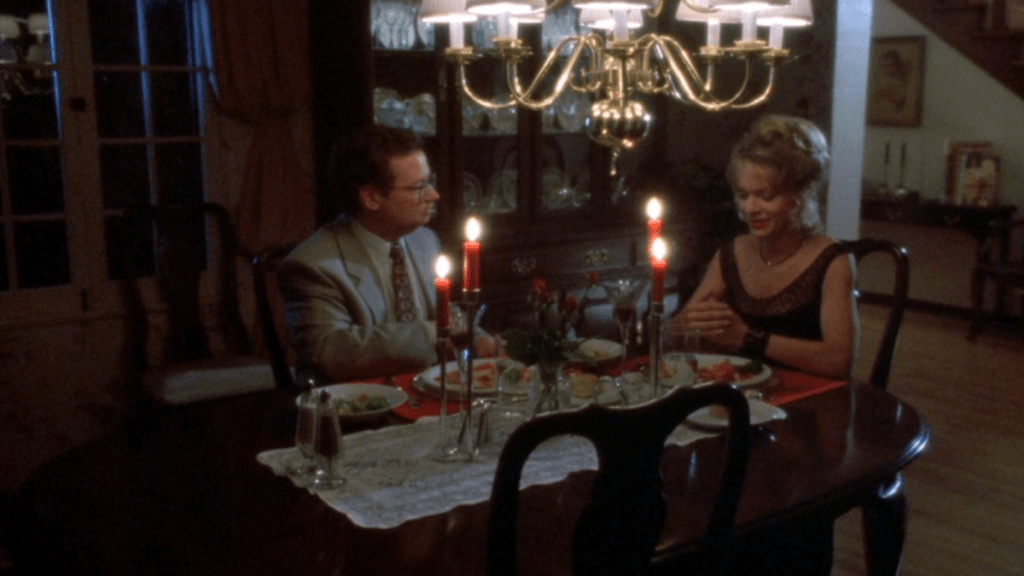
The computer named Agnes wanted to help with James’s love life, giving him tips for women (tips by the way that were remarkably sexist or even a touch misogynistic), especially one woman in particular, Millie.
The computer responded to verbal questions with the large font print on what looked like paper. The entire set up was ridiculous.
Poor little nerdy James really had no chance. He clumsily poured champagne all over Millie on one date. She, for some reason, gave him another date, even after giving her roses, flowers in which she was allergic. James, unintentionally introduced Millie to another co-worker and they hit it off really well.
Turned out that Agnes was sabotaging James, as if he needed the help, because Agnes was jealous. I guess this led to a nervous breakdown for James.. who was just trying to get some work done. James’s boss was Mr. Drysdale from the Beverly Hillbillies.
I am not sure that the show has ever had a successful episode of comedic nature. At least this comedic episode did not try to get by on slapstick and the music changed as the episode moved on.
The penultimate episode of Secret Invasion dropped on Disney + this morning. It did feel that this was an episode that was meant to set up the finale. Not that it is a bad episode, but it did feel that it did not have a ton of events happen.
Last week, I complained that there was no Olivia Colman in episode 4 so my favorite thing this week was the return of Sonia Falsworth.
She is simply my favorite part of this series and I would absolutely watch a series with her as the main protagonist. She is so charming and witty and yet as brutal and matter-of-fact as any character we have seen. She is completely believable as an MI6 agent and her moments with Samuel L. Jackson have been wonderful. I am pleased that she made her way into this episode more prominently than she had been up to this point.
I have also found Priscilla to be a great addition to this story. There is so much background that can be mined between Fury and Priscilla that it feels as the little bit that we have gotten here is gold. I want more of that as well.
Emilia Clarke feels underwritten and I have not had a ton of connection with this character. I wanted more form her with the death of Talos, but she seems very emotionally distant, even in situations where she should feel something. The scene with G’iah and Priscilla gunning down the Skrull house invaders was bad ass though. Emilia Clarks feels like she should be someone that is dominating every moment she is on screen and she just hasn’t. That is not her fault because it does feel as if she is doing what she can, but there just has not been enough with her to justify my emotional connection.
I liked the scene with Fury and ‘Rhodey’ at the hospital, even though there seemed to be a few holes in the logic. Sam Jackson and Don Cheadle are always welcome together on my screen.
There seems as if there is a lot of things happening and with next week’s finale coming, I hope they are able to wrap everything up effectively.
This is another episode out of official order on Prime. I will continue to do the write-up according to Prime’s listing, but include the actual order/numbers.
“Number 12 Looks Just Like You”
Another mysterious and dark future is shown to us in The Twilight Zone where a dystopian future has every young person at the age of 19 is transformed into a beautiful body of their choosing, surgically. There are only a handful of choices to be made and everyone looks alike.
“Given the chance, what young girl wouldn’t happily exchange a plain face for a lovely one? What girl could refuse the opportunity to be beautiful? For want of a better estimate, let’s call it the year 2000. At any rate, imagine a time in the future where science has developed the means of giving everyone the face and body he dreams of. It may not happen tomorrow, but it happens now, in The Twilight Zone.”
The episode reminded me of Pixar’s The Incredibles. In that movie, Syndrome, the villain, wanted to give weaponry to the world because he had a hatred of the super people and he believed that “… when everyone is super… no one will be.” The same idea is going on in this episode, except instead of ‘supers,’ it is beautiful people. In fact, the quote “when everyone is beautiful, then no one will be” is used a couple of times in the episode.
The episode implies that the surgery is not voluntary, and that there is someone behind the scenes that is pushing for this conformation for all. As Marilyn had chosen not to undergo the transformation, but she is taken to the hospital and basically forced into having the surgery.
The three actors: Richard Long, Pam Austin, and Suzy Parker played all of the different roles to show how everyone in this world looked alike. Richard Long, in particular, took on all the male roles in the hospital, from doctors to orderlies to Marilyn’s father and uncle. Collin Wilcox gives a strong performance as the young girl who did not want to join the collective and become just another beautiful person. The ending of the episode is quite tragic and dark.
This is an episode that does a decent job of world building, but does not feel as if it were complete. I think this is one that could have been a successful episode in season four when there were more time for the story.
More grandfather clock shenanigans on The Twilight Zone.
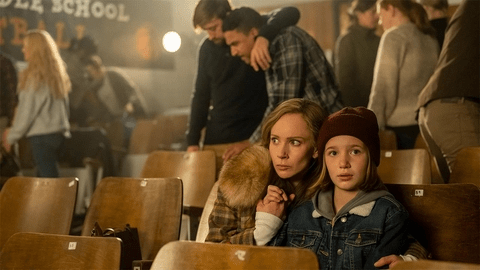
“Each man measures his time; some with hope, some with joy, some with fear. But Sam Forstmann measures his allotted time by a grandfather’s clock, a unique mechanism whose pendulum swings between life and death, a very special clock that keeps a special kind of time—in the Twilight Zone.”
Sam was a grandfather living with his granddaughter and he believed that as soon as the grandfather clock stopped running, he would die. So he was obsessively rewinding it, making sure that it never stopped. His granddaughter and her husband were getting concerned that grandpa had lost his mind.
There was a whole psychiatrist thing happen, but grandpa wound up selling the clock to a neighbor so he could keep taking care of it. However, the neighbors left town for the weekend and the clock was going to stop ticking. Grandpa tried to break in but he got caught by the cops.
So Grandpa had accepted his fate, that he was getting ready to die. He spirit left his body and then… he told his spirit that he wasn’t going to die. He just said, nope… not dying tonight.
This was such a silly end to an episode that could have had some real anxiety to it, but never did. Just a waste of an episode. Ed Wynn is a likable actor though and he did a good job with his performance, but the writing was just not up to par.
“Ring-a-Ding Girl”
I have complained a few times during the Daily Zone that The Twilight Zone had plenty of episodes that had a pretty solid set-up, a very good premise, but the ending just did not pay it off properly. Well, this is the first time that I can remember from the series that the episode was dull and not working for me, until the ending, which was absolutely fantastic and pulled the episode off the heap.
“Introduction to Bunny Blake. Occupation: film actress. Residence: Hollywood, California, or anywhere in the world that cameras happen to be grinding. Bunny Blake is a public figure; what she wears, eats, thinks, says is news. But underneath the glamour, the makeup, the publicity, the buildup, the costuming, is a flesh-and-blood person, a beautiful girl about to take a long and bizarre journey into The Twilight Zone.”
Bunny Blake received this mood ring from her sister that she hadn’t seen in years and, though she was expected to be in Rome to film her next movie, she decided to stop off in her hometown and see her sister. Bunny was seeing images in the ring of people she knew from the town and they kept asking for Bunny’s help.
Bunny was intended to be shown as a stuck-up, vain actress that would look down on the common world. However, Maggie McNamara, the actress playing Bunny, was so charming and relatable, I never once held any of that against her. You could feel that there was something going on with her, but I had no idea what it was. And that is what would eventually make this episode better than expected.
Bunny was definitely trying to get the town to not go to the park for the annual founder’s day picnic. None of it made sense… until it did.
We find out that Bunny was actually on a plane that would crash into the park, killing all the people who attended. But since Bunny had worked to get the people elsewhere, she saved most of the townspeople. We then learn that Bunny was truly on the plane and had died in the crash, and that the Bunny who was here visiting her sister and fixing it so the town would not be at the park was just a spirit.
“We are all travelers. The trip starts in a place called birth, and ends in that lonely town called death. And that’s the end of the journey, unless you happen to exist for a few hours, like Bunny Blake, in the misty regions of the Twilight Zone.”
As I was watching this episode, I was thinking that it was going to be a very low 3 or perhaps a high 2 for the rating, but then the ending happened and I found myself elevating the episode all the way up to …
That shows how a successful twist at the end of the show can improve what they had seen. It made everything make more sense and put a real emotional touch on the episode.
“You Drive”
I hated Oliver Pope immediately.
There have been a bunch of characters that have appeared on The Twilight Zone over the previous 133 episodes that I disliked. There were even a few that I hated, but Oliver Pope is right near the top of that list.
“Portrait of a nervous man: Oliver Pope by name, office manager by profession. A man beset by life’s problems: his job, his salary, the competition to get ahead. Obviously, Mr. Pope’s mind is not on his driving.”
When the narration finished, Oliver hit a kid on a bicycle with his car and then drove off. Rod Serling continued his narration:
“Oliver Pope, businessman-turned-killer, on a rain-soaked street in the early evening of just another day during just another drive home from the office. The victim, a kid on a bicycle, lying injured, near death. But Mr. Pope hasn’t time for the victim, his only concern is for himself. Oliver Pope, hit-and-run driver, just arrived at a crossroad in his life, and he’s chosen the wrong turn. The hit occurred in the world he knows, but the run will lead him straight into—the Twilight Zone.”
Oliver went home, filled with guilt, but not filled enough to do anything about it. He was more concerned with his job and a guy who he believed was trying to get his job. And when that guy got arrested as a suspect in the hit-and-run, Oliver celebrated the fact that he did not have to worry about his job any more.
The episode started with some good creepiness as the car in his garage was making noises. Unfortunately, the rest of the episode got really silly, as the car would honk its horn, drive itself back from the shop, and chase Oliver down the road.
There was a moment when it looked like the car was going to run over Oliver’s head, but it stopped short of that. Instead, it drove Oliver to the police station where he, apparently, confessed to the hit-and-run that had killed the boy.
I don’t know if this episode inspired Stephen King to write Christine, but it did not inspire me to do anything but want a more satisfying punishment for Oliver.
June 25, 1876 is a dark day in the history of the US Military. June 25, 1964 was a dark day in the history of The Twilight Zone.
The episode took the story of Custer’s Last Stand and had three soldiers from the show and had them tracing the path of the past, only to get stuck in it.
“June twenty-fifth 1964—or, if you prefer, June twenty-fifth 1876. The cast of characters in order of their appearance: a patrol of General Custer’s cavalry and a patrol of National Guardsmen on a maneuver. Past and present are about to collide head-on, as they are wont to do in a very special bivouac area known as….the Twilight Zone.”
It was weird because we started with three military officers from the Old West and I thought we were getting another of the Western themed episodes of The Twilight Zone. A few moments later, there was a tank and that threw a monkey wrench into the plans.

This episode gave me more specifics about the lead up to the slaughter of Custer and his men, which was fairly interesting, but the episode did not engage me in much else. It was an intriguing premise, but the overall execution of the episode felt pretty lacking.
“A Short Drink from a Certain Fountain”
A new version of Dr. Jekyll and Mr. Hyde, the idea how scientists will test their formulas on themselves… although this is a scientist testing his formula on his brother.
“Picture of an aging man who leads his life, as Thoreau said, ‘in quiet desperation.’ Because Harmon Gordon is enslaved by a love affair with a wife forty years his junior. Because of this, he runs when he should walk. He surrenders when simple pride dictates a stand. He pines away for the lost morning of his life when he should be enjoying the evening. In short, Mr. Harmon Gordon seeks a fountain of youth, and who’s to say he won’t find it? This happens to be the Twilight Zone.”
So, Harmon basically talks his brother into testing his formula on him because he wanted to be young again so he could keep up with the love of his life, his young wife Flora. Flora, btw, is one of those horrible characters from the Twilight Zone that you just hate.
Of course, it is also a Fountain of Youth trope and it turns out much like you would expect.
The relationship between Harmon and Flora was inconsistent and unlikable. There was no reason I believed that Harmon was in love with this rotten woman and I believe even less that she wouldn’t just walk out the door and return with a lawyer when the doctor threatened to have all of his brother’s money and the gifts that he gave her away from her if she did not take care of her newly ‘childish’ husband.
This one was not one of the better episodes of the show. Not much to benefit for the story.