
January 21
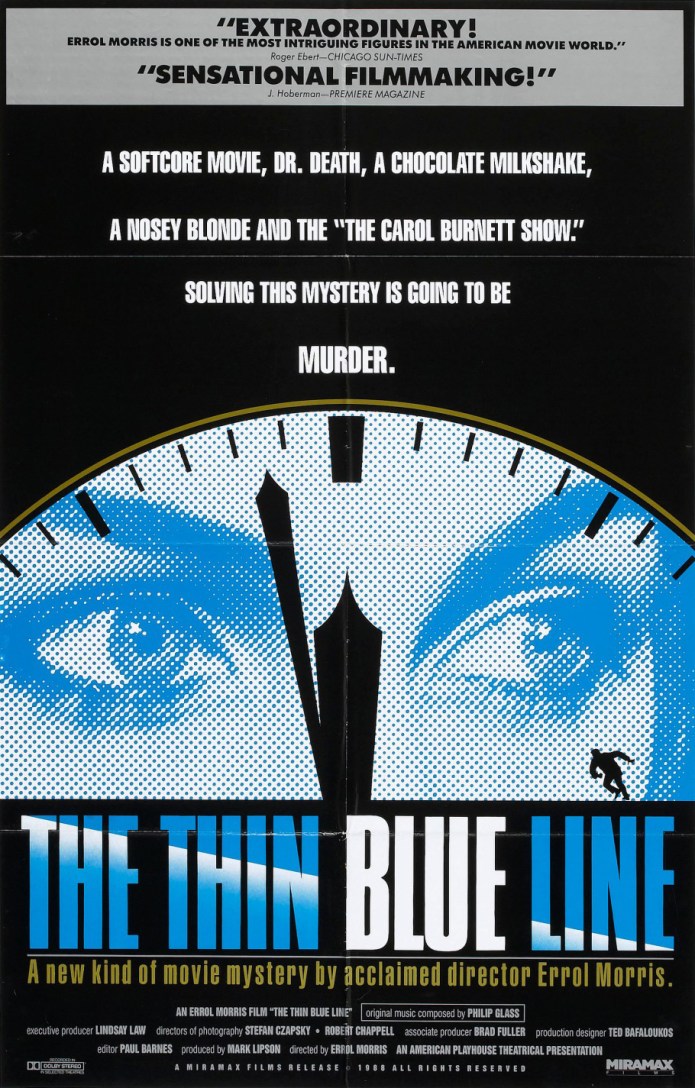
The Genre-ary for today is the oldest of the documentaries I watched for this DailyView so far. It was from 1988 and it was called The Thin Blue Line. It documented the case of wrongfully convicted cop killer Randall Adams, who had always claimed that he was innocent. After the release of this documentary, the case against Adams was reexamined and he was set free.
Randall Adams had run out of gas and had been picked up by a 16-year old runaway named David Harris. Adams and Harris hung out for the night, drinking, smoking marijuana and going to the movies. Adams claimed that he then returned to his motel and went to sleep. Harris claimed that they went out again and were pulled over by the police and that Adams shot the cop and drove off, leaving the officer to die in the street.
Apparently, the prosecutors and investigators targeted Adams as their killer, even going as far as to give Harris immunity to be their eyewitness. There were other eyewitnesses whom had driven past the pull over before it turned deadly. These witnesses claimed to have seen Adams too. However, these witnesses were dubious to say the least.
The documentary interviewed both Adams and Harris in an effort to tell the story that had happened. There were also interviews from the defense attorneys, the judge, and several of the police involved before and after.
Another thing that this doc did was to use recreations to show the events of the night through a variety of POVs. At the time, most documentary films did not use this technique in its story telling methods and it gave The Thin Blue Line a different feel. In 2025, some of these recreations were cheesy, but I did get used to them as the film went on. The film also used a soundtrack, scored by Phillip Glass, that was very memorable and created a mood for the film.
This was extremely influential in the world of the documentary. Many true crime style docs take concepts and storytelling techniques from The Thin Blue Line. It was a compelling story at the heart of the doc, with interviews with everyone involved.
 EYG- Embrace Your Geekness