It seems like the Coen Brothers’ films are the ones that I need to see more than once before finalizing on an opinion. Fargo leaps to mind immediately. Now there is No Country for Old Men.
I remember watching this the first time at a friend’s house and neither of us were paying too close of attention to the movie. It got to a point where we just decided that it was time to stop because the film had failed to grab out attention. After watching this for the Do Over, I can guess that we did not give this the chance that it deserved, because this is much better than I ever remembered.
Llewelyn Moss (Josh Brolin), a local hunter in rural Texas, discovered a drug deal that had gone wrong and, instead of calling the police, he took the bag of $2 million dollars with the hope of starting a new life with his wife Carla Jean (Kelly Macdonald). Psychopathic killer, Anton Chigurh (Javier Bardem) wound up on the trail of Llewelyn, leaving a trail of bodies in his path. Sheriff Ed Tom Bell (Tommy Lee Jones) investigated the case, reminiscing about a different time.
There were so many jarring moments in this movie that it totally keeps you off guard. Throw in some brilliant performances, especially from Javier Bardem and Josh Brolin, and this movie is unexpected and extremely well done.
When something specific happens that I do not want to spoil, it flipped the entire film on its head. It was so unexpected that it, at first, felt like it sent the entire story off the rails. However, the chaos of the situation I think is part of the concept of the film. The more I reflected on the ending, the more I enjoyed the shock of what the filmmakers were setting up, despite the overall depressing nature of the world they created.
I’m not sure the film ends in a satisfying way, but, again, I think that is part of the intent. I’m not sure how many times I would revisit this, but I found this much more engaging this time for sure.
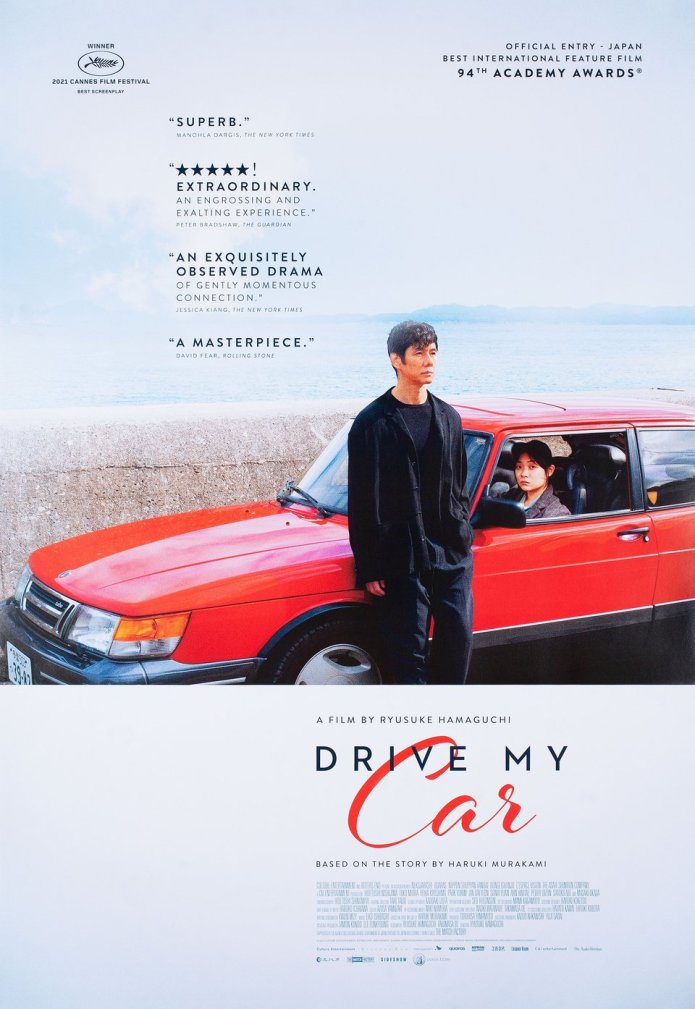
Today, I opened up HBO Max and watched one of the films that I have been waiting to watch for awhile. Drive My Car was getting a ton of buzz around Oscar time and it had become available on HBO Max around that time, and I really considered watching it then. However, I added it to the June Swoon list and decided to wait. Meanwhile, every time I looked at “My List” on HBO Max, there Drive My Car was looking right back at me.
Well, today was the day for the 3 hour Japanese film to finally get played. Was it worth the wait? Sure. Did it blow my mind? Not quite.
According to IMDB: “Two years after his wife’s unexpected death, Yusuke Kafuku (Hidetoshi Nishijima), a renowned stage actor and director, receives an offer to direct a production of Uncle Vanya at a theater festival in Hiroshima. There, he meets Misaki Watari (Toko Miura), a taciturn young woman assigned by the festival to chauffeur him in his beloved red Saab 900. As the production’s premiere approaches, tensions mount amongst the cast and crew, not least between Yusuke and Koshi Takatsuki, a handsome TV star who shares an unwelcome connection to Yusuke’s late wife. Forced to confront painful truths raised from his past, Yusuke begins – with the help of his driver – to face the haunting mysteries his wife left behind.“
This film is a real character study mainly featuring Kafuku and Misaki, as the film goes deep into the loss and the grief they suffered and were having what was a difficult time getting past. Both characters were emotionally distant but would eventually bond over the Saab 900 and Misaki’s skill at driving the car. As time passes, they begin talking about their losses, able to put in words thoughts that had clearly been weighing on their mind.
While there were a few other characters in the film that were interesting, the main focus was on the director and the driver. There was a character who was one of the actors in the play who spoke with sign language. I found her to be a fascinating character and she was one of the earliest people who helped start the bonding between Kafuku and Misaki.
I’m not sure this needed to be three hours long, as it did feel its length. Still, it was beautifully shot and the performances were strong. Drive My Car won the Best International Feature Film Academy Award this year and I could see why. It also received a nomination for its director, Ryûsuke Hamaguchi, though he did not win.
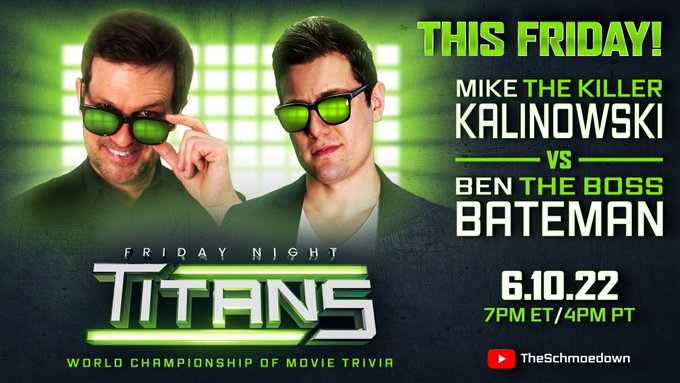
Big match feel this week as we got the second ever match-up in singles of Ben “The Boss” Bateman and Mike “The Killer” Kalinowski.
Mike is now the face which helped in this match-up because Ben Bateman has totally embraced his obnoxious heel role, which makes him extremely difficult to deal with. I have never been a fan of Bateman so it was nice to cheer against him. Unfortunately, Bateman was able to defeat Kalinowski. Mike battled hard all match, but Ben was in control most of the way.
The two of them were animated with their banter and trash talk. It seemed as if they were frustrating Mark Ellis and Ken Napzok at the desk with the continual talking.
With Ben Bateman winning this match, he earned a number one contender match against “Lady Justice” Marisol McKee. Marisol gave Ben a piece of her mind when he tried to interrupt the interview with Mike and Shannon afterwards.
Opening match had two new debuting teams. Last week I complained about team names and there is another example this week. The Culture is a team of Amaru Moses and Klee Wiggins. I like the team, but that name is just about as non-descript as it can get. They took on The Dojo, which I liked better as a name because you had a legend in Mark Riley and a young competitor learning at his side in Jacoby Bancroft. The Dojo worked. And the Dojo won. Riley and Jacoby could be a very capable team in the future.
Oh, and what the heck was Winston Marshall doing?
I’m curious how the tournaments are going to work this season with Friday Night Titans having two matches a week. I have been enjoying the show each week, but I am curious how it will work out.
I gained a whole new respect for Oscar Isaac after watching him on the Moon Knight Marvel TV show. His acting chops were outstanding. I had seen him in other films before, but he did not jump out at me as much as he did when he was Marc Specter on Disney +.
Perhaps I should go back and look closer at some of his other performances.
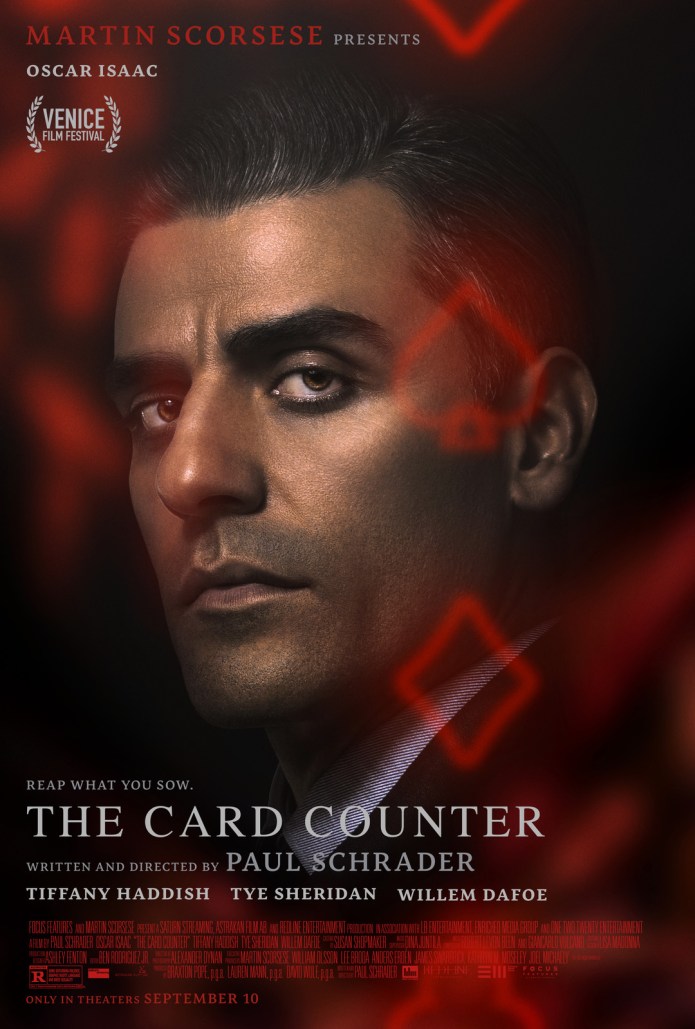
Oscar Isaac starred in The Card Counter, a drama involving a man who learned how to count cards while in a military prison and who began to use the skill as a gambler. Isaac was completely amazing in the role and his performance was easily the standout performance of the film.
Oscar Isaac played William Tell, who had a dark past that he was trying to put behind him when he was approached by La Linda (Tiffany Haddish). La Linda ran a stable of gamblers for a group of investors who back gamblers for a portion of their winnings. Tell turned her down. However, when he was approached by another person, a younger boy Cirk (Tye Sheridan), who told Tell that he knew who he really was and that Tell had known his father. Both were trained by a Major John Gordo (Willem Dafoe) in advanced interrogation techniques which led to Tell’s imprisonment and Cirk’s father’s suicide.
Tell convinces the boy to come with him and join him on his gambling trips. He called La Linda, telling her that he had changed his mind and wanted to join up.
Oscar Isaac was amazing here, but I do not want to take anything away from Tiffany Haddish either because she absolutely matched him in every scene that they shared.
The film took more swerves than I expected and it really worked. The whole narration by William Tell explaining some of the intricacies of poker as well as counting cards. It was a fascinating addition to the film that was already full of tension and suspense.
The character of William Tell was extremely deep and developed.
The Card Counter was a very solid and enjoyable film.
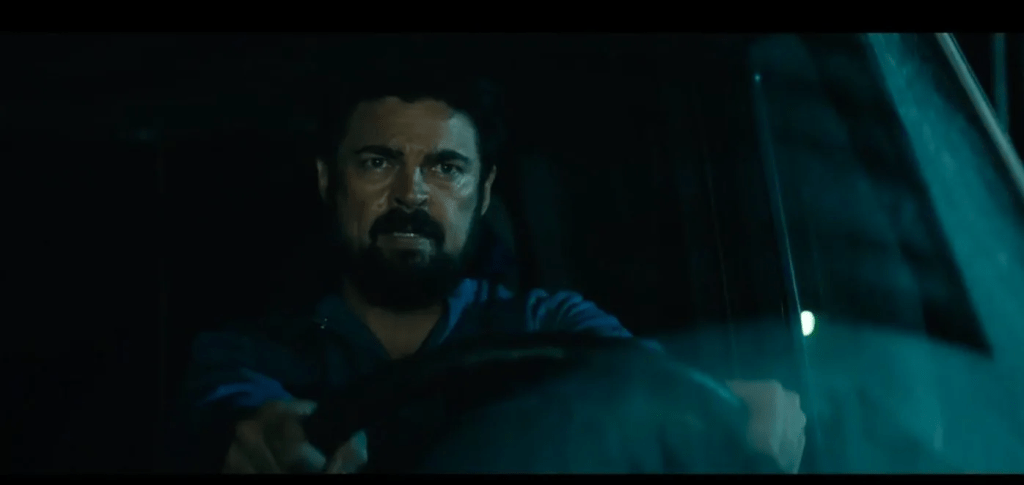
Every season I get to a point where I am just on the edge of hating Billy Butcher and then he pulls back enough for me to ease down again. We are just about to that point in season three. Butcher clearly cares for Hughie and MM, but he couldn’t give two craps about Kimiko and, because of that, he treats her like a weapon that he can do with what he likes. He looks down on the her, probably because she is a supes.
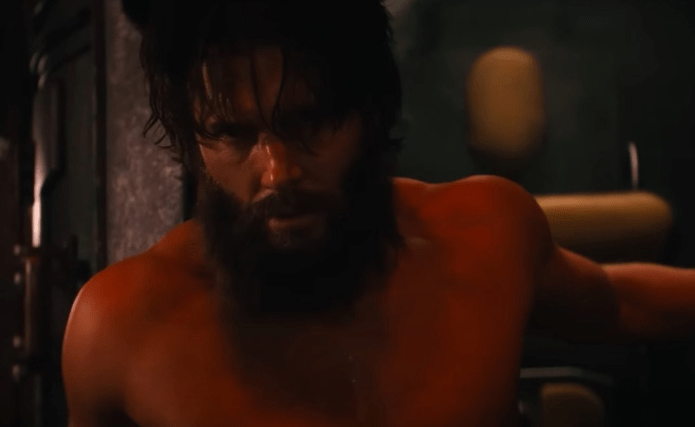
The season is halfway over and things could not be much worse than they are right now. Butcher and the Boys just awoken Soldier Boy with his gigantic beard and he blasted Kimiko with his chest ray (something I do not know if Soldier Boy could do). The blast was killing Kimiko as her healing did not seem to work. I wonder if that is the eventual way to stop Highlander.
I do not want Kimiko to die, but it was clear that something was going to happen to her or to Frenchie when they had decided to leave the group after this final mission. That is a terrible sign in super hero stories. Don’t be happy and think you are getting out.
Highlander has also really been feeling his oats lately too. He went to Victoria and had her turn on Stan. He had been tormenting all of the members of the Seven. You can tell that he believes he has no weakness right now.
With Starlight and Maeve teaming up to plan an attack on him, Starlight went to Super Sonic for help. This guy has always looked to be a straight laced hero and I did not really expect him to turn on her. However, when he tried to recruit A-Train to the cause (after a confrontation with The Deep), I saw this was a bad move. I even said out loud, “don’t tell him!”
Unfortunately, I was right. A-Train went to Highlander (off-screen) and told him about the plot against him, which led to Highlander murdering Super Sonic as a way to try and keep Starlight in line. It was not surprising that Super Sonic was killed, but it was a shocking moment. Funny, I was listening to John Campea’s show recently when he and Rob Meyer Burnett were talking about Super Sonic, and they set the Over-Under for Super Sonic’s death at 5.5 episodes. Well guys, it is under.
Oh, I skipped over Kimiko’s dildo fight. Not a sentence one would expect to type. It was an awesome segment.
The Boys episode 4 is the low point for the season (at least I hope). I really hope that Highlander gets his comeuppance this season. He deserves it.
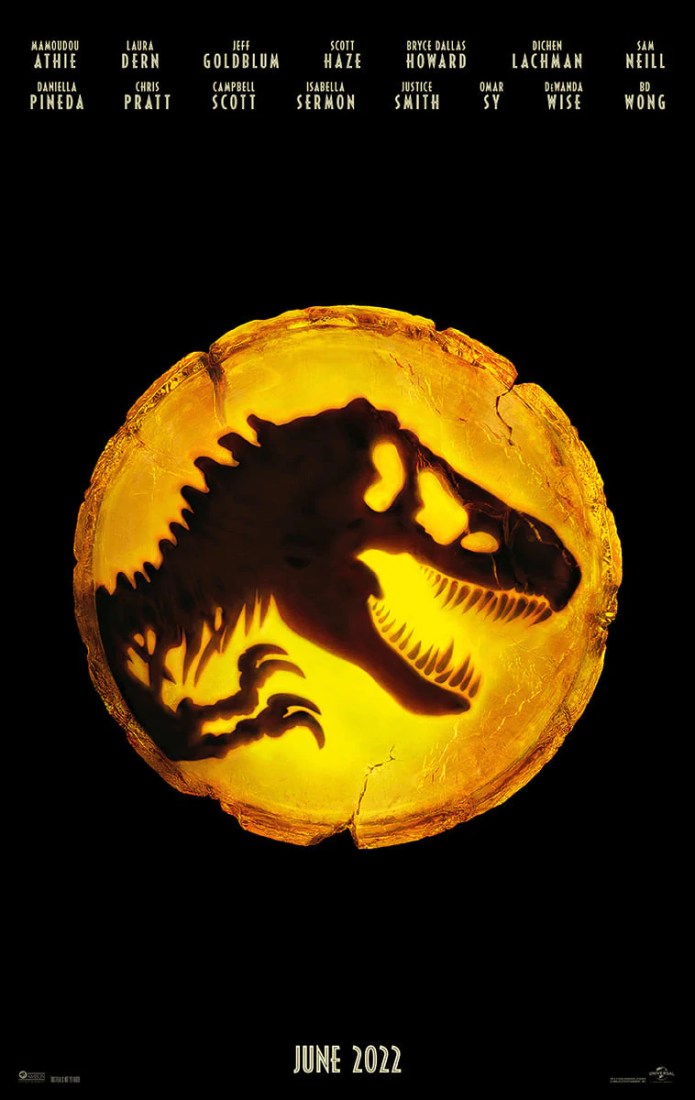
Jurassic World: Dominion is supposedly the final of the Jurassic Park franchise, as this movie brought together characters and actors from across the franchise in the finale. Directed by Colin Trevorrow, Dominion started with the dinosaurs found across the country, free and wild.
I had heard plenty of negative comments about the movie online, so I had entered the theater with low expectations. As it normally happened, low expectations makes it easier to enjoy what I am watching. There is no doubt that Jurassic World: Dominion was not a good movie, but I have seen way worse. Heck, I found this much better than 2018 Jurassic World: Fallen Kingdom.
While the dinosaurs roamed the earth, a mysterious group of large locusts began destroying the food supply of the country. The company Biosyn has been creating these locusts and working with the dinosaurs as well. Agents of Biosyn kidnapped Maisie Lockwood (Isabella Sermon) away from Owen Grady (Chris Pratt) and Claire Dearing (Bryce Dallas Howard), who had been raising her as their own. The raptor Blue had also given birth to a little raptor and that raptor was taken by Biosyn’s hired henchmen.
Owen and Claire pursued the Biosyn henchmen in an attempt to recover Maisie and the raptor. Meanwhile, Dr. Ellie Sattler (Laura Dern) went to recruit Dr. Alan Grant (Sam Neill) to help her infiltrate Biosyn and get evidence about the company being behind the locusts. She was invited in by Dr. Ian Malcolm (Jeff Goldblum) who was inside the company already.
Seeing the mixing of these characters from Jurassic Park/World was the best part of the movie. Jeff Goldblum is always great and there is still wonderful chemistry with Laura Dern and Sam Neill. This is all nostalgia and it was great. I enjoyed the addition of two new characters too: Head of Communications of Biosyn Ramsay Cole (Mamoudou Athie) and pilot Kayla Watts (DeWanda Wise).
The CGI/special effects were good, but there were a few times when it was not up to the standards set prior to this film.
Part of the issue I had with the film was there were several times, in particular during chase scenes, it was difficult to see what was going on. The shaky camera work here is meant to cover up some of the CGI that was just not good. This was a huge chunk of the first hour to an hour and a half of the film.
Which, by the way, Jurassic World: Dominion was two and a half hours and it felt like it. Many big action films with long run times seem to fly by but this one felt its length.
I thought the last hour or so was better, once the group came together and arrived in the base of Biosyn. However, there were also plenty of dumb choices and moves that make little sense. Things that are done simply because the plot needs it to be done.
While there are sections of Jurassic World: Dominion that I liked, it does not pull together in a sensible thriller and it has apparently lost the wonder of the first film.
I have never seen even one episode of the animated TV series Bob’s Burgers before seeing this movie in the theater today so I was not a fan. I had nothing against it either. It was a blank slate. I have a feeling that fans of Bob’s Burgers animated series would love this movie. For me, it was okay at times and dull at others.
According to IMDB: “The story begins when a ruptured water main creates an enormous sinkhole right in front of Bob’s Burgers, blocking the entrance indefinitely and ruining the Belchers’ plans for a successful summer. While Bob and Linda struggle to keep the business afloat, the kids try to solve a mystery that could save their family’s restaurant. As the dangers mount, these underdogs help each other find hope and fight to get back behind the counter, where they belong.“
I admit that I was not expecting this animated film would also have musical components to it, and the first song surprised me. I will say that the songs were pretty decent and catchy.
The movie was fine, but there was little that stood out to me. I can see this as being just a longer version of the TV show.
The original voice cast from the TV show returned for the movie including H. Jon Benjamin, Dan Mintz, Eugene Mirman, Larry Murphy, John Roberts, Kristen Schaal, David Wain, Zach Galifianakis, and Kevin Kline.
The story of the film was simplistic and typical for a situation comedy show like Bob’s Burgers. Bob’s Burgers restaurant was in trouble with paying bills, Louise is feeling down and unhappy about the fact that she wore a hat with rabbit ears and she had a ton of doubt about her person and Tina wanted to ask Jimmy to be her summertime boyfriend.
There was also a larger piece of the story involving an attempt to replace Wonder Wharf with a mega-park. Who was behind this (including a murder of Cotton Candy Dan, a worker at the Wharf six years ago) was one of the central mysteries of the film. However, it was pretty obvious who was behind the crime because the red herrings were clearly set.
I did not hate this, but I did not find it engaging either. There were some clever use of the language/dialogue and the animation looked much like the typical TV show animation. It was silly but I was bored at times. I am sure that if I had been a fan of Bob’s Burgers this would have hit differently for me.
This is probably not the film you want to watch every Thanksgiving.
Based on his one-act play, The Humans was written and directed by Stephen Karam. The film told the story of the Blake family during Thanksgiving at Brigid (Beanie Feldstein)Blake’s new apartment with her boyfriend Robert (Steven Yeun). Her parents Erik (Richard Jennings) and Deirdre (Jayne Houdyshell) were in attendance along with her sister Aimee (Amy Schumer) and her grandmother Momo (June Squibb). Momo was slipping further into senility, Aimee had lost her job, Richard was struggling to get by and Erik and Deirdre were very judgmental over the new apartment.
The film mostly took place within the confines of the small apartment and depended heavily on the acting chops of the strong cast.
There was something bizarre going on inside the apartment as well as Erik was being haunted by visions of a faceless woman. Erik was a witness of the 9-11 tragedies as he had intended on being on the observation deck of the Twin Towers as he awaited for Aimee to complete a job interview. However, the decks were not yet open and so he was in a donut shop across the street.
The dialogue carried the film and the elements of horror were kept in the background as questions of something in the walls were hinted at by the film.
At first, it was a little difficult to follow the movie, because there was not that much happening, but I enjoy many of the actors involved so I kept watching and, as I got to know these characters more, I began to become invested in their interactions and their family dynamic.
I love June Squibb. I think she improves any project that she is involved in and she gives a heart-breaking performance here as Momo and her decline into darkness inside her own mind.
The ending 20 minutes or so was compelling as could be and I was glad that I continued to watch the movie after the beginning.
However, there is a definite downer tone to the film and I would not necessarily want to watch it again. I am glad I watched it once, for some great performances.
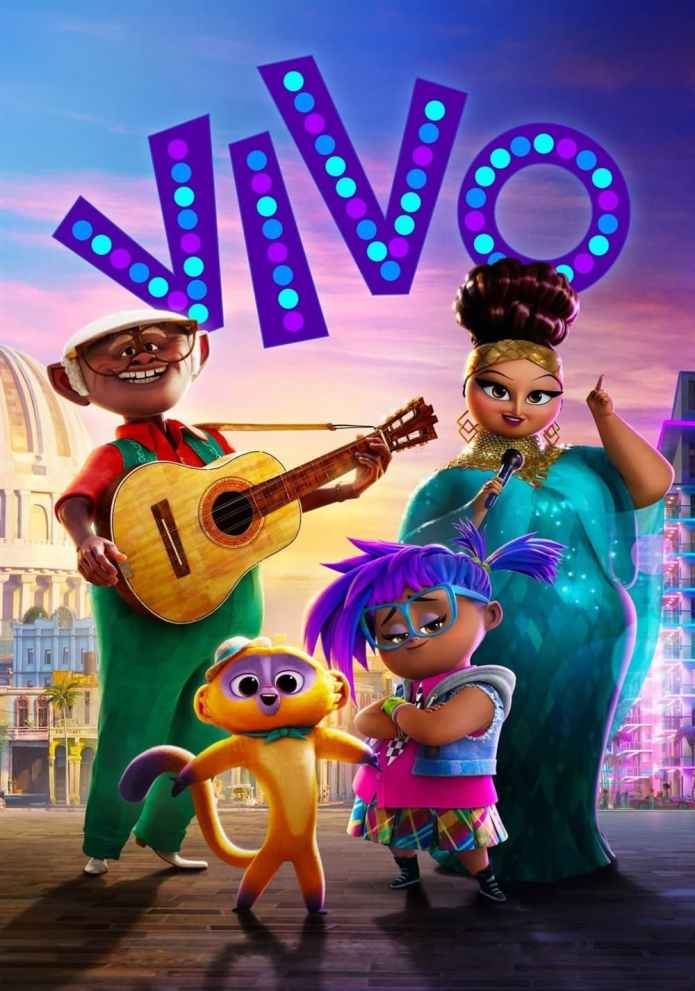
I was looking for a shorter film today to work for the June Swoon. I was hoping for somewhere around 90 minutes or so and so I stopped on the Sony Animation film on Netflix called Vivo.
I couldn’t believe it when I heard Lin-Manuel Miranda’s voice coming out of the animated kinkajou that was named Vivo. This was a musical featuring a kinkajou that was a street performer along with an older man named Andrés Hernández (Juan de Marcos González). Andrés received an invite to come see a famous singer named Marta Sandoval (Gloria Estefan), whom he had left years before. He was hoping to deliver to her the song he wrote when she left, but he died before he could leave Cuba for her Miami concert.
Vivo decided to deliver the song for him, with the help of a little girl without much musical skill named Gabi (Ynairaly Simo).
Much of Vivo was average, particularly the story. There was little original among the plot or of the character design. However, the music was really strong, many of which were written by Lin-Manuel Miranda himself. The animation was well done too, using some excellent computer generated animation that made the film easy to watch.
I would be lying if I said that, despite the formulaic structure, I did not find myself a little emotional at the ending of the film so there must have been something that the movie had done right.
I wanted to shout out one particular voice actor that I picked up. Michael Rooker appeared as a Burmese python named Lutador.
Vivo is not a stand out film, but it had some great music and looked good. You could do worse.
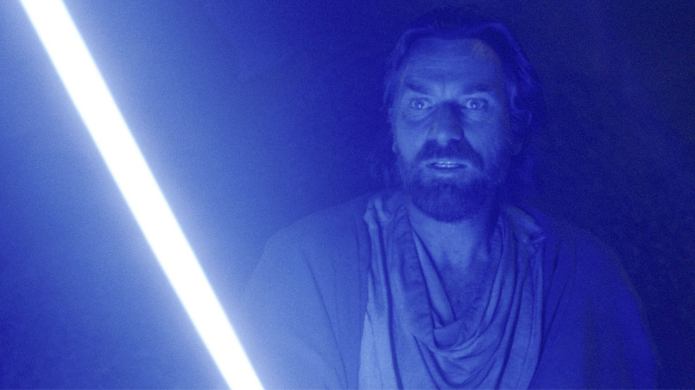
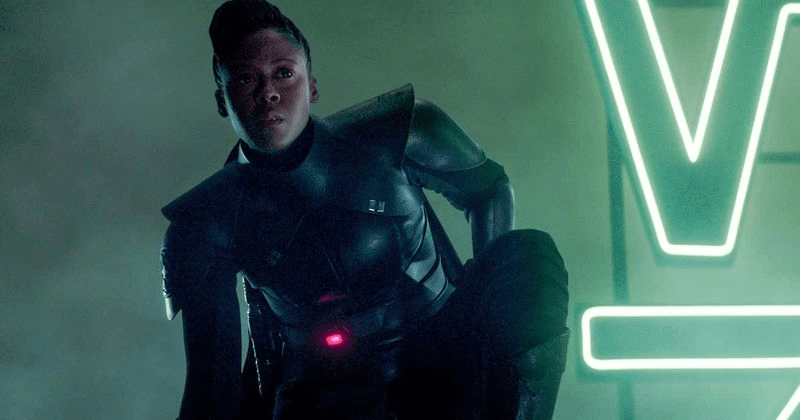
Episode 4 of Obi-Wan Kenobi is another rescue mission as Obi-Wan and Talia head into an Empire stronghold to rescue Leia, who had been captured by Reva, the Third Sister (which was probably one of my biggest issues with last episode).
Obi-Wan and Talia head into the heart of the beast pretty easily. They find Leia, fairly easily too. And there is yet another Deus Ex Machina to pull his fat out of the fire.
There were a couple of interesting things: such as Obi-Wan using the force to hold back a cracking window with water behind it. I liked that moment (it reminded me of the “Not Penny’s Boat” scene form LOST, just with less emotion behind it).
It was also weird that Reva was able to foresee the possibility of Leia’s escape and plot to stash a tracking device on her droid. When she told Vader that she had a tracking device on the ship, I rolled my eyes big time because I did not think there was any chance that Reva could have possibly planted a tracker on the ship. However, at least it is plausible that she planted it on Lulu.
My problem is that this really does not seem to have any purpose in this episode. We basically ended up in the exact same spot we were before the episode. There were a few nice scenes with Obi-Wan and Leia after the rescue, but those did not require going through the rescue.
Only two more episodes and, for me, there have been two great episodes and two average to below average episodes.
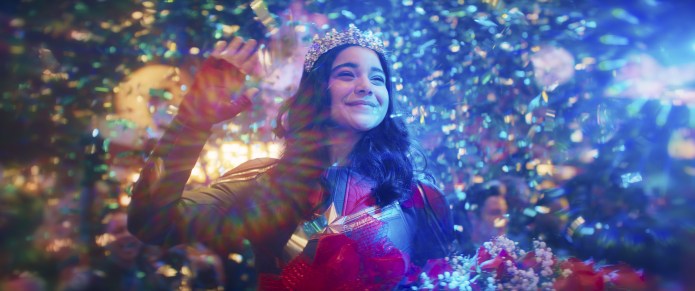
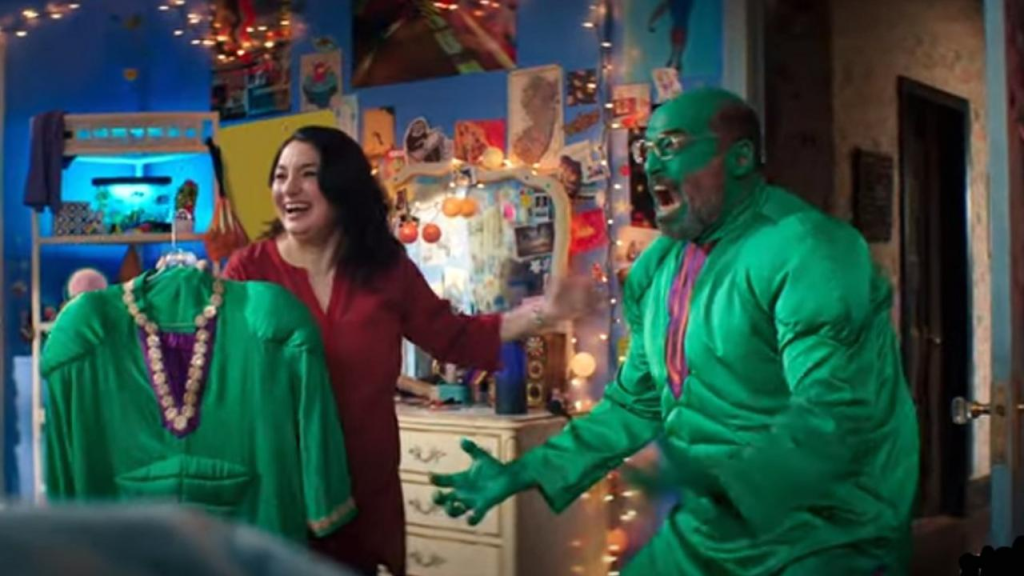
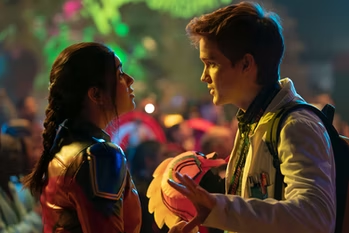
The newest Marvel Disney + show debuted this morning and it was Ms. Marvel. I’m not going to lie. I was not sure how this would work. I have enjoyed the character of Kamala Khan in the comics, but I was unsure how that would translate and would I enjoy watching a coming of age version of the character?
The answer is…very much so.
I really enjoyed the first episode of Ms. Marvel, which brought a fun. energetic burst of energy to the screen. Colorful, charismatic and charming, Ms. Marvel Episode 1 combined the feel of a John Hughes high school film with that of Scott Pilgrim vs. the World.
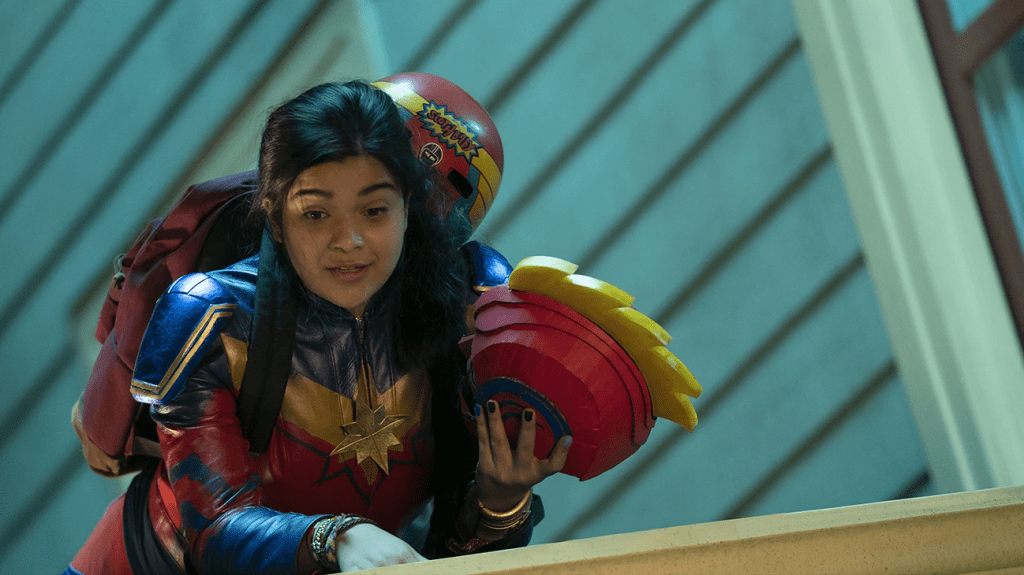
Kamala Khan was a 16-year old High School Junior who daydreamed her way through the day with visions of Marvel superheroes bursting form her imagination. Creating fan fiction on YouTube, Kamala was able to create adventures for her favorite superhero, Captain Marvel.
With the first ever Avengercon coming up, Kamala, and her best friend Bruno, tried to figure out a way that they could convince Kamala’s overprotective parents, Yusuf and Muneeba, to let her go.
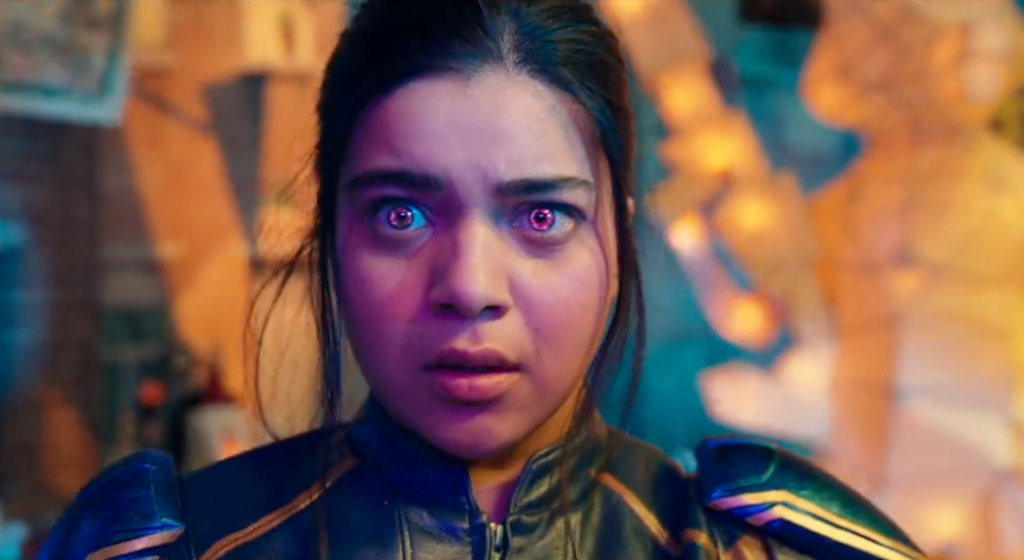
The show has played with the origin of the character of Ms. Marvel. In the comics, Kamala Khan is an Inhuman and gained her powers through exposure to Terragin Mist, as the other Inhumans have. However, here she found a arm band of some kind and it gave her these light based powers. Her TV show abilities are still undefined as of yet, but I saw some highlights on Jimmy Fallon showing Kamala and Bruno working on them on a roof top. I know there has been some controversy over changing Kamala’s powers, but that does not bother me. These seem to be a interesting variation of them and we do not know where the show will be taking them. I’m fine with what we got.
Easily, the best part of this show is young actress Iman Vellani, who, in her first acting role, is so charming and so realistic that you can’t help but be swept up in her life. She may be the perfect casting for the first Muslim superhero to have her own comic.
The cast around Iman is amazing too. I immediately loved everyone in her family, Bruno, the actors at school. It all just flowed so wonderfully.
I also loved how they worked in the Pakistani culture while still making me relate with her. I am looking forward to expanding that culture.
The visual style of the show is unlike anything that we have seen in the MCU yet and it is so full of humor and creativity. There are some amazing shots included that create a style all of its own.
I am excited to see what comes next in this enjoyable new show.
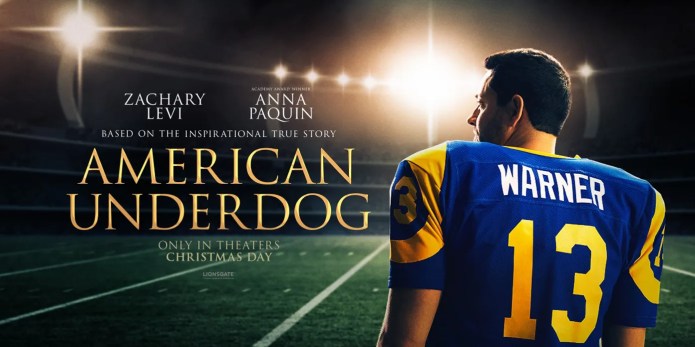
The first movie I had on the list for the June Swoon was American Underdog. When it was out, honestly, I was not in a huge rush to see it. I had people tell me that it was really good, but I just was not interested in heading to the theater to see it. So when it came up on streaming, I had come up with the idea about the June Swoon and I decided that this would be one of the films I watched during that time.
I have now finished the film, starring Zachary Levi as Kurt Warner, NFL MVP and Hall of Famer, detailing his bumpy and unlikely rise to stardom in the NFL, and I have to say that it was better than I thought it was going to be.
The film showed the struggle of Kurt Warner to get on the field to play the game, starting in University of Northern Iowa to the Iowa Barnstormers in the Arena League right up with the St. Louis Rams. It also provided the story of his relationship with Brenda (Anna Paquin), a single mother that Warner met in a country bar and who would eventually become his wife. There were plenty of terrible tragedies and difficult challenges that the pair went through that are dealt with in the film. Some of these scenes feel surface level though as if they are touched upon but not delved into deeply.
My biggest issue with the film prior to seeing it was the word that it was a faith-based film. Many of those kind of films are just so “hit you over the head” with their religious view that it takes away from the story that is being told. However, I did not find that in this movie at all. It was not preachy and the faith-based aspect was simply part of the characters. It was handled extremely well and fit in with the underdog tale that was being weaved.
Zachary Levi is charming and he has a decent chemistry with Anna Paquin. They feel well cast in the film, but I do feel like the script could have gone deeper with the story. There are parts of the film that felt more like a Lifetime original than a big screen movie.
However, a lot of the film does work and it tells a clearly inspirational story. I think the football scenes work very well in isolation and Levi and Paquin make a great pair. I would have liked to see more of a crossover between these two main story arcs. Still, it was a decent watch and I am happy that I finally got to the film.
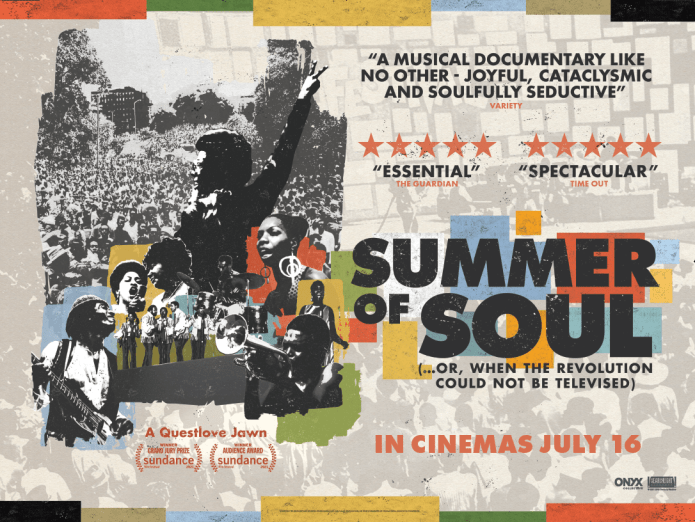
I have been looking forward to watching Summer of Soul for quite awhile now. I wanted to watch it back around Oscar time, but I decided that I would wait until June for the June Swoon to finally watch it. It was easy to find on Disney + and I placed it on my watchlist. Today, I finally loaded up the Oscar winning documentary from Ahmir “Questlove” Thompson from the Roots.
Questlove’s documentary told the story of the 1969 Harlem Cultural Festival, which took place on six Sundays between June 29 and August 24 in Harlem, New York. The documentary is told through footage of the event that had never been seen, as well as news footage and present day interviews of artists involved.
Some of the greatest black entertainers of the time participated in the festival including Stevie Wonder, The Fifth Dimension, B.B. King, Gladys Knight and the Pips, Sly and the Family Stone, The Staple Singers, Mavis Staples, Blinky Williams, Mahalia Jackson, Nina Simone, and The Chambers Brothers.
There is more to this documentary than just playing the footage from 1969 and letting the remarkable moments sell your show. The film does a great job of showing how significant piece of history this was despite how few people in the cultural zeitgeist remembered. Interviews with the artists and others involved really compliment the ride that we are on with this fantastic music. We hear from Jesse Jackson and the Mayor of New York among others.
The film also showed the cultural significance and how this music was the soundtrack to the civil rights battle and the importance of finding a voice of a revolution.
It is two hours of entertainment that can also open up the thoughts of a generation. It was an exceptional documentary.
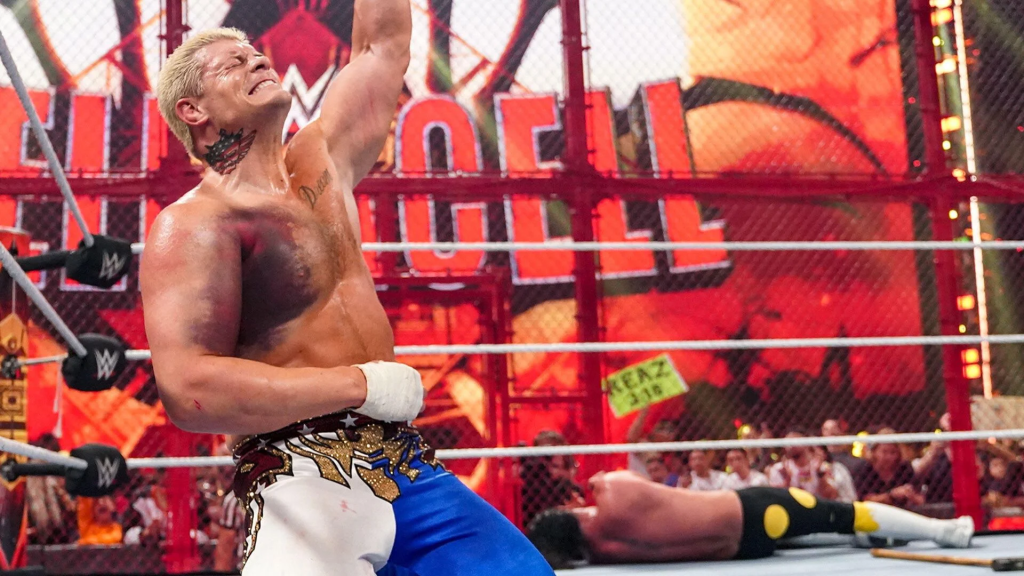
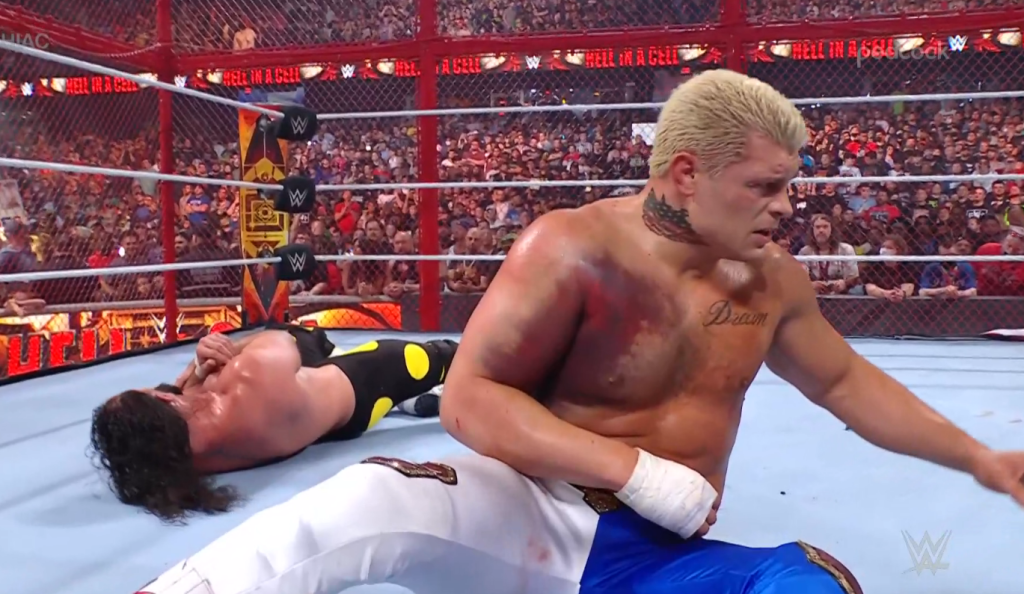
Last night, the WWE presented its premium live event called Hell in the Cell which was going to be main evented by the third matchup between Seth “Freakin'” Rollins and “The American Nightmare” Cody Rhodes inside the Hell in a Cell structure. This was the match that had the best build-up over the weeks prior to the event.
Then word came out that Cody Rhodes had been injured. He was pulled out of a Saturday night House Show against Rollins starting the speculation. The day of the show came and more rumors started swirling that Cody Rhodes was injured badly.
Cody Rhodes had just returned to the WWE at Wrestlemania 38 this year after leaving six years ago, becoming a huge star on the independents and being part of the ownership group that created AEW. When Cody left AEW, there were rumors flying around that he was going to return to WWE but it was still a surreal happening. Cody won at Wrestlemania and was being pushed as a main star in the company.
For a professional wrestler in a major spot, there is never a good time for an injury, and this was no exception. WWE Universal Champion Roman Reigns was already not on the card and the whole build was toward this Hell in a Cell match. If Cody Rhodes could not perform, the company would be in a real spot.
Then came a press release from the WWE saying that Cody had a torn pectoral muscle, torn off the bone, but that he was still going to wrestle.
As Seth Rollins stood in the ring inside the Hell in a Cell, Cody Rhodes walked down the ramp in his coat. It was obvious which side of his body was injured as he held his right side lower and only raised his left arm. Then, once in the ring, the amazing moment of Cody taking off his robe/coat and revealing the massive bruise on his chest and down his arm that utterly silenced the crowd. As I watched this, I wondered if the injury had makeup to make it look that bad (No makeup, btw)
I wondered that because I could not believe that the WWE doctors would allow Cody to go out and wrestle. The last few years, the WWE has been known to not clear people to wrestle on all kinds of things, but here was Cody Rhodes with a clear injury. I’m not sure this is the precedent that WWE wants to set, letting their wrestlers “tough” through injuries.
Plus, there was dangers to Seth Rollins. What if Cody Rhodes went for a move that he could not execute and suddenly Seth is in a dangerous situation? However, they do a great job of protecting each other while still looking as if they were killing each other. Seth Rollins is truly one of the best wrestlers in the world and he was amazingly professional.
The question about whether this match should have happened or not is real, but, according to some doctors I had heard on YouTube after, if the muscle was torn off the bone, there was no way that Cody could do any more damage to the pec. However, there was a chance that he could have injured something else by over-compensating for his injury.
Having said all that and not been 100% sure that the match should have gone on, Cody Rhodes is an absolute warrior. Coming from an old school mentality, Cody showed how tough he was because that injury looked horrendous. He had to be in so much pain that it is astounding that he could put together any sort of match, let alone a Hell in the Cell match. Because of the circumstances, it will be one of the most memorable Hell in the Cell matches of all time.
I saw one of the haters on Twitter claim that there was no crowd noise during the match and so it was not a good one. I can only assume that the crowd was quiet because, like me, they had their breath held for every bump or move because we did not want Cody Rhodes to have his arm fall off. Crowd noise during this match was not an effective barometer for the match’s success. This was something different. Listen to the response after the match if you want to judge it in that manner.
After the show went off air, Cody got on the microphone and told everyone that nobody forced him to work the event and that it was his decision. Of course that meant that no one stopped him from working the match either, and perhaps someone should have.
But since the match happened, I can be in awe of “The American Nightmare” and his unbelievable toughness and grit, as well as Seth Rollins and his professionalism and overall skill. This certainly will go into the argument for match of the year (along with their other two matches).
Cody is going to be on RAW tonight to talk about the injury. If I were the WWE, I’d have someone attack Cody (maybe like the Judgment Day faction) and have a respectful Seth Rollins make the save. Seth Rollins was on his way to a face turn before Cody arrived. That face turn was put on hold, but now is the time to pull the trigger so there can be a new face while Cody is off recovering from his surgery. Just a little fantasy booking for you there.
The June Swoon continues today diving into the world of comedy with Barb and Star Go to Vista Del Mar. Barb and Star felt like characters that had been from another source, such as SNL or British TV, but, as far as I can tell from my research, they are originating in this movie.
Star is played by the wonderful Kristen Wiig and Barb is played by Annie Mumolo, who I was unaware of before this. Barb and Star are a pair of middle aged women who are friends and who spend their lives together, both widowed, talking and exchanging an almost non-stop banter with each other.
And it is exceptionally funny.
Poor Star and Barb lost their jobs and were kicked out of their discussion club for lying about it so they were at their wits end. They finally decided that they needed a vacation from their regular life, and they packed their bags for a place in Florida called Vista De Mar.
Coincidentally enough, an international terrorist named Sharon Gordon Fisherman (also played by Kristen Wiig), a white skinned woman, and her boy toy assistant Edgar (Jamie Dornan), were targeting Vista Del Mar for a complicated plan of revenge over its treatment of Sharon Gordon Fisherman when she lived in the community as a youth.
Fisherman sent Edgar ahead to set up her revenge. Unfortunately, he lost an important piece after a night of drunken debauchery with Barb and Star. Edgar, who had been in an unrequited loving relationship with Fisherman, started spending more time with Star. Star hid the relationship from Barb because she did not want to have Barb feel bad leading to a potential rift between the ladies.
The movie is utterly silly and has plenty of ridiculous scenes and moments, but it works because they are really funny. There were times when I could feel that if certain scenes were in different movies, I might hate them, but since I had drawn such a love for these characters, I accepted it as okay (I’m specifically thinking about parachute pants).
Jamir Dornan was great here too. He had solid comedic timing and he sang. Yes, there are a couple of moments when the film broke into songs. I would not consider the whole movie a musical, but there are at least two scene where it could make sense in a musical.
I’ve said this before… the most important part of a comedy is…does it make you laugh? Barb and Star made me laugh. I found it to be extremely charming and fun.