
The X-Files S8 E3

Spoilers

“Patience”

Agent Scully and Agent Doggett went together for the first time as partners out to chase down DC Comic’s Man-Bat.

Okay, so maybe it is not specifically the Man-Bat aka Dr. Robert Kirkland “Kirk” Langstrom. But there sure were a few similarities to the two characters.

I thought that the scenes with Scully and Doggett worked fairly well. Scully going out of her way to try and fit into the role of Mulder in the story seemed logical and the conflict with local authorities continued to be a trope of the X-Files.

John Doggett is an interesting piece. He seemed more willing to buy into the paranormal than Scully would have been, but he proved himself with his late second return after what looked to be a potential watery grave. I was never worried that Doggett was going to be killed, but it was a dramatic moment as Man-Bat and he fought in the water.

The ending was a bit anticlimactic as the Man-Bat just swooped down, was shot at, and disappeared. Doggett’s idea that he had shot him, as did Scully did not feel like a satisfying conclusion. Sure, it fell into the type of ending the X-Files thrived on, but this did not work as well as many of these previous monster episodes did.

Overall, it was an okay episode, and it furthered the partnership of Scully and Doggett, which was a vital component for the rest of the season.

Capturing the Friedmans (2003)

January 29

With just three days remaining on the Genre-ary for 2025, I watched an Oscar-nominated doc called Catching the Friedmans, another tough watch because it centered around a teacher and his son who had been accused of sodomy and sexual abuse of kids.

Director Andrew Jarecki, who was the director behind the amazing docu-series, The Jinx, was the driving force behind this documentary.

According to IMDB, the “Documentary on the Friedmans, a seemingly typical, upper-middle-class Jewish family whose world is instantly transformed when the father and his youngest son are arrested and charged with shocking and horrible crimes.”

There are plenty of scenes in this movie that came from home video recordings taped by the Friedman family themselves. Most of these scenes were really tough to watch considering the way some of this was portrayed. It painted a horrible picture of most of these people. There was a dramatic scene taped at Jesse Friedman’s trial of a parent chasing after him screaming that he had raped his son. Unbelievable.

Elaine Friedman seemed to be a spiteful woman, but it is hard to imagine the situation she found herself in daily. Her husband was a pedophile. Her sons hated her. A lot of the recordings by her kids had her screaming like a banshee. She did not come off looking well. Then, the final scene of the doc seemed to go against everything that the doc had shown us up until that point.

The doc sheds plenty of question on the case overall, especially when it came to Jesse. Arnold, the father who was an admitted pedophile, said that he had committed sexual abuse on two kids, but not the countless number at school.

I’m not sure how I felt about this doc because the voice seemed to be all over the place. I’m not sure what the doc was telling me about this story and it felt as if details changed throughout. I do not have a better understanding of what the truth was in this case or to what level these people were guilty or innocent. Maybe that is the idea with the doc… that truth may be elusive and that you may never know for sure what is happening in the heart of a family.

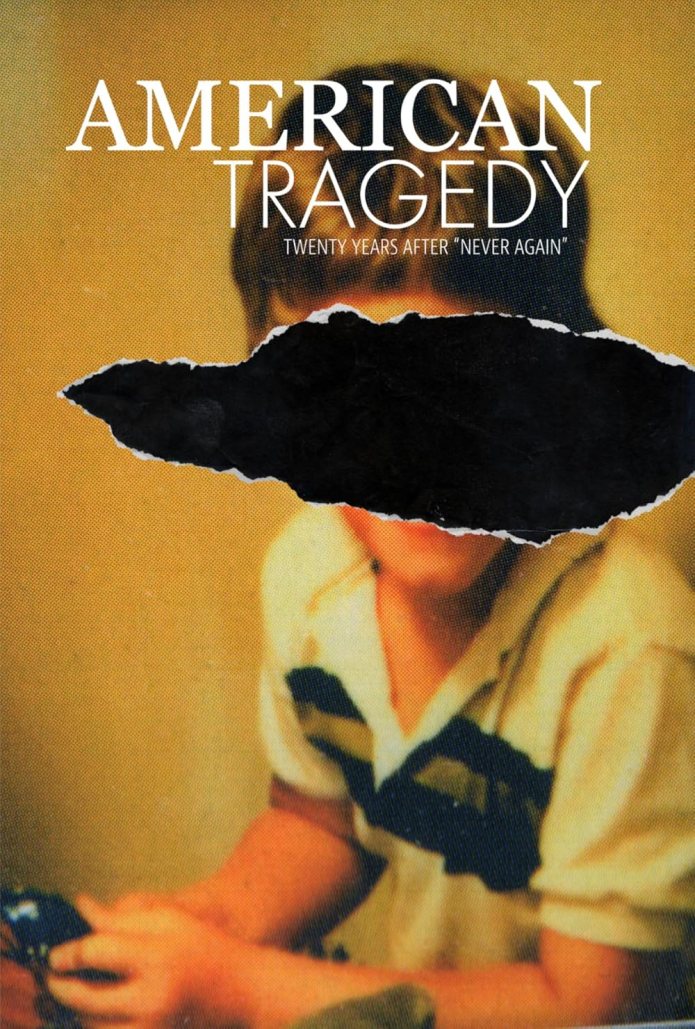
American Tragedy (2019)

January 24

When I saw the synopsis for this documentary for the Genre-ary, I anticipated this film being a difficult watch. Strangely enough, this was not the emotional and gut-punch of a doc that I thought it would be.

This film was about one of the kids who participated in the shootings at Columbine. Surely, this would be a devastating film.

I was not prepared for American Tragedy, which I viewed on Amazon Prime, to be quite as dull as it was.

According to IMDB, “April 20, 1999 Columbine High School was under attack by Eric Harris and Dylan Klebold. Sue Klebold, Dylan’s mother, attempts to reconcile how the son she thought she knew, the son she loved could willingly be a school shooter. ‘If love could have stopped Columbine,’ she says, ‘Columbine would never have happened.’ What would real prevention look like? Is it possible? Is America ready?

The film spoke to Sue Klebold during the film, but I just did not get the expected feelings from her that I expected. Perhaps it was from years of hardening herself from the anger and the unexpected behavior, but a lot of the sections with Sue felt like the story was being told by someone else. I am sure that is not the way she felt, but it does not translate to the screen in this doc.

There were a few moments that stood out, but they were few and far between.

This is a shame that this doc does not connect with the viewer as much as it should have.

ReMastered: Tricky Dick and the Man in Black (2018)

January 6th

Today’s Genre-ary documentary I found on Netflix and it was a short doc about the time Johnny Cash was asked by President Richard Nixon to come and play at the White House.

The doc gave us some basic background on both Johnny Cash and on Richard Nixon. The Nixon section was specifically focused in on the Vietnam controversies among his presidency.

The doc talked about Nixon using the “Southern Strategy” that has been well documented in Presidential politics since the sixties when the south became more of a Republican stronghold instead of a consistent Democratic voters. It brought up how Nixon used some dog whistles to bring out the “Silent majority” to support the Republican party and create a nation of divisiveness. It was very connected to the present day politics and how it has its roots in this time frame.

The doc never went into too much detail about any of the sections, as it was just under an hour long.

It was interesting seeing how Johnny Cash was affected by his own trip to Vietnam and how he made some changes to the songs Nixon had requested Cash play at the White House. Both of the songs he asked for were songs that took shots at some of the marginalized people of the time, including hippies and those on Welfare.

I liked this doc, but I really believe it could have gone into much more details about the performance and about the two figures of American culture. It touched on a lot of the issues, but it did not go into enough depth.