The Exorcist is one of the most frightening horror movies of all-time and this new trailer for the next chapter of the story is something truly horrifying.
The first trailer focused more on the pre-possession for a chunk of it, but this is all out evil and it gave me that feeling.
This could be a huge hit this October as a Halloween celebration.
I am so very excited by the upcoming second season of Loki on Disney +.
I also like that this new trailer is just a teaser, coming in at under a minute. I do not need to see more than what I have already seen.
I can not wait to see more Loki/Moebius goodness. The appearances of Ke Huy Quan, which should be a ton of fun. Curious how much we will see Jonathan Majors. There is, once again, a little bit of him here, with just a little bit new.
The series drops on FRIDAY (which is different than any other Marvel Disney + show) Ocotber 6th.
If I am being honest, I have found season three of Only Murders in the Building to be lackluster. They have focused less on the case and the investigation than I would have liked. However, after episode six, “Ghost Light,” I see why they have been making the choices that they have made.
This is the best episode of this entire season.
The previous episodes focusing on their individual lives and the play have beautifully circled back into this wonderful episode, which encapsulates the entire season into that final throw down with our three main characters.
Even in this episode, Charles, Oliver and Mabel are focused on individually, each having to deal with an uncomfortable situation or a truth. Charles, unable to accept how much Joy’s departure has hit him, Mabel, afraid to move forward in fear of what she would leave behind, and Oliver, who suspects his new love has secrets to hide that would leave him alone.
The investigation went to the theater and moved into high gear. It was cute to see how Charles and Oliver felt threatened and jealous of Mabel’s new relationship with Tobert, again, probably built out of fear of being left.
The whole Gideon Goosebury ghost twist in this episode really worked well, as Howard is clearly a true believer. His whole arc within the episode centered around his ‘protecting’ the play from this killer ghost. The addition of Jerry, a former friend and colleague of Oliver who was down on his luck and squatting in the theater brought a new witness to the case that only played on Oliver’s fears of failure and loss. Jerry was truly a sad story. He did tell Oliver about Charles’ punch to Ben that we learned about last week.
Jerry helped Oliver make a decision about his life, which was to protect Loretta under all circumstances, that his love for the actress was greater than the chance that she was a killer. This lead him to erase the lipstick message on the mirror in the dressing room which triggered the meltdown among the threesome.
I have pretty much decided that Loretta is not the killer, but it seems apparent that she wrote that message on Ben’s mirror.
Ben’s understudy, Jonathan seemed to be cleared of suspicion this week as he revealed to Mabel and Tobert that he did not want to be the lead of this play, that the stress of carrying a Broadway play was overwhelming, thus taking away his motive. He also revealed that Ben had been taking some concoction of medications from his doctor, which feels like an important clue for down the road. My guess is that this mixture of drugs played a part in Ben’s first ‘death’ on stage.
I loved this episode and it helped frame what the season had been about up to this point. I am sorry that I even entertained the idea that the season was lackluster. I do not think this episode hits as well without the set-up prior. Four more episodes to go and I am invested.
I hope everyone has had a happy Labor Day spent with friends, family or engaging in their favorite geek activities. I went to a movie, although saying that I ‘enjoyed’ it would be a gross overstatement.
By the way, it really feels like Sunday night to me right now. Have to keep telling myself that it is Monday.
Before heading out to the theater though, I did some comic reading this morning, finishing off the books from last week’s pull list that I needed to read and getting some of the new back issues that I recently purchased read as well.
My comic book shop sprung a super secret sale on Sunday out of nowhere. Literally, I saw a Facebook post about it on Saturday night and Todd called me wondering if I new anything about it. LOL. Anyway, I went and sprung for a bunch of comic bags and boards for my continuing goal of getting my full collection bagged and boarded, including replacing the old books’ protective materials with new ones. However, it was quite the depressing fact because I am almost done with the bags/boards that I bought and I made it through one long box with unbagged books. I have at least two more of these long boxes to go BEFORE I get into the books in the old boxes. Suddenly, I saw the expense that I would be looking at to complete this goal…
Definitely a LONG term goal.
I originally thought it would be about a year, but that seems impractical (and quite expensive). Anyway, it is still a process.
The books read…
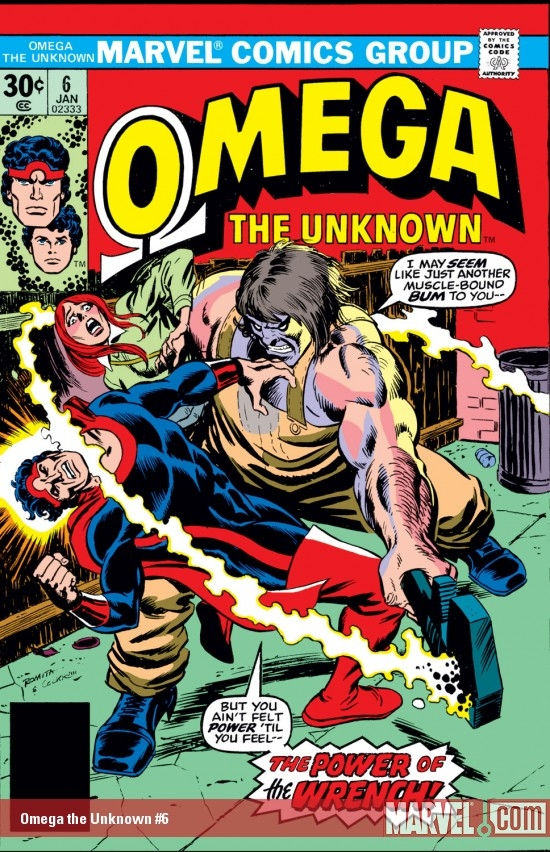
Omega the Unknown #6. “A Tug of the Wrench” Written by Mary Skreenes & Steve Gerber with art by Jim Mooney & Mike Esposito. Cover art by Romita/Cockrum. I bought this at the aforementioned Comic World secret sale simply because it came out in 1977 and it would allow me to make my first post in the Facebook group that I recently joined, Old Guys Who Like Old Comics. I had never heard of Omega the Unknown. I just read it and I have to say that I loved it! I was totally in on everything happening in the book and I thought it was amazingly original and unlike most anything that I have read before. Looks like a winner for the first post.
Marvel Spotlight #24. “Walk the Darkling Road.” Written by Chris Claremont and drawn by Sal Buscema. This featured Daimon Hellstrom, aka the Son of Satan. I have always enjoyed the character in his runs in the Defenders and such and I loved his involvement in the recent Hellcat series. He had a confrontation with his sister Satana, but he seemed too goodie-good for the Son of Satan. Still a fun read.
Local Man Gold. Creative team: Tony Fleecs & Tim Seeley with colors by Felipe Sobreiro. This surprised me to no end. I enjoyed the Local Man series that was recently out by Image, and this was a one shot involving him. However, there were other heroes that showed up from the past. Strangely enough, I did not recognize them and I thought they were just new characters in Jack Xaver’s life. Then, shockingly, there was Joan Petersen, the main character in Love Everlasting. I couldn’t believe it. Then, I got to the page that showed that all these characters that I thought were just new characters were actually from all kinds of Image books. It was a cool surprise.
W0rldtr33 #5. Written by James Tynion IV and featuring art by Fernando Blanco. I will be honest that I have been struggling with this book so far. However, this issue was really exciting and compelling and made me want to get the next issue immediately. Much like a lot of Tynion’s work, W0rldtr33 requires focus and is not designed for a quick skim, and that is not a bad thing.
Spider-Man: India #3. “Seva Part III.” This has been fun so far. Pavitr started selling videos making Spider-Man look bad for money. However, this is all playing back into his own self-image issues. I like Spider-Man: India and the character is interesting.
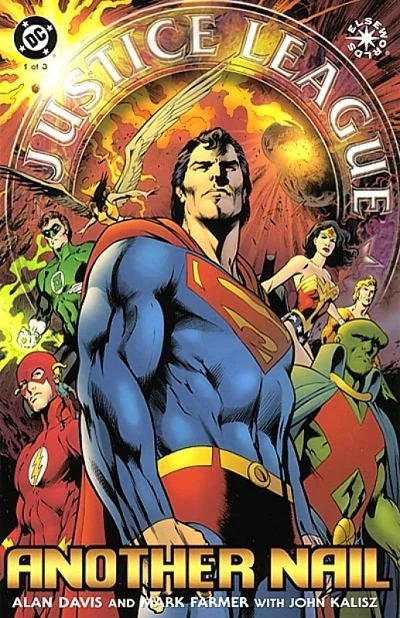
Justice League: Another Nail #1-3. Written and drawn by Alan Davis. This is an Elseworlds series featuring Superman as an Amish kid and Batman depressed over the death of Robin and Batgirl by the hand of Joker. I liked the resolution of the series, but to be honest, I did not like this that much. It felt like just a whole bunch of cameos by DC heroes that, while cool, did not service the story very well. I did not love the manner the story was told or constructed. Superman did not feel like he was Amish, with it being more in name than anything else. The Batman stuff in Hell was interesting. Overall, this was okay, but not much more than that.
Deadpool: Badder Blood #3. Story by Rob Liefeld, script by Chad Bowers and penciled by Rob Liefeld. Venompool takes on Deadpool… and Zabu? This is a great series that feels like a top notch Deadpool book.
The people who gave us Shin Godzilla in 2016 has now given us a new trailer with the force fo nature that is Godzilla.
Wow that was intense. This is the way Godzilla is meant to be portrayed.
That final shot of Godzilla roaring is just amazing. This feels like Godzilla coming for retribution against the human race and he just does not give two gigantic craps about them. The line “The Monster will never forgive us” is all kinds of powerful.
Really looking forward to seeing this and hoping that I will be able to see it in the theater and not just on Vudu because this feels like the kind of epic film that needs the biggest screen possible.
Near the end of the movie, main character Mike said “It was a good little movie.”
Au contrare.
This is an adaptation of author R.L. Stine novel Zombie Town, which, much like his Goosebumps series of books, is meant to be targeted to young readers to give them an introduction to horror, so you can expect this film to be a younger skewing movie. Still, skewing young does not excuse a film from being so stupid.
Reclusive director/filmmaker Len Carver (Dan Aykroyd) lived in a town named for him, after disappearing and stopping creating zombie movies at his high point during the 70s. Today, Carver prepared a new film for release.
Mike (Marlon Kazadi) did not like zombie movies, but he did work at the theater that had the exclusive release. However, Mike was more interested in what the girl he had been crushing upon, Amy (Madi Monroe) was up to.
When Carver was dropping off the film the day before the big release, he was hit on the head and taken to the hospital. With the film in his possession, Mike texted Amy, who hurried over to the theater, asking to see it early. Though he was not sure if this was a good idea, Mike acquiesced and played the film for her. Instead of a film, there was just white light and some magical power that transformed the town into zombies.
Mike and Amy was not changed into zombies so they ran across the town in an attempt to figure out what was going on.
This had a ‘so bad, it’s okay’ feel to it as this conceivably could turn into one of those cult films that are shown like The Room or Samurai Cop. In fact, I feel as if this film would be extremely entertaining as a film shown by RiffTrax Live. It absolutely has that level of quality (or lack there of) to it.
It was intended to be funny, but, at best, I may have chuckled once or twice. Would a ten year old find it funnier than I did? Maybe, though I am not convinced of that.
Clearly, the budget on this was all for Dan Aykroyd and Chevy Chase because the zombie makeup was basically some dark eye liner and maybe some powder for the faces.
Some things happen that defy total explanation. For example, Carver never made the hospital, but the theater owner (Henry Czerny), who had been coming with him to the hospital and had changed into a zombie, actually drove the ambulance with Carver… and he drove it as a zombie. What?
Characters were inconsistent with their motives and their actions. Carver himself was a mess of contradictions, flip flopping all over the place.
I did think that Marlon Kazadi was okay as the lead. He did not have a lot of material that stretched his acting skills, but he did have a decent screen presence. He did not have much chemistry with Madi Monroe though and unfortunately, they were supposed to have plenty. Their relationship felt mean-spirited at times and seemed more like siblings than anything else.
I intended on watching this on Saturday after The Equalizer 3, but my plans changed and I decided to go today on Labor Day instead. It was a poor choice as this was an hour and a half that I won’t get back again. There are considerably better films to introduce young people to horror, including films from the oeuvre of R.L. Stine, like the Goosebumps films or the film by Guillermo Del Toro, Scary Stories to Tell in the Dark. Don’t waste your time with this one.
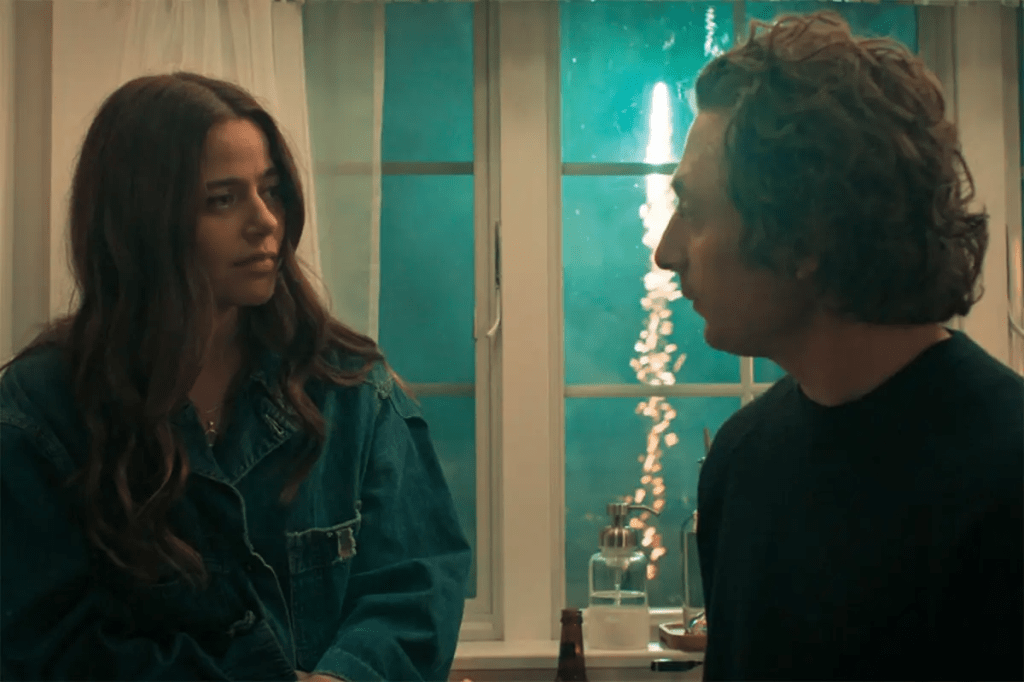
Carmy gets out of the restaurant for a bit as he goes to hang out with Claire. She talks him into accompanying her to a ‘party’ where one of her friends had just had a bad breakup. Carmy clearly was uncomfortable.
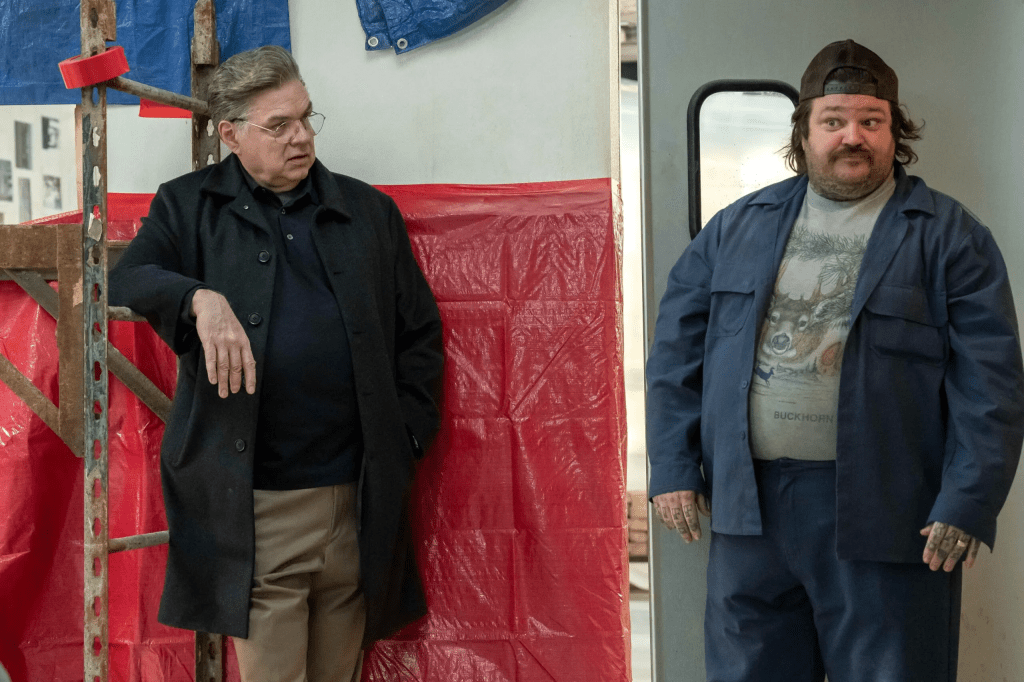
As this was going on, all kinds of troubles were coming to the restaurant in only six weeks before the opening. Oliver Platt made another appearance and helped get a liquor license. Better to not know how he cut through the red tape.
Richie is always fighting with everyone and it is becoming an issue.
Sugar is trying to deal with all of the problems as Sydney struggled with the menu.
The restaurant continues to be a place of chaos and it feels as if something is going to need to give soon.
Tina is doing well in her training, but she is worried about Ebraheim. Others in the program invited Tina out for drinks that night and she ends up singing at karaoke and just knocking it out of the park. Tina seems to be living her best life so far this season. Carmy had gotten her a new knife too.
Carmy and Claire end up kissing after returning to the restaurant and seeing the chaos first hand. He admits how much he likes her and this is great. These two have amazing chemistry and have expanded the character depth while interacting.
This was a solid episode, but it does feel as if the show is in a bit of a holding pattern as it moves toward their opening date.
After four episodes, it has completely engaged my curiosity, anticipation and thrilled me to no end. I love these characters and I love the villains that cause the conflict. One Piece has been a huge success in my eyes for Netflix.
It is just so much fun.
Episodes three and four are a two-parter, in sense, though it does not call it so. This is the first time where the story expanded past the first episode and encapsulated a second one.
This two episode arc serves to introduce Usopp, who would become one of the new crew (not a crew) members. We are shown a young Usopp running through the town calling out that “The pirates are coming.” He is great with a slingshot and works at the shipyard.
This is the reason why our Straw Hat Pirates crew come to this town. The boat they were are was leaking and getting ready to sink and they needed to find a new pirate ship.
When Luffy finds the ship that ‘speaks’ to him, they meet Usopp and he tells them about the owner of the shipyard, who is a friend of his. You doubt this considering we have seen that Usopp is the ‘boy who cried wolf.’
However, he does take them to meet his friend, Kaya, a wealthy but sickly young girl about to turn 18. Luffy plans on convincing her to make a deal with them for the ship. However, as they were there, it was revealed that her butler was a pirate captain who was slowly poisoning her.
The butler was revealed as Kuro, the captain of the Black Cat Pirates, who had long blades on his fingers and an ability to move quickly. This would lead to yet another epic fight scene with Luffy and the crew.
We learned more about the background of Zoro, specifically why he carries a third sword. This dated back to his early sword training with a young woman who he could not defeat in combat. This back story did give us more insight into Zoro and it helped him be motivated to escape the deep hole he had been tossed in by Kuro’s two henchpeople.
The Marines are on Luffy’s trail too as Garp becomes a mentor for Kobe. The very end of episode four dropped a bomb too as Luffy sees Garp through a spyglass as they were being pursued on the new ship and he says “Grandpa.” Garp is Luffy’s grandpa??? Did not expect that.
Our main characters continue to bond as they battle with each other to help save Kaya from the evil clutches of Kuro. Having this occur over the run of two episodes allowed the show to pace this very well and not make it feel rushed. All of these storylines received a nice amount of time and fit together extremely well.
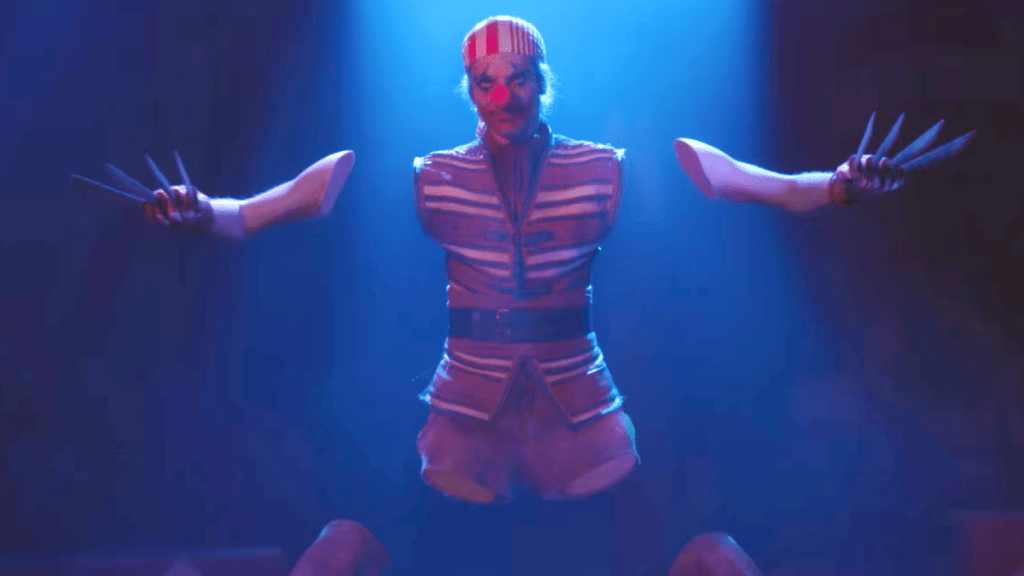
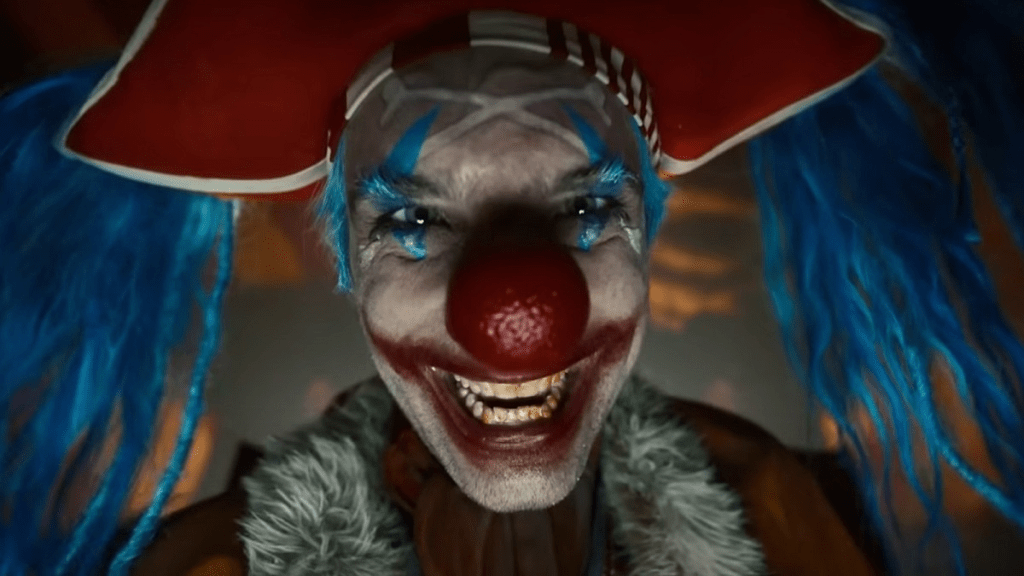
Buggy the Clown literally pulled himself back together after being trapped by Luffy last episode only to be grabbed and taken by another pirate that felt like a big deal. Even though we know nothing about this Arlong (at least I don’t since I did not see the anime this is based on), this character absolutely felt sinister and a problem. I wonder if Kuro will wind up with Arlong and Buggy too?
This has been great so far. I did not intend on watching this many episodes already, but the cliffhanger at the end of episode three made me keep watching. According to Netflix, there are only eight episodes, but Wikipedia indicates that there are ten, so I wonder if the last two episodes are being saved like a part two, much like season 4 of Stranger Things did.
Either way, my goal is to spread out watching the remaining 4 available episodes so that I can watch the final one on September 19th as a way to celebrate Talk Like A Pirate Day. Ahoy!
Their new ship was dubbed The Going Merry, after Kaya’s lawyer who had been killed by Kuro.
Buggy the Clown made his presence known this week with an over-the-top excellent performance by Jeff Ward.
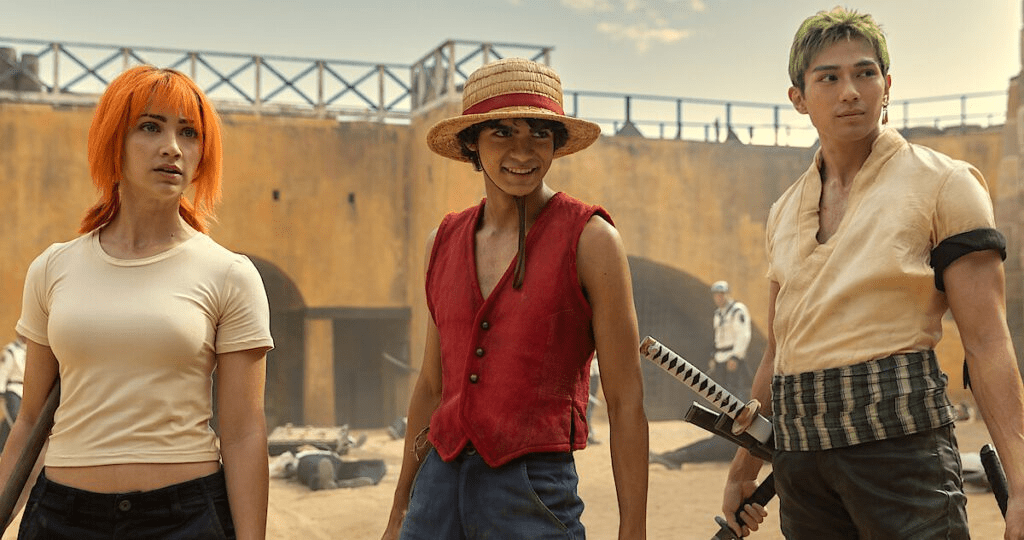
Again, the episodes center around how amazingly charming and engaging the main cast is. Iñaki Godoy as Monkey D. Luffy, Emily Rudd as Nami, Mackenyu as Roronoa Zoro are all huge winners and are so wonderful and easy to cheer for. Even though we see this episode that there is something we do not know about Nami, who looks to be ready to betray the other by stealing the map from out under them. That will be troublesome, especially after Luffy specifically trusted her with the map since she was “the Navigator.”
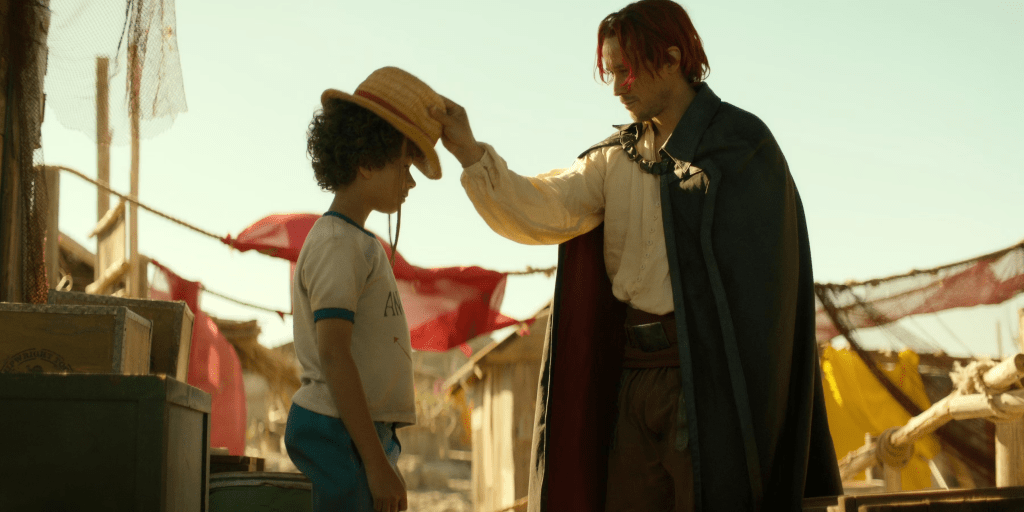
The flashbacks to young Luffy with Shanks are always great, as we see why Luffy has such a connection to the straw hat that he wears. Not to mention the apparent ability Shanks has to control sea creatures?
The parts of the story with Buggy the Clown was awesome. Jeff Ward did a fantastic job as this character, who I was afraid was just going to be a Joker rip off when I first saw him at the end of the first episode. That was not the case at all, although there are certainly some new and spectacular powers from baggy, who is another person to have eaten the Devil Fruit. It was hilarious when Buggy called out his finishing move, as Luffy always does.
Zoro has come around fairly quickly. From loner to someone willing to help Luffy under any circumstances. It might have been too quick to be honest as I wondered this as he was tied to the circus wheel. Still, that is a minor complaint (more of a critique, really).
I think I said that it was 8 episodes last post, but it looks like there are 10 actually. That makes me happy. I would watch 100 of these.
Denzel Washington returned for a third time as former government assassin Robert McCall, in the action franchise film, The Equalizer 3, directed by Antoine Fuqua. The movie was originally loosely based on a CBS TV program from the late 1980s.
While on a case on Italy, McCall is wounded and ends up in Altamonte, a remote coast side Italian town, where a kindly doctor Enzo (Remo Girone) was nursing him back to health. With his injury forcing him to slow down, McCall started to appreciate the quiet life in the small Italian village.
Unfortunately, trouble was still around as a pair of brothers in the local mafia the Camorra, Vincent and Marco Quaranta (Andrea Scarduzio and Andrea Dodero) are involved in drug smuggling with a terrorist organization to raise money for their plans. McCall tips off the CIA, specifically Emma Collins (Dakota Fanning), creating suspicion among the agent.
All McCall wanted is to be able to be left alone and to keep the people of Altamonte safe. Sadly, this would not be possible.
I really enjoyed this movie, as there was a lot to like about it. Let me start with the negatives though because there are not a lot of them. The biggest issue is that the villains of this movie, the Quaranta brothers and their assembled hoodlums never felt like threats to McCall even a little bit. They are one note villains that I never believed would cause any real trouble for McCall. Every time McCall stepped up to anyone, he destroyed the fools. Even when he was wounded, it was from someone that he did not expect (no spoilers, but that moment when he is shot feels tacked on and did not provide any closure.
Other than that, this movie was great. It felt like a classic Western where you had an aging gunslinger who found a place where he wanted to live out his life in peace, only to have the danger/threats still find him, forcing him back into action. There is a bit of Clint Eastwood’s Unforgiven here, though that is a better film.
Denzel Washington is great here, though this does not feel like the character that we see in the first two Equalizer movies as much. I really thought Washington was excellent as the former assassin who wanted to just not have to use his violent skills, but would take any actions to protect the people around him. Denzel Washington is always good, but he feels totally comfortable in the skin of Robert McCall. You can see how much fun Washington is having with this role.
He has a nice, easy chemistry with CIA agent Collins. There is a pretty easily guessed connection between these characters but they have some excellent scenes together.
There is a ton of action in the film, even though a lot of times it is hard to believe. Everything is filmed beautifully and there are many scenes that look fantastic. The action choreography really works throughout, and the visuals are stunningly brutal, including some real gory moments. The contradiction of the violence and the peaceful moments of tranquility in the Italian village serve as a wonderful counter-balance.
I enjoyed The Equalizer 3 quite a bit. I’d go as far as to say I liked it more than the first two, which blend together in my head. Yes, the story has some cartoony nature to it and the villains are not threats, but the work from Denzel Washington is top notch and the action is wild to see.
“No time to count what I’m worth ‘Cause I just left the planet earth Where I go I hope there’s rum Not to worry mon soon come” -‘Volcano’, Jimmy Buffett
We have been losing a lot of legends in 2023 so far, and there was yet another that passed away yesterday.
Jimmy Buffett has some of the greatest songs of all time, Margaritaville, Fins, Come Monday, Son of a Son of a Sailor etc. Honestly, I am not sure how many songs Jimmy Buffett has had and I do not think he has done anything new over the last many years. I know the songs that are on the greatest hits album, Songs That You Know By Heart, but I do not know many more than that.
Truthfully, there are a lot of people who are more fans of Jimmy Buffett than I am. I have a couple of friends who are much greater Buffett fans than I am, and they have even gone seen Buffett in concert multiple times. I thought of them immediately when I found out about the loss.
Much of Buffett’s music dealt with drinking, which is something that I do not do. However, just because his songs feature topics that I do not do, doesn’t mean that I can not enjoy the music. I mean… Why Don’t We Get Drunk is not a philosophy that I live my life by, but that does not stop me from belting out the lyrics any time I hear that song.
Wherever Jimmy Buffett is right now, let’s hope that he has access to an unlimited amount of rum.
I had no idea what this was. I had never heard of the manga cartoon this new Netflix series was based upon. I actually never even heard of this adaptation coming on the streamer. I happened to come across some reviews of it on YouTube earlier today. So I figured…
I love me some pirates…
This is the perfect month for a new pirate themed series, since we are just 18 days away from Talk Like A Pirate Day on September 19th. It also gives me a new series to watch along with season two of The Bear and season three of Only Murders in the Building.
My guess is that the lead character, Monkey D. Luffy, was a vital role for this adaptation to cast and Iñaki Godoy brings amazing charm and likability. I was in on this guy immediately. He was so fun to watch and he had brilliant chemistry with his ‘crew’ who does not want to be known as a crew.
Emily Rudd is Nami, a thief, and Mackenyu played Roronoa Zoro, a pirate hunter, create a trio that is awesome. The three of them have their own talents. I was shocked when Luffy was revealed to have stretching powers that he received as a kid when he ate a demon fruit.
Eiichiro Oda is the reclusive creator of the manga One Piece and he, in a video shared on the show’s Instagram, supported the new live action adaptation.
“As a Hollywood production, the action and VFX are great, not to mention the performances by the cast. But above all I want to call attention to how perfect the Straw Hat cast are,” says Oda. “It’s like you’re watching the Straw Hats in real life, which I’d love for you to savor.” (Petski, Deadline).
The cast absolutely is the strength of this first episode and that is really important. The fight choreography was excellent as was the special effects.
One Piece has dropped eight episodes on Netflix and I am excited to continue to watch this series. I do not plan to binge this necessarily, but I am looking forward to work my way through the first season.
The end of the episode a cool pirate named Buggy the Clown that looks to be coming next episode. Buggy is being played by Jeff Ward (the awesome Deke from Agents of SHIELD).
Yesterday was a busy day, so I only had the chance to gets some of the books from NEW COMIC BOOK DAY read tonight. There will be another EYG Comic Cavalcade later this weekend (probably), but kicked it off.
There are also a few back issues in this week’s post. Some fun books…
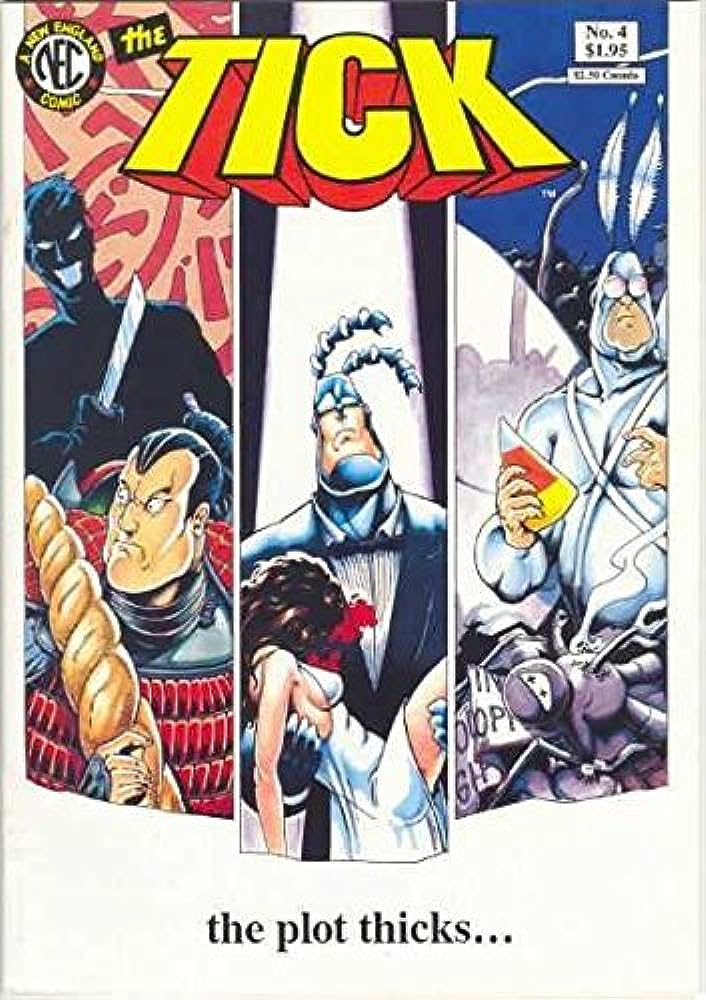
The Tick #4. “A Big Fight.” Written and penciled by Ben Edlund. This was a great pick up by my friend Todd. These New England Comics books are unlike a lot of books. Black and white. Larger sized comic book. I know some of the basic stories told with the Tick but this included a lot of characters that I have never heard of including Paul the Samurai. It felt as if I missed some story beats too as I wasn’t sure why The Tick was doing some of the things he was doing. Still, enjoyed this a lot.
Ms. Marvel: The New Mutant #1. “New Normal.” Written by Iman Vellani & Sabir Pirzada and drawn by Carlos Gomez & Adam Gorham. Cover art by Sara Pichelli & Matthew Wilson. Our newly resurrected MUTANT Kamala Khan, aka Ms. Marvel is back in her own limited series, co-written by the actor Iman Vellani, who plays Kamala in the MCU. This was a lot of fun as Kamala head undercover for the X-Men inside a college summer program that is sponsored by Orchis. Ms. Marvel appears in her new X-Man outfit and gets a taste of the hatred given to mutants. There are some wonderful scenes between Kamala and Bruno in this book and I loved the use of Kamala as a narrator. Good stuff.
Secret War #3-4. Written by Brian Michael Bendis and art by Gabriele Dell’Otto. I am enjoying this series so far, even if some of the time jumps and the confusion of the characters involved make me a bit uncertain about what is happening. Nick Fury is causing all kinds of chaos and the super heroes are struggling to remember what happened in Latveria. Meanwhile, Captain America is back and he is ticked off.
Ultimate Invasion #3. Written by Jonathan Hickman and penciled by Bryan Hitch. We’re getting a bunch of variations of different heroes here and the Maker is more involved than is good. There are some shocking moments, including an appearance by Reed Richards in a Doom mask and an armored up Kang.
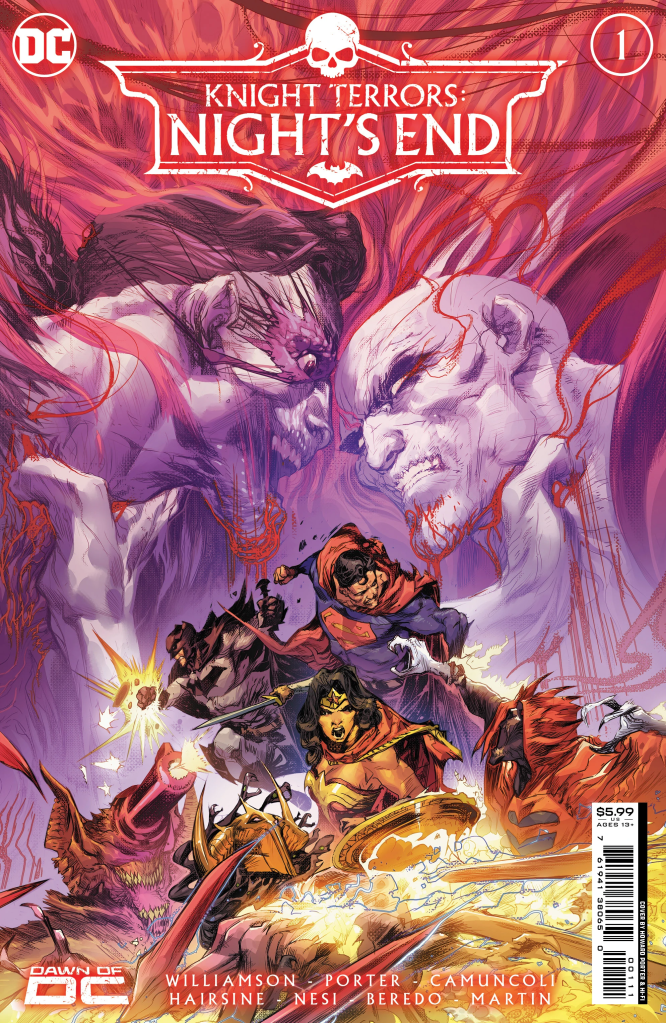
Knight Terrors: Night’s End#1. Written by Joshua Williamson and Art by Howard Porter. The two month run through the nightmares of the DC characters come to an end as the combined heroes of the DC universe and Deadman and Sandman helped stop Insomnia after 45 previous issues of horrors. The nightmares are beginning to make people feel scared of superheroes in the DC world, and they introduced a new character called Doctor Hate. The ending was fine. The overall series has its ups and downs, but I was happy I bought it.
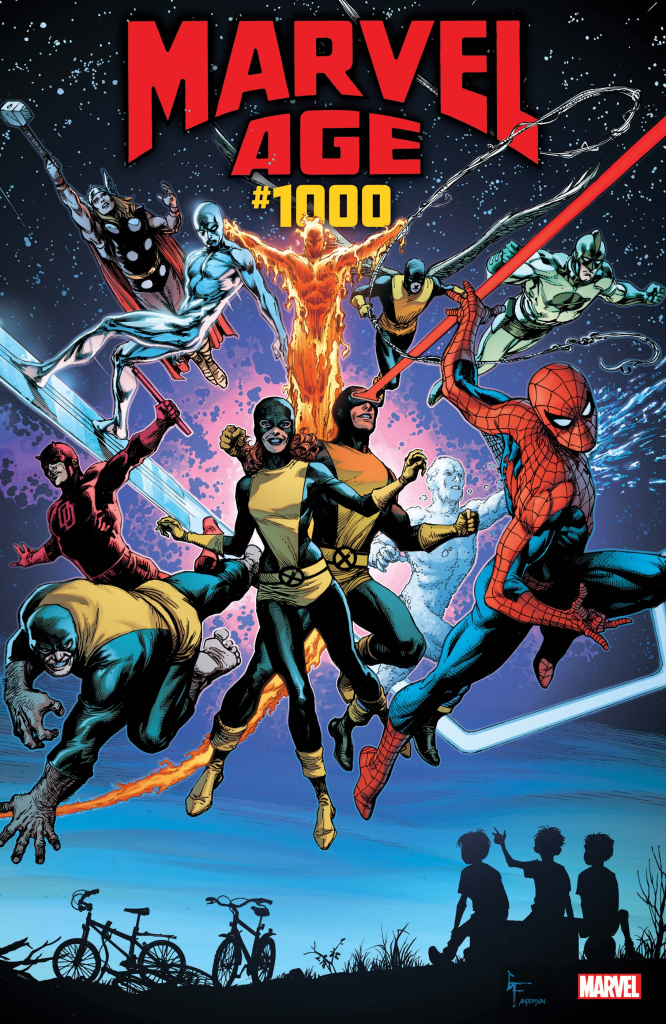
Marvel Age #1000. A compilation of short stories from some of the top creative forces of the genre that spanned the history of the Marvel universe. It included the original Human Torch, Spider-Man, the original X-Men, the Mighty Thor, Captain Marvel, Daredevil, Silver Surfer and a cut little story with childhood versions of Stan Lee, Jack Kirby and Steve Ditko. A celebration of the entire line and history of Marvel Comics.
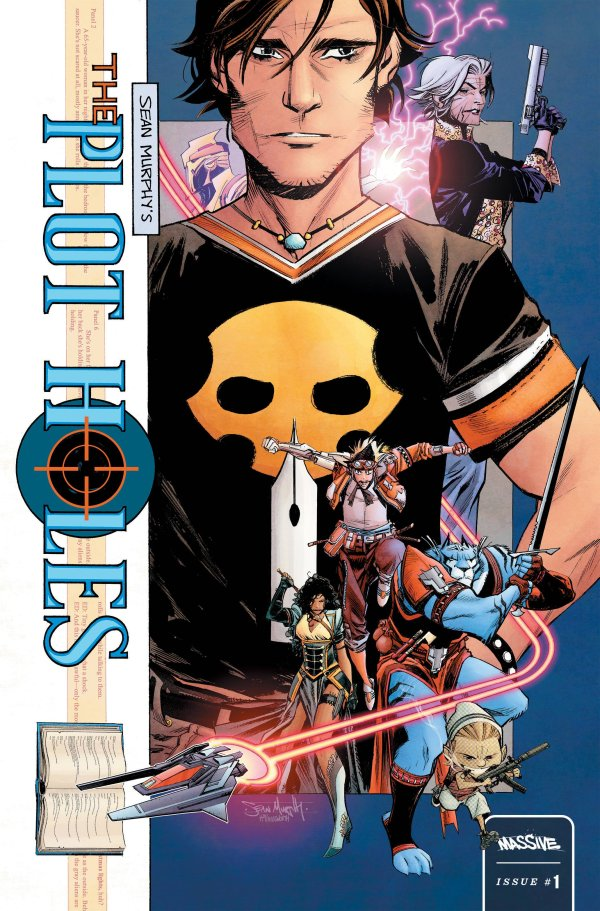
The Plot Holes #1. Written and illustrated by Sean Gordon Murphy. Honestly, this is one of the more original and way out there ideas I have seen in comics in a long while. This issue spent a lot of time building up the world these characters existed within and that truly required some serious build because it is a touch confusing. Still, I am curious to see where this goes.
Incredible Hulk #3. “That Old-Time Religion: Part Two” Written by Phillip Kennedy Johnson and art by Nic Klein. The Hulk is out of Banner and is as brutal as ever. The young girl named Charlie was, at first, shunned by Hulk and then, after she proved herself, was allowed to tag along. They had to face the zombies of Brother Deep. More horror in the world of the Hulk and I am here for it.
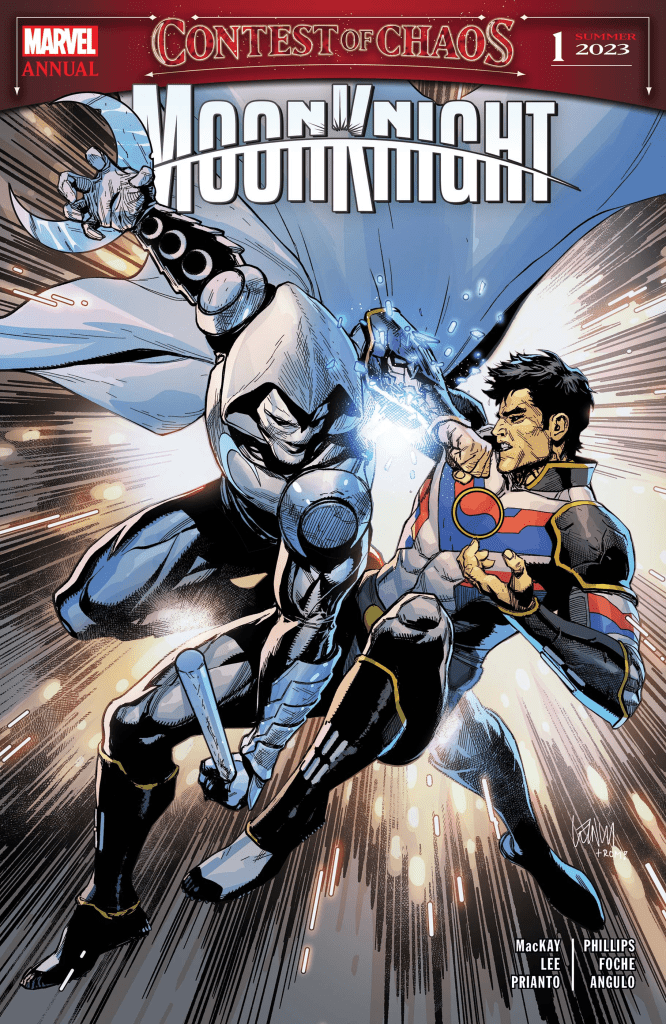
Moon Knight Annual #1. “Contest of Chaos: Part Four.” This annual featured the battle between Moon Knight and Korean hero Taegukgi of the Tiger Division. I loved the resolution of this fight as Moon Knight realized what they were doing and just said, “I quit.” We also start to see what Agatha Harkness is after in the final few pages of the story.
Blade #2. “Mother of Evil.” Written by Bryan Hill and penciled by Elena Casagrande. Blade and Tulip meet up as Blade saved her life. This leads to a lot of trouble for both of them and leaves Blade in a bad state. So far this has been different than I expected, definitely in a good way.
Blumhouse dropped the final trailer for the horror adaptation of a popular game, Five Nights at Freddy’s.
Starring Josh Hutchinson, this trailer does a good job of creating a scary tone and a feeling of anxiety.
They do, apparently, give a secret away in this trailer, a secret that was an important piece of the story, but maybe they plan on taking this in a different direction.
Five Nights at Freddy’s comes out October 27, making this appointment viewing during the Halloween holiday.
The crew formerly of The Beef are on a time crunch, and they wind up facing a ton of new problems over these two episodes. Meanwhile, a few of the other crew have their own paths to follow.
Sydney was supposed to go to a whole ton of restaurants around Chicago with Carmy to sample some other foods for inspiration. However, Carmy canceled on her to go help Claire move family stuff. Sydney went ahead to an all-day eat-a-thon. As she was going, there are seeds planted to make her question her partnership with Carmy. I expect those seeds to take root later this season, otherwise this would be a wasted opportunity.
Marcus heads to Denmark to for an internship with chef Luca (played by Will Poulter) but leaving his comatose mother causes stress for him. The interaction between Marcus and Luca are some of the best seasons of the episode.
Wall are falling down at the restaurant as Murphy’s Law rears its ugly head hard (raccoons… plural?). One of those walls fell just as Sugar is telling her brother Carmy that she is pregnant but wants to keep it a secret. She blurts out the pregnancy just as the wall falls, revealing the secret to everyone.
These episodes felt more like character studies for the main cast members involved while the construction (or was it deconstruction) of the restaurant was underway. Carmy was not front in center in either though his presence is still throughout the series.