Ordinary People (1980)

DailyView: Day 346, Movie 493

This film made the list of Oscar winners when I was using the DailyView to watch Academy Award winners and I had wanted to watch it. The thing is the timing of watching Ordinary People just did not fit the schedule, until now.

Ordinary People tells the story of a single family, led by Calvin and Beth Jarrett (Donald Sutherland & Mary Tyler Moore), who were dealing with the death of their oldest son Buck (Scott Doebler) in a boating accident and the suicide attempt of their younger son Conrad (Timothy Hutton). Well, “dealing with” might be a stretch as Beth is emotionally distant from Conrad and Calvin is trying to find the place between them.

The film focuses on Conrad and his struggles after returning from a mental health hospital where he received treatments. Conrad was having difficulties with every day life and plagued by nightmares of his past. It is clear that he is on edge the entire film.

Finally, Conrad began seeing psychiatrist Doctor Berger (Judd Hirsch), giving him someone to talk to. The relationship between the two of them really carries through their scenes and provided both actors a chance to show what they had. In particular, a scene near the end of the film where Conrad had a breakthrough was powerfully impactful and brought tears to my eyes. Both Hutton and Judd were nominated for Academy Awards for Best Supporting Actor (with Hutton winning) and you can see why they deserved it in this scene.

Mary Tyler Moore played against her type so much as she was a mother who just could not find the connection with her surviving son. She loved Buck so much and when he died, she became more emotionally withdrawn. She is truly an unlikeable character and it is amazing that an actress as likeable as Mary Tyler Moore could pull this off.

The film begins with Pachalbel’s “Canon in D” (which I know through a humorous song about the tune) and is used throughout the film.

The title Ordinary People describes this film perfectly. These are real people dealing with their problems the way real people deal with them. It was not melodramatic despite the topics that it dealt with. It was a serious film with deeply flawed people trying to suffer through personal tragedies.

Robert Redford directed the film, receiving an Academy Award for Best Director. He brought emotion and deep feeling of dread while never losing the hope. I also liked how everything was not necessarily wrapped up neatly by the end of the film.

Ordinary People was a wonderful story that was difficult to watch at times, but always worthy and attention-grabbing.

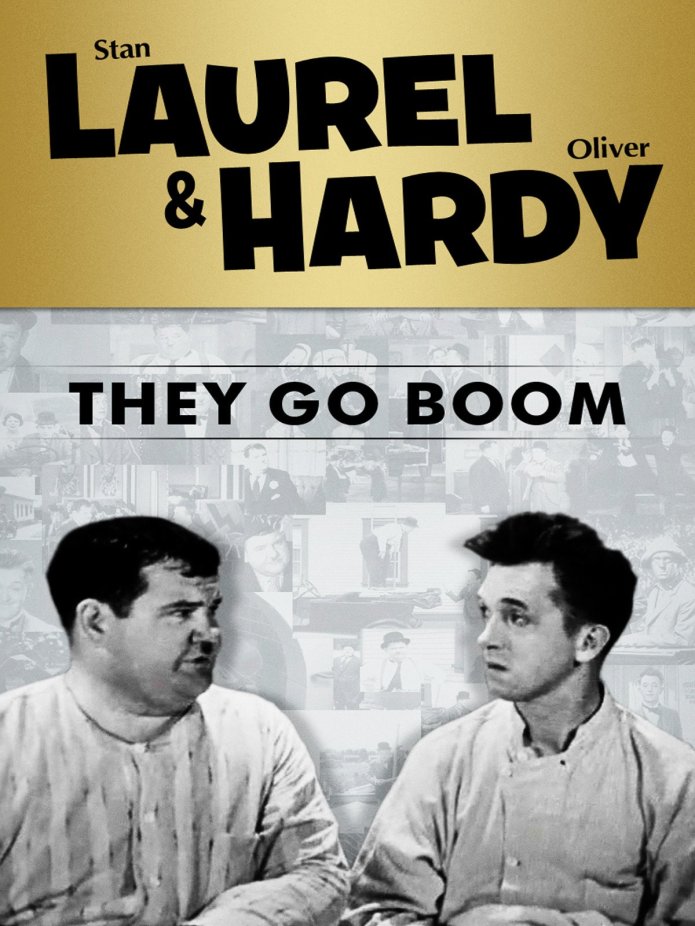
They Go Boom (1929)

DailyView: Day 345, Movie 492

This morning, we go back to 1929 for another trip to the world of Laurel and Hardy in a comedy short called They Go Boom on YouTube.

The setup: Hardy is sick with the “sniffles” and Laurel snores and the pair can not get too sleep. Hardy whines and complains about having “ammonia” while yelling at Stan to do something for him.

There is a ton of slapstick comedy involved in this short with the pair of Laurel and Hardy banging their heads and falling over things. Hardy’s sneezes and creates all kinds of chaos.

Honestly, I was not a fan of this short. It felt as if there was just too much of Hardy yelling at Laurel and I missed the typical connection between them that made their shtick funny and not mean-spirited. I know this is very much like some of Laurel and Hardy’s comedic moments, but there felt like there was a humanity missing in this.

Plus the end was ridiculous.

They Go Boom was one of the earliest talkies in the era of film that had been rediscovered and restored. Directed by James Parrot, I do not think that I would recommend this to anyone.

JCVD (2008)

DailyView: Day 344, Movie 491

Earlier this week, I was watching the latest Top Ten Show with John Rocha and Matt Knost. This week’s topic was “Top 10 films that break the fourth wall.” It was an interesting and original topic, and I had known most of the films that were mentioned, but then Matt mentioned a film called JCVD. I was not sure what he had said, but John reacted in anger since he had forgotten to include the film, which he said he loved.

I tried to figure out what the film was and I finally figured it out. Jean-Claude van Damme’s initials.

I searched up the movie and found it on Amazon Prime.

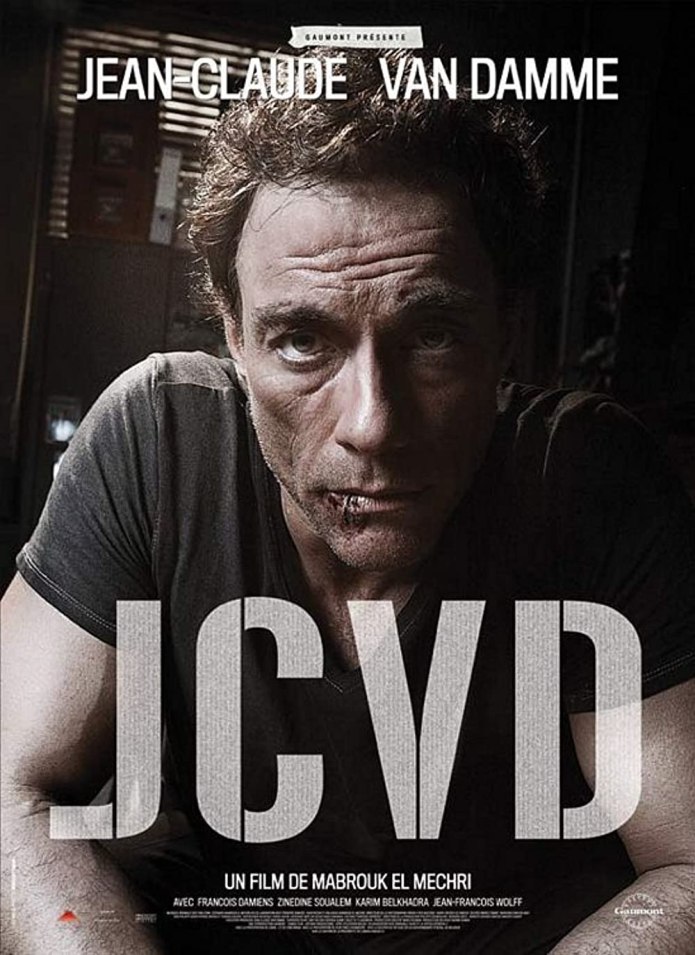
In JCVD, van Damme played a fictional version of himself, who had lost most of his money, was involved in a terrible custody dispute over his daughter, kept losing film roles to Steven Segal and returned home to Brussels, where he was still considered a hero.

Desperate for a money, van Damme went to a local bank for a wire transfer from his agent. Unfortunately for Jean-Claude, he stumbled into the middle of a bank robbery in progress. Jean-Claude’s luck was only going to get worse.

When an accidental gunshot goes off, the police arrive at the bank, setting up a hostage situation. They spy Jean-Claude inside the bank and they mistakenly think that he was one of the bank robbers.

I am not a fan of Jean-Claude van Damme and his film catalog, but I thought he was fantastic here. It was the best performance I have seen from him. The character is very self-deprecating, making van Damme the butt of most of the jokes. It is ironic that his best character ever was a version of himself.

The film is extremely funny, but is based in the troubles of the characters. And not only the character of van Damme, but the bank robbers, the police and the other hostages.

The story is told in a disjointed narrative as we start out in the bank with a situation that was confusing. The film flashed back several times to show what had happened and how we arrived at where we were. The writing is very clever and well constructed.

It does feature a six minute monologue with Jean-Claude speaking directly to the camera and breaking the fourth wall in an emotional diatribe. It has to be some of the best acting of his career.

This is unlike any Jean-Claude van Damme film I have ever seen and I found it to be completely charming and wonderfully entertaining. It was mostly in French (though there are some moments where English is used), but I was not opposed to the subtitles (avoid the voice overs always!). I am very grateful to Matt Knost for including it on his list.

Birth of the Living Dead (2013)

DailyView: Day 343, Movie 490

Back in the late sixties, a sub-genre of horror was invented. A sub-genre that exploded in popularity over the years, Zombies, although that word is never mentioned in the film.

There was little to nothing with zombies in movies prior to George C. Romero’s Night of the Living Dead came out and became a cult classic. This documentary looked at the filming, distribution and response of The Night of the Living Dead.

To be honest, the story of the movie was fun to hear, but there was nothing deep and surprising in the tale told. Some of the most fascinating part of the doc was the interview of Romero himself. Most of the interviews with the “talking heads” in the film added to the doc very well.

You really get the idea that this film was a leader in the field of horror and an inspiration to filmmakers over the decades that followed.

The investigation of how the lead character of the movie was black, but there was absolutely zero racial issues made in the film was quite revolutionary for the 1960s and was intriguing.

It is an easy watch that does not require much of the viewer. It has an interesting story to tell and flies by quickly.

Near Dark (1987)

DailyView: Day 342, Movie 489

This past weekend, I saw the most recent vampire flick, Morbius, in the theaters and I was suitably unimpressed. During discussion about Morbius online, I had heard a film referenced that had been directed by Oscar Award winner Kathryn Bigelow in her solo directorial debut. It was called Near Dark so when I spotted it as a new film on Shudder today, it was an easy choice for today’s DailyView.

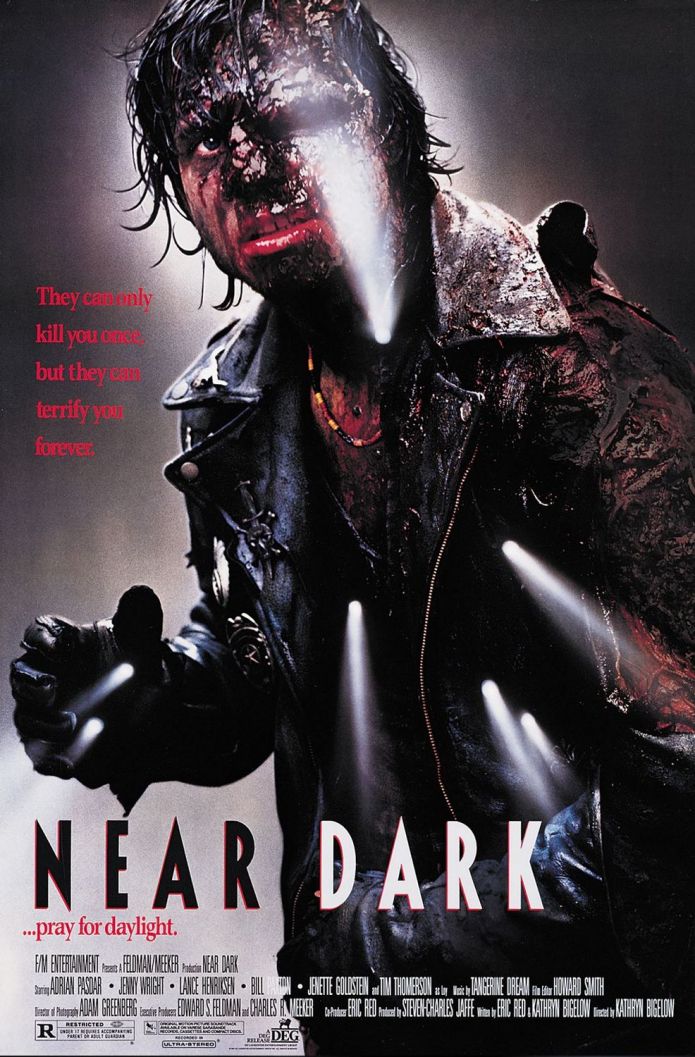
According to IMDB: “A mid-western farm boy reluctantly becomes a member of the undead when a girl he meets turns out to be part of a band of southern vampires who roam the highways in stolen cars. Part of his initiation includes a bloody assault on a hick bar

The lead protagonist in the film was Adrian Pasdar, who played Caleb, the “reluctant farm boy” as IMDB stated. Pasdar was a familiar face from the TV show Heroes. He does a decent job of struggling against the inner demons that were tugging at him to embrace fully the darkness of the vampire life. Pasdar does an admirable job of showing that struggle and maintaining the humanity despite everything around him telling him to join the crowd.

The crowd included a top level, over-the-top performance from Bill Paxton as Severin, who was everything that Caleb was not. Also, Lance Hendriksen is great as the fatherly figure among the vampire horde, Jesse Hooker. Both of these fine actors bring different layers to their characters and both are intimidating to watch. Pasdar does well to stay with these impressive actors.

There are some violent scenes, especially at a biker bar the group stops at. It is shot extremely well and provides some real gory moments while blending in some funny bits as well.

The story is fairly straightforward, which I appreciated in this film. There is a section in the third act involving a blood transfusion which is new to the lore of vampires, but it worked for this type of film.

There are some explosions that I am not sure about. Why the objects burst into flames, and such. However, these are minor gripes of an entertaining vampire film, a film that never once used the word, vampire.

The Girl Who Leapt Through Time (2006)

DailyView: Day 341, Movie 488

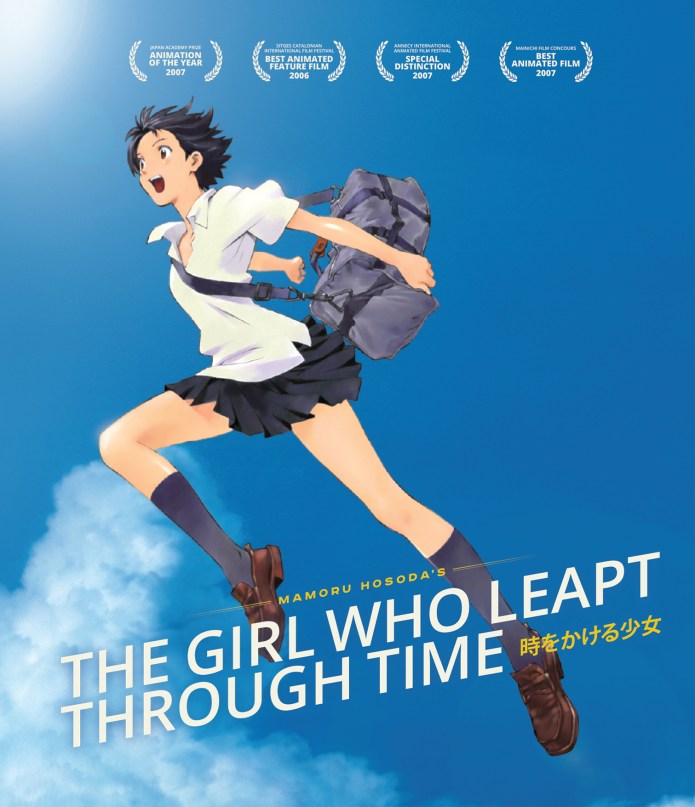
The Girl Who Leapt Through Time was an animated, sci-fi romance/coming of age Anime from Japan directed by Mamoru Hosoda. As you can probably gleam from the movie title, this deals with time travel.

Time travel is always a challenge because of all of the different manners in which it has been executed in movies over the years. In this case, the time travel has been called “team leap” and it allowed the time traveler to go to a location in the past and relive everything again and make adjustments to the time line.

Once the form of time travel is established and the rules are stated, it is important to remain consistent with them, otherwise you can mess up your story.

According to IMDB: “A high-school girl named Makoto acquires the power to travel back in time, and decides to use it for her own personal benefits. Little does she know that she is affecting the lives of others just as much as she is her own.”

Makoto, Chiaki and Kōsuke and their relationships are the key to the film. Everything that Makoto does using her time travel powers was wasteful and she was slowly learning what was important.

The animation is beautiful and the story is creative and wonderful. The three characters could be whiny at times, but that was pretty typical for the style.

I did enjoy the film and it was an enjoyable animated time travel flick.

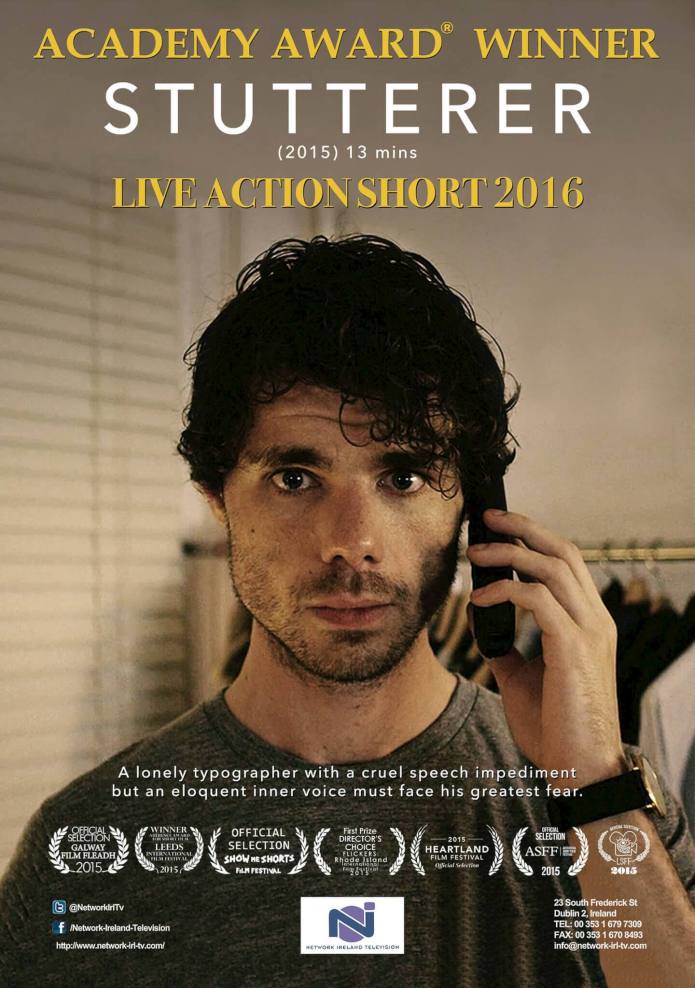
Stutterer (2015)

DailyView: Day 340, Movie 487

Another live action short, in fact an Oscar winner in 2016, Stutterer is written and directed by Benjamin Cleary.

Greenwood (Matthew Needham) has a terrible stutter that affects his life every day. He can’t make a phone call to check on his bills because he can’t get the words out in a proper time. He goes through the day watching people around him and making judgments about the people, running through silently in his head what he believes they are thinking about.

It should be of no surprise that Greenwood feels more comfortable talking by using text messaging. For six months, Greenwood had been exchanging messages with his online girlfriend Ellie (Chloe Pirrie). Ellie surprised him with the fact that she was coming to his city, London, and she wanted to meet him.

Greenwood was nervous about meeting her and having her judge him because of his speech impediment. He finally went to meet her and discovered a big surprise.

The short was well done and shined a light on a problem that many people suffer with. The character of Greenwood personified the fears and worries of stutterers everywhere. It was a well done short.

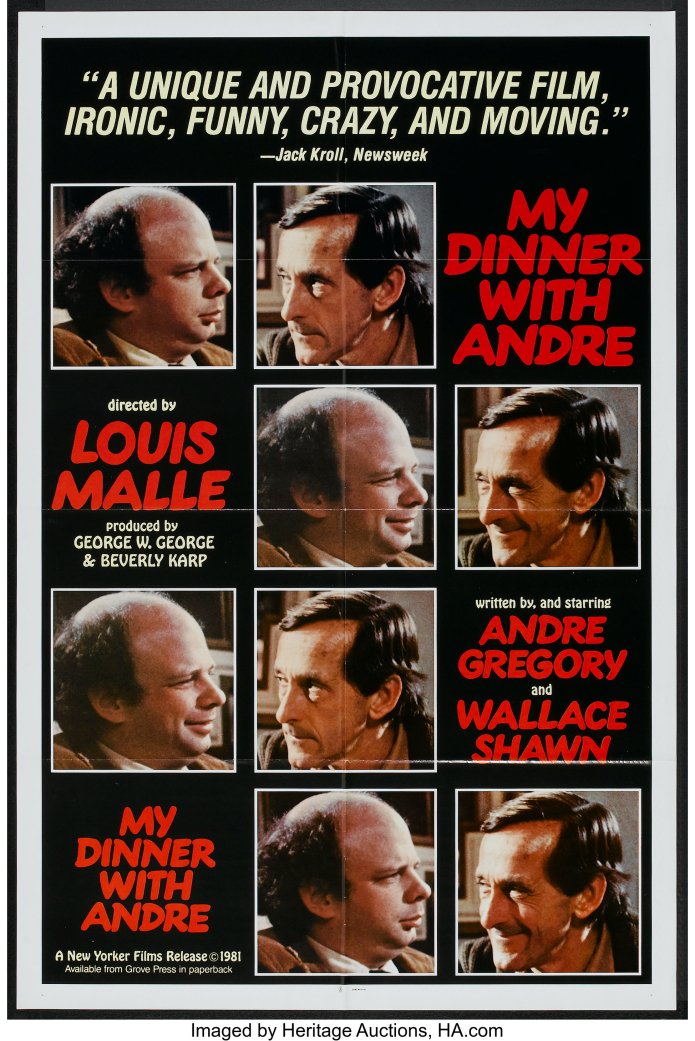
My Dinner with Andre (1981)

DailyView: Day 340, Movie 486

Since I watched the film, My Breakfast with Blassie, this morning, and it is a parody of a film that had been on the watch list for the DailyView for many months now, I figured it was a good time to go ahead and watch My Dinner with Andre.

Featuring actors Wallace Shawn and André Gregory playing fictionalized versions of themselves in a film that sees the two creative people meeting for dinner and conversation at Café des Artistes in Manhattan. Their conversations included the bizarre life led by Gregory, the world of theater, and the way of life.

Wallace Shawn will always be Vizzini to me, from the Princess Bride no matter what he is in. He is one of the most intriguing actors around with his distinctive voice and original appearance. I am unaware of André Gregory. The film was directed by Louis Malle, French director.

The philosophical dialogue and conversation being carried out by “Wally” and Andre was, at both, fascinating and challenging. It ranged all over the place. I found it most interesting when the pair of them were going back and forth. André Gregory had much more dialogue written for his character and he delivered it well, but there are a lot of concepts and ideas in the script that can be hard to follow.

This is a film that absolutely requires focus to understand what is happening. It is amazing that this film is so dominated with the language between two friends.

There is a really interesting shot in the film when Wally is speaking and the camera focuses on his, we can see Andre’s reflection in the mirror behind him and his reflection is looking directly at Wally’s head. It is a totally original way to look at POV. It is interesting as well that when the camera is on Andre, all we see is the back of Wally’s head. Maybe I am looking into it too much, but it is just something I noticed.

My Dinner with Andre has some great dialogue, but it does tend to be a little dull, especially if you have lost track of the conversation. It is extremely well written and deep, but it requires a perfect time to watch it.

My Breakfast with Blassie (1983)

DailyView: Day 340, Movie 485

Wrestlemania 38 night one was tremendous and the DailyView is continuing on with another wrestling film that I had not heard of before that featured former professional wrestler/manager “Classy” Freddie Blassie and comedian Andy Kaufman at a restaurant, meeting and eating breakfast while offending customers everywhere.

This was also found on YouTube, much like yesterday’s Kayfabe film.

This took place at Sambo’s restaurant around the time when Andy Kaufman was involved in Memphis wrestling and Jerry “The King” Lawler. The film is a parody of “My Dinner with Andre” as Kaufman and Blassie had a discussion over breakfast.

Reportedly, this was mostly an improvisational film with the two men interacting with each other and the other customers, mostly of whom are real people. There are a few exceptions such as Kaufman’s friend and “co-conspirator” Bob Zmuda.

Fred Blassie is quite a character, and, while Kaufman was playing, I am not sure if what we saw was anything but exactly what Blassie was like. He was outspoken and some of his opinions were certainly not 2022 opinions.

It was funny and totally like one of Kaufman’s performance art pieces. It is a weird experience featuring two of the biggest characters of the 1970/80s.

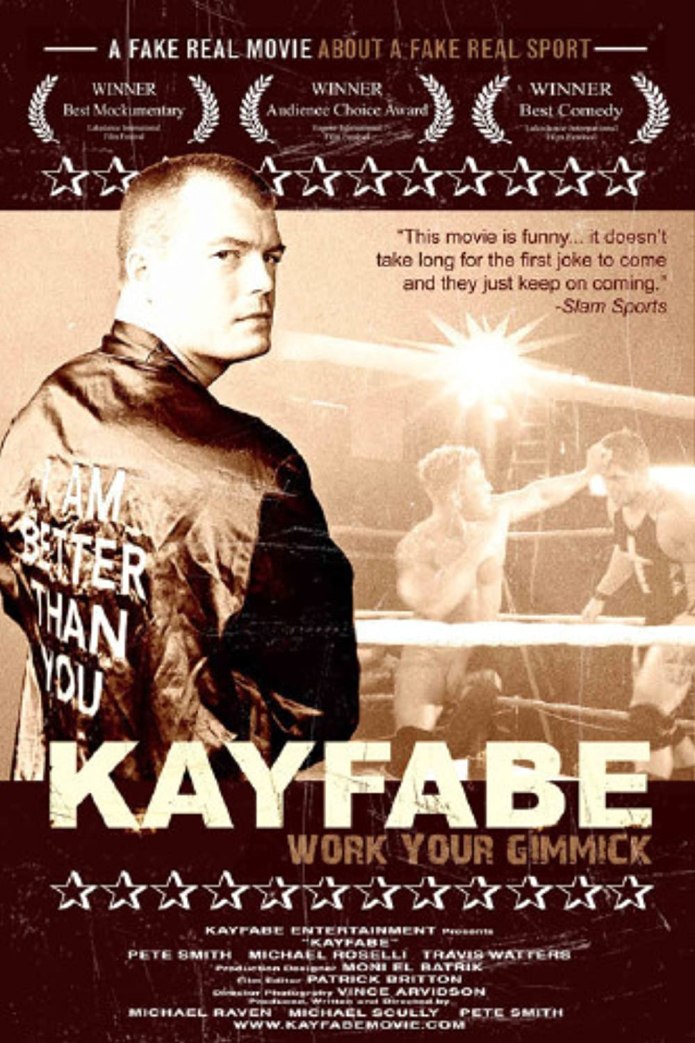
Kayfabe: A Fake Real Movie About a Fake Real Sport (2007)

DailyView: Day 339, Movie 484

This is the start of Wrestlemania weekend in the WWE and I looked through some of the other films that feature the world of professional wrestling. I discovered a film that was shot as a mockumentary called Kayfabe: A Fake Real Movie About a Fake Real Sport.

Kayfabe is a pro wrestling term for treating everything as real, the characters, the rivalries, the injuries. For decades, wrestlers protected kayfabe above all else. If you were feuding with someone, you could not hang out with them after work.

This mockumentary looked at the world of the independent wrestling company, TCICWF (Tri-Cities International Championship Wrestling Federation). The mockumentary took you backstage and showed what the world of pro wrestling was like at the level of wrestling in the churches and bingo halls with a promotion that was on its final legs before folding.

“The Rocket” Randy Tyler (Pete Smith) was the promotion’s top heel (bad guy) who helped the legendary former wrestler Al Thompson (Travis Watters) book the TCICWF matches and storylines. “The Rocket” is the champion after defeating top babyface (good guy) Steve Justice (Michael Roselli). However, Thompson delivered Randy bad news. The promotion was going out of business after the final two shows that had been scheduled.

The film focused on the bizarre characters, not only inside, but outside the ring. You had the hardcore wrestler who always bladed and bled in every match, the suspected gay wrestler who walked around the locker room completely naked, the rookie who was having sex with Thompson’s daughter, play by play broadcaster with a fetish for midgets, among others.

If you are a professional wrestling fan, this is a mockumentary for you. They use plenty of insider terms (many of which are defined for you in the first scene of the film) and they show many of the tricks of the trade.

There are fascinating and eccentric characters to follow and the way that the matches are set up are fun to watch. You can tell that there are plenty of types of real wrestlers being used as inspiration of the weird, behind-the-scene world we are introduced to.

The whole film is found on YouTube and is certainly a film any wrestling fan should watch. I do think there is enough humor and intelligence in the script and the execution that non-wrestling fans could find enjoyable aspects of it as well.

Curfew (2012)

DailyView: Day 338, Movie 483

With tonight being the start of Wrestlemania weekend and another episode of Friday Night Titans, I decided to finish Oscar week with another Academy winning short, this time a Live Action short from 2012 called Curfew.

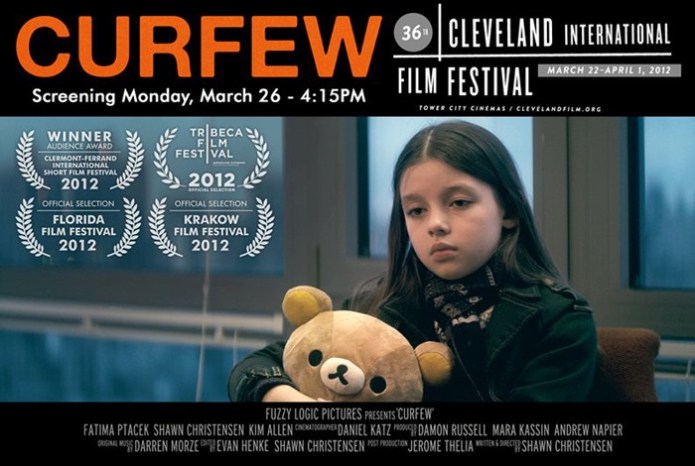
This one kicked off in a massively powerful way, with our main character Richie (Shawn Christensen) in the bath tub, in the midst of killing himself when the phone rings. It is his estranged sister (Kim Allen) calling in desperation. She needs someone to watch her daughter Sophia (Fátima Ptacek). The request was a surprise to Richie who seemingly cannot say no to his sister, Maggie.

Sophia is distant from Richie at first, but as the evening continued, she begins to warm to her unfamiliar uncle and we learn some truths about them both.

Wow. This one was really good. It immediately gripped me with the bathtub scene and it dove deep into characters with very little screen time. Performances were vital and the three main actors involved here do a fabulous job.

The dance scene at the bowling alley is phenomenal and just came out of nowhere. The fact that Richie was seeing things happen that were not there speaks to the isolation of the character and led directly to Sophia discovering the cut marks on his wrist.

This was a fantastic live short and it used its time brilliantly to tell its story.

The Fantastic Flying Books of Mr. Morris Lessmore (2011)

DailyView: Day 337, Movie 482

With Morbius scheduled for tonight, I needed to do the early morning DailyView today, which meant I needed to pull from the short category. Since I have been doing Oscar winners this week, I decided to look into the list of Oscar winners for Best Short and I found a film that was intriguing in the Best Animated Short category. It had the title The Fantastic Flying Books of Mr. Morris Lessmore.

In the short, a hurricane levels a city leaving Morris Lessmore alone and confused. He saw a flying woman, supported by several books and this led him to a library with a portrait of the woman on the wall.

Morris becomes the proprietor of the library, taking care of the magical books and giving out books to those members of the community still suffering from the storm.

Morris begins to rewrite his memoir, completing it years later. Satisfied with his life’s work, the books swirl around him again and he becomes young once more, flying off much like the woman he saw originally. When a new young girl arrived at the library, Morris’s portrait has joined the wall.

There are lots of connections in this animated short to past films. There is a definite Wizard of Oz flare here, including a use of black and white/color scheme. Jules Verne’s book, From the Earth tot he Moon is referenced during the film as was the children’s rhyme Humpty Dumpty. Morris himself was modeled after Buster Keaton’s character in Steamboat Bill, Jr.

The animation is beautiful, as one could expect in an Oscar winner, and, according to IMDB, it used several techniques in its animation (miniatures, computer animation, 2D animation).

The importance of books and stories in a person’s life cannot be overstated in this film, clearly a major theme. There are plenty of ideas swirling around the film and it is worth a watch.

All the King’s Men (1949)

DailyView: Day 336, Movie 481

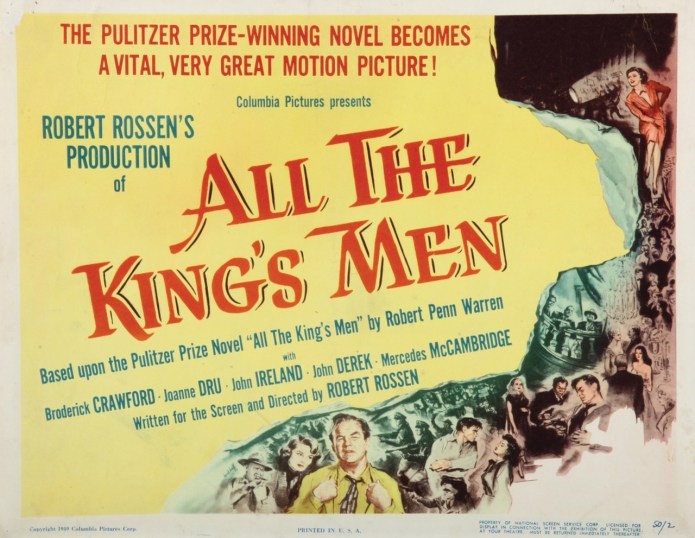
This Best Picture winner from 1946, All the King’s Men, has some distinct connections to the present day politics and made me think of a former president of the United States as I watched it.

Willie Stark (Broderick Crawford) was running for treasurer in his Southern state, and newspaper man Jack Burden (John Ireland) was on hand to report about the race. Stark lost that race, but he had learned a lot along the way and looked to campaign for the Governor of the state.

This time. Stark does not lose, and he begins to grab power through deals and corrupt plans. Stark became a shadow of the former honest man he was seen to be as he continued to carry through with misbehaviors and criminal dealings.

When his son (John Derek) got drunk and crashed his car, putting his girlfriend into a near death state, Stark arranged for the girl’s father to disappear.

The power that Willie Stark had come to find had corrupted him completely, unable to see the horrendous human being that he had become.

Almost 80 years later, this whole story of this governor (who was reportedly based on Louisiana Governor Huey Long) draws quite a parallel with Donald Trump, right down to the impeachment attempt and the chanting crowd protesting the impeachment.

This made this film even more difficult to watch. It was as if I’d been watching this for the past six years.

The Lost Weekend (1945)

DailyView: Day 335, Movie 480

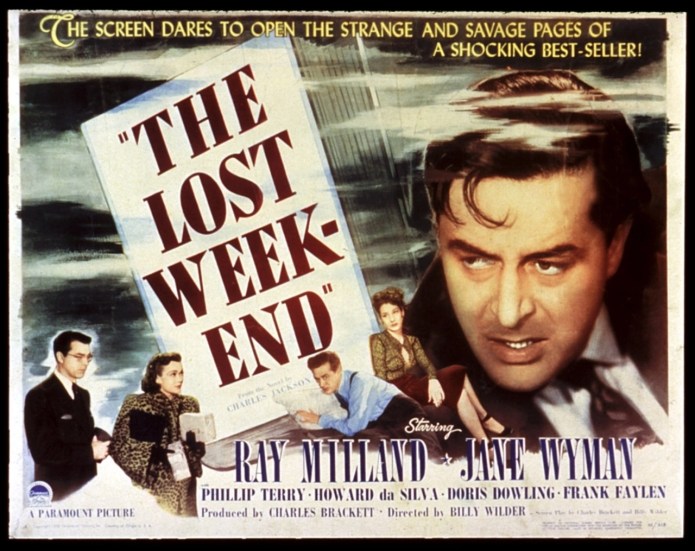
We go back to 1945 for tonight’s DailyView Best Picture Academy Award winner. This is a film noir drama directed and co-written by Billy Wilder. The Lost Weekend not only won best picture but it also won for Best Actor, Best Adapted Screenplay and Best Director.

Failed writer Don Birnam (Ray Milland) has been sober for 10 days, but he was finding it impossible to stay on the wagon. After avoiding a trip out of town with his brother Wick (Phillip Terry), Don went on a four day bender where he had flashbacks to his early days as a drunk and his meeting with his girlfriend Helen (Jane Wyman).

Oscar winner Ray Milland is exceptional in this role as the obsessed alcoholic just after his next drink. Watching his spiral into chaos was riveting and powerful. Milland carries it off brilliantly. This film does not work without his epic lead performance, but work it does.

We see the heights to which Don will go to get another drink. The desperation in his face and the shame hidden behind it. The passion of another drink juxtaposed with the anguish and distress of Helen as she struggled to find any way to help the man she loved.

I have to say, the scene with Don in “Hangover Plaza” at the local hospital after he had fallen down the stairs was a frightening scene that made this film almost a horror film. It was about as unnerving as it could be. Fascinating that it did not have that much of an effect on Don, showing exactly how far gone he was.

Having said that, the ending does feel a little pat, with things being ended with a nice little bow. It felt as if the ending was not deserved for this picture. There should have been more of a battle at the end, something more powerful to accomplish what happened. I’m not sure what it should have been, but it just felt as if the end just happened.

While the ending may not have been perfect, there is so much more in this movie that works well. It looked at some of the real horrors that alcohol can bring upon a person and how it can change a person’s path in life.

Marty (1955)

DailyView: Day 334, Movie 479

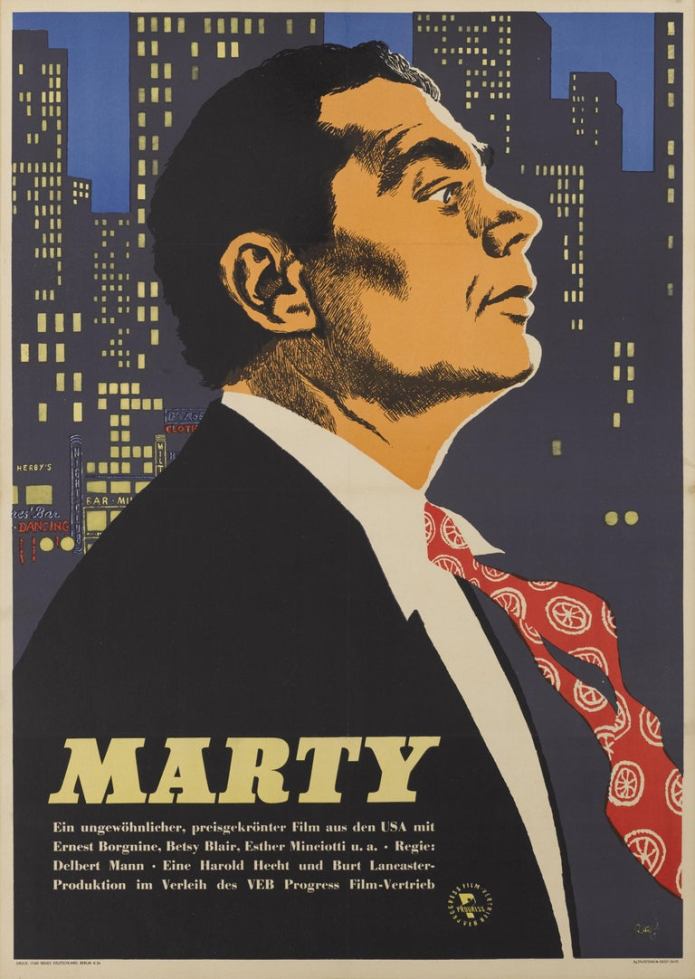
I am continuing the Oscar winning Best Picture films section of the DailyView in honor of the Academy Awards last night. Today, I watched the 1955 Best Picture winner, Marty, a romantic movie starring Ernest Borgnine and Betsy Blair. It was the directorial debut of Delbert Mann in which he won an Oscar for Best Director.

Marty (Ernest Borgnine) was a lonely 34-year old butcher whose brothers had all gotten married and people were on his back about when he was going to get married. He lived at home with his Italian mother (Esther Minciotti) and tried to think of something to do with his friend Angie (Joe Mantell).

When they go out one night to a club, Marty meets up with a shy teacher Clara (Betsy Blair). Clara was plain looking and called a “dog” by many of the men at the club. However, Marty and Clara connected with their shared low-self images and spend the night talking and walking around the neighborhood.

Marty’s mother, afraid that Marty would toss her aside if he got married, told him she did not like Clara despite only meeting her for a few minutes, and Angie was jealous of the time Marty spent with her and told him she was a dog. With everyone in his life telling him to end this with Clara, Marty was unsure what he was supposed to do.

Ernest Borgnine was great in Marty as he brought a realism to the part. Marty was a character that you could relate to easily, with his doubts and his loneliness. Borgnine would win the Academy Award for Best Actor for his role in this film.

The story was simple and sweet, based solely on the connection between the two main characters. And I loved the way the ending of the film went.

Marty was a quick watch, only around 90 minutes, and it gives several true life performances of a couple of characters that you can’t help but root for. Marty was a wonderfully charming film.