

Dexter: Resurrection E4, E5

Spoilers

“Call Me Red”

“Murder Horny”

I was able to catch up with the new season/series of Dexter: Resurrection this morning. New episodes come out on Fridays on Showtime, so I can follow it along as the season progresses for however long it will last.

I was very excited to see episode four as I knew it had some kind of serial killer dinner party at the center of it. I did not know that the guest list would be as sparkling as it was. The party was thrown by Peter Dinklage was something that I knew. He played serial killer fan Leon Prater. He was the employer of problem-solver Charley, who is played by Uma Thurman. We had seen her before.

Having Prater show Dexter (whom he believed was the Dark Passenger) around his trophy room of serial killers was creepy. Especially when he showed Dexter the hammer of the Trinity Killer and the slides of the Bay Harbor Butcher.

Then, shocks kept coming as the rest of the guests arrived. This list included Krysten Ritter as Mia, Lady Vengeance, Eric Stonestreet as family man Al, David Dastmalchian as Gareth and Neil Patrick Harris as slimy Lowell, the tattoo killer. I did not expect such a Who’s Who of actors taking these roles, and it was even more amazing when NPH wound up on Dexter’s table at the end of the episode.

The show also teased a relationship between Dexter (still pretending to be Red, the Dark Passenger) and Mia. Dexter entertained the idea of working with her until he discovered that she was not exclusively killing sexual predators as the press had assumed. He framed her for the murder of the man that Harrison had killed in the hotel. That had a lot of holes to it (including Mia telling her intended victim that he would be her first kill in New York) but the media seemed to grab the idea quickly.

Batista was not as happy about the results. He had gone to see Detective Wallace with a plan to share ideas on the case that, he said, sounded similar to the bay Harbor Butcher.

The fifth episode ended with a promising connection between Dexter and Harrison, after Harrison learned that his father had taken care of the problem with his own murder. Harrison showed Dexter signs that he was not like him, which made Dexter happy.
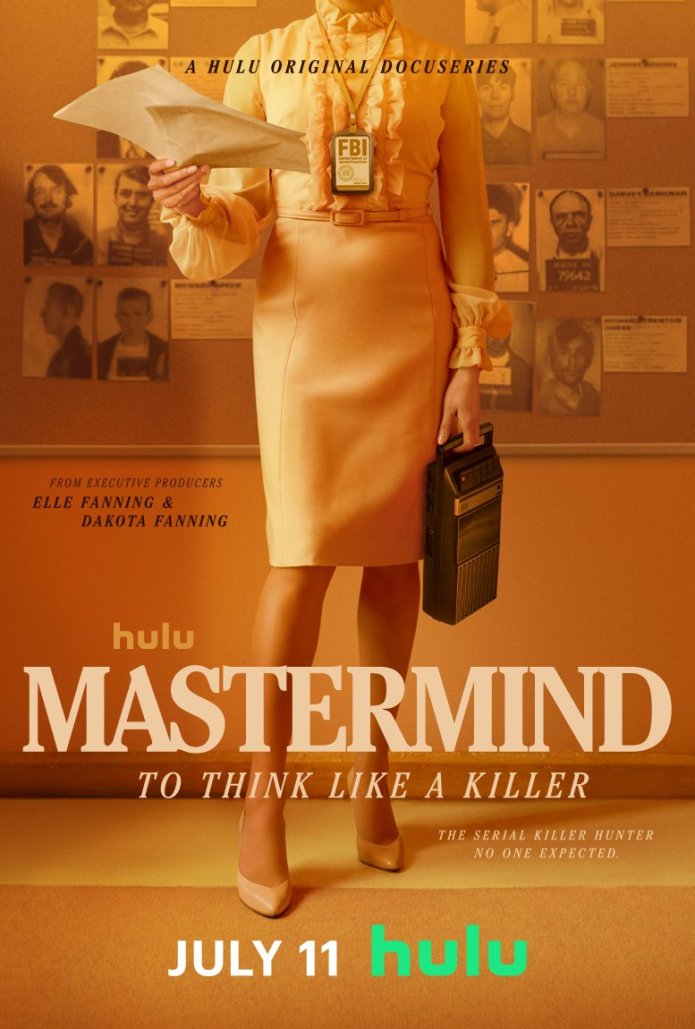
Mastermind: To Think Like a Killer

This docuseries appeared on my Disney + feed a short time ago, listed as a Hulu original. I have always been fascinated by the study of serial killers and this three episode docuseries caught that interest directly.

When I was younger, I was engaged in reading a group of books written by an FBI profiler named John Douglas, including his well known novel Mindhunter. In those works, I actually recognized the name of the woman featured in this docuseries, Ann Burgess.

Ann Burgess was not an FBI agent, but instead a nurse who was interested in the behavioral science aspect of criminal cases. She, along with other FBI agents, got together in a way that would revolutionize the process of investigation of serial cases.

They actually did bring up John Douglas in this series, along with another agent Robert Ressler. Douglas was not portrayed as the best person in this series, implying an environment of sexist behavior. It was Ressler that Burgess was more interested in working with and this group of people changed the way law enforcement looked at murder or rape cases.

The docuseries was interesting, looking at a couple of specific cases, such as the Ski Mask Rapist, and the idea of talking to the victimizers as a way to discover any sort of pattern among the people committing these crimes.

The third episode dealt mostly with her time outside of the FBI profilers, including her work in favor of the Menéndez brothers case and her work in the revealing of Bill Cosby’s sexual assaults.

This was a fascinating watch and provided even more details into the world of profilers that have always been intriguing for me.

Mastermind: To Think Like a Killer is streaming on Hulu and on Disney + right now.

The Jinx Part Two S2 E4

Spoilers

“The Unluckiest Man in the World”

The trial had been going Bob Durst’s way at first.

Then came Emily Altman.

Emily and her husband Stewart were long time friends with Bob. When the prosecution put Emily on the witness stand, they were able to get her to place Bob in Los Angeles at the time of the murder of Susan Berman. That was something that had never happened before.

Because of that, Bob admitted to writing the “Cadaver note.”

I’m not kidding.

This is absolutely nuts.

Bob had sent years denying that he wrote that note, the one sent to the police alerting them to the death of Susan. The one with the misspelling of “Beverly” with an “E”. Now, he has changed his story and claimed that he had walked in and found the body and sent the anonymous note to police to avoid his own suspicion.

This changed the entire feel of the trial.

Emily had not intended on making thing bad for Bob. In fact, the show speculated that she may have thought she was trying to help him.

This episode ended with the shocking reveal that Bob had decided to testify on his own behalf. We get that next episode. Can’t wait!

Boy did this one take a turn. I love how the producers of the mini-series used Bob’s correspondence with friends and others to score the program. Bob’s voice was the key to the first season, and this second season uses his voice just as well. When Bob said that Emily was so stupid, it was an amazing moment.

The Jinx: The Life and Deaths of Robert Durst S1 E4

“The State of Texas vs. Robert Durst”

Okay, this is just astounding.

This episode featured the trial of Robert Durst in Galveston, Texas on the murder of Morris Black, Durst’s neighbor while he was hiding out in Galveston, pretending to be a woman.

There are so many unbelievable things that happened during the trial that would lead to his being found “not guilty” that it is difficult to understand how it could happen. The thing is as you are watching this trial unfold, including Durst’s own testimony on the stand, you can see why the jury made this remarkably unpopular verdict, freeing the NYC billionaire in what seemed to be a slam dunk case.

I may have missed this, but why in God’s name did the prosecutors in Galveston not include charges against Durst for cutting up the body, destroying evidence or anything else along with the murder charge? By not charging him with these other offenses, they gave Robert Durst a clever way to get away with what he had done.

The fact was that no one could conceivably say that how the event in the room happened. Was it a murder-execution style or was it an accidental death coming from self-defense? Once Robert explained the decapitation part, in a way that made somewhat of a sense, the jury only could decide whether Robert had committed murder. They could not determine if he had cut up the body and disposed of the evidence. None of that was relevant to this case because there were no charges stemming from that.

That entire jury may have believed that he had killed Morris, but there was no proof that he had done so.

The creators of the docuseries added something at the end of this episode that is foreshadowing the bombshell that would be dropped at the end of the series. Andrew Jarecki had asked Robert if he needed a break and during the break, Durst was practicing what he was going to say, which was being picked up on his hot mike.

Durst said, “I did not knowingly purposefully lie. I did not knowingly purposefully lie. I did not knowingly, purposefully, intentionally lie. I did make mistakes.

I literally shook from this. Durst is such a chilling, manipulative person and his words both at trial and the interview with Jarecki is what makes this more than just any true crime story.

And by the way, why does nobody ask Durst what happened to the head?

This is amazing. I remember how much this stuck with me after the first watch and it absolutely holds up and a compelling piece of drama.