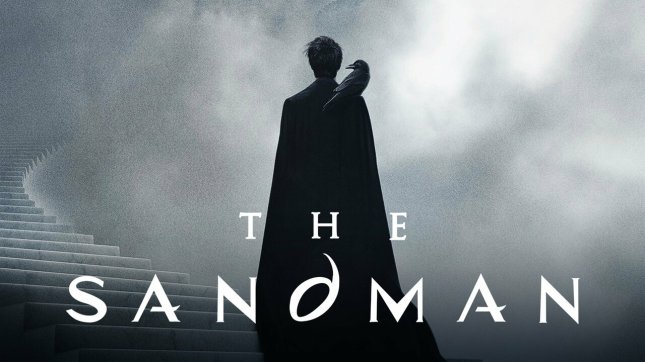

This felt like a heavy set-up episode for the next arc of the show. Very little Morpheus and a lot of info on other characters, such as Rose Walker, the Vortex.
We also get more on the Corinthian as he is wooed by a group of “collectors” for a convention of sorts.
Matthew is sent to observe and report on Rose and her family. Her brother Jed is missing and they can not even find him in the Dreaming.
Another piece of info dropped here was the still missing entities: Gault the shapeshifter, The Corinthian and the supposedly reliable Fiddler’s Green.
Stephen Fry showed up to aid Rose in an alleyway, as she was about to be mugged. As we learned, though, she did not really need his help.
I struggled through this episode as I was not connected to much of the story. I did find it fascinating as Rose strolled confidently up to Morpheus in the Dreaming to ask him about her brother’s whereabouts. I am sure things will pick up again as we move toward the final 4 episodes of this show.
This was an interesting episode that could be seen as two parts surrounding a common theme. That theme is Death and the preparation for it.
The first half is Morpheus following his sister, Death around while she approached those who were about or pass to the other side. He sees Death interacting with the humans that she was meeting and how she made them feel comfortable with the unhappy news.
After Death leaves, we move back to 1389 where we see Morpheus and Death once again at a pub. They overhear a man making a boast that he would never die. Death decided to grant his wish and Morpheus talks to the man, Hob Gadling, telling him he would return to this pub in 100 years to speak to him again.
Obviously, the man did not buy the comment at first. Morpheus expected the man to beg for death after awhile. Every year, fate had found Hob in a different circumstance, but always happy to be alive.
The episode showed Morpheus learning lessons from both opposite characters. Both Death and Hob helped create a fascinating episode and all the mini-stories they encountered were well done.
This feels like a middle episode before the next big struggle, which seems to be Morpheus’s other siblings, Desire and Despair, the twins. Still, I like a good transition episode and this is certainly that.
With John having the dream ruby, he stops off at a diner for some coffee and truth-telling, bringing along everyone with the misfortune to come inside the diner.
This did not feature much Sandman. Outside of a shot of him still unconscious with Matthew trying to wake him, we do not see Morpheus until the final act of the episode. What we get is a tour de force from David Thewlis as John, just sitting back and observing the scenario he put into place about truth telling. There was something funny about John Dee watching everything unfold as he dug into a big container of ice cream.
The show provides a powerful theme about truth and lies, showing, I believe, the fact that we cannot survive by being honest all the time about everything. It reveals the darker side of human nature and destroys the idea that “honesty is the best policy.” At least in part.
The unfortunate people in the diner have to face their unhappy existences because John Dee has created a situation where they are going to tell the truth about everything. Even for one of the sweetest characters that we have seen so far, waitress Bette Munroe (Emma Duncan), who seemed to be engaging and friendly to everyone.
The show does a strong job of introducing these secondary characters quickly and providing enough details that make us intrigued, if not interested, in their lives and their eventual downfall.
There was a lot of darkness in this episode, and Morpheus is anything but a hero. He is just finally here to retrieve the power of the ruby, which he does in the final showdown. I was unaware that John Dee was the kid of the man who had captured and imprisoned Morpheus in episode one, and that made the story all the more interesting. John Dee seems to have found his own fate at the end of the show.
Is it just me or is Matthew the raven a better person than anyone else on the show?
There are six more weeks of The Sandman in the Sunday Morning Sidewalk.
This morning, we take a stroll down the Sunday Morning Sidewalk onto the path to Hell.
And the path to Hell is lined with more than just good intentions. It is lined with tension, anxiety and suspense.
What a great episode this was.
At first, as Morpheus and Matthew traveled into Hell to regain his helm, I was more engaged with the second part of the story, John Dee being picked up by a woman named Rosemary. That conversation inside Rosemary’s car was scary and I dreaded what was going to happen to Rosemary, who was just trying to be a good person.
However, then Morpheus wound up in a fight with Lucifer Morningstar and the narrative of the episode switched. The ‘fight” between these two was amazing… and unlike anything I expected. It was truly sensational and brilliantly constructed. It could have easily just slipped into the big power fight that we see so often, but this was deeper, more intense.
The fight turned on the word of the raven, Matthew, giving Morpheus that last bit of motivation to overcome the ruler of the Underworld.
It also seemed as if Rosemary was able to survive the episode, and I was sure she was a goner. Sarah Niles played Rosemary so exceptionally that I immediately connected with the character and wished for her safety. John gave her the amulet of protection at the end of the episode after she had decided to wait for him instead of escaping to freedom. It was a sweet ending that I still was anxious about. I really wanted Rosemary, a good person, to not be killed off in this warped story. When it was clear that she was going to make it, I did breath a sigh of relief.
Nicely paired episode with two stories (which nearly crossed at the end) that I was very engaged in. This is my favorite episode so far of the season and it does seem as if the show is only getting better each week.
There is a lot going down today. It is also Sunday Morning Sidewalk #13, the third episode of the first (and only?) season of Netflix’s The Sandman, entitled “Dream a Little Dream of Me.”
Morpheus was in search of his items and he started with the pouch of sand that was in the possession of Constantine. That is Johanna Constantine, not John, by the way.
We also get the debut of a new raven, Matthew. This one is voiced by everyone’s favorite comic book geek, Patton Oswalt. Oswalt has appeared in Agents of SHIELD, voiced MODOK, Uncle Ben, Chameleon, The Atom, made an appearance as Pip the Troll and played himself in the Boys. He has also written comic books over the last several years. He has a ton of irons in the geek fire.
David Thewlis continued to be as sinister as could be as John Dee got himself out of the asylum he was living in thanks to his mom, Ethel Cripps. He immediately met up with The Corinthian, who gave him a coat. This pairing of villains are compelling and these two actors, Thewlis and Boyd Holbrook, are great.
This was another solid outing. I am pleased with what I saw this week. Week one, I was uncertain if I was going to enjoy this series, but the last two episodes have been very good so I hope we are on a entertaining path moving forward.
I guess the path we are on will lead to Hell as that is where Morpheus and Matthew were departing for as the episode closed.
The Sunday Morning Sidewalk continued this week with the second episode of Netflix’s The Sandman. I was somewhat disappointed with last week’s episode and I was worried that the commitment I have made, watching an episode a week for eleven weeks, was going to be a toil.
Thankfully, I thought episode two was a considerable step up from last week’s fare and I have a renewed vigor for the series.
One strength of this week’s episode is that it featured more of a spotlight on Morpheus himself. Sure there were other characters involved, but it felt as if they were all contributing toward the story of The Sandman, and not their own tales. Last week there was so little of Dream that it did not feel right.
I loved the introduction of Cain and Abel in the Sandman world. First, with Gregory, the dragon that Morpheus had given to them right out of the nightmare, and then with the fact that Cain continued to kill his brother, these two characters presented a neat contrast to Morpheus. Abel’s confession to Irving, the gargoyle, that he understood the roles they must play, Cain the first murderer and Abel the first victim, was profound and was a cool way to incorporate them into the dream world.
The show built some antagonists more this week, with an increased look at The Corinthian and the introduction of Ethel Cripps, an art dealer who may have sold Morpheus’s tools along the way. This allows Morpheus a group of McGuffins to chase after this season.
They also introduced a Constantine, though not the one I was familiar with. Her name was Johanna Constantine, supposedly a descendent of John. I look forward to the interaction between these characters moving forward.
Again, I am approaching this without much knowledge of the comics so this is an all-new world for me. I did a little research after the episode an discovered that the character of John that we got at the end of the episode is a major villain, Dr. Destiny. I was unaware of that and it provides a neat little Easter egg for me.
Sunday Morning Sidewalk started a new series this week, The Sandman, from Netflix. Based on a classic DC Comics comic book from Neil Gaiman, The Sandman was a show that I had always intended to watch, but just never got around to doing. It has eleven episodes on Netflix so it will be our new Sunday Morning Sidewalk into early June.
At least, that is the current schedule. I do hope that the remainder of The Sandman is an improvement over this first episode, because I was not very impressed with it.
Before I go into the negatives, the show looked absolutely amazing. The visuals were stunning and it was clear that this show did not skimp on a budget for it.
However, there was so much exposition that I had a difficult time keeping my focus on the story the show was telling. It bounced around at first and did not establish the feel well. Then, the story moved on to Charles Dance, a well known character actor playing a man named Roderick Burgess, who was able to capture Morpheus in some contraption. He then holds him for ten years.
The problem with this was that Burgess’s motivation was very muddy. Did he want his deceased son back from the dead or did he want immortality and wealth? It seemed as if he wanted all of that in order to free Morpheus. Poor Morpheus had to lay inside this glass container naked for such a long time. Get the man a blanket at least.
Then there was another son, Alex, who was ignored and verbally abused by Burgess. Alex accidentally killed his father and then he held on to Morpheus for an undetermined amount of time. The world suffered from some kind of sleep sickness, but the show really did not go into any specifics on that.
Oh, Boyd Holbrook is here too, as some kind of figure that opposes Morpheus. IMDB tells me his name is The Corinthian. I was not a Sandman comics reader so I do not know whom that was. He seemed to be a potential future antagonist. Not sure why.
The story of this episode was a mess and I was very disappointed in the show. The main story of the Burgess family did not grasp my attention and did not seem to be a worth story to kick off this series with. Again, I do not know if this is a vital comic storyline adapted or if this was completely new for the series, but I did not enjoy it much.
I do hope this gets better as it moves along or else I might have to looking into the possibility of adjusting the Sunday Morning Sidewalk schedule.
Episode ten of the Band of Brothers brought the season to an end.
This episode dealt with the end of the war in Germany, dealing with the Easy Company having to handle the fact that they were still active without any enemies to fight.
There are some lovely spots that they recorded this episode at in Austria, creating a beauty that has not been seen much during the gritty, violent series.
This episode did feel like a lot of falling actions. It had a couple of powerful moments, in particular surrounding the shooting of Sergeant Grant.
Episode nine felt like the real emotional conclusion to this series as the trip to the concentration camp showed what they were fighting for.
This made sense as a concluding episode because of the situation. I did like the ending voice over from Winters that gave us the insights on the surviving members and the words from the real men that these characters were based on. This was so much better than the boxed text that sometimes pops on the screen at the end of films based on true events. This was much more active and kinetic.
This brings the first arc of Sunday Morning Sidewalk to an end. Next week, post #11 will start off with a new series. Starting next week on April 6, I will begin the watch of the Netflix series The Sandman, which has eleven episodes and will run into June.
I was wondering if this was an episode we were going to get.
When the soldiers of Easy Company were sounding like they were questioning the reason they were fighting this war in the first place, I knew we were getting the scenes we would get.
Concentration Camps.
It was tough to watch the horror of the soldiers as they walked into the camp and realized what the people who were there were going through at the hands of the Nazis. The imagery the show provided in this time was heartbreaking.
The soldiers brought the German town folk to the camp to help clean up and bury the bodies of the Jews that were dead. The shock of what the people saw was powerful. I can’t imagine the idea that they realized that they were the bad guys the whole time.
The episode focused on Nixon, who received bad news from home… his wife is divorcing him and taking his dog. Nixon spent much of the episode drinking, a specific whiskey only. He spends much of the episode searching for it.
I enjoyed this episode because it felt a little different than some of the others.
One of the biggest reasons I liked this one so much is that there was less of the war time action involved. Don’t misunderstand me. I think the war action has been great in the series so far, but a little less in this episode fits with the narrative and allows for character growth for several characters. Would I have wanted the same amount of action in the previous episodes? No, I would not, but this gives a bit of a different look.
The POV of this episode was heavily featured by Private Webster, who had been with Easy Company during D-Day and other early offensives, but had missed Bastogne since he was recovering in the hospital. However, when he returned, Easy Company had been through the ringer in Bastogne and Webster found them considerably different than he remembered.
The company did not accept Webster’s return easily either. Since he missed Bastogne, they saw him now as nothing more than a replacement and they shunned him.
We also met a new character named Lt. Jones, fresh out of West Point. He was another character the hardened soldiers had a difficult time connecting to and Jones was desperate for experience in battle as the war did seem to be slowly coming to an end.
A dangerous patrol was sent out across the rover to attempt to capture some German prisoners that they could gather info from. The mission was not well received by Easy Company since the soldiers were beginning to believe that they might make it out of the war alive.
The character development included Sgt. Malarky, who had lost most of his friends at Bastogne and was extremely burned out. Webster was able to convince the brass to give Malarky this mission off because he needed the time.
After coming back from the mission with only one casualty, Lt. Col. Sink ordered the men to return for another patrol. This one would be more dangerous since they would have to go further into the city. Captain Winters met with the men and basically told them to get a good nights sleep and then report to him in the morning that they had completed the mission but were unable to attain any more German prisoners. Winters took the unneeded order and made a judgment call about the viability and importance of it. He weighed the lives of his men ahead of any miniscule benefits that might come from executing the patrol.
The end of the episode indicated that Easy Company would be soon heading into Germany.
This was one of my favorite episodes of Band of Brothers so far. I’m not ready to anoint it as my favorite, but it is certainly in the argument.
There was so much character development throughout the entire episode, narrated by Lipton, that it provided me with more feeling toward some of these characters that, to be honest, blend together for me at times. Lipton. Speirs. Dyke. Compton. Malarky.
I have to say, there were two visceral moments for me in the episode. The first was when Joe Toye lost his leg in the shelling. It was such a shocking moment and the shell that then shredded Bill Guarnere, who had rushed out to help Joe, was unthinkable.
And the second moment was during this entire barrage, the soldiers kept jumping into their foxholes and I kept thinking how are these foxholes supposed to help against these shells? I mean, I understand how it can provide shelter to gunfire, but these shells were coming down from above, right? Then the show proved me right when it showed Corporal Penkala and Sgt. Skip Muck getting blown to bits while they were inside their foxhole, begging for George Lutz to get in it with them. I literally cried out when that happened.
The show dealt with the incompetent leadership provided by Dyke and continued to enhance the legend of Speirs. Buck Compton was not injured during this episode, but it showed that he had reached his own “breaking point” after seeing so many of the people he had been close with over his time with Easy Company dying. Part of the theme of this episode was that wounds were not all physical injuries and that the path of war took a toll on the soldiers’ minds as well.
The mood of the show was downtrodden, depressed. The cold weather played right into that as well. There was little joy in this episode. Even when the company felt safe and were singing, they were interrupted by a sniper.
There are three more episodes remaining in the first series of the Sunday Morning Sidewalk.
As we start the second half of the season, the soldiers of Easy Company are in bad shape. The defense of the Belgium city of Bastogne was part of the Battle of the Bulge and was one of the most important moments of the war.
One of the key parts to this episode was the focus on the character Eugene Roe, the medic with the group. The horrors he had to endure in an attempt to keep the soldiers of his company in one piece was devastating. I was always a fan of the TV show MASH, but this took the realism to an all new level with the injuries and the blood. It truly gave a portrait of a man trying to hold his own self together to do what he could for the wounded.
Eugene met up with a nurse in the town of Bastogne, Renee. They connected over their efforts to save people and their wartime moments were the sole peace in this episode. Sadly, I knew what was destined to happen here, as Renee appeared to have died in a German bombing run on Bastogne (although no body was found).
Eugene went through the mental wringer in this episode, but the final moments with him seemed to indicate that he was going to make it through. He had slowly been starting to become like a zombie, but the final moment in a foxhole with Heffron, who he calls by his nickname “Babe” which was significant because Eugene did not use the nicknames before.
One of the more haunting moments of the episode came when there was a lull in fighting and the Germans could be heard singing “Silent Night” in German from out of their locations in the woods. Since it was Christmastime, this little bit of singing humanized the Germans, reminding us that they were just people fighting for their side, even if the Nazi Party was completely evil.
Another brutally powerful episode of this mini-series. Just four more weeks to go for this series in the Sunday Morning Sidewalk.
This episode of Band of Brothers moved through time, showing us different moments in the life of Captain Winters, from his last command in the field in Holland to his promotion to Executive Officer (XO) of 2nd Battalion. This would mean that he was no longer in command of Easy Company.
We see his response to all the paperwork that his new position entailed and how he returned mentally to the front lines. This is juxtaposed with a memory of his final shots of his command when he shot a young German soldier. The moment when the young German, who was kneeling, smiled, only to have the smile leave his face in realization, was haunting and stuck with Winters moving forward.
Fredrick “Moose” Heyliger is the person that Winters suggested to take his place, but Moose is shot by a twitchy Army sentry. Moose does survive, but he does not return to Easy Company after his injuries. What a scene this was with the young Army sentry actually shooting someone on his side.
We saw a cameo with Jimmy Fallon as Lt. George Rice. This was an episode that was directed by Tom Hanks, and he does a great job with the non-linear storytelling.
“Replacements” details the events for Easy Company undergoing Operation Market Garden in Holland, which was a failure. The high-risk operation saw Easy Company retreat from the fight with the Krauts and showed how dangerous this situation could be.
It also featured a group of replacements to the company and how they were accepted (or hazed as the case may be) into a group of men who had been together for going on two years.
We had a return from David Schwimmer’s Captain Sobel, now as the newly appointed Regimental S-4. His facial expressions told more than any lines of dialogue could have from this returning character.
The story was told from the perspective of Sgt. Denver “Bull” Randleman. He gets wounded by some tank shrapnel and winds up spending the night in a barn with Germans all around him. He received help from a Dutch farmer and his daughter in a tense moment. Bull had to fight a German soldier hand-to-hand to keep his presence hidden.
There was also a cool scene where Private Webster gave a Dutch child a chocolate bar. The child had been with his father in an air raid shelter and came out when the Americans went past. The father had said the boy had never had chocolate before and the joy on the boy’s face after tasting the chocolate was a wonderful bit of life included within the horrors surrounding everything.
Horrors such as the Dutch people, who were greeting Easy Company as “liberators,” taking women and cutting their hair and drawing swastikas on their faces. These were women who had slept with German soldiers and were now facing consequences from an angry mob. This was a disturbing scene and you could tell that the soldiers were bothered by it as well.
This show does a really good job of these smaller moments tucked inside the overall dramatics and violence of the war scenes.
Week three of the Sunday Morning Sidewalk was the third episode of Band of Brothers, which showed that it continued to be one of the most realistic and stunning displays of wartime battles ever put together.
This episode featured Private Albert Blithe, a solider who was struggling with the war and its trappings. He went through a bout of “hysterical blindness” and ended up being wounded on a scouting mission. This was an amazing story of self-doubt and fear. 1st Lt. Speirs was a key piece to this story, as his brutal nature became legend among the men, but it was his wisdom that helped keep Private Blithe going. Speirs’s death was totally foreshadowed when he told Blithe that he was scared because he still had hope, and had not accepted the fact that they were all already dead.
There was a great scene at the end of the episode where Sgt. Malarky went to pick up his laundry that he had dropped off before the mission. Mrs. Lamb had done the laundry and he paid her. She asked if Lieutenant Meehan had forgotten about his laundry and she hoped he would come and pick it up. She had not realized that he had been killed. Malarky paid for his laundry as well, not telling her that he had been killed. She then asked about 1stSgt. Evans, Pvt. Moya, Pvt. Bloser, Pvt. Gray, PFC. Miller, Sgt. Owen, T-5 Collins, and Pvt. Elliot and Blithe, all of whom were dead. The show used this as a way to indicate that the Easy Company had lost 65 men during this offensive and that Blithe did not recover from his wound and died in 1948.