Eisner Awards 2021

This year’s Eisner Award nominees are here.

2021 Eisner Awards Nominations

Best Short Story
  • “Garden Boys” by Henry McCausland, in Now #8 (Fantagraphics)
  • “I Needed the Discounts” by Connor Willumsen, in The New York Times (January 3, 2020)
  • “Parts of Us,” by Chan Chau, in Elements: Earth, A Comic Anthology by Creators of Color (Ascend Press)
  • “Rookie,” by Greg Rucka and Eduardo Risso, in Detective Comics #1027 (DC)
  • “Soft Lead,” by Chan Chau, https://chanchauart.com/comics#/soft-lead/
  • “When the Menopausal Carnival Comes to Town,” by Mimi Pond, in Menopause: A Comic Treatment (Graphic Medicine/Pennsylvania State University Press)

Best Single Issue
  • The Burning Hotels, by Thomas Lampion (Birdcage Bottom Books)
  • Hedra, by Jesse Lonergan (Image)
  • The Other History of the DC Universe #1, by John Ridley and Giuseppe Camuncoli (DC)
  • Sports Is Hell, by Ben Passmore (Koyama Press)
  • Stanley’s Ghost: A Halloween Adventure, by Jeff Balke, Paul Storrie, and Dave Alvarez (Storm Kids)

Best Continuing Series
  • Bitter Root, by David F. Walker, Chuck Brown, and Sanford Greene (Image)
  • Daredevil, by Chip Zdarsky and Marco Checchetto (Marvel)
  • The Department of Truth, by James Tynion IV and Martin Simmonds (Image)
  • Gideon Falls, by Jeff Lemire and Andrea Sorrentino (Image)
  • Stillwater, by Chip Zdarsky and Ramón K Pérez (Image/Skybound)
  • Usagi Yojimbo, by Stan Sakai (IDW)

Best Limited Series
  • Barbalien: Red Planet, by Jeff Lemire, Tate Brombal, and Gabriel Hernandez Walta (Dark Horse)
  • Decorum, by Jonathan Hickman and Mike Huddleston (Image)
  • Far Sector, by N. K. Jemisin and Jamal Campbell (DC)
  • Strange Adventures, by Tom King, Mitch Gerads, and Evan “Doc” Shaner (DC Black Label)
  • Superman’s Pal Jimmy Olsen, by Matt Fraction and Steve Lieber (DC)
  • We Live, by Inaki Miranda and Roy Miranda (AfterShock)

Best New Series
  • Black Widow, by Kelly Thompson and Elena Casagrande (Marvel)
  • Crossover, by Donny Cates and Geoff Shaw (Image)
  • The Department of Truth, by James Tynion IV and Martin Simmonds (Image)
  • Killadelphia, by Rodney Barnes and Jason Shawn Alexander (Image)
  • We Only Find Them When They’re Dead, by Al Ewing and Simone Di Meo (BOOM! Studios)

Best Publication for Early Readers (up to age 8)
  • Bear, by Ben Queen and Joe Todd-Stanton (Archaia/BOOM!)
  • Cat Kid Comic Club, by Dav Pilkey (Scholastic Graphix)
  • Donut Feed the Squirrels, by Mika Song (RH Graphic/RH Children’s Books)
  • Kodi, by Jared Cullum (Top Shelf)
  • Lift, by Minh Lê and Dan Santat (Little, Brown Young Readers)
  • Our Little Kitchen, by Jillian Tamaki (Abrams Books for Young Readers)

Best Publication for Kids (ages 9-12)
  • Doodleville, by Chad Sell (Knopf/BFYR/RH Children’s Books)
  • Go with the Flow, by Lily Williams and Karen Schneemann (First Second/Macmillan)
  • Mister Invincible: Local Hero, by Pascal Jousselin (Magnetic Press)
  • Snapdragon, by Kat Leyh (First Second/Macmillan)
  • Superman Smashes the Klan, by Gene Luen Yang and Gurihiru (DC)
  • Twins, by Varian Johnson and Shannon Wright (Scholastic Graphix)

Best Publication for Teens (ages 13-17)
  • Check, Please! Book 2: Sticks & Scones, by Ngozi Ukazu (First Second/Macmillan)
  • Displacement, by Kiku Hughes (First Second/Macmillan)
  • Dragon Hoops, by Gene Luen Yang (First Second/Macmillan)
  • Fights: One Boy’s Triumph Over Violence, by Joel Christian Gill (Oni Press)
  • A Map to the Sun, by Sloane Leong (First Second/Macmillan)
  • When Stars are Scattered, by Victoria Jamieson and Omar Mohamed (Dial Books)

Best Humor Publication
  • The Complete Fante Bukowski, by Noah Van Sciver (Fantagraphics)
  • Department of Mind-Blowing Theories, by Tom Gauld (Drawn & Quarterly)
  • FANGS, by Sarah Andersen (Andrews McMeel)
  • Wendy, Master of Art, by Walter Scott (Drawn & Quarterly)
  • Superman’s Pal Jimmy Olsen, by Matt Fraction and Steve Lieber (DC)
  • What If We Were . . ., by Axelle Lenoir (Top Shelf)

Best Anthology
  • Ex Mag, vols. 1–2, edited by Wren McDonald (PEOW)
  • Guantanamo Voices: True Accounts from the World’s Most Infamous Prison, edited by Sarah Mirk (Abrams)
  • Hey, Amateur! Go From Novice to Nailing It in 9 Panels, edited and curated by Shelly Bond (IDW Black Crown)
  • Los Angeles Times, edited by Sammy Harkham (NTWRK)
  • Menopause: A Comic Treatment, edited by MK Czerwiec (Graphic Medicine/Pennsylvania State University Press)
  • Now, edited by Eric Reynolds (Fantagraphics)

Best Reality-Based Work
  • Big Black: Stand at Attica, by Frank “Big Black” Smith, Jared Reinmuth, and Améziane (Archaia/BOOM!)
  • Dragon Hoops, by Gene Luen Yang (First Second/Macmillan)
  • Invisible Differences: A Story of Asperger’s, Adulting, and Living a Life in Full Color, by Mme Caroline and Julie Dachez, translation by Edward Gauvin (Oni Press)
  • Kent State: Four Dead in Ohio, by Derf Backderf (Abrams)
  • Paying the Land, by Joe Sacco (Metropolitan/Henry Holt)
  • Year of the Rabbit, by Tian Veasna, translation by Helge Dascher (Drawn & Quarterly)

Best Graphic Memoir
  • Banned Book Club, by Kim Hyun Sook, Ryan Estrada, and Ko Hyung-Ju (Iron Circus)
  • Dancing After TEN: A Graphic Memoir, by Vivian Chong and Georgia Webber (Fantagraphics)
  • Ginseng Roots, by Craig Thompson (Uncivilized)
  • I Don’t Know How to Give Birth! by Ayami Kazama, translated by Julie Goniwich (Yen Press)
  • The Loneliness of the Long-Distance Cartoonist, by Adrian Tomine (Drawn & Quarterly)
  • When Stars Are Scattered, by Victoria Jamieson and Omar Mohamed (Dial Books)

Best Graphic Album—New
  • The Book Tour, by Andi Watson (Top Shelf)
  • Dragman, by Steven Appleby (Metropolitan)
  • Flake, by Matthew Dooley (Jonathan Cape)
  • Labyrinth, by Ben Argon (Abrams)
  • Paul at Home, by Michel Rabagliati, translation by Helge Dascher and Rob Aspinall (Drawn & Quarterly)
  • Pulp, by Ed Brubaker and Sean Phillips (Image)

Best Graphic Album—Reprint
  • Black Hammer Library Edition, vol. 2, by Jeff Lemire, Dean Ormstom, Emi Lenox, and Rich Tommaso (Dark Horse)
  • Criminal Deluxe Edition, vol. 3, by Ed Brubaker and Sean Phillips (Image)
  • Eight-Lane Runaways, by Henry McCausland (Fantagraphics)
  • Fante Bukowski: The Complete Works, by Noah Van Sciver (Fantagraphics)
  • Herobear and the Kid: The Heritage, by Mike Kunkel (Astonish Factory)
  • Seeds and Stems, by Simon Hanselmann (Fantagraphics)

Best Adaptation from Another Medium
  • Constitution Illustrated, by R. Sikoryak (Drawn & Quarterly)
  • Parable of the Sower: The Graphic Novel Adaptation, by Octavia E. Butler, adapted by Damian Duffy and John Jennings (Abrams)
  • Sapiens: A Graphic History: The Birth of Mankind, vol. 1, by Yuval Noah Harari, adapted by David Vandermeulen and Daniel Casanave (Harper Perennial)
  • Slaughterhouse-Five, by Kurt Vonnegut, adapted by Ryan North and Albert Monteys (Archaia/BOOM!)
  • Superman Smashes the Klan, adapted by Gene Luen Yang and Gurihiru (DC)

Best U.S. Edition of International Material
  • Altitude, by Olivier Bocquet and Jean-Marc Rochette, translation by Edward Gauvin (SelfMadeHero)
  • Gamayun Tales I: An Anthology of Modern Russian Folk Tales, by Alexander Utkin, translation by Lada Morozova (Nobrow)
  • Goblin Girl, by Moa Romanova, translation by Melissa Bowers (Fantagraphics)
  • Irena Books 2-3, by Jean-David Morvan, Severine Tréfouël, and David Evrard, translation by Dan Christensen (Magnetic Press)
  • When You Look Up, by Decur, translation by Chloe Garcia Roberts (Enchanted Lion Books)
  • The Winter of the Cartoonist, by Paco Roca, translation by Erica Mena (Fantagraphics)

Best U.S. Edition of International Material—Asia
  • I Had That Same Dream Again, by Yoru Sumino and Idumi Kirihara, translation by Beni Axia Conrad (Seven Seas)
  • I Wish I Could Say “Thank You,” by Yukari Takinami, translation by Yukari Takeuchi (Fanfare/Ponent Mon)
  • A Journal Of My Father, by Jiro Taniguchi, translation by Kumar Sivasubramanian (Fanfare/Ponent Mon)
  • Ping Pong, vols. 1–2, by Taiyo Matsumoto, translation by Michael Arias (VIZ Media)
  • Remina, by Junji Ito, translation by Jocelyne Allen (VIZ Media)
  • Spy x Family, vols. 1–3, by Tatsuya Endo, translation by Casey Loe (VIZ Media)

Best Archival Collection/Project—Strips 
  • The Flapper Queens: Women Cartoonists of the Jazz Age, edited by Trina Robbins (Fantagraphics)
  • Gross Exaggerations: The Meshuga Comic Strips of Milt Gross, by Milt Gross, edited by Peter Maresca (Sunday Press/IDW)
  • Krazy & Ignatz 1919-1921 by George Herriman, edited by RJ Casey (Fantagraphics)
  • Little Debbie and the Second Coming of Elmo: Daily Comic Strips, August 1960–September 1961, by Cecil Jensen, edited by Frank Young (Labor of Love)
  • Pogo The Complete Syndicated Comic Strips: Volume 7: Clean as a Weasel, by Walt Kelly, edited by Mark Evanier and Eric Reynolds (Fantagraphics)

Best Archival Collection/Project—Comic Books
  • Art Young’s Inferno, by Art Young, edited by Glenn Bray (Fantagraphics)
  • Atlas at War! edited by Michael J. Vassallo (Dead Reckoning)
  • The Complete Hate, by Peter Bagge, edited by Eric Reynolds (Fantagraphics)
  • Corto Maltese: The Ballad of the Salty Sea, by Hugo Pratt, translation by Dean Mullaney and Simone Castaldi (EuroComics/IDW)
  • Little Lulu: The Fuzzythingus Poopi, by John Stanley, edited by Frank Young and Tom Devlin (Drawn & Quarterly)
  • Man and Superman and Other Stories, by Harvey Kurtzman, edited by J. Michael Catron (Fantagraphics)

Best Writer
  • Ed Brubaker, Pulp, Reckless (Image); Friday (Panel Syndicate)
  • Matt Fraction, Superman’s Pal Jimmy Olsen (DC); Adventureman, November vols. 2–3, Sex Criminals (Image)
  • Jonathan Hickman, Decorum (Image); Giant-Size X-Men, X-Men (Marvel)
  • Jeff Lemire, Barbalien, Black Hammer, Colonel Weird: Cosmagog (Dark Horse); The Question: The Deaths of Vic Sage (DC Black Label); Family Tree, Gideon Falls (Image)
  • James Tynion IV, Something Is Killing the Children, Wynd (BOOM! Studios); Batman (DC); The Department of Truth (Image); Razorblades (Tiny Onion)
  • Chip Zdarsky, Stillwater (Image/Skybound), Daredevil, Fantastic Four/X-Men (Marvel)

Best Writer/Artist
  • Junji Ito, Remina, Venus in the Blind Spot (VIZ Media)
  • Pascal Jousselin, Mister Invincible: Local Hero (Magnetic Press)
  • Trung Le Nguyen, The Magic Fish (RH Graphic/RH Children’s Books)
  • Craig Thompson, Ginseng Roots (Uncivilized)
  • Adrian Tomine, The Loneliness of the Long-Distance Cartoonist (Drawn & Quarterly)
  • Gene Luen Yang, Dragon Hoops (First Second/Macmillan)

Best Penciller/Inker or Penciller/Inker Team
  • Michael Allred, Bowie: Stardust, Rayguns & Moonage Daydreams (Insight Editions)
  • Marco Chechetto, Daredevil (Marvel)
  • Jorge Corona, Middlewest (Image)
  • Bertrand Gatignol, Pistouvi (Magnetic Press)
  • Mitch Gerads/Evan “Doc” Shaner, Strange Adventures (DC Black Label)
  • Sanford Greene, Bitter Root (Image)

Best Painter/Multimedia Artist (interior art)
  • Benjamin Adam, Soon (Europe Comics)
  • Alice Chemama, The Zolas (Europe Comics)
  • Jared Cullum, Kodi (Top Shelf)
  • Decur, When You Look Up (Enchanted Lion Books)
  • Antonio Lapone, Gentlemind (Europe Comics)
  • Anand RK/John Pearson, Blue in Green (Image)

Best Cover Artist
  • Jamal Campbell, Mighty Morphin Power Rangers (BOOM! Studios); Far Sector (DC)
  • Simone Di Meo, We Only Find Them When They’re Dead (BOOM! Studio)
  • Mike Huddleston, Decorum (Image)
  • Dave Johnson, Butcher of Paris (Dark Horse)
  • Peach Momoko, Buffy the Vampire Slayer #19, Mighty Morphin #2, Something Is Killing the Children #12, Power Rangers #1 (BOOM! Studios); DIE!namite, Vampirella (Dynamite); The Crow: Lethe (IDW); Marvel Variants (Marvel
  • Ramón K. Pérez, Stillwater (Image/Skybound)

Best Coloring
  • Laura Allred, X-Ray Robot (Dark Horse); Bowie: Stardust, Rayguns & Moonage Daydreams (Insight Editions)
  • Jean-Francois Beaulieu, Middlewest (Image)
  • Gipi, One Story (Fantagraphics)
  • Marte Gracia, Empyre, X of Swords (Marvel)
  • Dave Stewart, Promethee 13:13 (comiXology); Black Hammer (Dark Horse); Gideon Falls (Image); Spider-Man #4-#5 (Marvel)
  • Matt Wilson, Undiscovered Country (Image); Fire Power (Image/Skybound); Thor (Marvel)

Best Lettering
  • Mike Allred, Bowie: Stardust, Rayguns & Moonage Daydreams (Insight Editions)
  • Deron Bennett, Bear, The Sacrifice of Darkness (Archaia); King of Nowhere, Something Is Killing the Children, We Only Find Them When They’re Dead (BOOM! Studios); Far Sector, Harley Quinn: Black + White + Red, Martian Manhunter (DC); Excellence (Image/Skybound); A Dark Interlude, Dark One, Relics of Youth, Resonant, Shadow Service, Vampire: The Masquerade: Winter’s Teeth (Vault); Ping Pong (VIZ Media)
  • Aditya Bidikar, Barbalien: Red Planet, Grafity’s Wall Expanded Edition (Dark Horse); John Constantine, Hellblazer (DC); A Map to the Sun (First Second); The Department of Truth, Lost Soldiers (Image); Giga, The Picture of Everything Else (Vault)
  • Clayton Cowles, Aquaman, Batman, Batman and the Outsiders, Strange Adventures, Superman: Man of Tomorrow, Superman’s Pal Jimmy Olsen (DC); Adventureman, Bitter Root, Bog Bodies, Die (Image); Reaver (Image/Skybound); Morbius, X Of Swords (Marvel)
  • Stan Sakai, Usagi Yojimbo (IDW)
  • Rus Wooton, Wonder Woman: Dead Earth (DC); Decorum, Monstress (Image); Die!Die!Die!, Fire Power, Oblivion Song, Outcast, Stillwater (Image/Skybound) 

Best Comics-Related Journalism/Periodical

Best Comics-Related Book
  • American Daredevil: Comics, Communism, and the Battles of Lev Gleason, by Brett Dakin (Comic House/Lev Gleason)
  • Ditko Shrugged: The Uncompromising Life of the Artist Behind Spider-Man and the Rise of Marvel Comics, by David Currie (Hermes Press)
  • Drawing Fire: The Editorial Cartoons of Bill Mauldin, edited by Todd DePastino (Pritzker Military Museum & Library)
  • The History of EC Comics, by Grant Geissman (TASCHEN)
  • Invisible Men: The Trailblazing Black Artists of Comic Books, by Ken Quattro (Yoe Books/IDW)
  • Masters of British Comic Art, by David Roach (2000AD)

Best Academic/Scholarly Work
  • Comic Art in Museums, edited by Kim A. Munson (University Press of Mississippi)
  • Comic Studies: A Guidebook, edited by Charles Hatfield and Bart Beaty (Rutgers University Press)
  • The Content of Our Caricature: African American Comic Art and Political Belonging, by Rebecca Wanzo (New York University Press)
  • Webcomics, by Sean Kleefeld (Bloomsbury)
  • Who Understands Comics: Questioning the Universality of Visual Language Comprehension, by Neil Cohn (Bloomsbury)

Best Publication Design
  • Chasin’ the Bird: Charlie Parker in California deluxe edition, designed by David Chisholm and Tyler Boss (Z2 Comics)
  • Dbury@50: The Complete Digital Doonesbury, by G.B. Trudeau, designed by George Corsillo and Susan McCaslin (Andrews McMeel)
  • J & K, designed by John Pham (Fantagraphics)
  • The Loneliness of the Long-Distance Cartoonist, designed by Adrian Tomine and Tracy Huron (Drawn & Quarterly)
  • Original Art: The Dan Clowes Studio Edition, designed by Daniel Clowes (Fantagraphics)

Best Digital Comic
  • Friday, by Ed Brubaker and Marcos Martin (Panel Syndicate)
  • Genius Animals? by Vali Chandrasekaran and Jun-Pierre Shiozawa, geniusanimals.net
  • Gentlemind, by Juan Díaz Canales, Teresa Valero, and Antonio Lapone, translation by Jeremy Melloul (Europe Comics)
  • Promethee 13:13, by Andy Diggle and Shawn Martinbrough (comiXology Originals/Delcourt)
  • Olive, by Véro Cazot and Lucy Mazel, translation by Jessie Aufiery (Europe Comics)
  • Soon, by Thomas Cadène and Benjamin Adam, translation by Margaret Besser (Europe Comics)

Best Webcomic

SOURCE: https://www.comic-con.org/awards/2021-eisner-awards-nominations

Only Lovers Left Alive (2013)

In honor of the arrival of Loki on Disney + today, I wanted the DailyView to feature the one and only Tom Hiddleston so I went to IMDB to look for a movie that I had not seen from the God of Mischief himself. Obviously, it was not going to be anything from the MCU, which I have seen countless times, but there were several others that I had already seen: Crimson Peak, Kong: Skull Island, High-Rise, I Saw the Light…all of which I had seen. Then, I found an interesting one that I had never heard of before. Only Lovers Left Alive was released in 2013 and featured Hiddleston with Tilda Swinton and they were, apparently, playing vampires. I was sufficiently intrigued.

Tom Hiddleston was Adam, a depressed vampire who is a mysterious, but legendary musician. He records his music is secret and passes it to the world via a human (he called ‘zombie’) named Ian (Anton Yelchin). Feeling suicidal, Adam had Ian make him a wooden bullet.

His centuries old wife, Eve (Tilda Swinton) heard his desperation on the phone and she came to be with Adam and things were looking up. However, with the arrival of Eve’s wild sister Ava (Mia Wasikowska), the couple is thrown into chaos.

There should not be much doubt to this, but Tom Hiddleston and Tilda Swinton are absolutely fantastic here. They are so charismatic that even with Hiddleston acting depressed and suicidal he is a joy to watch. The film succeeds on their back.

In fact, the story itself includes bits of events that happen to these two vampires in the current world. Even the stuff with the sister felt like a side note in the long run.

Eve has a close relationship with Christopher Marlowe (John Hurt). Yes, that Christopher Marlowe, who, according to the film, faked his own death in 1593 and survived under the protection of a protégé. Hurt is a nice addition to the cast and does some quality work here.

The film is very much about music and the passions of the heart and the search to find where you fall in the current world.

Only Lovers Left Alive is moody and melancholic, funny and sad at the same time and an intelligent character study of a pair who just happen to be vampires. It truly is unlike any vampire movie you have seen before. I do not know why I had never heard of this before, but I am happy that I got to watch it this morning.

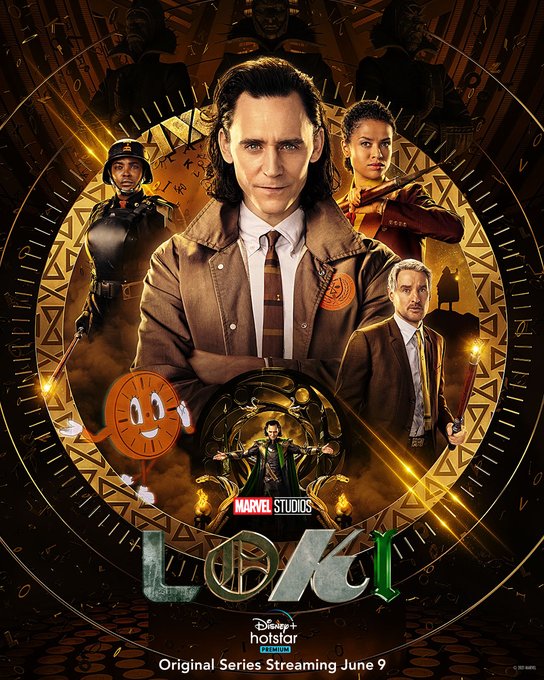
Loki Episode 1

SPOILER WARNING FOR EPISODE 1 OF THE DISNEY + SERIES, LOKI.

Well, here we go again.

After two highly successful and entertaining Disney + Marvel series, WandaVision and The Falcon and the Winter Soldier, Marvel Studios has arrived with the start of its third, hugely anticipated series, Loki. The first episode debuted on the streaming service in the middle of the night with what has to be considered one of the most impactful episodes for the MCU of any of the Disney + series so far.

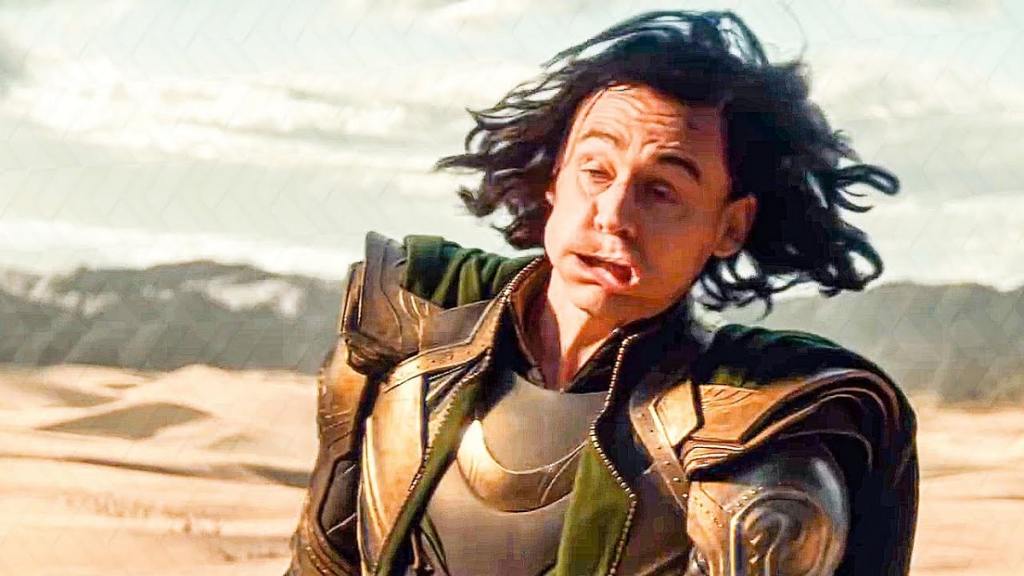
The episode began with a recap of Avengers: Endgame, specifically the time travel in New York where we see Loki escape the clutches of his brother Thor and the others by using the Tesseract that Iron Man and Ant Man were attempting to steal in their “time heist.” These scenes are vitally important for anyone who was unsure about who this Loki was or for those two or three people who have never seen Endgame before.

We find out that the Tesseract takes Loki to Mongolia, into the Gobi Desert (in a scene that was reminiscent for me of when Ben Linus turned the wheel and was transported off the Island on LOST). Here, Loki gets confronted by members of the TVA.

The TVA stands for the Time Variance Authority, which turns out to be an all-powerful organization in place to keep the timeline clean. These time agents arrive any time that something happens that is not supposed to have happened and they deal with it. Actress Wunmi Mosaku played Hunter B-15, a standout in this first episode.

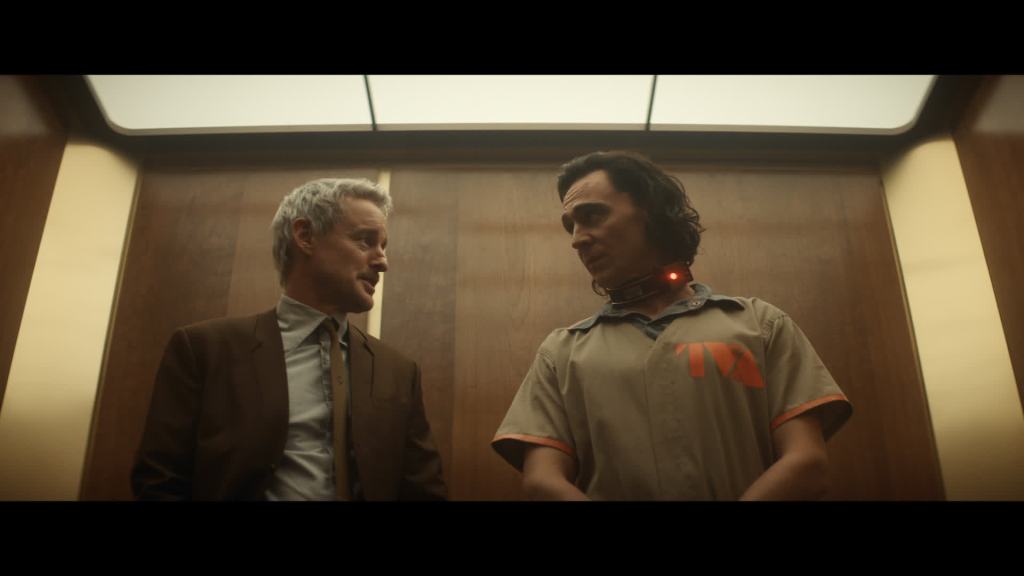
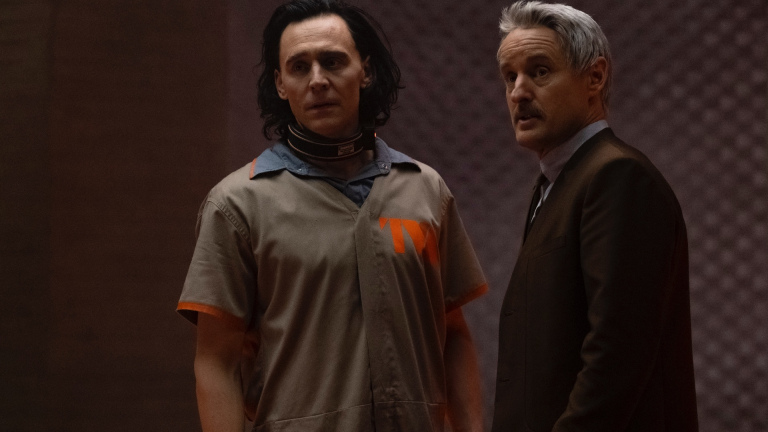
We are introduced to another one of the TVA agents, Mobius M. Mobius, played by Owen Wilson. Wilson and Tom Hiddleston’s chemistry is off the charts and it is setting up an awesome buddy cop type story moving along in Loki. Mobius, as is the entire TVA, is shown as a bureaucratic agent, much like all of the government agencies that we are familiar with. We can relate to Loki and his frustrations over the seemingly mindless paperwork and hoops that require jumping through.

The main thrust of the episode was taking this “variant” Loki from the 2012 time and showing him the parts of his life that he had not lived through yet. This is done through the use of clips from Avengers, Thor: Dark World, Thor: Ragnarok and Avengers; Infinity War. Watching Loki watch himself go through the loss of his mother, father, and his own death, as well as a nice moment between him and his brother, was extremely emotional. It allowed this version of Loki to reflect upon his life and the loss that is ahead. We know that these events lead to Loki discovering that he is more than just a would-be world conqueror, but to see him see it was tough.

We then get the set up for the remainder of the season. Mobius tells Loki that they want his help in stopping a variant that is causing trouble in the timeline… and that the variant is a Loki… and then we see this Loki torch some TVA agents in the 1850s.

More

  • Infinity stones! They use them as paperweights!
  • There was so many cool tech weapons or items, such as the time loop collar.
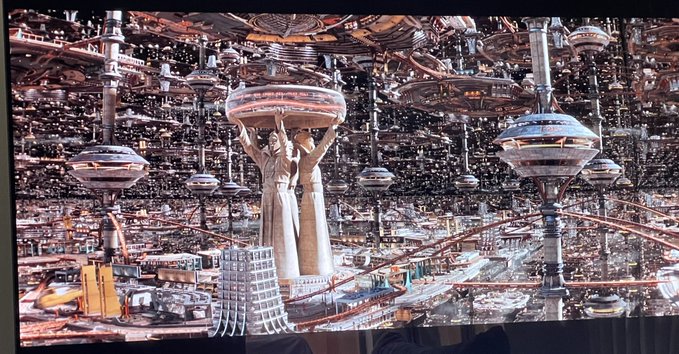
  • The look at the TVA… “city?” It had a very Fifth Element/Star Wars look to it. I’ve heard reference to Dr. Who as well.
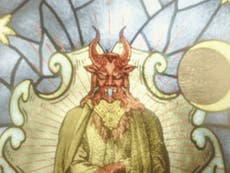
  • Is this Mephisto finally? Or is it Loki with his horned helmet? According to Mobius, this devil is afraid of the TVA
  • We find out that the Avengers were not messing with time because what they did was what was “supposed to happen.”
  • The very idea of the inescapability of time makes me a tad concerned. I don’t want to think that the future cannot be altered. The past? fine. But the future is more challenging of a concept.
  • The animated PSA at the beginning is a great and simple way to bring everyone into the time travel concept the MCU is pushing.
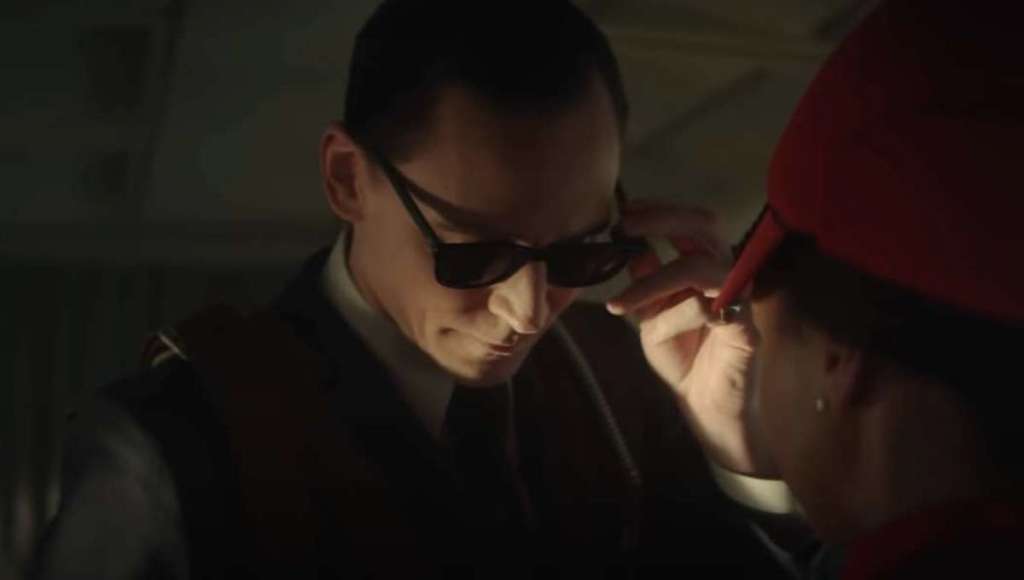
  • Loki as DB Cooper because he lost a bet to Thor? AWESOME!
  • “Do a lot of people not know if they’re robots” is my favorite line of the whole show.
  • Episode title was “Glorious Purpose”, coming from Loki’s classic quote of being burdened with glorious purpose. It gets to the center of what the episode is about.
  • Loki’s reflection with Mobius near the episode’s end is powerful.
  • Tom Hiddleston plays this character brilliantly. He is so familiar with Loki that he can go deeper with just a glance or a look. Hiddleston is also one of the most charming of the all of the MCU actors.
  • The episode is 52 minutes long. It still goes quickly.
  • Why do the workers at the TVA not know what a fish is?

Loki has started with a fantastic episode full of humor, plot details and great characters. Loki and Mobius look to be a great pair and I can’t wait for the show to give me what it next.

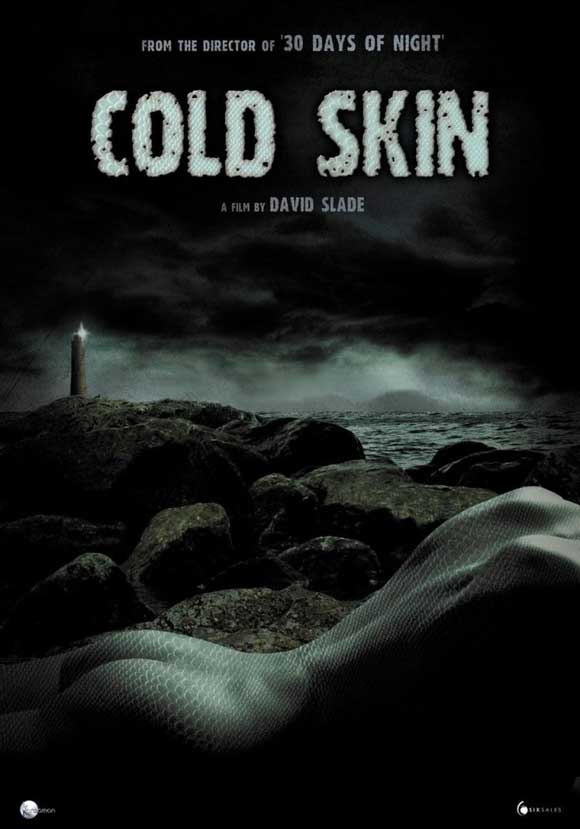
Cold Skin (2018)

The third movie of the day for the DailyView was one that had a rotten score on Rotten Tomatoes, but that I thought was considerably better than that. On the site, Cold Skin, the film directed by Xavier Gens, has currently a score of 48% which would make it “rotten.” It also had a 56% audience score, so plenty of people found this a bad movie.

I would disagree with all of them. I actually enjoyed this one quite a bit.

In 1914, a young man (David Oakes) arrives on a nearly deserted island near the Antarctic Circle. He is there to replace another man who had been placed on the island a year before as a weather observer. However, there was no sign of the man. The only person here was Gruner (Ray Stevenson), who manages the lighthouse. He claimed that the other man was dead, had walked away one night and never returned.

As the new young man settled into his new routine, he realized that there was more to this island than what he knew. When monsters attacked his cabin, the young man (who would be eventually called ‘friend’) desperately fought them off and had to retreat to the lighthouse, where Gruner is anything but welcoming.

The film was very dark, beautifully shot and filled with excellent practical effects. These monsters are great designs. The images of the island are wonderfully fitting with the isolation felt by the lighthouse.

Aura Garrido plays one of the monsters and she brings a lot of humanity to the role that could have been played with very little.

There is a conflict between Gruner and Friend that really does not go anywhere. It feels like a story beat just tossed out there to add to the anxiety, but it just goes nowhere and should have been removed.

I am also not sure about the very end of the movie. What happens at the last scene does not make sense to me and serves to downplay the story the movie was telling.

I found this movie exciting and tense. I was not sure what was going to happen and I was enjoying what was there. There were a few things that I would have liked to happen and the film did drop a few plot points, but it was overall a solid watch.

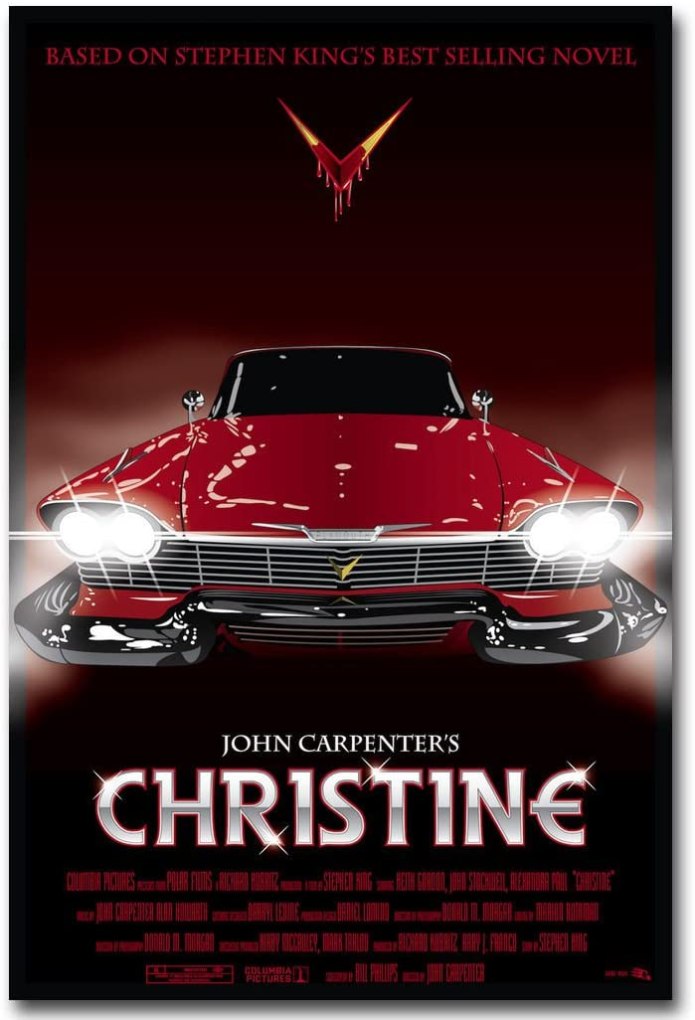
Christine (1983)

The next movie in the DailyView binge watch comes from an adaptation of one of Stephen King’s novels. There have been plenty of King adaptations hitting the big screen. Some were awesome such as It, Carrie, Stand by Me or The Shining (Sorry Stephen, I love that movie). Some were not as good such as Children of the Corn, It Chapter 2 or The Dark Tower. The adaptation that I am going to talk about today is Christine.

Directed by John Carpenter, Christine is an evil red Plymouth Fury that had a history of people dying in mysterious manners around it. Named Christine, it bonded with nerdy teenager Arnie (Keith Gordon) and Arnie immediately became obsessed with the car. As soon as he discovered Christine, Arnie changed becoming more aggressive, more angry and completely focused on the car.

Arnie became more verbally abusive toward his parents, started spending less time with his best friend Dennis (John Stockwell), and hooked up with new girl Leigh (Alexandra Paul). Unfortunately, Leigh began to feel uncomfortable in the car and nearly chokes to death.

After the bully (William Ostrander) attempts to destroy Christine, Arnie discovers the car’s special abilities

Sure, some of Christine is silly, but it is a solid adaptation and is filled with decent scenes. Though we see a flashback to its time on the assembly line back in Detroit in 1957, we do not get any sort of origin for how the car became such a killer. There were two accidents during that flashback, but there is no attempt to explain what was going on. I liked that.

We are also never quite sure to what level Arnie is involved in Christine’s reign of terror as she killed those that had wrecked her. I liked that as well, although we do learn his involvement or understanding at the end of the movie.

Yes, there is a lot of credibility that needs to be stretched to make this work, but the fact that the film plays it straight allows us to overlook some of the unlikely events going on.

Harry Dean Stanton appears here as Detective Junkins, but his role was vastly underutilized. He had maybe two or three scenes that certainly show off his great skill, but leave you wanting for more.

Christine is a fun movie that takes a silly premise and creates an effective and entertaining movie. The flaming Christine scene was easily my favorite and one of the best effects of the production.

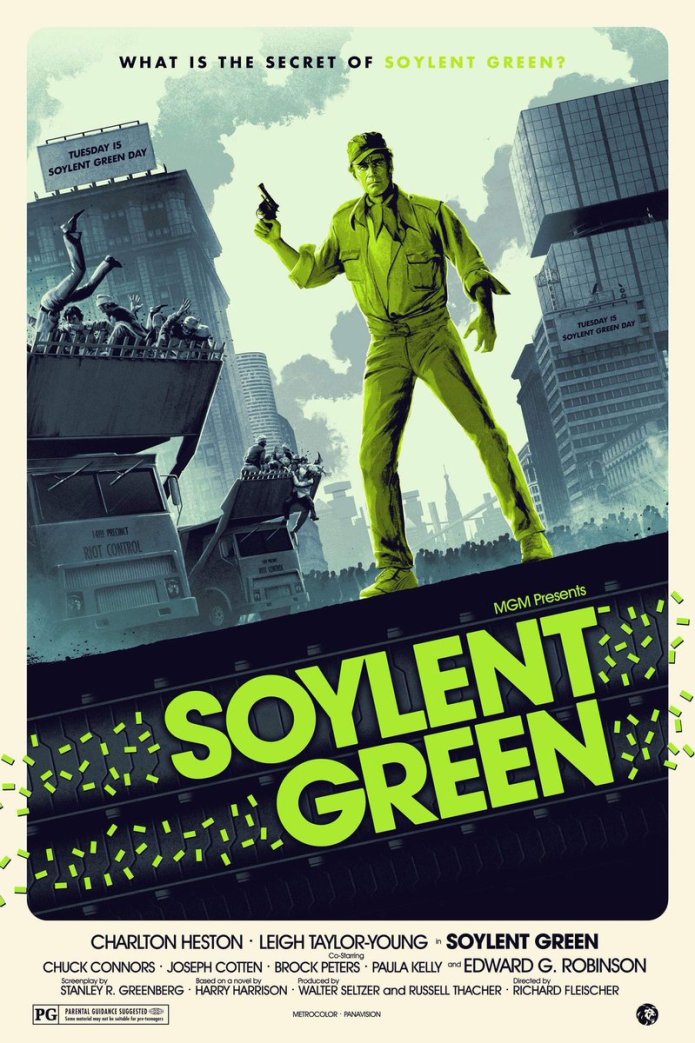
Soylent Green (1973)

This movie is set in 2022, which is right around the corner, so everybody needs to make sure to keep checking those food labels!

We head into a sci-fi dystopian future for DailyView today. A world where it has been overpopulated and polluted. The people are desperate for food provided by the Soylent company.

Charlton Heston starred in Soylent Green as Detective Thorn, who has been assigned to the case of the murder of William Simonson (Joseph Cotton), a Soylent board member. At first, it is assumed that the murder was part of a robbery, but Thorn quickly discovers that it is an assassination and he goes about trying to figure out the truth of the case. What he finds out, though, is shocking.

I, of course, knew the secret of Soylent Green before starting the movie. I wonder what it would have been like if I had not been aware of the shocking plot twist.

The movie was an enjoyable watch, especially with the work of the case. I was not much of a fan of Heston and his toxic masculine, especially with the women of the time. That might be a factor of the time period, but calling the women “furniture” was a bit too much.

Soylent Green is very dark and what makes it the scariest is that I could see this future being one that is easily reached.

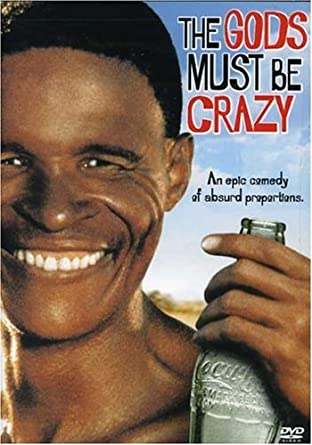
The Gods Must Be Crazy (1980)

I had an epic problem trying to watch this movie last week when I wound up watching the fourth film in this series called Crazy Hong Kong instead. After realizing that I was watching the wrong movie, I finished that one and started looking for the actual movie, The Gods Must Be Crazy. It was nowhere on any of the streaming services (that I could find) so I went to Ebay and I purchased the DVD copy. It arrived today so I decided to give this a second attempt at adding The Gods Must Be Crazy to the DailyView.

A Bushman named Xi (N!xau) found a Coca-Cola bottle that had fallen from an airplane. He had no idea what it was, but it became one of the most valuable tools his village had ever seen. However, they started to fight over the bottle and it caused problems internally. Xi decided that the bottle was evil and went to throw it off the edge of the earth.

This is a premise that is filled with comedic potential, but there are like a couple other storylines going on at the same time that have little, if anything to do with the main plot point. There is a clumsy scientist (Marius Weyers) and a school teacher (Sandra Prinsloo). There are military conflicts with local armies and a warlord all over the place with rocket launchers and tanks. It makes the narrative very choppy and difficult to follow.

All of the stories do combine at the end, but the whole Coke bottle bit was an after thought at this point. It was just a trick to get Xi involved with these other characters.

There was a ton of slapstick comedy here that was funny. There was a running gag about a jeep that could not stop if they wanted it to keep running that was very funny.

I’m not sure if this was worth the effort it took for me to find it, but it was a funny film at times. Xi is easy to root for and the clumsy scientist had its moments too.

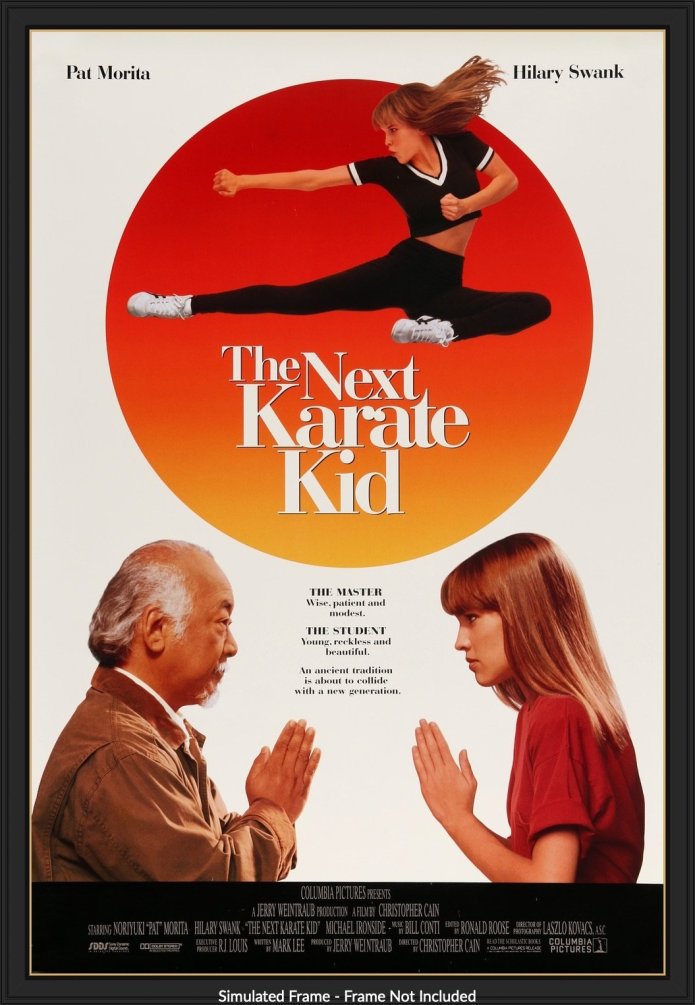
The Next Karate Kid (1994)

I loved the Karate Kid franchise. Still do as I have been enjoying Cobra Kai on Netflix. There was one of the four movies that I had not seen before and so The Next Karate Kid becomes the next film in the DailyView.

Hilary Swank is Julie, a troubled adolescent girl whose parents were killed in an accident. She lives in Boston with her grandmother (Constance Towers), who was the widow of one of Mr. Miyagi’s (Noriyuki “Pat” Morita) wartime friends. With the rebellious Julie causing trouble, Miyagi proposes that the grandmother go back to California and he would stay and help Julie work through her anger.

There are some really odd moments in this movie, which otherwise is the same basic story as the other Karate Kid movies. The only major change is that our main protagonist being trained by Mr. Miyagi is a girl instead of Daniel. However, the film does have a trip to a monastery to give us some life lessons with a group of monks.

Pat Morita is still great as Mr. Miyagi, a role he has clearly mastered after the previous three times he has played him. Still, he is limited by the script and the story of the film. It truly is nothing new here and the only times it shines is when we get Morita on screen. Of course, you can tell that he is not moving as well as he did in past movies as the karate Mr. Miyagi does really moves in slow motion or is filmed in tight, close-up shots.

Hilary Swank has seen better days as an actor. Here, she does not elevate the material above what it is. Her angry girl character is cliché and there is little depth to her performance.

Michael Ironside is the villainous PE teacher Dugan who runs the school’s elite team of bullies. Ironside is so over-the-top that he feels like a cartoon. He takes all of the characteristics of John Kreese from the first two movies and Terry Silver from Karate Kid III and mashes them up into Dugan.

They tried to keep the franchise viable, but they could not. There just was nothing new for the film to investigate. There are scenes that are literally the same as the previous movies, just with Hilary Swank inserted into them instead. That never is a good strategy for a successful movie.

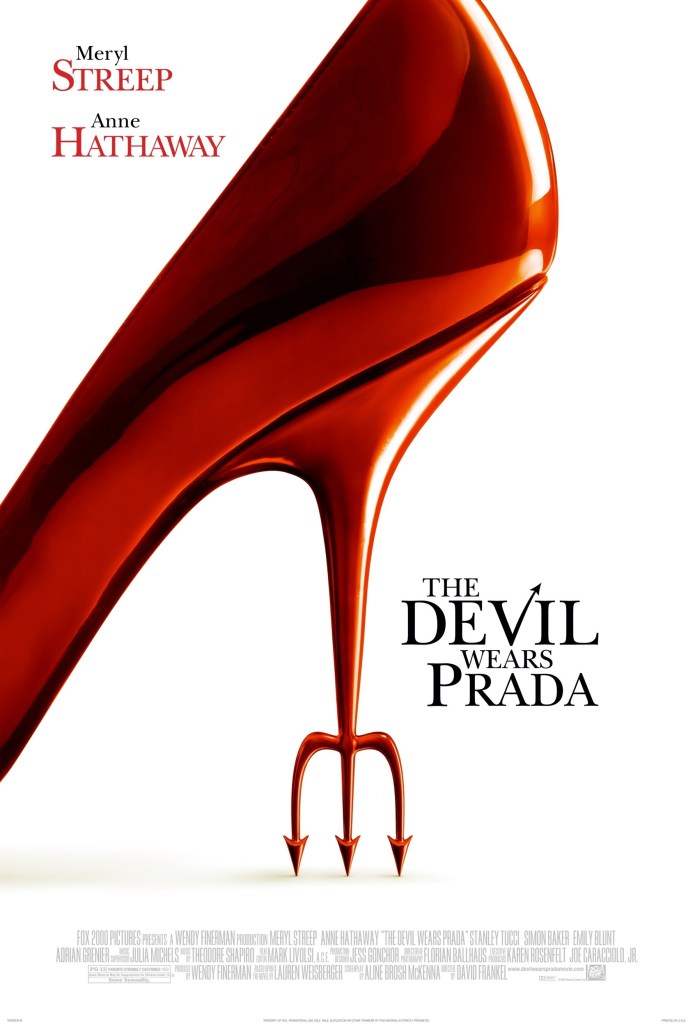
The Devil Wears Prada (2006)

The fish out of water trope is explored in a different manner in The Devil Wears Prada, the next film in the DailyView binge. This is the second Meryl Streep movie I watched today, with Kramer vs. Kramer being the first. You could not find two different roles, both played to perfection by Meryl Steep.

The Devil Wears Prada also features Anne Hathaway and Emily Blunt, highlighting the list of top notch actresses appearing in this movie.

Anne Hathaway played Andy Sachs, a bright college graduation looking to break into the world of journalism. The problem is that she winds up interviewing for a job as an assistant to Miranda Priestly (Meryl Streep), the editor in chief of a fashion magazine and one of the most influential names in the industry.

Andy starts off flailing her way through the job, struggling with the impossibility of many of the tasks placed before her by her overbearing boss. Co-worker Emily (Emily Blunt) has been in the position for years, battling her way to a place of importance.

When Andy decides that she is determined to succeed at this job, she begins to transform herself into the type who would be more comfortable in the world of fashion. She begins to create a distance with her boyfriend Nate (Adrian Grenier) and her other friends while becoming more valuable to Miranda.

The Devil Wears Prada has a story that we have seen before (or since as there are many things here shared with Cruella), but the great performances elevate this to a positive note. Meryl Streep takes what could have been a one-dimensional character, but created a fascinating woman who had power and was not afraid to use it.

I know little about the world of fashion, but it looked brutal. The story took the sweet and innocent Andy and turned her into someone who was very different. Watching this happen and seeing how it worked itself out was a lot of fun.

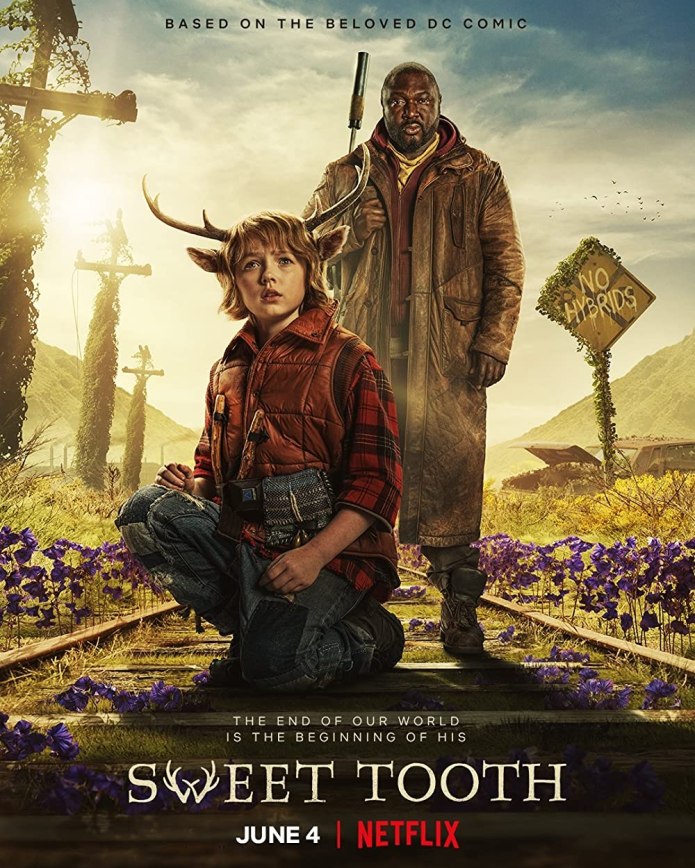
Sweet Tooth

I have been souring on the idea of binge watching TV series these days. I used to binge plenty of Netflix series, but they were always a time consuming effort and I did not find the time on weekends to carve out for these series. I have been liking the shows like WandaVision, Falcon & Winter Soldier, Superman & Lois that come out once a week because they are so easier to watch.

However, I was watching Kevin Smith’s podcast Fatman Beyond last night on YouTube and he started talking about Netflix’s latest series Sweet Tooth, a show based on the DC Comic by Jeff Lemire and produced by Robert Downey Jr. and Susan Downey. Kevin was raving about the show. If you watch Kevin Smith, he does tend to love a lot of shows. But this sounded different. I was immediately sold on what he was saying and I was excited to start the show last night.

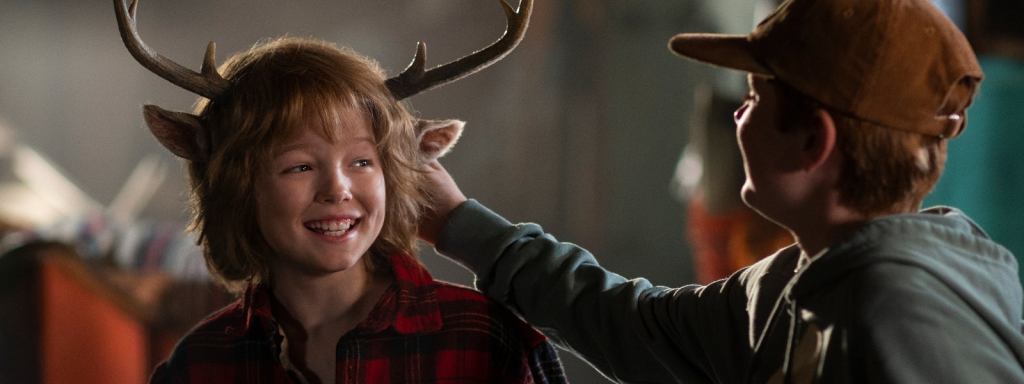
This is fantastic. The show is full of excitement, drama, humor and such great storytelling. The twists and turns are devastating. The performances are great, especially from young Christian Convery, who plays the title role. He is so full of joy and life. It is an exceptional performance from the young actor.

In a world where a deadly virus outbreak caused many people to die from “The Sickness,” babies were being born as hybrids, part human and part animal. This fed right into the panic of the virus and the military joined in to make it worse yet.

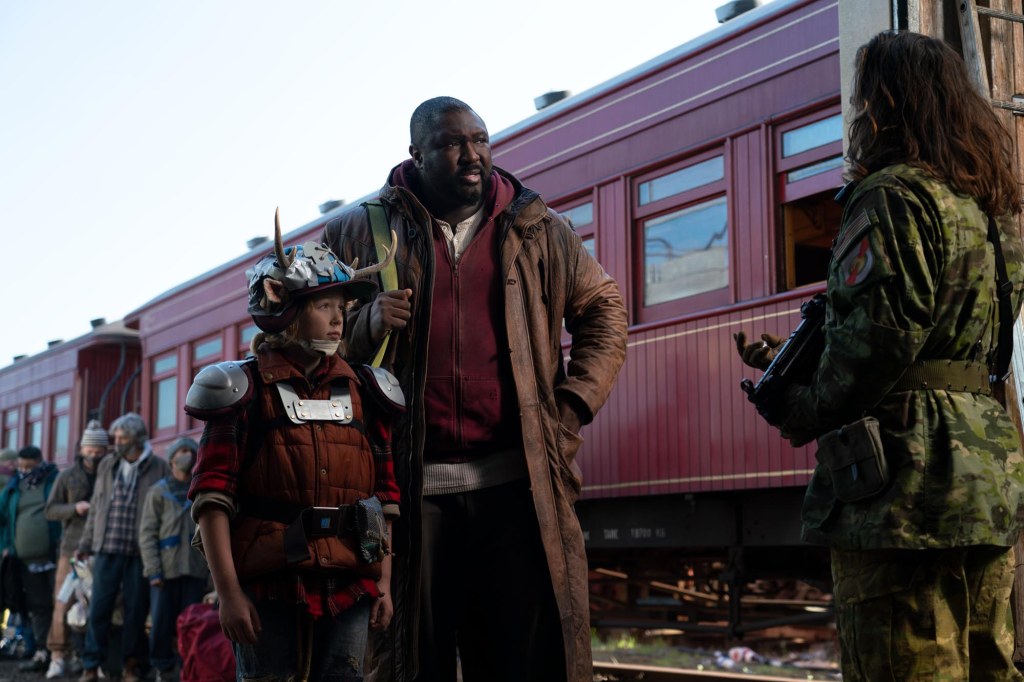
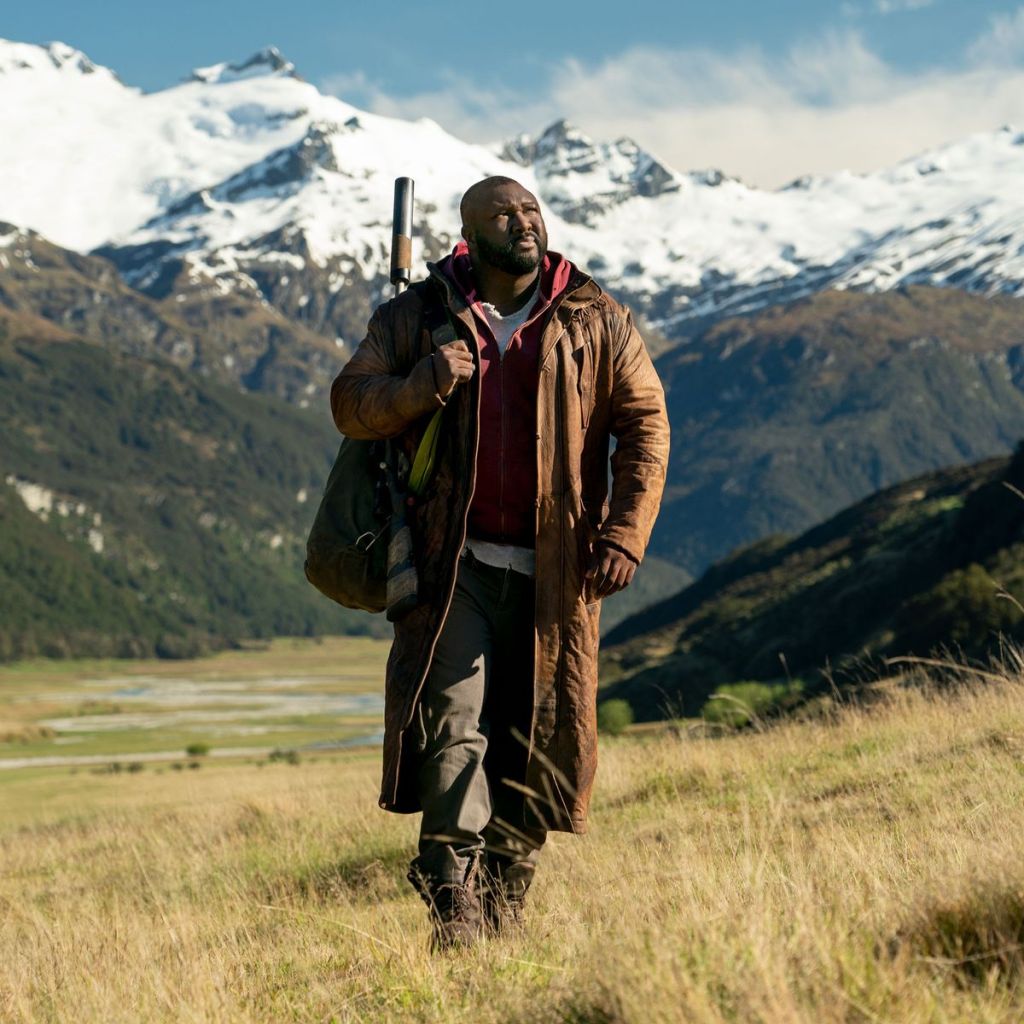
Pubba (Will Forte) took his son Gus (Christian Convery) and escaped from the insanity of the world into the wilderness of Yellowstone Park. He raised the boy alone for nine years before The Sick entered into their world in a tragic manner. Alone, Gus tries to follow his father’s major rule, “Do not go past the fence.” When he is unable to follow that rule, Jepperd (Nonso Anonzie) arrives to help Gus out. Gus dubbed him “Big Man” and the pair take off for Colorado, where Gus believes his mother is living.

SWEET TOOTH (L to R) CHRISTIAN CONVERY as GUS and NONSO ANOZIE as TOMMY JEPPERD in episode 103 of SWEET TOOTH Cr. KIRSTY GRIFFIN/NETFLIX © 2021

The series does an exceptional job of setting up this dark, sad world, but not to get bogged down in the tragedy. It is not a depressing, dystopian future show, despite the fact that the setting would lead that way. This show is about life and about the joy of being alive and keeping those feelings despite what the world around you is saying.

The characters are all deep and well developed. Each character is dealing with a secret or a tragedy that they are desperately trying to manage. Big Man, aka former football star Tommy Jepperd, was once one of the Last Men, the group of military men rounding up hybrids. Jepperd found that he could not do that any longer and broke out on his own to wander the world. His connection with Gus, whom he called Sweet Tooth, is a highlight of the series. Watching the two of them go from strangers to family is truly some of the best parts of the show.

Another characters introduced early is Bear, a leader of a resistance group out to help hybrids. She fit in with Gus and Big Man beautifully, though at first, she had her own issues with Big Man. As the series progressed, you can see how the two of them were growing closer.

We meet Dr. Aditya Singh, whose wife Rani has the Sick, but he had contact with a woman who had been able to create a treatment that kept The Sick at bay. His desperation to help his wife and to keep his wife safe, not only from the Sick but also from the remaining of humanity. There are some unbelievably tense moments with this couple in their neighborhood, including a couple of the worst scenes imaginable.

We know very little about the main villain of the film, General Abbott who leads the Last Men and is hunting the hybrids. He is very cruel and vicious, but we do not have much info on him at this point.

The show was so fantastic, although the 8th and final episode ends on a massive cliffhanger that I sure hope we can get a season two. There are some wonderful reveals as the show moves along. It was a very easy binge, the episodes ranging from 39 minutes to 53 minutes. It is very easy to breeze through the episodes and move to the next one.

The story sets up several characters, including a narrator (spoken by James Brolin) and then the show does a wonderful job of intermixing the characters naturally, without making it feel forced.

I have never read the DC Comic this was based on and, despite the fact that I love Jeff Lemire’s work (his run on Moon Knight was awesome), I am kind of glad that I came into this series with such a lack of knowledge. It made every twist all the more effective.

Sweet Tooth is full of fun and excitement. Make sure you give it a try.

Kramer vs. Kramer (1979)

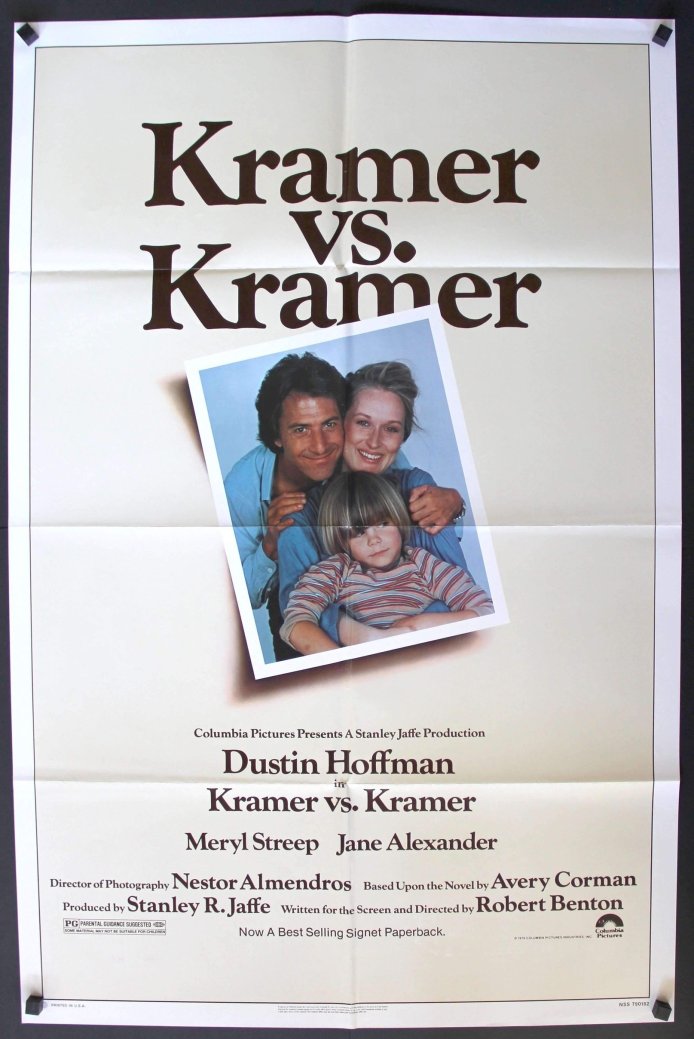
Continuing the DailyView binge this Sunday morning, I pulled up HBO Max and picked out the film Kramer vs. Kramer starring Dustin Hoffman and Meryl Streep.

Kramer vs. Kramer is a tough watch at times as the emotions are a major component of the story.

Joanna (Meryl Streep) has been unhappy in her marriage to Ted (Dustin Hoffman) for years and she has finally gotten to the point that she was ready to leave him and find out who she was. Unfortunately, her situation did not allow her to take her son, Billy (Justin Henry), with her. So she leaves Billy with Ted and walks out.

Ted had never been the most present parent. Working at the ad agency, Ted spent more time at work than being a father. With Joanna gone, Ted was forced to change his life to accommodate his son. At the beginning, the times were rocky, with Ted struggle with his newly defined roles. However, over the months, he slowly began to improve. Above all, he loved his son and he made the adjustments he needed to make.

With things going well, Joanna returned to the picture, having found the personal self-worth she was in search of, and she wanted custody of Billy. The Kramers went to court to fight, often times dirty, to get custody of their son.

Meryl Streep’s character in Kramer vs. Kramer is not as developed as Hoffman’s, mainly because of a lack of screen time in the normal moments. We only seen Joanna in highly emotional states and that colors our perceptions of her. We see the negative side of Ted, but we also get the chance to see him change and to improve his fathering. This is something we do not see with Joanna. We are told that she is a great mother, but we never get a chance to see it. Even when she gets her time with Billy after being gone for months, we do not get to see them interact.

Because of this, Kramer vs. Kramer feels unbalanced. We find ourselves rooting for Ted because we have seen his transformation and we have seen how the relationship between him and Billy has grown. Joanna is not given that same development and one wonders how emotional the movie could have been had it been set up with more of a balance between the mother and father.

The ending also feels as if it comes out of nowhere. We do not see Joanna make any of the revelations that she does in order to come to the decision that she makes. It makes her look even more flighty than she had during the film. It feels as if the character of Joanna is really underserved with the story.

However, the acting in the film is top notch. Both Meryl Streep and Dustin Hoffman are at the top of their game and the only reason you have connection with Joanna at all is because of the skill of Meryl Streep. Strep and Hoffman both won Academy Awards for their work in Kramer vs. Kramer. An unsung performance is that of Justin Henry as Billy. Every scene that required emotional depth, he knocked out of the park. He fit right in with Hoffman and Streep, which is impressive for an eight year old. Though he did not win, Justin Henry was nominated for Best Supporting Actor too.

Though it did feel too one sides, Kramer vs. Kramer is an emotional roller coaster and shows how a father-son relationship can be a successful one. It showed how much the character of Ted loved his son and it explored the pain that can come from custody hearing. I wish they had made Joanna more of a complete character, or at least let us see her develop as well.

The French Connection (1971)

Gene Hackman is a natural treasure.

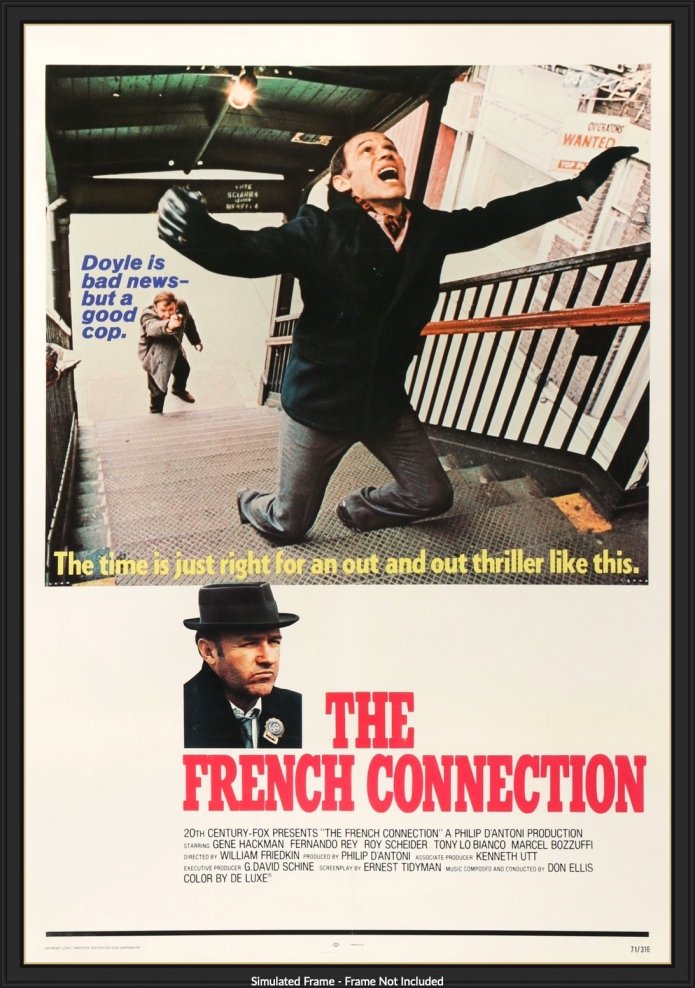
He can make you root for and cheer for a character that is utterly rotten, and he does that in what is considered to be one of the greatest movies made in The French Connection, my next film in the DailyView.

The currently retired Hackman is desperately missed as one of the great actors around. His character of Jimmy ‘Popeye’ Doyle is racist, hard headed, obnoxious, and short-tempered, and, yet, the audience is behind him as he pursued the gentleman Frenchman Alain Charnier (Fernando Rey), a criminal and one of the largest drug suppliers of pure heroin to North America.

Some of the chase scenes in The French Connection are amazing. Filmed practically, the chases (in particularly, the elevated train chase) are breathtaking and thrilling.

The first part of The French Connection is slow and I have to say that I had a hard time getting into the movie at the beginning, but as I moved along, things got considerably more intense and I became more invested.

I found the ending extremely unsettling too, and I loved it. Apparently these characters are based on real people, but it has never stopped films from changing things up for the story. The fact that the end of The French Connection is so shocking that it can be upsetting is a great thing.

The French Connection is a good movie. I did not love it as much as everyone else seemed to, but I did like it.

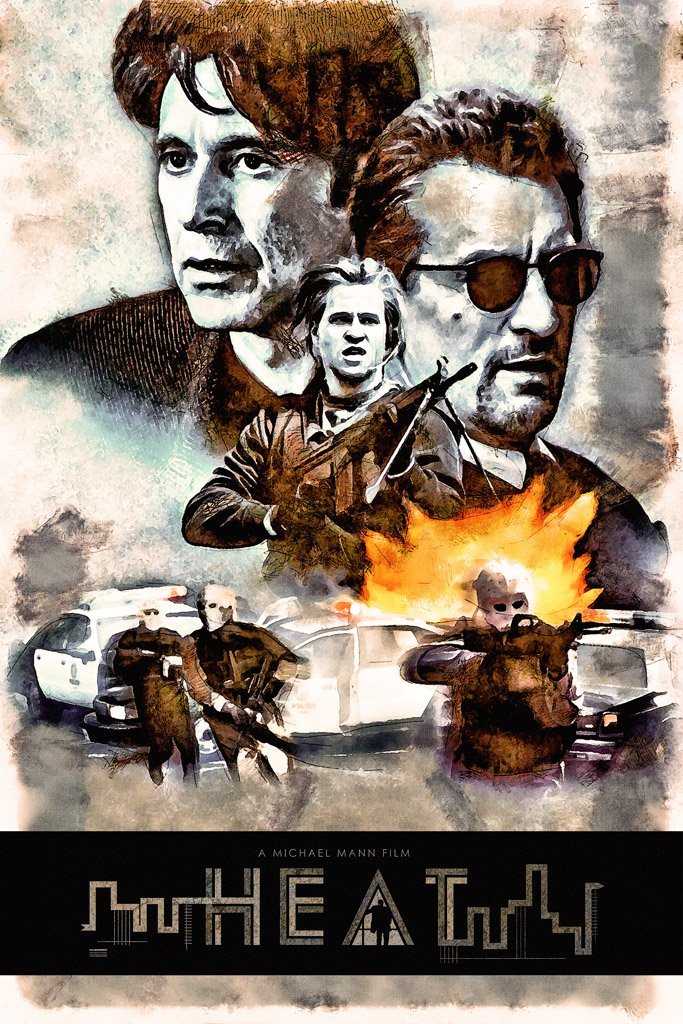
Heat (1995)

One of the reasons that I began this DailyView binge this summer was to fill some of the gaping holes of my movie viewing life, especially with the beloved classics. Admittedly, some of the films that I have watched so far in the binge would not be considered classics. However, I have been able to see several that would be considered classics such as The Sound of Music, Apocalypse Now, Saving Private Ryan and Caddyshack. These would fit into that category. So does today’s first film, Michael Mann’s classic heist film, Heat, starring Robert DeNiro and Al Pacino.

Considered one of the greatest heist movies made, Heat was a long film, but it is masterfully developed from the beginning to a major banger of a conclusion. There were definitely a lot to follow here as Heat had a ton of moving parts of the plot with a large group of interwoven characters.

In fact, Heat is absolutely a film that you have to pay attention to and not one that you can put on in the background if you want to understand what was going on. Although, you can also break this down into the basic plot of good vs. evil as the film staged the idea of DeNiro and Pacino facing off with one another.

You see that as early as the iconic scene of DeNiro and Pacino together in the restaurant, “having coffee” but really setting the stage for the rest of the movie. The dialogue in this scene is just tremendous and you can certainly see why this is considered such an amazing scene.

The cast of this movie is just filled with unbelievably talented actors. Sure the eyes are on DeNiro and Pacino, but the fact is that every role, no matter how minor, is cast with amazing actors. Val Kilmer received nearly top billing along with the two icons as his name appeared on the poster. We also had Jon Voight, Tom Sizemore, Amy Brenneman, Ashley Judd, Ted Levine, Dennis Haysbert, Natalie Portman, Mykelti Williamson, Wes Studi, Diane Venora, Tom Noonan, William Fichtner, Hank Azaria, Danny Trejo, Tone Loc, Xander Berkeley, Jeremy Piven, Steven Ford, Patricia Healy, and Martin Ferrero, among others.

The bank robbery scene and the ensuing chaos that is the result of the heist is one of the most insane, breathtaking scenes I have seen in any crime movie. It is set up beautifully by Michael Mann and his crew and it truly shows how skilled Mann is in this genre.

I did struggle at the very beginning keeping everything straight, but Heat pays off in the second and third acts like few other movies. There was an intensity of performance and situation that is able to isolate the similarities and differences between our protagonist and antagonist. There is almost a respect between them that demands to be faced.

Having said that, there may have been a plot point or two that could have been taken out which wouldn’t have affected the overall story (I’m thinking about much of Pacino’s home life issues). The extra bits do help deepen the characters, but some of the side plot points do wind up unresolved so do they really serve a purpose?

Heat is not a movie that I would normally seek out, but I am glad I did. I got a chance to see two powerhouse actors in their prime and delivering a master class in acting, despite only being on screen with each other a minimal amount of time. The film has been carefully constructed and works on many levels.

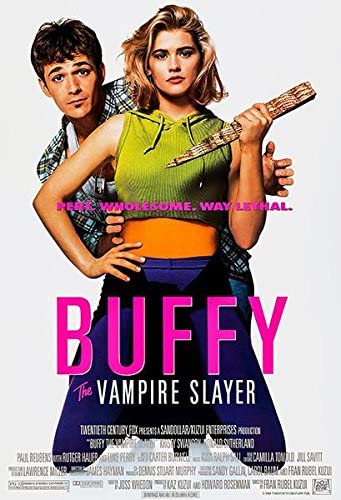
Buffy the Vampire Slayer (1992)

Trying to fit one more movie into the DailyView today, but the time was limited. As I was going through the list of Starz movies, I came across the cult film that spawned a huge hit TV show, Buffy the Vampire Slayer.

I had never seen the movie, but I was a big fan of the TV series with Sarah Michelle Geller as the Slayer. I had always heard that the movie Buffy was not very good and so I had avoided it. However, this felt like a good moment to sample it (especially since it was just 85 minutes).

You know what? I did not hate it.

Yes, it wasn’t anywhere near as good as the series. You could tell that the series took the best parts of the concept and built something awesome out of it.

Joss Whedon was the writer on the movie, and he would take the ideas and build a great series later, but the writing on the film was a drawback. This did not have the typically witty and funny dialogue that Whedon is known for. In fact, the dialogue here was the biggest weakness of the movie.

The cast was deep and strong with Kristy Swanson as Buffy Summers leading the pack. Then we had Rutger Hauer, Paul Reubens, Donald Sutherland, Luke Perry, Hilary Swank, David Arquette, and Stephen Root. This is a really strong cast. Unfortunately, they just did not have enough to do for this great ensemble.

Kristy Swanson did a solid job as Buffy, but she is always going to pale in comparison to Sarah Michelle Geller. Still, her efforts here keep the film on a path.

The story felt too crammed into the time frame of the film. A TV series is a much more effective way to tell this story and you can tell why the TV show was such a hit. The tone was a bit too goofy in the movie. In the TV show, even the ridiculous parts were treated seriously. That helped make the humorous parts stand out more. The movie had silly reactions and moments that undermined the action/story with the response (aka Paul Reubens’ death scene for example).

I also missed the vampires turning into dust when stabbed with the wooden stakes. That is an effect that was added to the TV show and made a very solid visual image.

Now, it may not be fair for me to compare the TV show to the movie. The TV show had the advantage of improving the areas that needed improving and spreading out the story elements. The movie did not have that benefit. Looking at it only as a movie and not comparing it to the TV show, the movie was okay. It was better than I thought it would be. It had some story issues and the pacing was off, but I have certainly seen worse movies.

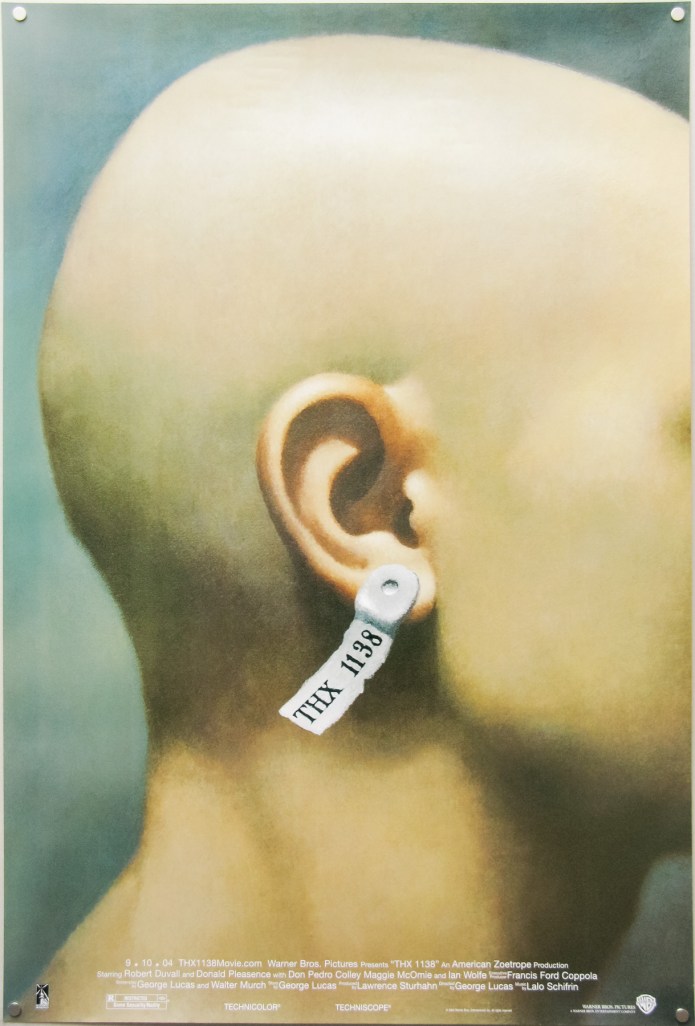
THX 1138 (1971)

I tried watching this film yesterday, but HBO Max was having some spasms here, so I had to put off this science fiction film, the feature film debut of George Lucas. The film was called THX 1138 and it is a futuristic, dystopian world where people do not have names, only designations and all sexual encounters have been removed.

THX (Robert Duvall) and LUH (Maggie McOmie) rebelled against this rigid society’s rules and connected with each other.

I was just bored out of my mind with this movie. While it is a beautiful film to watch with some of the more intriguing visual shots you are going to see in a science fiction movie with its minimalist style and white backgrounds, I just could not get into this story. The lack of exposition, while a brave choice, keeps the audience members at arms length, since it only continues to increase a level of confusion about what was happening.

The film feels like a thought experiment more than it does a story, but there just is not enough ideas here to make it a science fiction story. There are some fascinating visual storytelling here and you can see some of the director’s chops that would help create on of the seminal works of fiction of all time in Star Wars.

Not one of my favorite films for the DailyView.