Cedar Rapids (2011)

DailyView: Day 353, Movie 502

Cedar Rapids is a comedy film that matched up Ed Helms with John C. Reilly with a lot of crude humor. Typically, these kind of films, wit lots of drug and sex jokes, are not up my alley. Cedar Rapids, however, has some charm to it and Ed Helms gives a solid lead performance that helps raise the level of film for me.

After a surprising death, Tim Lippe (Ed Helms) is sent to an insurance convention by his boss Bill (Stephen Root) to try and gain another Two-Diamond award for their company. Tim is shy and withdrawn so when he gets matched up with the wild Dean Ziegler (John C. Reilly), things go haywire. After a lot of drugs and alcohol, Tim has to go to see the president (Kurtwood Smith) to keep his job.

As I said, this film has a charm about it, mainly from Ed Helms. John C. Reilly is not as over-the-top as he normally is, probably because he is playing opposite the quieter Ed Helms, so I could handle his performance better than when he plays opposite someone like Will Farrell who is doing the exact same schtick.

Anne Heche played a female agent at the convention who connected with Tim. She was married and had children but she used the convention in Cedar Rapids as her free time.

Sigourney Weaver is in the film as well, but she is grossly underused in a role that could be anyone. If you have Sigourney Weaver, you should really use her more.

The story is fairly typical for this kind of a film and does not miss too many beats. It is predictable as it moves along, but with the enjoyable cast, the film slips by.

Overall, Cedar Rapids is fine for what it is. It can be somewhat offensive at times, but there are some good laughs and Ed Helms does all the heavy lifting to make this a fun film.

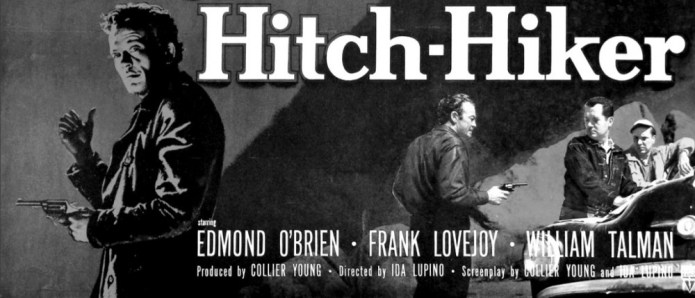
The Hitch-Hiker (1953)

DailyView: Day 352, Movie 501

The dangers of picking up a hitchhiker is illustrated in this film noir from the 1950s starring  Edmond O’Brien, William Talman and Frank Lovejoy.

The hour and ten minute film was on Amazon Prime and was in black and white. It was a fictionalized version of the Billy Cook murder spree and became the first noir film directed by a female Isa Lupino (Wikipedia).

Emmett Myers (William Talman) is wanted for his murders of people that picked him up as a hitchhiker. When two friends, Roy Collins (Edmond O’Brien) and Gilbert Bowen (Frank Lovejoy) pick up Myers, they find themselves hostages held at gunpoint for a trip into Mexico.

The three actors had good chemistry with each other, which was important for this to work. However, I had doubt that the two men held at gunpoint couldn’t have found a moment to escape or to overpower Myers along their trip. The three men did not have a lot of character depth and could have used some better dialogue between the three of them.

However, the film looked good for the time it was filmed and the use of the Mexican scenery helped to create a positive environment.

I would have liked more (especially at the end of the film – need some falling action here), but what was here works for what it is.

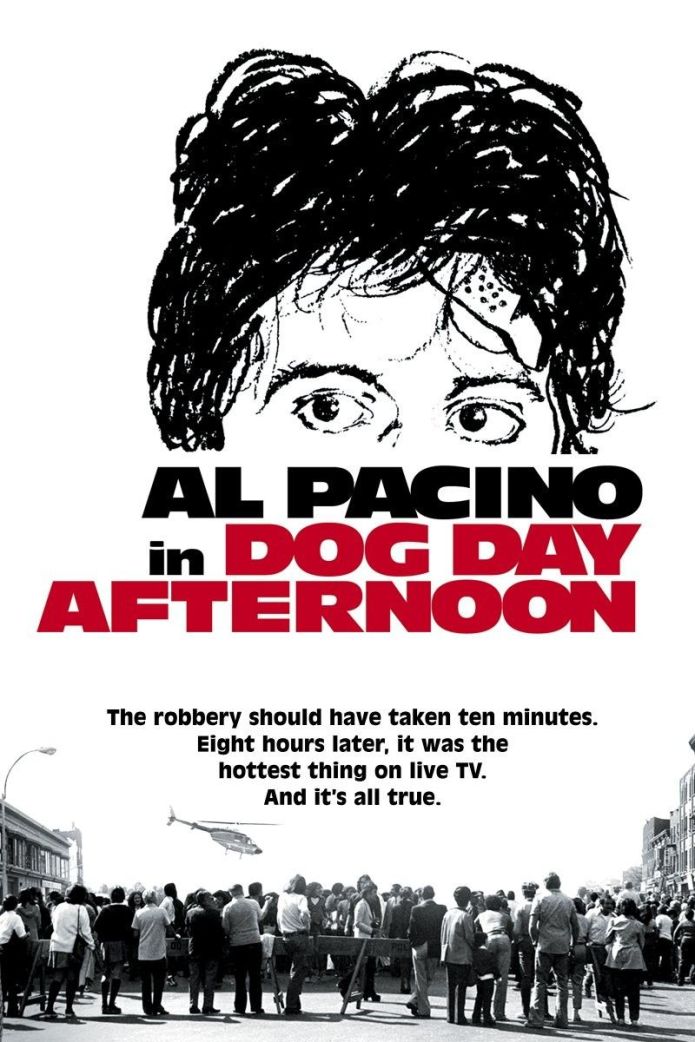
Dog Day Afternoon (1975)

DailyView: Day 352, Movie 500

Today’s movie achieved a major goal of the DailyView. I had set a goal to reach 500 movies watched during the 365-day DailyView. I had not made it an official goal, but, truthfully, I would have considered it a fail if I had not reached 500. However, that’s not an issue since #500 is Dog Day Afternoon.

Dog Day Afternoon was one of the classic films that I had never seen before and I have to say that it is fantastic.

Directed by Sidney Lumet, Dog Day Afternoon featured a spectacular performance by Al Pacino as bank robber Sonny Wortzik, who, along with his co-conspirator Sal Naturile (John Cazale), attempted to rob the First Brooklyn Savings Bank. Things go awry immediately and what should have been an easy plan turned into a long hostage situation.

Based on a true story, Dog Day Afternoon is filled with themes including the way the media portrays news, the reaction of the public to anti-heroes, LGBTQ + themes, family troubles, police resentment, the price of fame or infamy, and the heartbeat of New York City.

This is such an outlandish situation filled with real life moments. I loved the secondary characters among the hostages. They did not respond the way you would anticipate they would respond and, while none of them got real in-depth development, they were a fascinating group of people.

The film featured a surprising and tender relationship between Sonny and  Leon Shermer (Chris Sarandon) which had to be controversial in a film from the 1970s.

It was also a surprisingly funny movie. There were times that I thought it was going to veer into the realm of parody, however, it was the strength of the performances from Pacino and Charles Durning, as Sergeant Eugene Moretti that kept it from becoming a farce.

It was intriguing how the film turned the criminal Sonny into a character that you could root for. Honestly, the ending of the film made me kind of sad because of that. I do love the fact that we had a real fully developed character as the criminal and not just a bad vs. good situation. Sonny Wortzik and, to a lesser extent, Sal Naturile are complex characters that have a variety of motivations and mannerisms. I should like to shout out Sully Boyar as bank manager Mulvaney, who does a remarkable job in the film as well.

The film was thoroughly entertaining and filled with great performances from amazing characters. The conversation between Sonny and Leon was reportedly mostly ad-libbed and brought such a humanity to what could have been filled with stereotypes, but it was beautifully done.

Dog Day Afternoon was a wonderful film for #500.

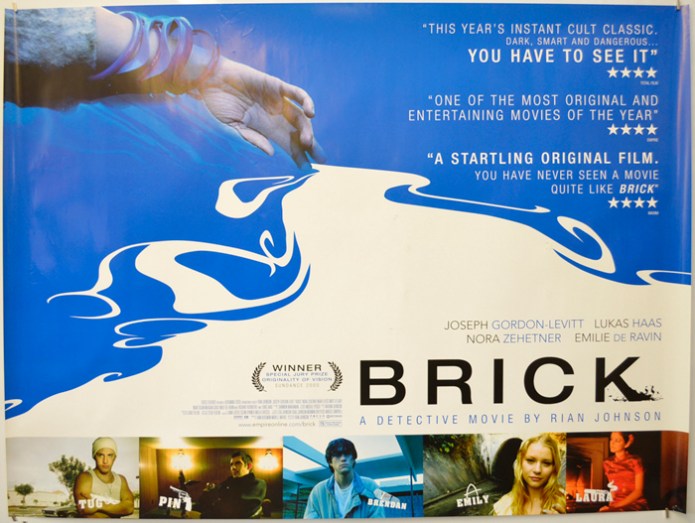
Brick (2005)

DailyView: Day 351, Movie 499

Today’s DailyView is Rian Johnson’s directorial debut. It was a film that I had never heard of, but I saw it mentioned by film critic William Bibbiani on Twitter as one of the better whodunits around. I like a good whodunit so I added it to my list and rented it on Vudu.

Brick is a neo-noir mystery film from 2005 that featured Joseph Gordon-Levitt as a high school student who discovered the body of Emily (LOST’s Emilie de Ravin), the girl he was in love with but who had broken up with him. Gordon-Levitt’s character, Brendan, decided that he would be the person to solve her murder, not the police, and so he hid her body and went about injecting himself into the world of drug running that had gotten her killed.

This film was well constructed and kept the viewer thinking about what had happened through the whole plot. Joseph Gordon-Levitt was excellent as Brendan, who took quite a beating as the film progressed. Laura (Nora Zehetner), tied to the drug runners, was becoming closer with Brendan, despite his doubt in her. Matt O’Leary played The Brain, the kid Brendan went to in order to figure out what he could. Lukas Haas played The Pin, the head of the drug runners in the school who Brendan tried to get in tight with. The Pin’s muscle, Tug (Noah Fleiss) reacted to most situations violently and attacked Brendan several times as Brendan continued to try and ingratiate himself into the Pin’s world.

All the performances were strong, but they were all anchored by Gordon-Levitt. He does a fantastic job of showing Brendan’s dedication to finding out who put Emily in the line of fire.

There was a great use of dialogue in the film and the writing was solid. I enjoyed seeing the noir based, for the most part, in the high school setting with high school students behind the issues. You could tell that Rian Johnson had that something special that would lead to success.

Jonestown: Paradise Lost (2007)

DailyView: Day 350, Movie 498

Day 350 of the year-long DailyView has arrived and I make it with a documentary/historical drama of one of the great tragedies of human memory: the mass suicide (and murder) at Jonestown by cult leader Jim Jones where over 950 people, whether voluntarily or by force, drank poisoned Kool-Aid or were injected by poison. That number included around 300 children.

This documentary included some of the actual videos and tapes of Jim Jones and his followers, interviews with the few survivors and escapees, and reenactments of the last days of the cult.

While some of the reenactments were not necessarily the greatest acting, there is enough horrendous moments included here that make this a challenging watch.

The story of what happened at the People’s Temple was both fascinating and horrific. The tragedy only amplified by the use of the real pictures and words of some of the victims.

In particular, the words of Jim Jones’s own son, Stephan Jones, about his memories of the time and of his father’s psychosis.

Even with the iffy dramatization, the story was emotional and powerful to watch. It is amazing how someone can talk people into doing what he wants them to do, whether or not it is in their best interest. Especially when we are talking about walking your children up and having them take poison and watching them die, some times in painful ways.

This is a lesson to us all about charismatic leaders and to be wary of those who may not be completely stable.

The Journey of Natty Gann (1985)

DailyView: Day 349, Movie 497

If you were after one of those old fashion Disney action adventures of a girl and her wolf, The Journey of Natty Gann will be right up your alley.

Set during the Great Depression when jobs were scarce and difficult to find, The Journey of Natty Gann followed young tomboy Natty Gann ( Meredith Salenger) on her desperate trip to reunite with her father (Ray Wise), who had to take a job 2,000 miles away from her in the Pacific Northwest. Along the way, she was befriended by a wild wolf and the pair of them go on several adventures on her path to find her father.

She also came across grifter Harry (John Cusack) who helped her jump several trains. John Cusack’s role is not as large as one might expect. The film is certainly Meredith Salenger’s and she does a very good job of being the lead protagonist. She never feels whiny, as some Disney characters tend to be. She and the wolf which she named Wolf, have a nice relationship, even if they come about it in a somewhat easy manner.

As a Disney film, you kind of already have an idea of where this was heading, but, to be fair, there is a scene where Natty was picked up by a guy in a truck who tried to force himself on her. Thankfully, Wolf is much more powerful than window glass, but I was surprised by the implication of the creepy guy in a truck in a Disney film.

The film sort of skirts around the dangers and the death that accompanied the trip, leaving much of it to the imagination of the viewers. It is in the film, it is just not front and center.

Ray Wise is always good, but I have to admit that I kept thinking that this film is not too far from when he would be wrapping Laura Palmer in plastic. That is, of course, my own problem and not a critique of this movie.

The Journey of Natty Gann is improbable, but fun. A good family film that has some darkness hidden inside it.

Howl (2015)

DailyView: Day 348, Movie 496

Werewolves, at least, sort of werewolves, are all over the British horror film Howl from 2015, directed by Paul Hyett. They certainly play with the mythology of the creatures, which is fine of course. However, the basically reduce one of the classic monsters into nothing more than a slasher flick.

A group of people aboard a train are placed in mortal danger when their train breaks down in the woods that happens to be filled with human eating werewolves.

That is basically it. Exactly what you think will happen, happens. The group of people have absolutely zero characters I wanted to root for. They were all nothing more than the typical victim character with, perhaps, one or so, defining characteristics trying to pass them off as developed charatcers.

There is not a single one of the characters that I gave a hoot for and, much like the slasher movies I referenced earlier, you just set them up to see how they are killed.

That would still be okay if the werewolves did not look as silly as they did. There was very little horrific about the creatures. They looked so much better when they kept them in the shadows without revealing their appearance. Once the brought the werewolf into the light, it stopped any further tension.

There was little difference between these werewolves and the classic zombies, with the exception of the howling and some extra hair.

I found this to be quite disappointing and uninteresting.

Fernando Nation (2010)

DailyView: Day 347, Movie 495

As a lifelong Dodger baseball fan, when I came across this ESPN 30 for 30 documentary on one of my all-time favorite pitchers, Fernando Valenzuela, it immediately went onto my watchlist.

Fernando Nation was a 51 minute doc on the history of one of the great phenoms in baseball history. Fernando Valenzuela was a 19-year old sensation when he started opening day for Los Angeles in 1981. The Dodgers initial opening day starter, Jerry Reuss, was not ready for the season to start and Fernando was given the ball in his first career start. He threw a complete game shutout against the Houston Astros and Fernandomania kicked off.

The doc looked back upon the racial troubles of Mexican-Americans in LA, especially with the ejection of several people from Chavez Ravine, the location where Walter O’Malley wanted to build his new Dodger Stadium for when the Dodgers moved west from Brooklyn. That was an interesting piece of history that I was unaware of, but that did not surprise me.

In his rookie season, Fernando started 8-0, with a ridiculous 0.4 ERA. He threw a bunch of complete games and helped lead the Dodgers to the World Series in that strike-shortened 1981 season.

They covered the rookie season fully, but the years post it was not covered as much. The doc looked at the contract dispute between LA and Fernando, and there were some ugly moments, including someone from immigration saying that if Fernando did not pitch for LA, he would be asked to return to Mexico.

The documentary was a great look at a pitcher who was a worldwide sensation and one who had to face difficulties as an idol for the Hispanic population of, not only Los Angeles, but of the world.

Summer of 84 (2018)

DailyView: Day 347, Movie 494

Summer of 84 felt like it was one specific type of genre film and then it swerved into a whole different type without any warning. I guess I should have known since it was on Shudder that it would be considered a horror movie, but I did not expect how things developed.

This absolutely felt like those 1980s flicks where a group of kids pursue the villain and/or solve the mystery at the end, films like The Goonies, Super 8, Monster Squad, It, Stand by Me. Sure, the topic was darker, but the feel of the film was very much similar.

Over-imaginative teen Davey Armstrong (Graham Verchere) suspected that his neighbor, police officer Wayne Mackey (Rich Sommer) was a serial killer who had been targeting kids for years. Though he had his suspicions, Davey had no proof so he and his friends started to spy on Mackey over their summer searching for the evidence that they needed to bring their theory to Davey’s parents.

The best part of the movie was the fact that I was never sure which way the film was going to go. There was certainly a possibility that Davey was correct and that Mackey was the killer, but there were also hints and nods that Mackey was not the killer and that Davey was mistaken. I actually switched my thoughts several times throughout the film and was not sure until a certain moment occurred. I love not being 100% sure and being kept off balance by the story.

Graham Verchere did a fantastic job as Davey. He was a perfect protagonist, someone everybody could relate with and the personification of the innocence of youth. His friends were all great too, with each getting something extra added to their characters as the story went along to provide each of them more depth. Davey’s best friend Woody (Caleb Emery), Faraday (Cory-Gruter Andrew), and Eats (Judah Lewis) spoke like real teenage boys with too many hormones to think straight. Each of the boys had something to build the characters on so they were not just tropes.

There was also the older and beautiful girl next door Nikki (Tiera Skovbye) gave Davey a foil to bounce things off even while driving Davey’s friends crazy with her beauty.

While all of these characters fit nicely into the group of kids and a mystery genre film, Summer of 84 took a drastic turn at the end. At first, the ending felt anticlimactic after building to a certain scene, but then the film went seriously dark and left the viewers with a gut punch of a conclusion that I did not see coming.

I do not think the film needed to be set in 1984. There was a Reagan-Bush yard sign and a reference to Steven Spielberg, but, after that, there was not much use for this as a setting. Perhaps it was set in 1984 to prevent the use of cell phones and such, which does ratchet up the tension in several moments where a cell phone could have been helpful. I think the setting was more for the ambiance of the film genre than for anything else.

Summer of 84 was engaging throughout, perhaps a tad long, but flipped the script in the third act to really earn its horror classification. The film featured great performances from its young cast and an ending that will stick with you.

Ordinary People (1980)

DailyView: Day 346, Movie 493

This film made the list of Oscar winners when I was using the DailyView to watch Academy Award winners and I had wanted to watch it. The thing is the timing of watching Ordinary People just did not fit the schedule, until now.

Ordinary People tells the story of a single family, led by Calvin and Beth Jarrett (Donald Sutherland & Mary Tyler Moore), who were dealing with the death of their oldest son Buck (Scott Doebler) in a boating accident and the suicide attempt of their younger son Conrad (Timothy Hutton). Well, “dealing with” might be a stretch as Beth is emotionally distant from Conrad and Calvin is trying to find the place between them.

The film focuses on Conrad and his struggles after returning from a mental health hospital where he received treatments. Conrad was having difficulties with every day life and plagued by nightmares of his past. It is clear that he is on edge the entire film.

Finally, Conrad began seeing psychiatrist Doctor Berger (Judd Hirsch), giving him someone to talk to. The relationship between the two of them really carries through their scenes and provided both actors a chance to show what they had. In particular, a scene near the end of the film where Conrad had a breakthrough was powerfully impactful and brought tears to my eyes. Both Hutton and Judd were nominated for Academy Awards for Best Supporting Actor (with Hutton winning) and you can see why they deserved it in this scene.

Mary Tyler Moore played against her type so much as she was a mother who just could not find the connection with her surviving son. She loved Buck so much and when he died, she became more emotionally withdrawn. She is truly an unlikeable character and it is amazing that an actress as likeable as Mary Tyler Moore could pull this off.

The film begins with Pachalbel’s “Canon in D” (which I know through a humorous song about the tune) and is used throughout the film.

The title Ordinary People describes this film perfectly. These are real people dealing with their problems the way real people deal with them. It was not melodramatic despite the topics that it dealt with. It was a serious film with deeply flawed people trying to suffer through personal tragedies.

Robert Redford directed the film, receiving an Academy Award for Best Director. He brought emotion and deep feeling of dread while never losing the hope. I also liked how everything was not necessarily wrapped up neatly by the end of the film.

Ordinary People was a wonderful story that was difficult to watch at times, but always worthy and attention-grabbing.

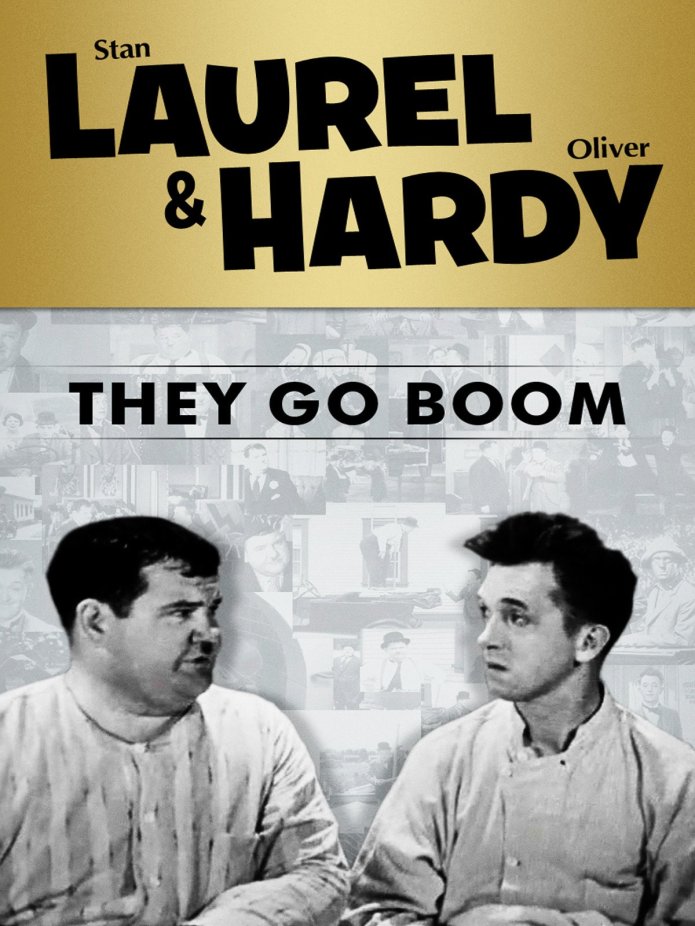
They Go Boom (1929)

DailyView: Day 345, Movie 492

This morning, we go back to 1929 for another trip to the world of Laurel and Hardy in a comedy short called They Go Boom on YouTube.

The setup: Hardy is sick with the “sniffles” and Laurel snores and the pair can not get too sleep. Hardy whines and complains about having “ammonia” while yelling at Stan to do something for him.

There is a ton of slapstick comedy involved in this short with the pair of Laurel and Hardy banging their heads and falling over things. Hardy’s sneezes and creates all kinds of chaos.

Honestly, I was not a fan of this short. It felt as if there was just too much of Hardy yelling at Laurel and I missed the typical connection between them that made their shtick funny and not mean-spirited. I know this is very much like some of Laurel and Hardy’s comedic moments, but there felt like there was a humanity missing in this.

Plus the end was ridiculous.

They Go Boom was one of the earliest talkies in the era of film that had been rediscovered and restored. Directed by James Parrot, I do not think that I would recommend this to anyone.

JCVD (2008)

DailyView: Day 344, Movie 491

Earlier this week, I was watching the latest Top Ten Show with John Rocha and Matt Knost. This week’s topic was “Top 10 films that break the fourth wall.” It was an interesting and original topic, and I had known most of the films that were mentioned, but then Matt mentioned a film called JCVD. I was not sure what he had said, but John reacted in anger since he had forgotten to include the film, which he said he loved.

I tried to figure out what the film was and I finally figured it out. Jean-Claude van Damme’s initials.

I searched up the movie and found it on Amazon Prime.

In JCVD, van Damme played a fictional version of himself, who had lost most of his money, was involved in a terrible custody dispute over his daughter, kept losing film roles to Steven Segal and returned home to Brussels, where he was still considered a hero.

Desperate for a money, van Damme went to a local bank for a wire transfer from his agent. Unfortunately for Jean-Claude, he stumbled into the middle of a bank robbery in progress. Jean-Claude’s luck was only going to get worse.

When an accidental gunshot goes off, the police arrive at the bank, setting up a hostage situation. They spy Jean-Claude inside the bank and they mistakenly think that he was one of the bank robbers.

I am not a fan of Jean-Claude van Damme and his film catalog, but I thought he was fantastic here. It was the best performance I have seen from him. The character is very self-deprecating, making van Damme the butt of most of the jokes. It is ironic that his best character ever was a version of himself.

The film is extremely funny, but is based in the troubles of the characters. And not only the character of van Damme, but the bank robbers, the police and the other hostages.

The story is told in a disjointed narrative as we start out in the bank with a situation that was confusing. The film flashed back several times to show what had happened and how we arrived at where we were. The writing is very clever and well constructed.

It does feature a six minute monologue with Jean-Claude speaking directly to the camera and breaking the fourth wall in an emotional diatribe. It has to be some of the best acting of his career.

This is unlike any Jean-Claude van Damme film I have ever seen and I found it to be completely charming and wonderfully entertaining. It was mostly in French (though there are some moments where English is used), but I was not opposed to the subtitles (avoid the voice overs always!). I am very grateful to Matt Knost for including it on his list.

Birth of the Living Dead (2013)

DailyView: Day 343, Movie 490

Back in the late sixties, a sub-genre of horror was invented. A sub-genre that exploded in popularity over the years, Zombies, although that word is never mentioned in the film.

There was little to nothing with zombies in movies prior to George C. Romero’s Night of the Living Dead came out and became a cult classic. This documentary looked at the filming, distribution and response of The Night of the Living Dead.

To be honest, the story of the movie was fun to hear, but there was nothing deep and surprising in the tale told. Some of the most fascinating part of the doc was the interview of Romero himself. Most of the interviews with the “talking heads” in the film added to the doc very well.

You really get the idea that this film was a leader in the field of horror and an inspiration to filmmakers over the decades that followed.

The investigation of how the lead character of the movie was black, but there was absolutely zero racial issues made in the film was quite revolutionary for the 1960s and was intriguing.

It is an easy watch that does not require much of the viewer. It has an interesting story to tell and flies by quickly.

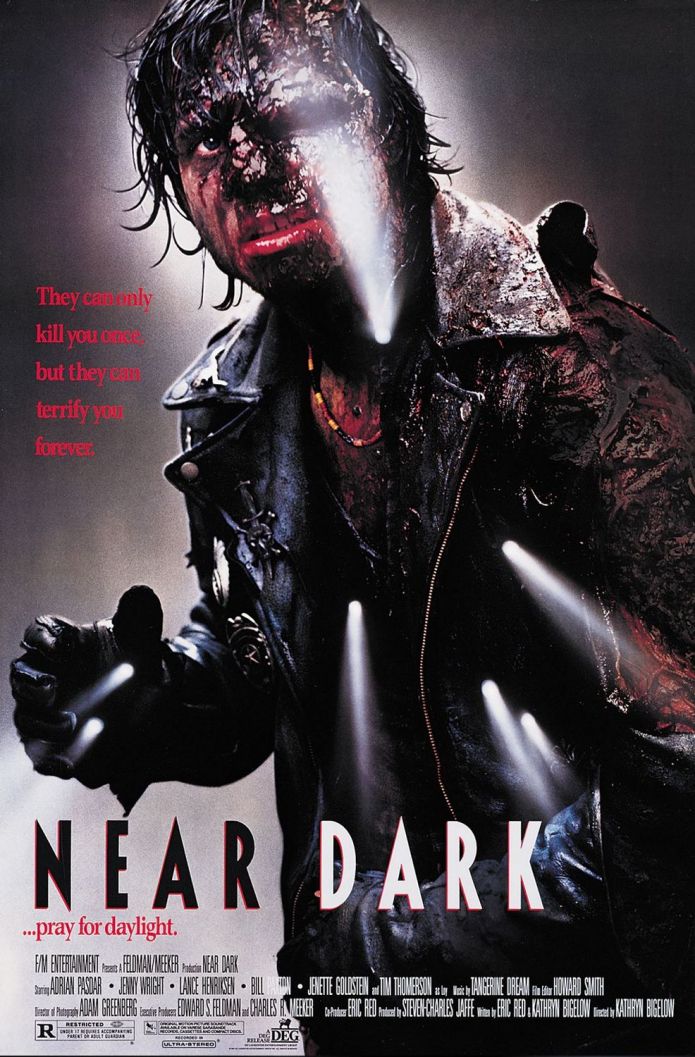
Near Dark (1987)

DailyView: Day 342, Movie 489

This past weekend, I saw the most recent vampire flick, Morbius, in the theaters and I was suitably unimpressed. During discussion about Morbius online, I had heard a film referenced that had been directed by Oscar Award winner Kathryn Bigelow in her solo directorial debut. It was called Near Dark so when I spotted it as a new film on Shudder today, it was an easy choice for today’s DailyView.

According to IMDB: “A mid-western farm boy reluctantly becomes a member of the undead when a girl he meets turns out to be part of a band of southern vampires who roam the highways in stolen cars. Part of his initiation includes a bloody assault on a hick bar

The lead protagonist in the film was Adrian Pasdar, who played Caleb, the “reluctant farm boy” as IMDB stated. Pasdar was a familiar face from the TV show Heroes. He does a decent job of struggling against the inner demons that were tugging at him to embrace fully the darkness of the vampire life. Pasdar does an admirable job of showing that struggle and maintaining the humanity despite everything around him telling him to join the crowd.

The crowd included a top level, over-the-top performance from Bill Paxton as Severin, who was everything that Caleb was not. Also, Lance Hendriksen is great as the fatherly figure among the vampire horde, Jesse Hooker. Both of these fine actors bring different layers to their characters and both are intimidating to watch. Pasdar does well to stay with these impressive actors.

There are some violent scenes, especially at a biker bar the group stops at. It is shot extremely well and provides some real gory moments while blending in some funny bits as well.

The story is fairly straightforward, which I appreciated in this film. There is a section in the third act involving a blood transfusion which is new to the lore of vampires, but it worked for this type of film.

There are some explosions that I am not sure about. Why the objects burst into flames, and such. However, these are minor gripes of an entertaining vampire film, a film that never once used the word, vampire.

The Girl Who Leapt Through Time (2006)

DailyView: Day 341, Movie 488

The Girl Who Leapt Through Time was an animated, sci-fi romance/coming of age Anime from Japan directed by Mamoru Hosoda. As you can probably gleam from the movie title, this deals with time travel.

Time travel is always a challenge because of all of the different manners in which it has been executed in movies over the years. In this case, the time travel has been called “team leap” and it allowed the time traveler to go to a location in the past and relive everything again and make adjustments to the time line.

Once the form of time travel is established and the rules are stated, it is important to remain consistent with them, otherwise you can mess up your story.

According to IMDB: “A high-school girl named Makoto acquires the power to travel back in time, and decides to use it for her own personal benefits. Little does she know that she is affecting the lives of others just as much as she is her own.”

Makoto, Chiaki and Kōsuke and their relationships are the key to the film. Everything that Makoto does using her time travel powers was wasteful and she was slowly learning what was important.

The animation is beautiful and the story is creative and wonderful. The three characters could be whiny at times, but that was pretty typical for the style.

I did enjoy the film and it was an enjoyable animated time travel flick.