Spellbound (1945)

DailyView: Day 252, Movie 352

Snow day!

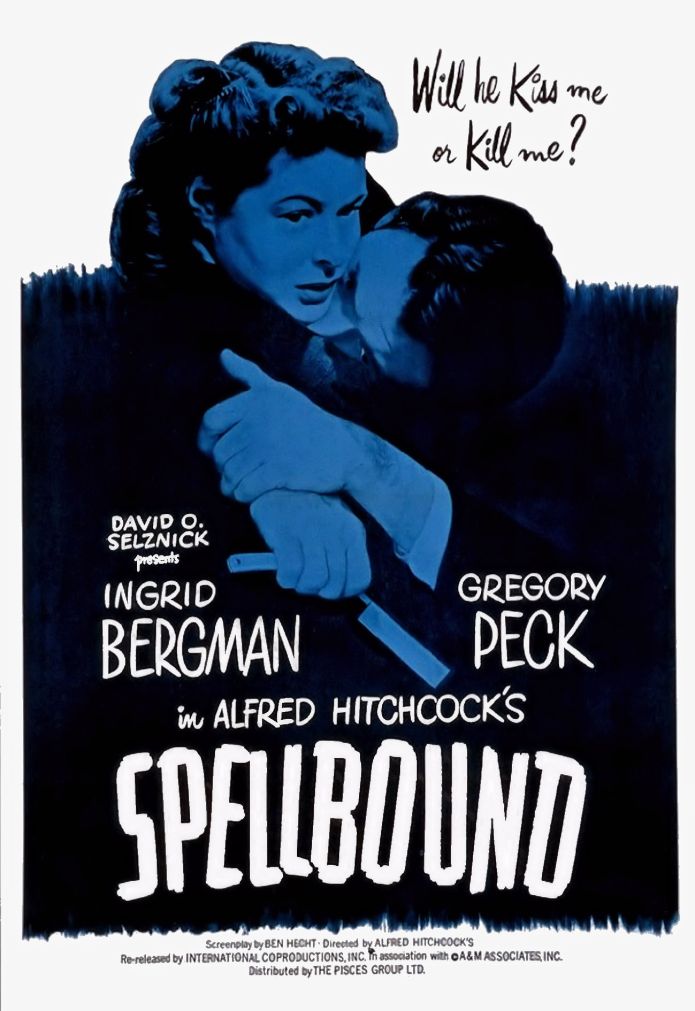
With bad road conditions outside, the DailyView continued on with the week of Hitchcock as I watched the 1945 film, Spellbound on YouTube. It starred Gregory Peck and Ingrid Bergman.

Dr. Constance Petersen (Ingrid Bergman) was a psychoanalyst at Green Manors, a mental hospital in Vermont. At the hospital, the director was Dr. Murchison (Leo G. Carroll) who was being forced to retire after a nervous exhaustion. He was to be replaced by Dr. Anthony Edwards (Gregory Peck), a young doctor who immediately started showing some cracks.

Dr. Petersen started to have feelings for Edwards, and she figured out the shocking twist, he was not the real Dr. Edwards. He was an amnesiac who could not remember who he was or what he did. He believed that he possibly had killed the real Dr. Edwards.

Dr. Petersen was convinced that he had not killed Edwards and she pursued him to New York in an attempt to prove his innocence.

Admittedly, the perception of the female doctor is different in the 1940s than it would be today so many of the comments leaned more toward misogamy than it would today, meaning that a good chuck of this movie does not work as well today. Many of Hitchcock’s films could fall into this category of not holding up because of outdated thoughts about women. But overlooking that, Ingrid Bergman does bring a strength to a character that may not have as much on the page as one might expect. Add to that the fact that Gregory Peck showed several moments of weakness and was more of the damsel in distress than Bergman was, perhaps this is more of a step than first considered.

The film has some wonderful POV shots, in particular one at the very end that was extremely effective and, actually, a bit disturbing. Hitchcock brought some really awesome moments of imagery in a film that could have just been a typical thriller. He lined the story with a lot of psychological drama and the scene with the dream was expertly shot and was completely engaging.

I did like the resolution of this movie and I found the relationship between Peck and Bergman to be excellent. I found Peck’s freakout moments to be very scary and intense and I was not sure what it meant. Peck was vey effective.

Spellbound received several Oscar nominations and they were all very well deserved. It is a difficult movie to find, but it is a great movie to watch if you can find it.

The Man Who Knew Too Much (1934)

DailyView: Day 251, Movie 351

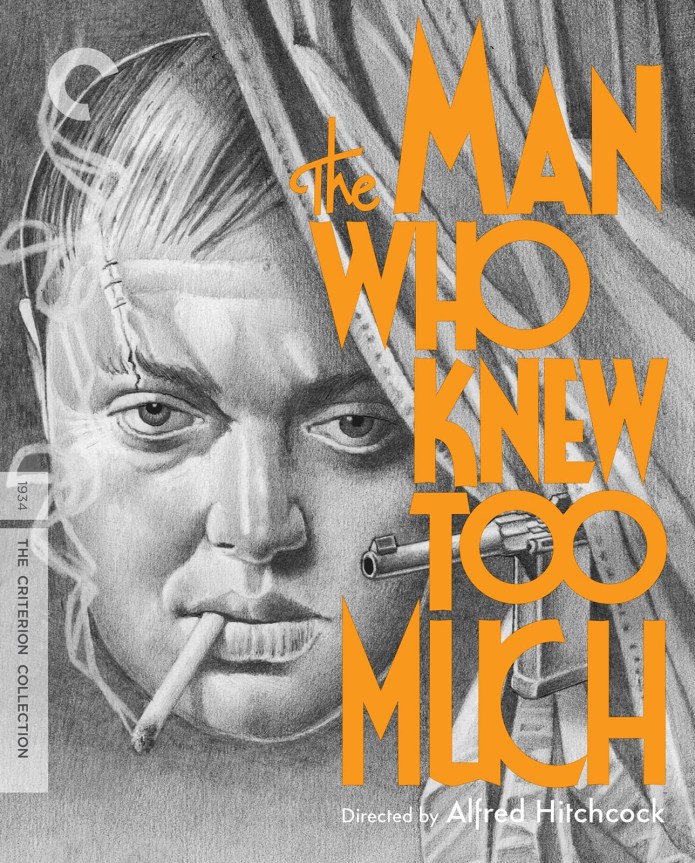
The week of Alfred Hitchcock in the DailyView continued with the 1934 classic, The Man Who Knew Too Much. I had seen a movie with this title, directed by Hitchcock, featuring Jimmy Stewart. I had enjoyed that one quite a bit, so I did not think this would work. However, Jimmy Stewart was not listed on this film which was when I realized that the one I had seen was a remake from Hitchcock. The one I had seen was from 1956, but this one was from 1934.

I needed a film from 1934 for the DailyView so I decided to see how close this was to the Jimmy Stewart version.

The answer to that is not very close at all.

British couple Bob and Jill Lawrence (Leslie Banks and Edna Best) are in Switzerland with their daughter Betty (Nova Philbeam) vacationing. They meet a Frenchman named Louis Bernard (Pierre Fresney). Later that night, Louis and Jill are dancing and he is shot and died. Before he died, he told her about a note in his room. It was a note which warned about an international crime.

The man behind the shooting, Abbott (Peter Lorre), had Betty kidnapped and was using her to keep the Lawrences in check.

There are few similarities between the films. Both had a child kidnapping involved in the story (one a daughter, one a son), both had a scene at the Royal Albert Hall and both had dealing with an international incident. That is where it stops though.

This was a good version, but it was truly missing a star the level of Jimmy Stewart. The closest to his name was Peter Lorre, who was the antagonist in the story.

I definitely preferred the 1956 version, but I was happy to have seen the first film. It is fascinating to see how Hitchcock changed things from the first one. Plus, this is considered a classic and a huge success at the time.

The Lodger: A Story of the London Fog (1927)

DailyView: Day 250, Movie 350

Another first tonight in the DailyView as the week of Alfred Hitchcock continued. This was the first feature length silent film in the DailyView. Yes, I have done silent shorts featuring Charlie Chaplin and Buster Keaton, but this was an hour and a half silent picture, not a 20 + minute short, and it was a new way to watch a film for me.

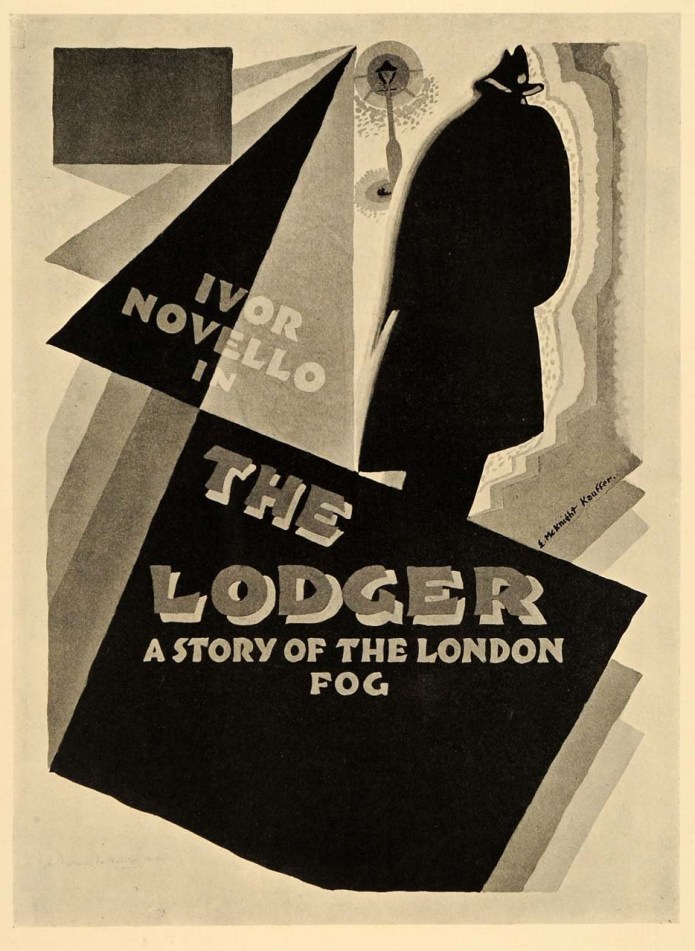
The Lodger told the story of a Jack the Ripper-like killer terrorizing London, killing another blonde, curly haired woman each Tuesday. Seven victims had the city scared for what was happening.

A stranger named Jonathan Drew (Ivor Novello) arrived at the Bunting lodge where Mr. Bunting (Arthur Chesney) and Mrs. Bunting (Marie Ault) live with their daughter Daisy (June Tripp). Drew looked to be very suspicious and would head out of the lodge on Tuesday nights.

Daisy’s boyfriend Joe Chandler (Malcolm Keen) was a police officer who was given the case of the Avenger, the serial killer tormenting London, killing blonde haired women and leaving a piece of paper with a triangle and the word “Avenger” on it. The newspapers jumped on the sensationalism of the stories, spreading the word of the killer.

Meanwhile, Drew and Daisy started to connect, Despite her feelings for Joe, Daisy seemed to be falling for the charms of Drew.

The music of the film was great, as it had to be. The silent movies were not actually silent. They just did not have talking from the actors or other sound effects. It did have music which helped to create the tone and the mood of the film.

Hitchcock told an interesting story, including an unexpected twist of the story. In fact, as I was watching the ending, I still felt there was more beneath the surface than what we got. Maybe I was just looking into it too much, but I do think it is there.

I really had to focus on the film because the storytelling was not just in the screens of dialogue printed on the screen. You had to watch closely because they did not write every word said. The storytelling came through images and facial expressions.

I certainly would not want to watch a lot of silent films, but this one was pretty good and it was a great example of Hitchcock’s skills. It looked like there was a remake of this movie in 1944, which I may visit before the end of the DailyView.

The 39 Steps (1935)

DailyView: Day 249, Movie 349

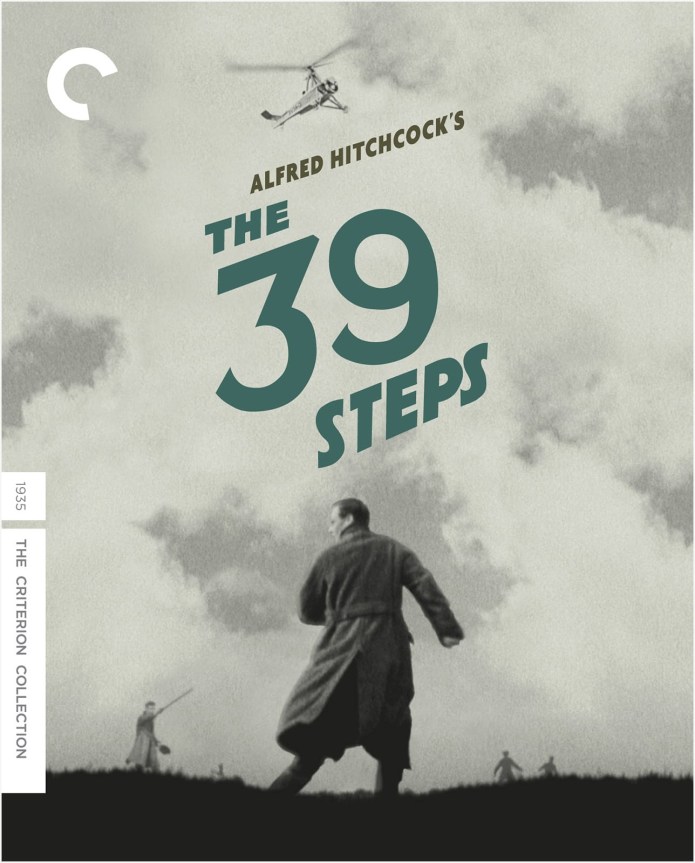
I love Alfred Hitchcock. One of the goals I wanted to set for the DailyView was to get around to some of the Hitchcock films that I have not seen. Unfortunately, I have not done this much. However, I have added to the list a series of films by the Master of Suspense from the late 1920s and early 1930s that I want to tackle over the next few weeks. The first one tonight happened to be conveniently on HBO Max. It was titled The 39 steps.

The 39 Steps was an organization of spies trying to smuggle vitally important information out of England. Richard Hannay (Robert Donat) found himself caught up in the plot, and accused of murdering a female counter-espionage agent by stabbing her in the back. Hannay went on the run to Scotland hoping to find someone to help and, instead, stumbling right into the door of the assassin himself, Professor Jordon (Godfrey Tearle).

He wound up with an attractive woman, Pamela (Madeleine Carroll), who unwillingly had to join him in his attempt to prove his innocence.

This is a fun, at times funny and romantic, thriller which has been dubbed a classic by many iconic filmmakers. It is a time of simpler filmmaking, where mood is created more with dialogue and the lighting than CGI. The characters bring the intensity to their performances with their reactions and their words as much as with their actions.

Robert Donat is very charming and brings an energy to the accused man. He is just trying to find a way to convince people that he was innocent, even though it seemed everyone that he tells does not believe him. There is an easy chemistry between him and Madeleine Carroll too, as they make a strong pairing.

I am looking forward to a further exploration into Hitchcock’s oeuvre.

Find Me Guilty (2006)

DailyView: Day 249, Movie 348

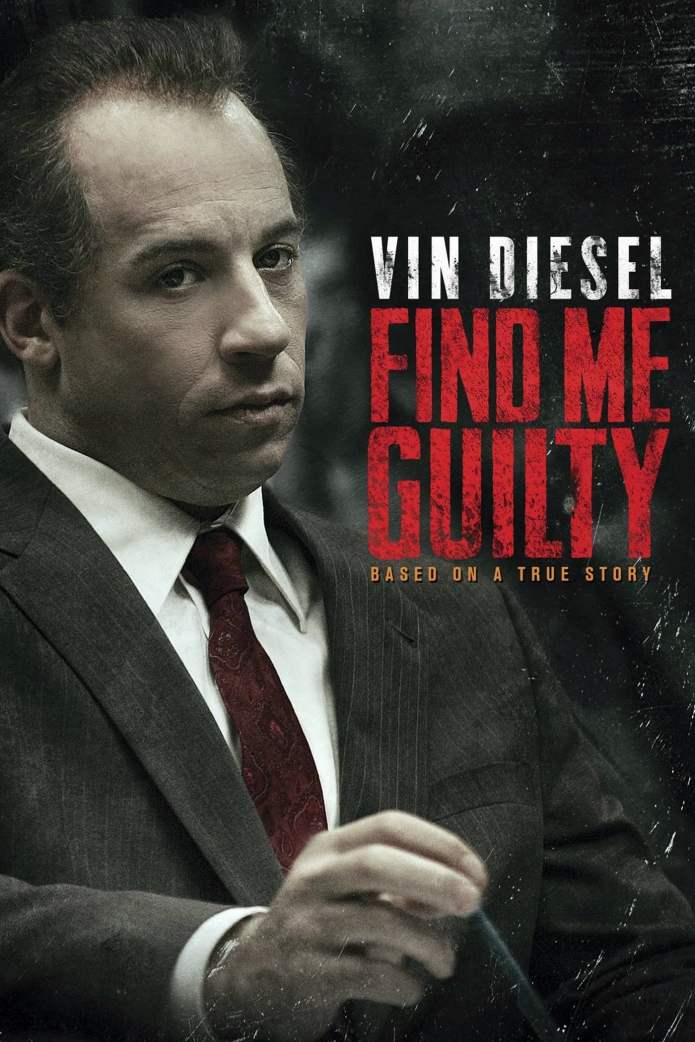
Here is another film that has been on the list for the DailyView since the very beginning and I had not gotten around to it. It is the Vin Diesel courtroom drama, Find Me Guilty.

Jackie DiNorscio (Vin Diesel) was a low level criminal in a New Jersey crime family. After his cousin shoots him, Jackie gets arrested for dealing drugs and is sent away for 30 years. The prosecutors building a case against the whole crime family approached Jackie with a deal if he would testify for them. Jackie refused to rat on anyone in the family.

The trial began with a courtroom filled with defendants each having their own lawyers. Jackie decided that he would defend himself in the case after his previous lawyer stick it to him so badly. Jackie is supported by lawyer Ben Klandis (Peter Dinklage), though when he sees some of the behaviors of Jackie, he wondered if he had done the right thing.

Ron Silver played the judge, Sidney Finestein, who was doing his best to present the fairest trial that he could, but he was worried about how Jackie’s behaviors were going to affect a possible appeal.

If you are only used to seeing Vin Diesel saying “family” all the time in the Fast and the Furious franchise, you should give Find Me Guilty a chance because this is one of the few examples of Vin Diesel really flexing his acting muscles (this and a small role in Saving Private Ryan… and, I suppose Groot). Diesel is really good in this court room drama and he brings a lot of emotion to the part. He acts like a buffoon at times, but when the stakes are at hand, he delivered big time.

This is based on a true story, the story of the longest mafia case, going over 600 days. Director Sidney Lumet, who had other legal dramas under his belt such as 12 Angry Men and The Verdict, brings a ton of credibility to the genre and gives us a great story of family and loyalty unlike many you will see.

I will say that the film felt long and could have benefited from about 15 minutes less, but the film is hurt by the feeling of passage of time. It did not feel like it was a 600 + day trial, but the film did feel long, if that made sense.

Find Me Guilty is a solid movie that is filled with drama and funny moments. You will never believe that this is Vin Diesel either.

Descendants (2015)

DailyView: Day 248, Movie 347

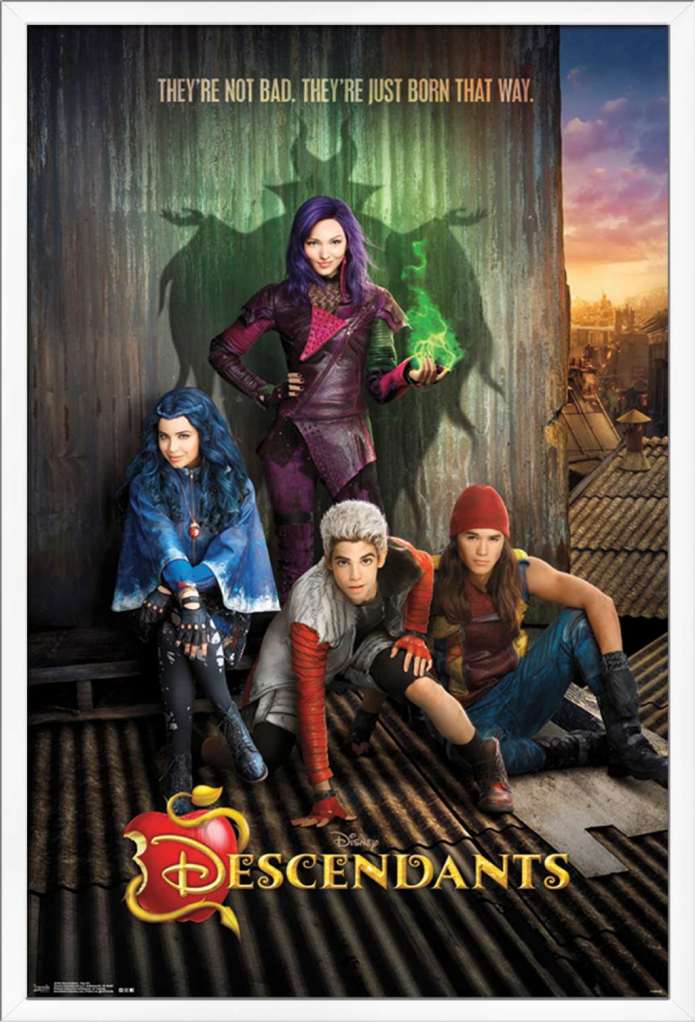
I was very excited about Descendants. I had not known what it was and when I looked into it, I thought the premise was cool. I’ve always liked the use of fairy tale characters like this. I loved Once Upon a Time and this sounded much like that. A high Rotten Tomatoes score helped to cement the choice.

Then I watched it.

I was really disappointed.

I was bored by it in the first 20 minutes. The music was alright. I mean, Disney knows how to add music to movies, but I felt no connection to any of the characters, the story was sadly predictable and the humor was inane.

The villain parents are so ridiculously over-the-top that it could only appeal to young, young viewers. That is the fact with this movie. It is targeted to young teens. That makes sense, of course. What did not make sense was the Rotten Tomatoes score of 90%. Upon further investigation, I see that there were only 10 reviews on the site for this film. That made more sense.

Having said that, the scene with Mal (Dove Cameron), daughter of Maleficent, and Queen Leah (Judith Maxie), mother of Sleeping Beauty, was well done. How Queen Leah reacted to the presence of Mal at this dinner party was understandable and powerful, even though unfair. That was a character development highlight for me.

The conclusion was sentimental and predictable, but it wasn’t the worst part of the film. Not quite a rave, but the coronation ceremony could have been way worse.

This could be acceptable to the lower teen set, but parents are going to have a hard time finding much to enjoy about Descendants.

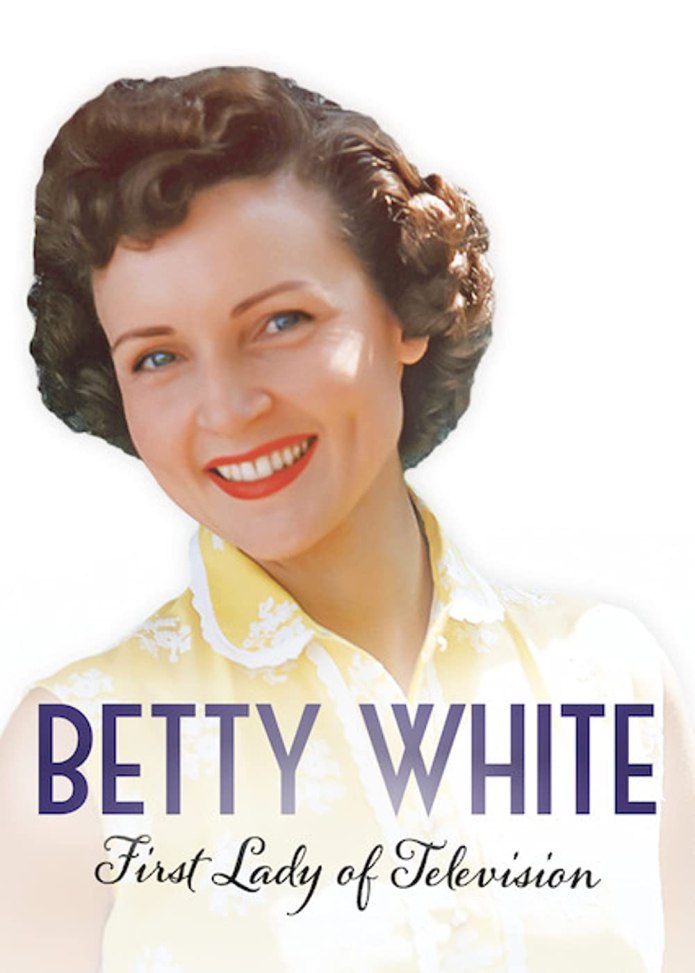
Betty White: First Lady of Television (2018)

DailyView: Day 248, Movie 346

Betty White passed away on New Years Eve 2021, just three weeks away from her 100th birthday, and the world felt the loss. I’m not sure there was a more beloved figure of the past 20 years than Betty White. So in honor, I wanted to watch something for the DailyView featuring Betty. However, I had seen Lake Placid and The Proposal, a few of the other films with Betty in it was real low on the Tomatometer, and the choices were limited.

That was when I found this documentary from 2018 on Netflix called Betty White: First lady of Television and it was perfect.

The doc looked back on Betty’s life from her early days, including talking about a TV show I had never heard of, called Life With Elizabeth. Of course, the doc spent more time on Mary Tyler Moore, The Golden Girls and Hot in Cleveland, which the iconic actress starred.

It talked about Betty’s love of game shows and games and how that love of games shows, in particular, Password led to her meeting and falling in love with Allen Ludden, the host of Password.

The doc talked about how Betty was able to reinvent herself, after appearances on The Roast of William Shatner and SNL into someone who was known for saying outrageous things. She became more than just another sitcom star. She became an icon.

The number of “talking heads” that they got to come on this doc and say how much they loved Betty was like a who’s who including Ryan Reynolds, Valerie Bertinelli, Tina Fey, Alex Trebek, Carl Reiner, Georgia Engel, Gavin MacLeod, Tom Sullivan and Mary Tyler Moore.

They touched on Betty’s love of animals, which could probably be an entire doc on its own. They showed a clip of Betty at a zoo hand feeding a grizzly bear that sat beside her and put its head on her shoulder. It was amazingly charming.

And that was what Betty White was, charming. She spent decades on the TV screen, entertaining us with her wit and her comedy, her musical ability and her presence. She truly was one of a kind.

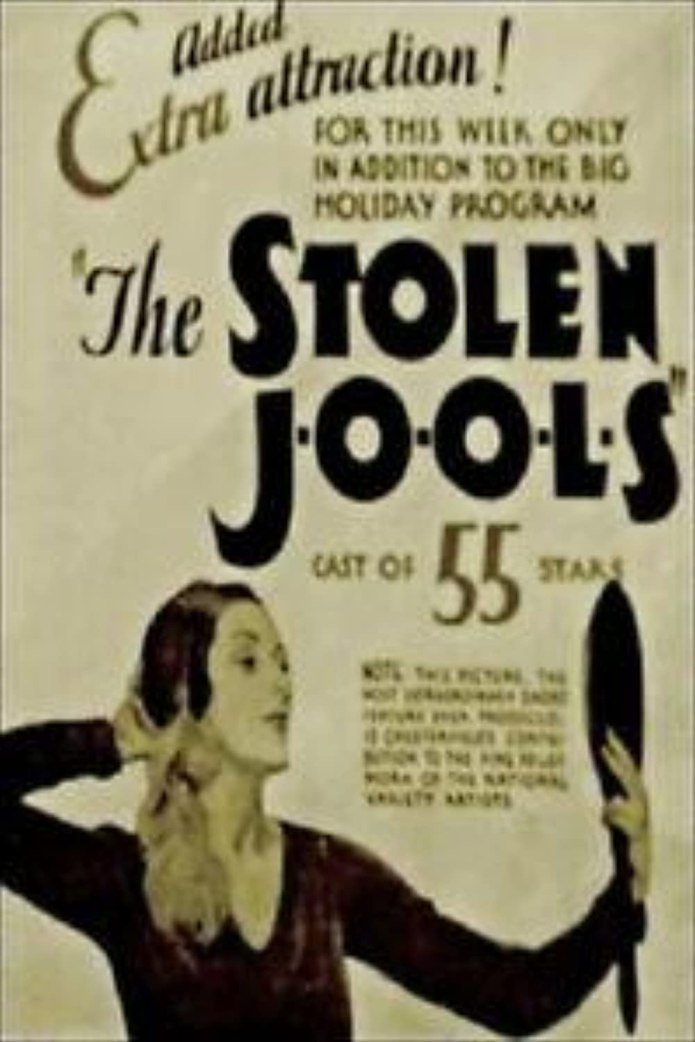
The Stolen Jools (1931)

DailyView: Day 247, Movie 345

I took a time out from binge watching Cobra Kai season 4 to get the DailyView completed. I pulled out one of the comedy shorts from 1931 that I thought was just a Laurel and Hardy short. However, it turned out that Laurel and Hardy only had a small bit in this film, as did a bunch of other celebrities of the time.

The Stolen Jools was a thinly veiled story about some missing jewels from Norma Shearer that had been stolen from a Ball the night before. Inspector Kane (Eddie Kane) was in search for the perpetrator.

And that was it, basically.

This twenty minute short had a whole bunch of stars together intended to raise funds for the National Variety Artists tuberculosis sanatorium, produced in association with a cigarette company.

The list of celebrities included Laurel & Hardy, Buster Keaton, Fay Wray, Edward G. Robinson, The Little Rascals, George E. Stone, Hedda Hopper, Gary Cooper, Douglas Fairbanks Jr, Loretta Young, Charles Butterworth, Barbara Stanwyck, Gabby Hayes, Mitzi Green, Richard Dix, Fifi D’Orsay, George Sydney, Joan Crawford, Dorothy Lee, Warner Baxter, Bert Wheeler, Irene Dunn, Claudia Dell, Skeets Gallagher, Buddy Rogers, Bebe Daniels, Frank Fay, Little Billy Rhodes, Wynne Gibson among others.

It is amazing to see all of the biggest celebrities of the time involved in this project. It makes one wonder what they could do today.

The film is more of a Who’s who than a story, but it was fun tying to suss out which actor was which.

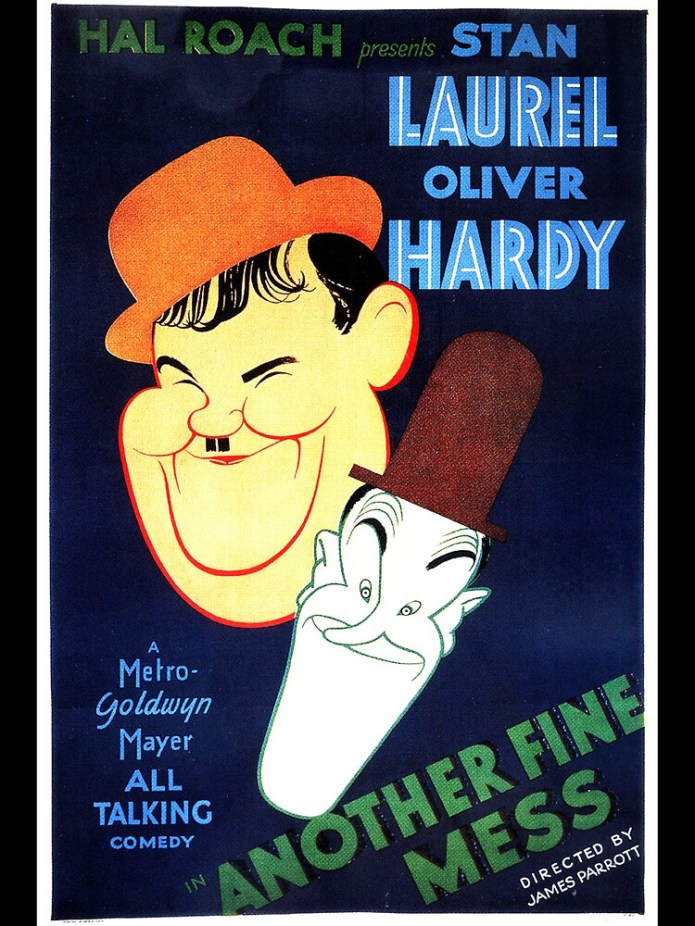
Another Fine Mess (1930)

DailyView: Day 246, Movie 344

We travelled back to 1930 for the next short, but this is no longer the silent variety as we saw with Charlie Chaplin or Buster Keaton. This short stars EYG Hall of Famers Stan Laurel and Oliver Hardy.

Another Fine Mess started off with Laurel and Hardy being chased by a police officer whom Stan had insulted in the park. They hid out in a fancy estate owned by Col. Wilburforce Buckshot (James Finlayson). Col. Buckshot is heading on a trip and is trying to rent out his home. Stan and Ollie wind up taking the position of Buckshot and a butler (and eventually a maid) after Buckshot had left. When Lord Leopold Ambrose Plumtree (Charles K. Gerrard) arrived with his new wife (Thelma Todd), Stan and Ollie had to assume these roles to avoid being caught.

Laurel and Hardy are funny, and they know what they do well. I did think that there was too many pratfalls by Stan and there were a few jokes that were run into the ground (especially Lord Plumtree’s laugh), but when the comedy worked, it was very funny. I would say that Laurel and Hardy’s bits worked more often than not.

There was a reliance on dialogue in this film, which was not common for Laurel and hardy films. I welcomed it as I found that it was funnier, in my opinion, than a lot of the physical slapstick that was on display here. It will be interesting to compare this to other Laurel and Hardy shorts moving forward.

I enjoyed the ending of the film as it felt like one of the funniest bits from the physical comedy in the film. The image of the bicycle and who was riding it was very hilarious.

It was fun to see a different type of the early day films for the DailyView today and I am happy that Laurel & Hardy gives me another type of short to cover those days when a short film is needed.

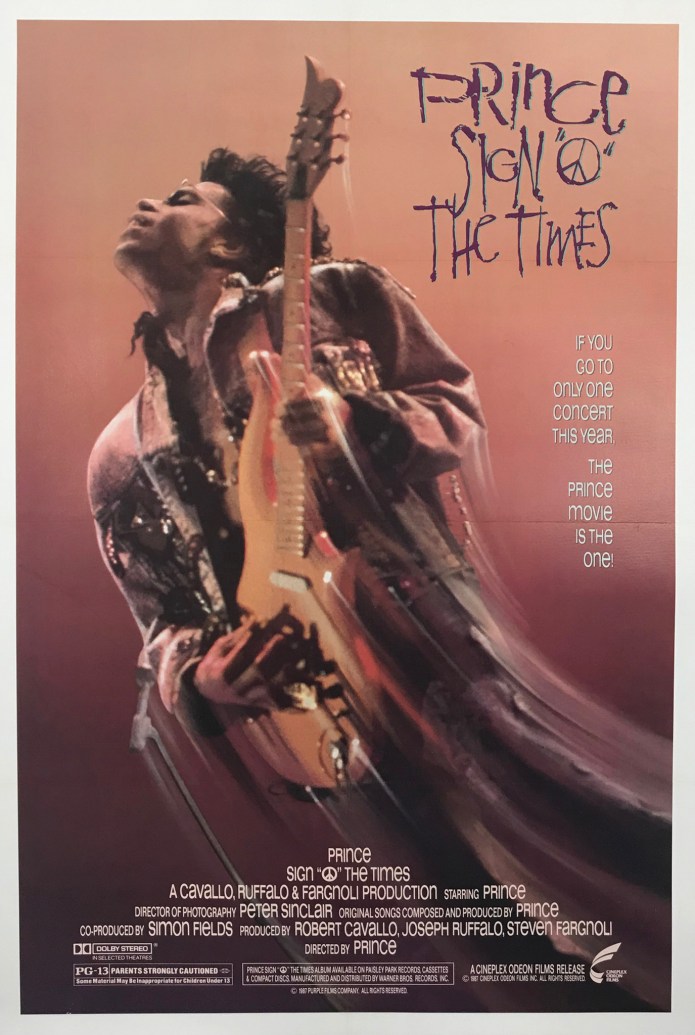
Sign ‘o’ the Times (1987)

DailyView: Day 246, Movie 343

I have not done a concert movie during the DailyView yet. Check that off the genre box. Today on Peacock, I took the time to watch Prince’s Sign ‘o’ the Times concert film.

I would not say that I was a fan of Prince. I like some of his music, particularly his earlier Purple Rain material. I was not aware of much of the album Sign ‘o’ the Times, outside of the song he did with Sheena Easton so I came into this concert film without any real expectations.

I quite enjoyed it.

The film was a lot of fun. It brought a ton of energy from Prince, and he seemed to be filled with joy (something that was not necessarily something he showed a lot of in his life). The music was exciting and filled with energy. Though a lot of it sounded alike, there were some amazing musical performances. Especially Shelia E’s amazing drum solo which just demanded your attention and powered through the middle of the film.

There are only so many shots that are available in a concert movie, which is a challenge for the filmmaker. Prince, who co-directed this with Albert Magnoli, did the best you could expect, but did not bring anything really new to the genre.

Because of this, the film will rise or fall with the music and fortunately, the music is exceptional. Well played, well performed and engaging. I bopped my head throughout the film despite not knowing many of the songs being performed.

I had a lot of fun.

Bound (1996)

DailyView: Day 245, Movie 342

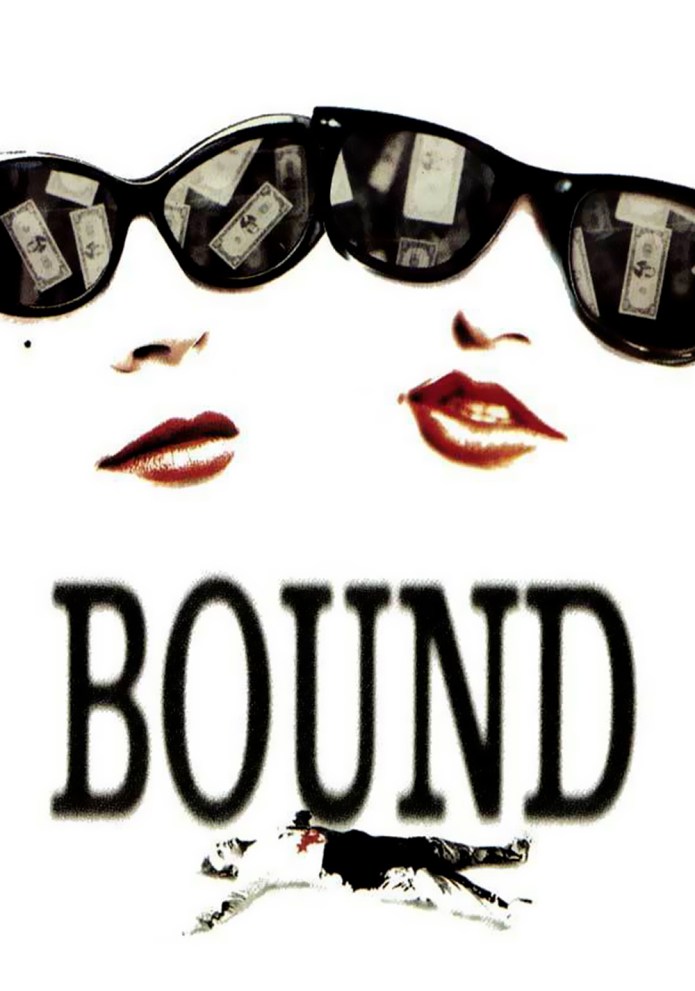
The Wachowskis became a huge success after they created and directed the original Matrix. However, prior to the Matrix, they directed another film called Bound and it was great.

We meet ex-com Corky (Gina Gershon) who comes across Violet (Jennifer Tilly), who was dating a man named Caesar (Joe Pantoliano), who was involved with the mob. Corky and Violet form a sexual connection and begin to plot together on a theft of $2 million dollars that Caesar had to clean (literally). They planned on framing Caesar for the stealing of the mob money, but their plot does not go as smoothly as planned.

This was a fun, violent and dramatic story, with several twists and turns that you do not see coming. Gina Gershon and Jennifer Tilly have great chemistry with each other and Joe Pantoliano brings the menace of Caesar to the film. These three carry the heavy load of the movie and they do it expertly.

The plot works extremely well as every step feels as if it was beautifully laid out in the story and works no matter how implausible or unexpected it should have been. Everything works story wise.

The last 45 minutes or so of the film is as batshit crazy as you can expect, with anxiety and nerves off the chart. You are never sure what is going to happen or how, or if, they surviving this plan.

The style is well done and the film leads right into the Matrix success. Good stuff.

The Naked City (1948)

DailyView: Day 244, Movie 341

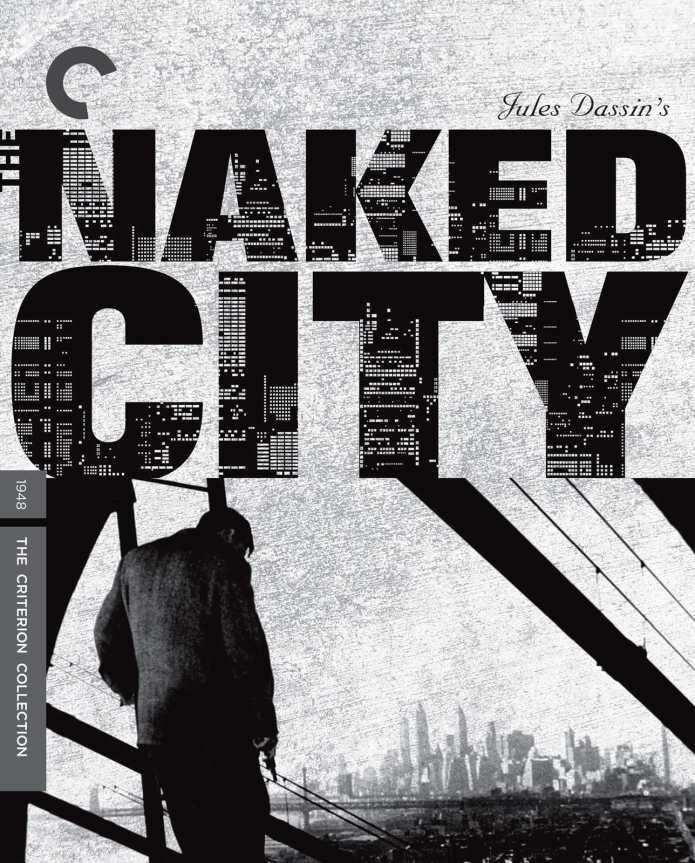
Filling the year of 1948 in the DailyView is an influential film directed by Jules Dassin that tells the story of the investigation by the police of the murder of a young model. It is most widely known because it films its scenes on the streets and building of New York City instead of on a sound stage.

The police procedural, led by Detective Lt. Dan Muldoon (Barry Fitzgerald), slowly follows the clues, many of which are small and seemingly unimportant, to solve the crime.

While it was interesting with the way they shot this movie, it led to some distinct problems. Namely, the requirement that there had to be a ton of voice over because the original shots outside the sound stage was hard to hear, I assume. Many times voices did not match lips because the sound was too low. There were other times where the sound included too much of an echo. All of this was distracting.

There was also a voice over doing narration at sporadic moments though the film. That voice made it sound like a documentary at times.

I’m going to say that some of the acting was wooden and uninteresting. Barry Fitzgerald though was a fascinating lead actor, looking unlike your typical leading man. He also had a distinct voice that helped break up the monotony of the scenes.

When the acting wasn’t wooden, it was way over the top. There did not seem to be much in the middle.

The Naked City did win two Academy Awards, but they were for technical aspects cinematography and film editing.

I was not into this movie much and I did not enjoy the story or characters much.

A Streetcar Named Desire (1951)

DailyView: Day 244, Movie 340

1951 was a year that was missing a film in the DailyView. I found a classic to fill that missing slot giving me at least one movie every year from 1949-2020 in the binge so far. The classic that I found to fill the 1951 year was A Streetcar Named Desire.

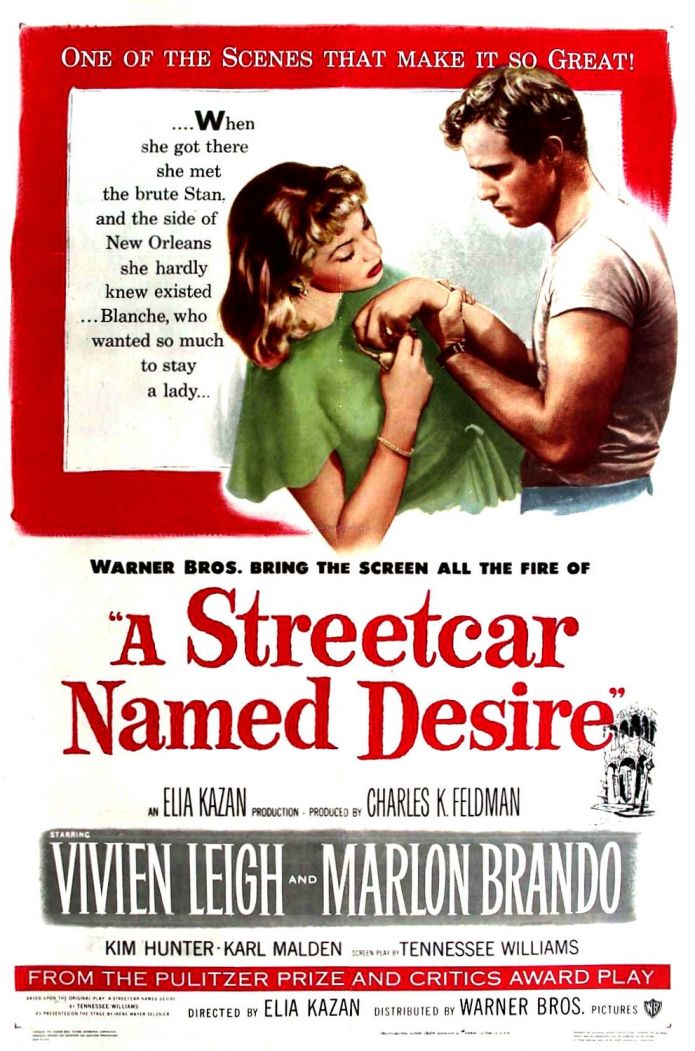
The Academy Award winning picture was adapted from Tennessee Williams’s Pulitzer Prize winning play from 1947. The film version had a definite feel of a stage play being put on screen, which helped create the mood that makes the film so special.

The film starred Marlon Brando as Stanley Kowalski, Kim Hunter as his wife Stella and Vivien Leigh as Blanche DuBois, Stella’s Southern belle sister. Blanche arrived at her sister’s home in New Orleans, a rundown apartment where she lived with Stanley. Stanley did not take Blanche well, wondering how she lost her family estate, Belle Reve.

Stanley was crude and brutish, clashing often with the more gentile, ladylike Blanche. Stella was caught between them several times which made things more dangerous, since she was pregnant.

One of Stanley’s poker playing friend, Mitch (Karl Malden) took a shine to Blanche and saw a fellow lonely soul in the Southern belle. However, when Stanley discovered the truth behind Blanche’s past, everything was blown out of the water.

This was an uncomfortable movie to watch since the physicality of Stanley (and even Mitch to a lesser extent) felt justified through much of the movie. The viciousness that he went after Blanche, (and Stella at times too) was treated as typical fashion whereas I absolutely found Stanley to be nothing more than an abuser with dreams of controlling and power. There were scenes where Stanley would fly off the handle over the littlest things and scream at the women in a manner to intimidate them. It was terrible.

It is a great performance by Marlon Brando, one that put him on the map, but the performance was terrifyingly realistic. Watching Stella cringe away from Stanley with every outburst makes me think that he was physical with her on a more regular basis than what we saw.

Karl Malden, Vivien Leigh and Kim Hunter all won Academy Awards for their roles in A Streetcar Named Desire. Brando was nominated but he did not receive the Oscar. Brando was virtually an unknown in this performance, but he went on a run of four consecutive Academy Award nominations with this one.

The black and white helped keep the tone of darkness and anxiety that was ambient throughout. You’re never quite sure what outcome was going to happen, but you could sense that it was not going to end happily.

A Streetcar Named Desire is a classic film with some powerful performances that does not allow the viewer to get comfortable at all. It deals with anger, physical abuse and mental illness all within the story and keeps you feeling confined.

Sudden Fear (1952)

DailyView: Day 243, Movie 339

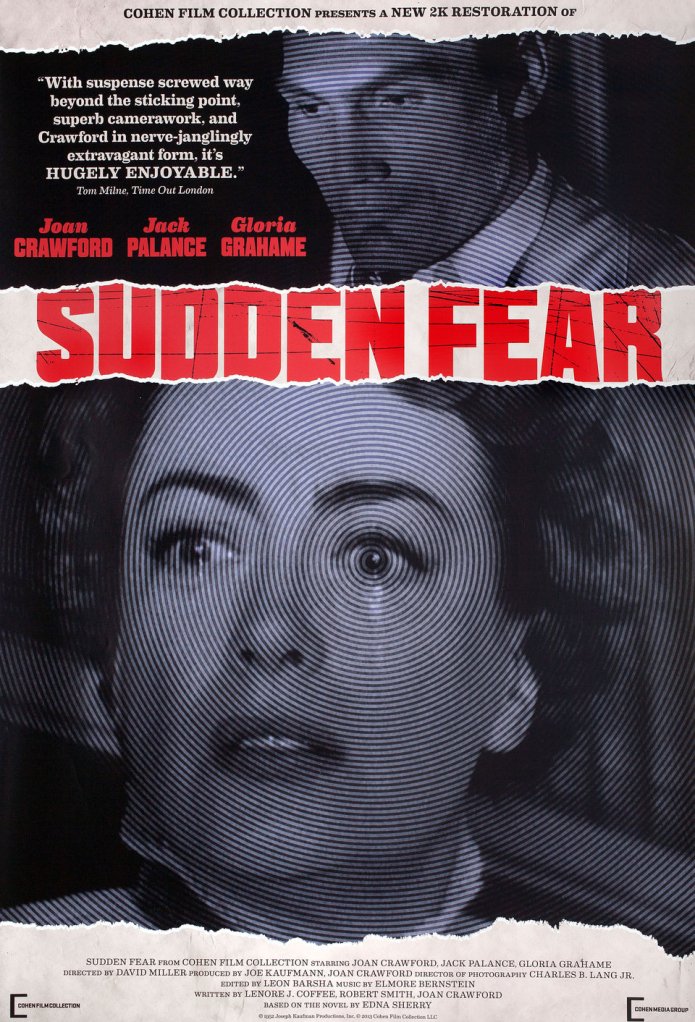
We find ourselves in the year 1952 and there is a noir thriller, filmed in black and white, that stars the iconic Joan Crawford and the one and only Jack Palance. It was called Sudden Fear and it was a film with several twists and turns.

Crawford played playwright Myra Hudson, who was casting her new play on Broadway. She had to reject actor Lester Blaine, played by Palance, as the lead. After this awkward encounter, she met him aboard the train that she was taking back to her home in San Francisco. They become close on the train and end up getting married.

However, Myra discovered that he was only in the marriage to get her money and that he and his co-conspirator/mistress Irene (Gloria Grahame) were planning on killing her and making it look like an accident. Shocked by the betrayal, Myra started her own plan to take care of the situation.

Joan Crawford is great here. She is not anybody’s fool. There are some things that she did that made me yell at the screen, which you find in most films like this. She kept most of it reasonable, but there were a few things that happened that made me immediately question why it happened, besides that the plot needed it to happen.

Jack Palance is always great, especially playing a villain. You never quite trust him from his arrival on the train until his plan is revealed to Myra and the audience.

The ambiance of the flick is very effective and the final act is filled with tension and an uncertainty of what was going to happen. The last 20 minutes or so of Sudden Fear kept my attention 100% and had me on the edge of my seat. It was a very effective thriller and, despite some questionable decisions made by characters, Sudden Fear builds to an excellent conclusion.

Man of a Thousand Faces (1957)

DailyView: Day 243, Movie 338

Former Vaudevillian and silent picture star Lon Chaney was known as the Man of 1000 Faces for his ability to create characters with wild made up faces and masks. He became a legend for being a “mystery man” and a horror icon.

In this biopic, Lon Chaney (James Cagney) and his life is examined from his early days as a child in a home where his father and mother were both deaf to his career in motion pictures.

The first part of the film dealt with his first marriage to Cleva (Dorothy Malone), a singer who became pregnant with Lon’s son. However, when Lon took her to meet his family, Cleva responded with anger and repulsion over Lon’s parents’ disability and she claimed that she did not want to have a baby that had this passed along to her.

I found Cleva totally horrible. I hated this character so much because of her ugliness of spirit and her ignorant mind. She was selfish and mean-spirited, even after the baby was born with his hearing. The film tried to rehabilitate the character at the end of the movie, but her cruelness in the first half did not make me think any better of her.

There were some horrible things that happened to Lon during this time frame of the film, including having the custody of his son taken by the state until he could provide a suitable home, which was another thing that I found terrible. This was the emphasis for Lon to leave Vaudeville and head to California to get work in pictures.

James Cagney is great as Lon Chaney. I believed him as the actor from the minute I saw him and he does a bunch of physical acting, including dancing, that makes him stand out and shows what a talented person Lon Chaney was.

Cleva was the character I hated most in movies this year. I had a much softer place in my heart for Norman Osborn {Spider-Man spoilers} after he killed Aunt May {End of Spoilers} than I did for this woman. There had to be some form of mental illness involved in this woman’s life that could have helped suss her out more and help the audience understand why she took the extreme steps she took instead of what we got to see.

I found this picture to be an excellent movie and I learned a lot about the life of Lon Chaney. The film may have been 10-15 minutes too long, but that is a minor gripe.